This article will take approximately 23 minutes to read. Don't have the time right now? No worries. Email the ad-free version of the article to yourself and read it later!
Chiang Mai is one of Southeast Asia’s top destinations for digital nomads, offering low living costs, fast internet, a strong expat community, and the Destination Thailand Visa for remote workers who want to stay long-term.
Money was tight. My business was languishing. My personal life was in the dumper and I was not a happy man. One of my best friends said only one thing to me, “Come to Chiang Mai.”
His words changed my life. Traveling to a foreign land seemed like a stretch, both financially and emotionally, but having lost it all, I had nothing else to lose.
In this guide on how to become a digital nomad in Chiang Mai, I’ll outline a few of the benefits, give you some practical advice, and even give you a blueprint for getting your toe in the water.
"*" indicates required fields
Disclaimer: This article may include links to products or services offered by ExpatDen's partners, which give us commissions when you click on them. Although this may influence how they appear in the text, we only recommend solutions that we would use in your situation. Read more in our Advertising Disclosure.
Contents
Most expats throw money away, get lost in red tape, and miss the local hacks that make life easier and cheaper. ExpatDen Premium gives you the secrets seasoned expats use to save, earn, and thrive beyond the basics, saving you thousands and opening doors you didn’t even know existed.
Here’s what’s inside:
- Housing Hacks: Slash your rent by 40% or more - because the locals are laughing at what you’re paying.
- Banking Mastery: Stop wasting on fees and get top exchange rates. Why give your money away?
- Healthcare for Local Prices: Quality treatment without the expat price tag.
- Visa and Legal Shortcuts: No more bureaucratic nightmares. Get the visa and residency secrets that others pay their lawyer dearly for.
- Deep Discounts: Find the savings locals rely on for groceries, dining, and more.
If you’re serious about making Thailand work for you, join ExpatDen Premium and make Thailand work for you.
Key Takeaways
- Chiang Mai is one of the most popular cities for digital nomads in Asia, known for low costs, good infrastructure, and a welcoming expat community.
- The Destination Thailand Visa (DTV) lets remote workers stay in Thailand for up to 180 days per entry over a 5-year visa validity, with a THB500,000 financial requirement.
- You can live comfortably in Chiang Mai on around US$1,000 to US$1,500 per month after covering startup costs.
- Internet in Thailand is affordable and fast, with home broadband packages starting at around US$20 per month.
- The most popular neighborhoods for digital nomads are the Old City, Nimmanhaemin, and Santitham, each with different price points and vibes.
- Air pollution from crop burning is a real concern from January to April each year, and some nomads choose to leave Chiang Mai during this period.
- Getting health insurance before arriving is strongly recommended, even for short stays.
Financial Benefits
Many digital nomads choose to set up shop in Chiang Mai because their money goes so much further here than it does in the West. Consider health costs, for instance.
Last year I had two elective procedures done here. The first was a full eye exam. I went to one of the best eye clinics in the country. In addition to a glaucoma screening, pink eye medication, and an exam by a physician, I was greeted by four receptionists and didn’t wait more than two minutes. I was out in under an hour. The total cost? US$32.
Your dollar simply goes further here. These financial benefits translate into a much cheaper cost of living in Chiang Mai, which I’ll discuss in greater detail in another section.
Flights
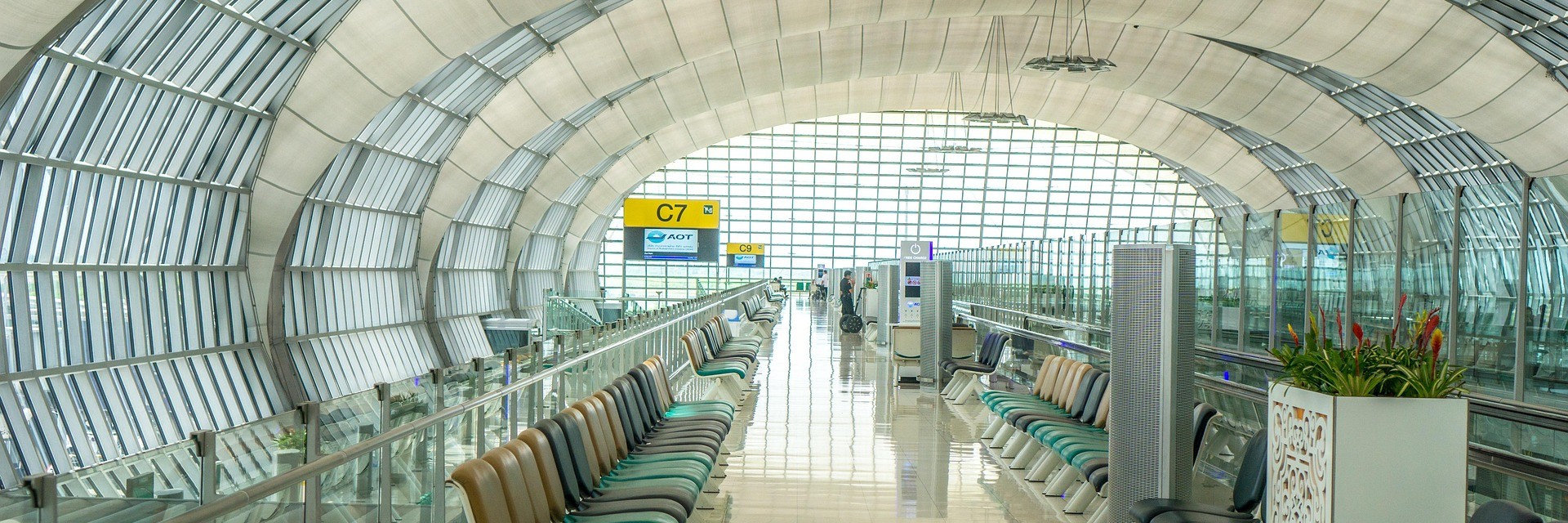
Getting to Chiang Mai from Suvarnabhumi Airport, or BKK, is quite easy. It’s a major hub for Southeast Asia and nearly every major airline flies into and out of BKK.
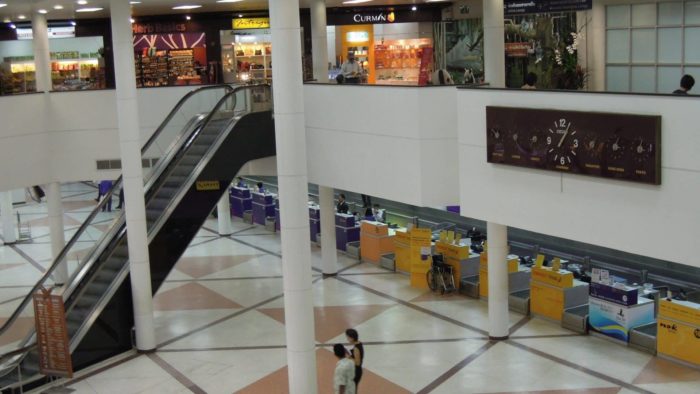
You can go from Bangkok to Chiang Mai from Don Mueang, as well. This airport was the original main airport for decades until Suvarnabhumi was built. Don Mueang, or DMK, is pretty much up to modern standards but not as busy as BKK.
While there are hundreds of flights from North America, Europe, and Asia to Thailand, getting to the kingdom from North America or Western Europe usually comes with a layover.
I’ve traveled here over fifteen times, and most of the time, a flight from Chicago to Thailand includes a layover in Japan, Korea, or China. If you go east to west, a layover in Doha or Frankfurt is more likely.
As a digital nomad, I traditionally book one-way flights because I don’t plan on leaving. Even though I am not a permanent resident of Thailand (we’ll cover that in a bit, too), a digital nomad visa will get you pretty well immersed. Booking a one-way flight gives me maximum flexibility.
But most airlines will want to see your return ticket before allowing you to board a flight into the country. In addition, when getting a visa from the Thai embassy, they’ll need to see onward travel for you as well.
Once you are in Thailand, you’ll find local flights to Chiang Mai to be cheaper than a bus ticket in the West. I am amazed I can fly from Bangkok to Chiang Mai (equivalent of flying Chicago to NYC) for under US$50 one-way.
Visa
The best visa for a digital nomad in Thailand so far is the Destination Thailand Visa. You can stay in Thailand for up to 5 years with it, and the requirements are quite low. For example, you only need to show financial proof of THB 500,000 in your bank account, as well as proof of your online work.
In addition, the application is done entirely online, with no embassy visits required. It’s possible to get visa approval within a few days.
I don’t recommend living here on a tourist visa or an education visa. While some people do that, it can cause legal problems in the future unless you are here for travel or to study in Thailand.
However, if you plan to stay for only a month or two, coming on a tourist visa is still fine. For anything longer than that, get a DTV visa.
Cost of Living
A startup budget to get established in Chiang Mai would have to be at least US$5,000. That’s to pay an advance and a few months’ rent when renting an apartment in Chiang Mai, a motorbike (to save on transportation costs), and the cost of some household items. Set aside US$1,500 to cover emergency medical costs.
After that, you could probably live on US$1,000 a month after you’ve covered the startup expenses and set aside some emergency funds. As you get regular income, increasing this to US$1,500 still wouldn’t hurt and you’d be living pretty comfortably if you’re alone.

There are varying degrees of lifestyle, of course. On my first trip here, my buddy set me up at a five-star hotel suite. It was easily 1,000 square feet and is technically a six-star hotel by Western standards. It only cost US$85 per night.
Now, as I live here six to eight months out of the year, I am more comfortable with getting an Airbnb or using some of the lesser-known hotels that are massively abundant. I rarely spend more than US$45 a night. But you could find a place to rent for a lot cheaper.
Here’s an example of lifestyle in Chiang Mai with a US$1,500 monthly budget.
Internet
A 500mbps connection in Thailand costs around US$20 a month, while this same subscription would cost three times the amount in the US. But the fact that you are a digital nomad means you often have free internet connection everywhere, including in your accommodation, in the café where you’re having coffee, and so on.
To put it simply, internet in Thailand is cheap, fast, stable, and widely available throughout the country.
Food
In Chiang Mai, there is a wide range of quality food at low prices. You can easily have a decent meal for less than US$2 at street-side restaurants that are quite literally an extension of the homeowner’s kitchen. Or you can have a meal in the heart of Chiang Mai for US$25 that would easily cost US$100 or more in America.
Regardless of your appetite or wallet, you can eat for a lot less in Chiang Mai.
Housing
In the more expensive cities in the US, the average rent is US$1,200 monthly, but in the more affordable places, expect to pay between US$600 to US$750 a month. Now, think of a modern two-bedroom apartment located in the city center of Chiang Mai. That will cost you US$350 to US$450 a month, sometimes including household items.
And average utilities? US$85.
Find out more: The Complete Guide to Renting in Chiang Mai
Where to Stay
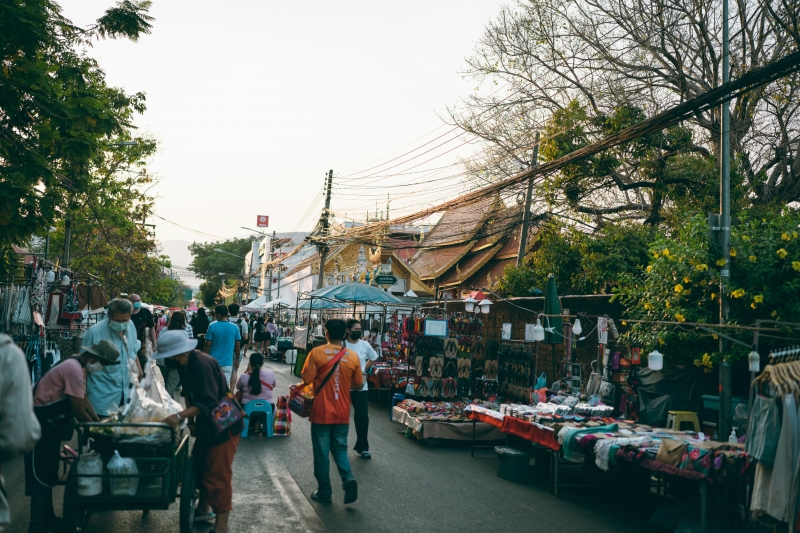
Chiang Mai is a wonderful place for digital nomads to set up shop. Like most of the popular places in Thailand, it’s an eclectic mix of ancient temples, traditions, and culture interwoven with new condos, hip bars, and happening restaurants. Although a separate guide can be written on all the sections of Chiang Mai (yes, there are that many), I’ve narrowed down three of the most popular spots for digital nomads.
The Old City
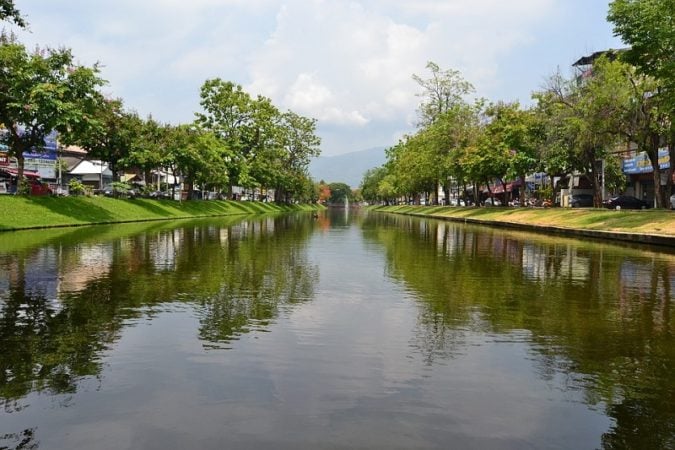
Although The Old City might come up as a tourist attraction, it offers a lot of benefits for digital nomads who are just getting their feet wet in Thailand. You won’t find many fancy places to rent. But the serviced apartments available in the area come at a cheap price. There are also lots of coffee shops. And being The Old City, you get a taste of Thai culture as well.
Nimmanhaemin
Nimmanhaemin is one of the trendier spots in Chiang Mai. Because of the number of cafes, restaurants, and other attractions, it makes it one of the favorite places for digital nomads who want to make Chiang Mai their home. Nimmanhaemin has seen quite the boom in the last few years, so expect prices to be higher than in other areas of Chiang Mai.
Santitham
Santitham is another great place for digital nomads who want to make Chiang Mai their home. Like Nimmanhaemin, Santitham is growing, and there are a number of places to rent for the new or just-starting-out digital nomad. For more neighbourhood options, we also have a guide to underrated neighborhoods in Chiang Mai.
On your downtime, there’s no shortage of attractions to experience as well.
Renting Apartments
If you are just testing the waters before deciding to settle in Chiang Mai as a digital nomad, you can rent an Airbnb room instead of paying an advance for an apartment. There are clean, efficient, and cozy hotels you can snag for as little as US$15 per night.
Please note that you need to book an Airbnb for more than 30 days. Otherwise, it’s considered illegal here.
If you’re already set on living in Chiang Mai, then you can look for a long-term lease. The easiest way to search for rental properties is to use a website like Hipflat. Hipflat makes it easy to search for rental properties based on your needs, like whether you want to rent a house or a condo, how many bedrooms you’d like, and how much you want to pay.
Listings start at THB6,000 per month and go up to THB180,000 per month. If you’re just getting started, you’ll probably want to start on the lower end of the price list.
Whichever property website you use to search for rentals, be sure to look with a skeptical eye. You might find some listings for only THB900 per month. But owners post these low prices as a way to lure in potential tenants.
Getting Around
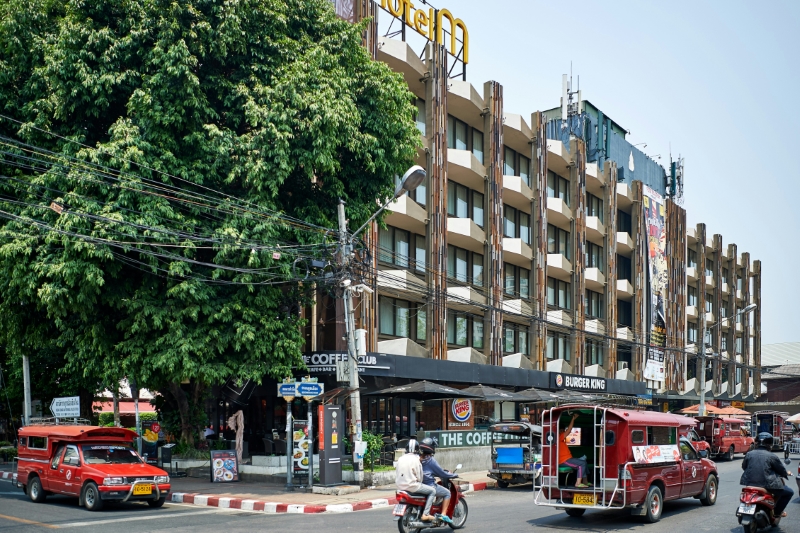
You’ll have no problems getting around Chiang Mai. You have three main options for traversing the city (four, if you count walking): renting a motorbike; using taxis, tuk-tuks, or Grab; and taking public transportation.
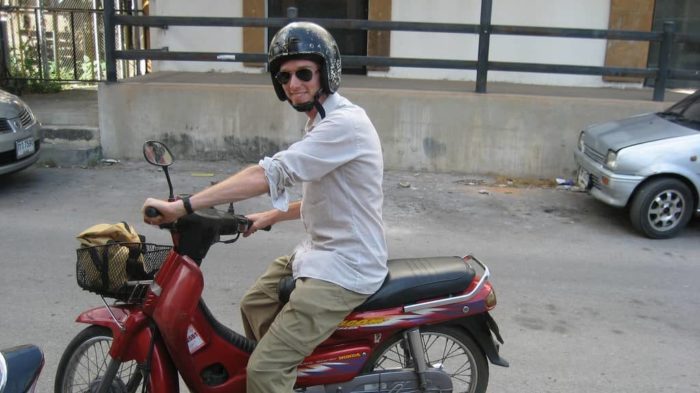
If you plan on staying in Chiang Mai long-term, consider buying or renting a motorbike. But don’t forget to get your Thai driver’s license first. Police are cracking down on unlicensed drivers throughout Thailand. You could probably rent a motorbike for THB2,500 to THB3,000 per month.
Taxis, tuk-tuks, and Grab are another option for digital nomads. But the cost of using these every day adds up over time. So use them judiciously.
Public transportation would be your cheapest bet. For just THB20 to THB50, you could get anywhere in the city on a songthaew, or covered pickup truck with benches. However, I still find riding a motorcycle the best way to get around here.
But if you are planning to be here long-term, you can buy a car instead. You can even use it during heavy rainy days.
Co-working Spaces
Chiang Mai is also known for its co-working spaces. At Maya Shopping Mall, there is a large co-working space on the top floor called CAMP (Creative and Meeting Place). It has super-fast WiFi and working there is free for the first hour.
After that, you’ll need to order at least THB50 worth of food from the café to get a 2-hour WiFi voucher. It’s also open twenty-four hours a day.
Punspace, in the Nimmanhaemin area, is another favourite among nomads. It offers reliable internet, flexible membership plans, and a social atmosphere that makes it easy to meet like-minded people.
There are other areas to find WiFi as well. Personally, I lean towards Starbucks and hotel lobbies. Starbucks generally gives you twelve hours of free internet access and the speeds are pretty good.
A hotel lobby may cost you a bit more to hang out in (always order a drink from the bar) and is a bit quieter than a Starbucks.
Depending on your need for either buzz or quiet, working from your own hotel or Airbnb is also an option. I always ask the host or hotel about their internet speed before committing to a place to stay, however. The speed can vary greatly depending on their setup.
Finding Work
When you come to Chiang Mai on a tourist visa, you are technically prohibited from working. Thailand is very protective of its economy and doesn’t want foreigners taking jobs away from Thai people. If you choose to work here, even digitally, you may be violating the rules. While I’ve never heard of any digital nomads being prosecuted for working from a Starbucks, it’s still important to understand that you could be breaking the law by doing so.
On the other hand, if you are here on a DTV visa, it’s fine to work remotely for clients outside of Thailand.
When I got started, I went after the low-hanging fruit: my current network of friends and family. People always want to help out a new business. It’s the American dream, even if you are not in America. So, don’t be shy. Proclaim what you intend to do and ask if anyone knows of anyone else looking for work.
The number one activity to start with is simply to ask. Or look online. We have an in-depth guide to finding work in Thailand.
And although there are some resources in the guide for finding work at brick-and-mortar companies, a portion of the strategies revolve around finding work as a digital nomad in Thailand.
Getting Paid
Unfortunately, PayPal doesn’t work well in Thailand. An alternative is to set up a multi-currency account from Wise and get a Wise card after that. With it, you can get paid in multiple currencies including USD, EUR, GBP, and so on. Then, you can convert to Thai Baht without losing out on currency exchange rates, and use the Wise card to withdraw money and pay for many things in Chiang Mai.
It’s very hard for digital nomads to open a bank account in Thailand. I’ve rarely heard of anyone here being able to open a bank account in Thailand as a digital nomad unless they have another long-term visa or use an agent to do it.
As a freelancer, you may also consider accepting credit cards online through portals like Stripe and Square. Both of these companies are well established and you can access your funds within 24 to 48 hours of receiving payment.
Paying Taxes
Just because you’ve left your home country doesn’t mean you should stop filing taxes. American citizens, for example, are still required to file and possibly pay taxes on all worldwide income, depending on how much you make. If you don’t file and pay taxes, you could have your passport revoked.

For more info on paying taxes while living in the kingdom, check out our in-depth guide to paying US taxes from Thailand.
Health Insurance
As I mentioned in the beginning of this guide, healthcare in Thailand is cheap compared to costs in the West.
But you should still consider getting health insurance for digital nomads in Thailand for those major accidents and medical emergencies. And trust me, they happen to all of us.
It could be taking a spill on your motorbike, getting injured while exploring nature, coming down with a serious illness, or having a baby in Thailand. All of these instances and more will be a lot easier on your pockets if you have insurance.
I’ve read many stories of tourists without insurance who needed to create a GoFundMe page for financial support with hospital bills and repatriation. It’s not a good situation. So, I would recommend anyone to get a health insurance plan. It can be just an in-patient plan that comes with a high deductible, so the plan will be affordable. You’ll only need to use it when you really need it.
So, after you’re done reading this article, read the following guides:
- Thai Health Insurance: Here’s What You Need to Know as an Expat
- Thailand Travel Insurance: Companies, Requirements, and Advice
- Insurance options in Thailand
- Health Insurance for Digital Nomads in Thailand: What You Really Need
Communities
Chiang Mai is now one of the world’s hubs for digital nomads. No matter your nationality, you can find like-minded people to hang out with. The amazing expatriate experience that Chiang Mai offers is one of the reasons why it’s attracting more and more digital nomads.
Here are some resources to help you connect with like-minded digital nomads in Chiang Mai.
- Chiang Mai Digital Nomads: A private Facebook group consisting of over 40,000 members who discuss all things related to the digital nomad lifestyle in Chiang Mai.
- Digital Nomad Coffee Club – Chiang Mai: A 16,000-plus community of digital nomads who meet up in real life for coffee.
- Chiang Mai Digital Nomads Graphic Designers and Illustrators: Although having fewer members (just under 500 at the time of this writing), the topic is very niche and could benefit graphic designers and illustrators in Chiang Mai.
Challenges
Being a digital nomad in Chiang Mai does present some challenges. But if you can overcome most of the challenges below, you should excel here in the kingdom.
Culture
Learning all the customs of Thailand can take a while. It’s important to learn what is permissible and what is downright offensive. For example, in Thailand you must remove your footwear when going into temples, residences, and some businesses.
With interpersonal relations, a majority of people are less straightforward compared to those from the West. It’s not what’s said in Thailand, but often what’s not said. So flexibility is not only important but critical to managing relationships in Thailand.
Respect is another important part of Thai society, especially when it comes to elders, the royal family, and religion.
Beyond culture, a common challenge is language.
Language
On one hand, most Thai people don’t have a solid command of the English language. You’ll find yourself speaking in short, clipped sentences that most people can understand. Google Translate and other language apps are a big benefit here.
On the other hand, the English language has quite a few extra (and often unnecessary) phrases. When you state briefly and directly what you want to communicate, it forces you to get to the point. And that’s a good thing.
For example, “Where is the toilet?” can easily be stated as “Toilet?”
But if you plan on staying in Thailand long term, learning the language is a must. We’ve dedicated an in-depth guide to learning Thai, so be sure to check that out.
Income
By far, the biggest challenge you’ll most likely face as a digital nomad in Chiang Mai is earning a steady income.
Unless you have set up your business to earn a steady US$5,000 to US$10,000 or more per month, and have a disciplined team to help you, distractions and the solopreneur lifestyle can be a challenge.
But, for many people, the digital nomad lifestyle is the way to go. In order to build my business, I train my clients to work with me via Zoom. Deriving a consistent income takes work, a lot of work.
If you are easily distracted by the bright lights of the city, elephant sanctuaries, Buddhist temples, or the crazy nightlife, you must discipline yourself to set up your work environment to avoid those things (at least most of the time).
You’ll find hundreds of expats drinking away their pensions in Thailand. If you don’t want to become a Facebook meme, make daily appointments with yourself for your health, fitness, and business.
With no boss to hold you accountable, it’s easy to procrastinate.
Air Pollution
Air pollution is the biggest problem in Chiang Mai, in my opinion. During the burning season every year from January to April, on a bad day, the AQI can exceed 200 and spike well above 300 during peak weeks, reaching hazardous levels, and you will see smog in the sky.
While I’ve seen improvements in recent years, nothing is really guaranteed.
So, during this time of year, you may want to live in other provinces with cleaner air, like Phuket or provinces in the south of Thailand instead.
Should I Become a Digital Nomad in Chiang Mai?
No one can answer this question better than you. In my opinion, there are hundreds of reasons why Chiang Mai is a great city for nomads. It’s like the nomad capital of Thailand for various reasons such as:
- Affordable cost of living. It’s 30% to 50% cheaper than Bangkok, Pattaya, and Phuket.
- The lifestyle is really good. You can wake up and see mountains every day. It’s slow-paced but still full of convenience.
- There are many nice co-working spaces throughout the city with great coffee and good working environments.
- The nomad community here is big. You can make new friends easily. In fact, there are networking events for digital nomads in Chiang Mai almost every week.
On the other hand, Chiang Mai might not be a good idea for you if you:
- Want to live by the sea. It’s a mountain city several hundred kilometers away from beaches.
- Want to rely solely on public transportation. In Chiang Mai, it’s much more convenient to have your own private transportation.
- Want to live a busy life with great nightlife all the time. Bangkok is much better in this regard.
Anyway, nothing is better than seeing Chiang Mai with your own eyes. You can come here for a few weeks and see whether you like it or not. If not, you can just leave and go to other cities. We are digital nomads anyway.



 Deutsch:
 ไทย:
ไทย: Français:
 Português:
 Português:
 Español:
 Español:
 中文 (中国):
 Русский:
 Nederlands:
 العربية:
 Italiano: