
This article will take approximately 22 minutes to read. Don't have the time right now? No worries. Email the ad-free version of the article to yourself and read it later!
Shipping a letter or package to Thailand? Moving here and need to send all your belongings? Find out how to do it.
You’re probably worried about whether your items will make it to Thailand at all, never mind on time.
Set those fears aside. Sending documents, furniture, even pets to Thailand doesn’t have to be hard. You just have to know which service is right for you, and that’s what this guide will help you figure out.
You’ll learn which shipping services are available, how much they cost, how long they take, and how to deal with Thai Customs.
If you want to skip the read, fill out the form on our contact page and get five free quotes from international shippers within 24 hours.
If you’re moving to Thailand for the long term, become a premium subscription member and get access to hundreds of exclusive guides with practical advice to help you live here hassle-free while saving thousands of dollars.
Preparing Packages
When preparing a package for international shipping, take real care with the packaging. FedEx’s recommended packing process is a good starting point.

International shipments take a lot of abuse in transit, and shipments to Thailand are no exception.
Marking your package “fragile” rarely prevents rough handling, so don’t rely on it.
Water damage is a common issue people don’t think about until it’s too late. Wrap items inside a plastic bag before sealing the package to keep them dry.
Shipping containers also get hot. Sea containers can reach internal temperatures of at least 105°F (40°C), so be careful with anything heat-sensitive like electronics, candles, vinyl records, or chocolate.
If someone else is preparing your package, ask who they are and what packing methods they use. Most private shippers will take photos of your packed items before they leave.
You can follow our packaging tips that can help protect your items from any damage that may occur during shipping.
You will also learn how to organize your goods during packaging, knowing which items to pack first and which ones to pack later, making it easy to unpack after your move.
Packing properly also makes it easy for you to declare your items with customs.
It’s one of our 100+ exclusive pieces of content available only to our premium subscribers.
To get access, please become a subscriber.
Filling Out Shipping Paperwork
When shipping items into Thailand, you have to fill out a Customs Declaration form. Post offices may fill it out for you. Without these forms, your package isn’t going anywhere.
The form will ask you to list:
- your sending and receiving addresses
- what’s in the package
- how much the items are worth
Forms vary slightly depending on the shipper.
Writing Thai Addresses
Thai addresses can look confusing to foreigners at first, but they do follow a system. It just takes a bit to get used to.
One major hang-up is the lack of standardized street names, especially in rural Thailand.
It’s common for village roads to have no name at all. Locals identify them by reference to nearby landmarks: the street with the three banks on it, the road between Road A and Road B, the intersection by the big 7-Eleven.
You’ll also find shops, apartments, and houses tucked into every corner of every winding soi (small road). An address like “the apartment behind the storefront, down the alley off a soi off a main road” is not unusual, and it doesn’t always come with house numbers.

Despite this, Thailand Post is remarkably good at figuring out where a package is going, even with vague addresses.
For example, a family member in the USA once sent me a package in Northeast Thailand with the wrong address on it. The postman not only worked out the correct address, he knew where I worked and dropped the package off at my office.
Don’t count on being that lucky, but even with an imperfect address, packages usually find their way.
Thailand follows the Universal Postal Union’s addressing system, so the structure is similar to addresses in Western countries: start with the smallest unit and work up to the largest.
Building name (if any)
Plot, House number, Village (if any), Road, Soi (if any)
Subdistrict, District
Province, Postal Code
Thailand
Here’s an example:
US Embassy
120–122 Wireless Rd
Lumphini, Pathum Wan
Bangkok 10330
Thailand
When moving to Thailand, you need to decide what to take and what to leave.
There are some items that you definitely do not want to ship over, as shipping prices can be very expensive and you might need to pay hefty taxes.
There are also some items that you don’t need to bring since you can find them easily in Thailand.
To help you decide, you can read our article on what to bring when shipping to Thailand.
It’s one of our 100+ exclusive pieces of content available only to our premium subscribers.
To get access, please become a subscriber.
Shipping Large Items to Thailand
For cars, bikes, furniture, or other large items, use container shipping or a freight forwarder.
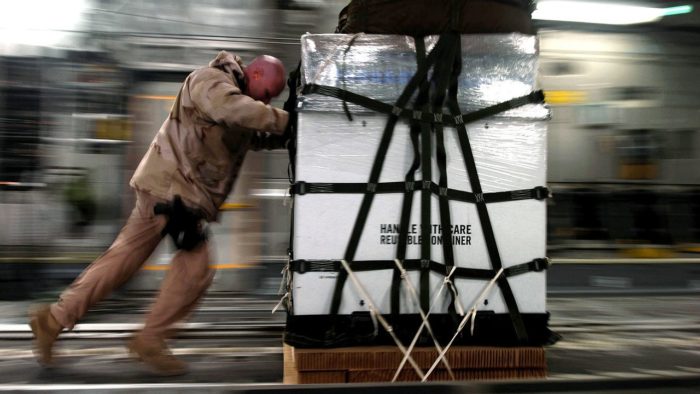
If you’re looking for a company to ship your belongings to Thailand, fill out your info on our international shipping page and get free quotes from international shipping companies.
Before signing anything, ask about restrictions, taxable items, pickup fees, shipping rates, and timelines.
Container Shipping
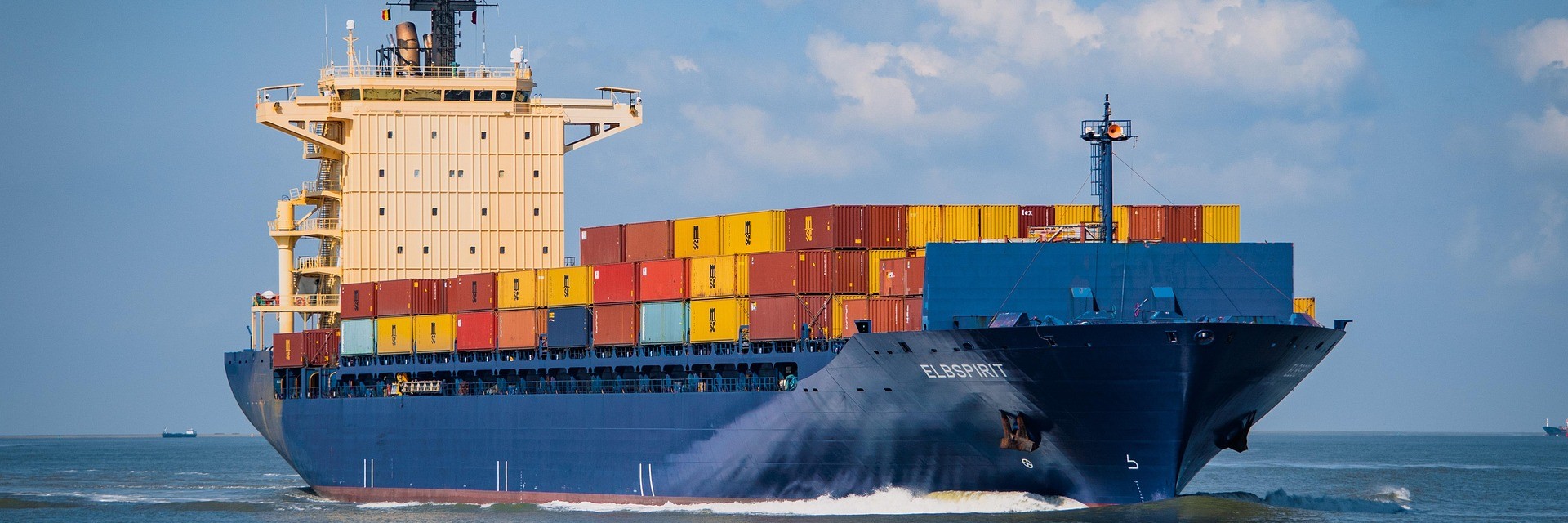
Container shipping means moving your goods inside a container on a cargo vessel. It’s the right choice if you’re moving a large quantity of belongings or oversized items.
You have two options:
- LCL: less than container load
- FCL: full container load
LCL
LCL means buying part of a container, usually priced by the cubic meter. It’s cheaper because you’re sharing the container with other shipments.
This works well for items too large for the postal service but not enough to fill a whole container.
The downside: you may have to wait until the container is full before it ships. Depending on the route and shipper, that can mean weeks of additional waiting on top of the actual transit time.
FCL
FCL means filling an entire container. It costs significantly more, but you control when and where the container is loaded and shipped.
Freight Forwarders
If you’re going the container route, start by choosing a freight forwarder. A freight forwarder is a firm that acts as the middleman between you and the shipping line.
A freight forwarder can handle:
- finding freight shippers
- negotiating shipping prices
- preparing documents
- tracking shipments
- storing shipments
- arranging inland transport
A freight forwarder doesn’t actually move your items; they’re a broker who handles the logistics on your behalf. They have relationships with shipping lines and know the paperwork.
You can use Freightnet’s freight forwarding directory to find forwarders working with Thailand.
Most forwarders won’t list shipping costs or transit times on their websites because there are too many variables. They typically price packages one of two ways:
- gross (real) weight
- dimensional weight
If you’re shipping a pallet of feathers, the shipper will charge by dimensional weight. Otherwise they’d lose money on something so light for its size.
If you want to know the cut-off between real and dimensional weight, ask the freight forwarder directly.
Case Study: Container shipping from the US to Thailand
Container shipping is the best option when you’re moving everything you own to Thailand. That’s what our editor John and his family did.
They had a young daughter and had already bought all her things in the US. It was cheaper to ship what they had than to buy it again in Thailand, often at higher prices.
They found an international shipper in NYC that handled Thailand routes. For a pallet-and-a-half of goods, 48 in. high and 42 in. long and wide, the cost came to around $1,400 at the time. Container rates have risen significantly since then, so expect higher figures today.
John and his wife had to pack everything into boxes themselves, but the shipper sent a van to collect it all. The shipping company also handled the paperwork. The only thing the family had to do was provide a general inventory list.
Because they were shipping personal belongings (furniture, kid’s clothes, toys, bikes), they didn’t have to pay import taxes.
Sea freight took six weeks. When the container arrived at port, a Thai shipping partner called them and delivered everything to their house in Samut Prakan.
They sent 62 boxes from the US, and 62 boxes arrived. Nothing was missing or broken.
If you’re worried about loss or damage, most private shippers offer insurance. In John’s case, insurance would have added about $200 to the bill.
Container Shipping Costs
The total cost depends on how much of the container you fill.
Most shipping companies offer 20-foot containers (sometimes used for LCL or “half” loads) and 40-foot containers (FCL).
Prices vary by shipper and route, and they change with global freight rates. Expect a US export fee of around US$45 on top of the shipping price.
Taxes are calculated on the declared value of what you ship. Personal-use items are often exempt from import duty when imported alongside a household relocation.
Since container costs vary so much, the best way to get an accurate price is to fill out the form on our contact page and get five free quotes from international shippers within 24 hours.
A key part of shipping to Thailand is to choose the right shipping company.
We have insider tips on this matter, including a list of shipping companies that you might want to consider.
It’s one of our 100+ exclusive pieces of content available only to our premium subscribers.
To get access, please become a subscriber.
Shipping Small Items to Thailand from Around the World
For letters or small packages, you have two main options:
- international courier companies (DHL, FedEx, UPS)
- government-run postal services (USPS, Royal Mail, etc.)
International couriers are usually more expensive but faster and more flexible on what you can send. They handle delivery end to end, their tracking is generally better, and they can help with customs clearance.
Government postal services are usually cheaper. They don’t have their own delivery fleet end to end, though. They typically hand the package off to airlines and then to the destination country’s postal service (Thailand Post in this case).
That hand-off chain means longer transit times, less reliable tracking, and tighter restrictions. For example, you can usually send toothpaste and over-the-counter medications via private courier but not through a national post office.
International Courier Companies
Wherever you are in the world, you should be able to ship to Thailand using one of these three couriers:
- DHL
- FedEx
- UPS
DHL
With DHL, you can ship parcels to Thailand from almost anywhere in the world. Their main service tiers are:
- DHL Express Worldwide: express service, typically one to three business days. Includes door-to-door delivery, customs clearance, and tracking.
- DHL Express 12:00: express service guaranteeing delivery by noon on the next possible business day. Includes door-to-door delivery, customs clearance, and tracking. Availability depends on origin and destination, so check the DHL Capability Tool.
- DHL eCommerce: economy service for small parcels and lightweight shipments. Typically seven to 14 business days, with tracking. (DHL Global Mail was rebranded into DHL eCommerce.)
FedEx
FedEx caps international shipments at 150 pounds per package. FedEx International Priority can get a package from most countries to Thailand within three working days. For overnight delivery, their International Next Flight service is the option to look at.
FedEx includes customs clearance with their international shipping services.
Main FedEx options for Thailand:
- FedEx International Priority: express service, typically one to three business days. Door-to-door, customs clearance, tracking.
- FedEx International Economy: economy service, typically two to five business days. Door-to-door, customs clearance, tracking.
- FedEx International First: express service guaranteeing delivery by 8:00, 9:00, or 10:00 AM on the next possible business day, depending on the destination city.
- FedEx International Priority Express: next-business-day-by-noon service to and from Thailand for time-critical shipments.
UPS
UPS offers a range of international shipping services to and from Thailand.
- UPS Worldwide Express: express service for urgent shipments. Includes a money-back guarantee and tracking.
- UPS Worldwide Express Saver: end-of-day delivery to major business centres in three to five working days. Designed for time-sensitive shipments. Includes customs clearance and tracking.
- UPS Worldwide Expedited: typically four to five business days. Note that UPS Worldwide Expedited is currently not available for inbound shipments into Thailand. It can still be used for shipping out of Thailand. Confirm with UPS before booking.
From the USA
For shipping from the US, you can use the United States Postal Service.
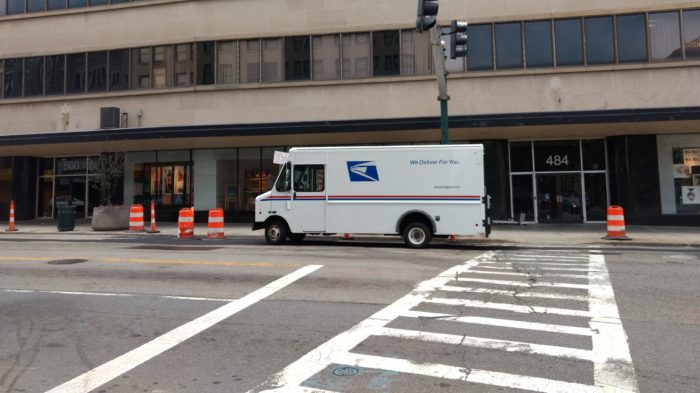
Most USPS international services come with:

- free Priority Mail and Priority Mail Express packing supplies (ordered via USPS.com)
- package pickup from your home or office
- package tracking
- up to $100 of included insurance, depending on service (extra insurance can be purchased)
USPS international services that ship to Thailand:
- Global Express Guaranteed (GXG): the fastest USPS option, 1 to 3 business days, delivered through a partnership with FedEx. Includes $100 insurance and tracking.
- Priority Mail Express International: 3 to 5 business days, starting around US$62.70.
- Priority Mail International: 6 to 10 business days for most destinations (Thailand often closer to 10 to 20 days).
- First-Class Package International Service (FCPIS): economical small-parcel option for items up to 4 lb and a value of up to $400.
- First-Class Mail International: the cheapest option, for postcards, letters, and large envelopes (flats).
Best Method for Sending Letters or Documents
For letters or important documents, use USPS Global Express Guaranteed.
Best Method for Shipping Small-to-Medium Packages
For larger packages, USPS Priority Mail Express International is your best bet (limits depend on the destination; check current size and weight rules on the USPS site).
USPS Customs Forms
You’ll need customs forms with any package sent to Thailand. You can print US customs forms from your computer.
For the full list, see USPS’s international shipping options.
From the UK
From the UK, the main option is Royal Mail (also sold through Post Office branches).
Royal Mail’s international services include:
- International Standard: the basic option for letters and parcels.
- International Tracked: end-to-end tracking, available to almost every destination.
- International Tracked & Signed: tracking plus a signature on delivery. From January 2026, Royal Mail consolidated its Tracked & Signed and Signed services into a single Tracked & Signed product, available for letters and large letters containing personal correspondence.
Compensation cover varies by service, generally up to £100 included with the option to buy more (up to several hundred pounds).
Royal Mail updated its postage rates on 7 April 2026, so confirm prices before sending.
Best Method for Sending Letters or Documents
For tracked, signed-for letters or documents to Thailand, use Royal Mail International Tracked & Signed.
Best Method for Shipping Small-to-Medium Packages
For parcels, use International Standard or International Tracked depending on whether you want tracking. Royal Mail accepts international parcels up to 2 kg via standard services and up to 20 kg via larger parcel services.
UK Customs Forms
Make sure the right customs forms are attached to your letter or parcel. Download UK customs forms here.
For the full list, see Royal Mail’s international services.
From Australia
From Australia, use Australia Post.
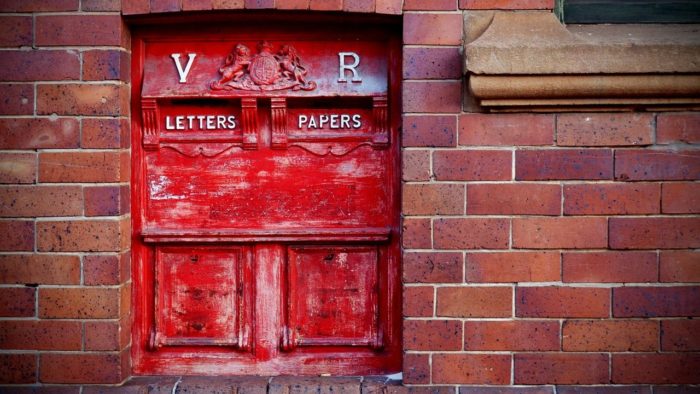
Depending on whether you choose courier, air, or sea, your package will reach Thailand anywhere from one or two days to 30 days.
Australia Post for Thailand:
- maximum parcel weight: 20 kg
- maximum length: 105 cm
- maximum girth: 140 cm
- tracking included on most services
- extra insurance available for purchase
Best Method for Sending Letters or Documents
For urgent letters or documents, use Australia Post’s International Courier service. Delivery is usually one to two days. International Courier is only available from selected Post Offices, so check before you go.
Best Method for Shipping Small-to-Medium Packages
For non-urgent parcels, use Australia Post’s International Standard service. For more economical sea-freight delivery, International Economy is also an option.
Australia Post Customs Forms
You can download Australia Post’s customs forms and read more about their customs rules on their site.
For the full list, see Australia Post’s international shipping options.
From Singapore
Singapore Post (SingPost) lets you send up to 20 kg per parcel internationally via Speedpost. Their international service includes:
 ?
? - A lesson structure to help you effectively learn Thai
- Thousands of Thai language lessons with lesson notes, podcasts, and quizzes
- Learn Thai on the go through their mobile application
- Personalized program to learn exactly on what you need
- Affordable price starting at only $8 a month
- 60-day moneyback guarantee

- tracking
- doorstep delivery
- compensation up to S$150 per shipment
- on-call collection
- Delivery Duty Unpaid (DDU) by default; Delivery Duty Paid (DDP) available on request
Best Method for Sending Letters or Documents
For urgent letters or documents, use Singapore Post’s Speedpost Priority International service. Delivery typically takes 3 to 14 working days, starting from S$26.50.
Best Method for Shipping Small-to-Medium Packages
For non-urgent shipments, use Speedpost Economy International (sea freight, 3 to 15 working weeks for bulky parcels). For something in between, Speedpost Express International starts from S$29.28.
For the full list, see all of Singapore Post’s international shipping options.
Calculating Shipping Costs to Thailand
To work out the cost, look at the item’s weight, size, value, and how fast you need it to arrive. Those four factors will tell you what service to use.
The tables below compare different shipping services using a 16-ounce computer part valued at US$150 as the example.
For small packages, there’s not much practical difference between national post and private couriers on price. For large or custom shipments, a private shipper is the better bet.
For container shipping costs, see the section earlier in this guide.
For an exact, current price, use the online shipping calculators on the DHL, FedEx, and UPS websites. They’ll ask for your package’s weight, dimensions, origin, and destination.
The figures below are estimates based on published 2026 postal rate cards. Confirm with the carrier before booking.
Shipping from the USA
| Service | ETA | Price USD |
|---|---|---|
| Priority Mail Express International | 3–5 days | $62.70+ |
| Priority Mail International | 6–10 days | $43.55+ |
| Medium Flat Rate (International) | 6–10 days | ~$72 |
| First-Class Package International Service | 10–14 days | $19.40+ |
| FedEx International Economy | 2–5 days | ~$130 |
| DHL Express Worldwide | 1–3 days | ~$115 |
| UPS Worldwide Express Saver | 3–5 days | ~$115 |
Shipping from Australia
| Service | ETA | Price AUD |
|---|---|---|
| International Courier | 1–2 days | $114.00 |
| International Express | 2–4 days | $46.00 |
| International Standard | 6–10 days | $29.00 |
| International Economy | up to 30 days | $27.00 |
| FedEx International Economy | 2–5 days | ~$140 |
| DHL Express Worldwide | 1–3 days | ~$100 |
| UPS Worldwide Express Saver | 3–5 days | ~$95 |
Shipping from the UK
| Service | ETA | Price GBP |
|---|---|---|
| International Tracked & Signed | 5–7 days | ~£15 |
| International Tracked | 6–8 days | ~£13 |
| International Standard | 7–10 days | ~£11 |
| FedEx International Economy | 2–5 days | ~£95 |
| DHL Express Worldwide | 1–3 days | ~£65 |
| UPS Worldwide Express Saver | 3–5 days | ~£60 |
Shipping from Singapore
| Service | ETA | Price SGD |
|---|---|---|
| Speedpost Economy (sea) | 3–15 weeks | ~$5 |
| Standard (air) | 4–6 days | ~$13 |
| Speedpost Priority International | 3–14 days | $26.50+ |
| Speedpost Express International | 1–3 days | $29.28+ |
| FedEx International Economy | 2–5 days | ~$92 |
| DHL Express Worldwide | 1–3 days | ~$105 |
| UPS Worldwide Express Saver | 3–5 days | ~$40 |
Insuring Your Package
All the services above offer shipping insurance for an additional fee. Approximate costs:
- USPS — Most shipments include up to $100 of cover. Additional insurance starts around $2.10 and can be purchased up to $5,000.
- Royal Mail — Most services to Thailand include up to £100 of cover for loss, damage, or delay. Higher cover is available depending on the service.
- Australia Post — Includes up to $100 of cover. Extra Cover costs $5 for the first $100, then $3.50 per additional $100, up to $5,000. Example: insuring a $1,000 item costs $36.50 total.
- Singapore Post — Speedpost includes up to S$150 of cover per shipment. Additional cover may be available depending on the service.
- DHL — No included cover by default. Optional shipment insurance is roughly 1.5% of declared value.
- FedEx — The first $100 of declared value is covered. From $100 to $300, additional cover is around $2.10. Above $300, it’s roughly $0.70 per $100 of value.
- UPS — The first $100 of declared value is covered. Above $100, additional declared-value cover is built into the shipping charge.
Shipping Amazon Packages to Thailand
Can you ship Amazon packages to Thailand? It’s a common question among expats wanting to buy from back home and have things sent over.
Amazon does ship some items to Thailand. To check if a specific product is eligible, look under the Buy Now button for international shipping info.
You’ll see something like this:
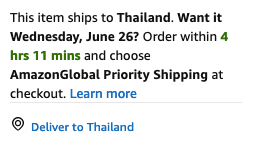
Amazon estimates the import tax and charges it upfront as an Import Fees Deposit. If the actual fees come in lower, Amazon refunds the difference automatically, usually within 60 to 180 days.
The big advantage: when Amazon handles the import tax, you don’t have to deal with Thai Customs yourself. They handle it for you.
One thing to be aware of: from 1 January 2026, Thailand applies 7% VAT and customs duty to all imported goods, regardless of value. The old 1,500-baht low-value exemption is gone, so even small Amazon orders now attract tax.
If Amazon doesn’t ship a particular item to Thailand, the workaround is to send it to a friend or family member at home and have them forward it to you.
Shipping Vehicles to Thailand
Can you ship a personal vehicle to Thailand? Technically yes, but it’s extremely difficult and expensive.
Thai Customs rarely allows personal vehicle imports unless you fit a specific category, such as a foreigner with a non-immigrant visa and a work permit valid for at least one year, or a returning Thai national. The process is so complex that many international shippers don’t offer the service at all.
Total taxes and duties on a non-classic personal car typically come to around 200% of the vehicle’s value once you stack import duty, excise tax, interior tax, and VAT.
If you still want to try, here are the general steps.
First, check eligibility. Foreign nationals need a non-immigrant visa and a work permit valid for at least one year, and you can typically import only one vehicle for personal use. Standard used cars are tightly restricted.
Second, get an import permit from the Ministry of Commerce (Department of Foreign Trade). You’ll need to provide vehicle registration, proof of ownership, and supporting documents.
Third, make sure the vehicle meets Thai safety and emissions standards. If it doesn’t, you may need to modify it or you may not be able to import it at all.

 Deutsch:
 ไทย:
ไทย: Français:
 Português:
 Português:
 Español:
 Español:
 中文 (中国):
 Русский:
 Nederlands:
 العربية:
 Italiano: