Moving to Vietnam: A Guide for Expats to Live Here
Vietnam offers expats a low cost of living, stable political environment, and a welcoming culture, but navigating visas, housing, healthcare, and daily life requires solid preparation before you arrive.
“You can’t start a new chapter of your life if you keep re-reading the last one.” Whatever the reason you want to leave your homeland behind and move to a new one, from a new job to a new family, Vietnam, with its warm sunshine, is a wonderful place to begin the adventure.
But living in a foreign environment with many differences in daily life also means a lot of challenges and changes. This article will help guide you through the process, from what to do before leaving your own country to actually living in Vietnam, with useful tips that will help you better adapt to a new life.
Checklist
This part will focus on matters essential to building a new life in Vietnam, starting with why Vietnam rather than somewhere else. The advantages and disadvantages of moving to Vietnam will be discussed to give you the big picture. In addition, you will find out more about the cost of living, main visa options for expats, and popular cities to live in.
Moving
This section will deal with what to prepare beforehand, how to travel to Vietnam, and important documents you have to bring with you when moving to Vietnam.
Settling in
This part will show you how to adapt to a new life in Vietnam. Starting with the simple dos and don’ts, you will know how to blend in smoothly with the locals within your first few days. Next, you will learn a few things about Vietnamese culture and social life to ease your transition in the long term. This also includes how to navigate a productive life in the country, like finding a job, opening a bank account, getting health care, and more.
Timeline
The final section gives the estimated time for your applications to be processed and how far ahead to plan before moving to Vietnam.
Vietnam’s e-visa now grants up to 90 days of stay and is available to citizens of all countries, with single-entry costing US$25 and multiple-entry costing US$50.
A comfortable, middle-class lifestyle in Ho Chi Minh City or Hanoi typically costs between US$1,500 and US$1,800 per month for a couple.
To work legally in Vietnam you need a work permit (LD2 visa) sponsored by your employer, which takes around 10 working days to process under current rules.
Vietnam ranked among the top 10 countries globally for fixed broadband speed in 2025, with average speeds exceeding 270 Mbps.
Expats who spend 183 days or more in Vietnam within a 12-month period are classified as tax residents and pay progressive income tax on worldwide earnings.
Pets can be brought into Vietnam provided they have a rabies vaccination certificate, a health certificate, and enter through an approved international airport.
Da Nang is increasingly popular with expats for its lower costs, cleaner air, and beach access compared to the two main metros.
Private health insurance is strongly recommended, as state-mandated health insurance covers only a portion of treatment costs and is generally considered insufficient for expat needs.
Checklist
Before moving to Vietnam, there are a few things you should do.
Pros and Cons
Despite still being a developing country, Vietnam is a very good place to live as an expat. Certain aspects of life aren’t like what they are at home, but once you get used to them, you can live comfortably here.
One of the best things about life in Vietnam is the stable political system, which results in the complete absence of coups and the unpredictability that follows them. Additionally, large-scale violent protests are few and far between, while peaceful small-to-medium gatherings sometimes take place with little to no risk for foreigners. The terrorist threat is close to non-existent.
Moreover, the quality of life is high despite the low cost of living. International Living, an Irish publishing company focused on retiring overseas, consistently rates Vietnam among the ten best nations for retirees.
The main appeal lies in the low cost of living and solid health care services. The global financial services giant HSBC has noted similar strengths. Its annual Expat Explorer Survey places Vietnam among the top countries for expats to live, praising the country’s strong financial security, positive work-life balance, and friendly, easy-going inhabitants, not to mention its striking natural beauty.
Vietnam is also a great country to travel around, with plenty of diverse and entertaining things going on at any given time.
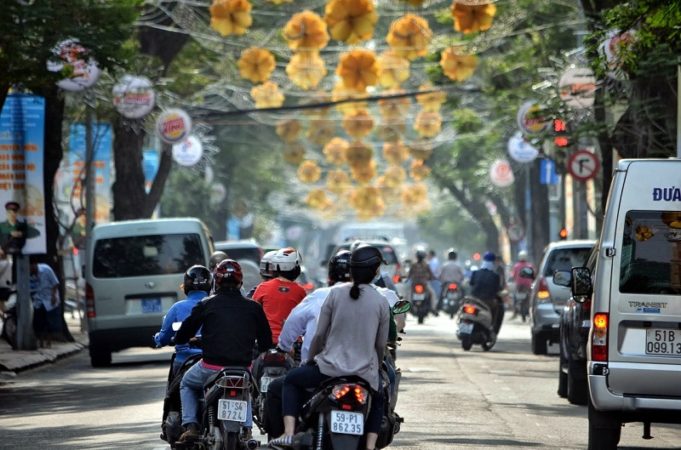
Of course, there are drawbacks to life in Vietnam. The most notorious is perhaps the chaotic traffic, which alarms most newcomers. The good news is that annual road fatalities have been gradually dropping, and stricter traffic regulations have led to measurable improvements in road safety.
While organized and violent crime in Vietnam is not a significant problem, petty crime is. Our guide on how safe Vietnam is for expats goes into more detail.
In big cities, unsuspecting foreigners can easily fall prey to pickpocketing, bag-snatching, or petty theft. It is generally safe to be out even at night, as long as you stay vigilant, just as you would in any major city. Air pollution is also an issue, with occasional smog hanging over the big cities, though Vietnam’s air quality is not notably worse than that of neighboring countries. Flooding in big cities, especially in Ho Chi Minh City and Hanoi, is another recurring hassle. Expats who have moved from cities like Bangkok or Jakarta often say the overall livability still compares favorably once you adjust to the pace. For those moving from Da Nang, the city’s cleaner air relative to the two main metros is frequently cited as a pleasant surprise.
Although traffic in Vietnam can be hectic, it’s safer than Thailand.
Cost of Living
As mentioned above, the low cost of living is one of the main reasons why Vietnam is such a tempting destination for expats. Costs vary from city to city. The most expensive places to live in Vietnam are Ho Chi Minh City and Hanoi.
You can get by decently in these two cities for US$600–US$700 per month, though life is fairly restricted on that budget. Triple that to US$1,500–US$1,800 per month, and you can live a comfortable, middle-class lifestyle. Triple your monthly budget once more to US$4,000–US$5,000, and you can enjoy most luxuries available in the country.
If you opt for less mainstream destinations such as Da Nang, Nha Trang, or Hoi An, expenses drop even further. Here is a brief breakdown of average monthly costs for a couple in Ho Chi Minh City and Hanoi. Expenses can be as much as 20–30% cheaper in other cities.
Accommodations:US$350 to US$1,000. A one-bedroom apartment outside the city center typically rents for around US$350 per month, while a similar apartment in the downtown area runs US$500–US$600. Upscale apartments in modern urban neighborhoods can exceed US$1,000 per month.
Food and Drink:US$400 to US$450. This estimate assumes home-cooked meals from local produce or dining at street vendors and local restaurants. A local meal of rice or noodles, meat, and vegetables, or a Vietnamese baguette (bánh mì thịt), is both delicious and inexpensive. Eating regularly at Western-style restaurants or buying imported ingredients pushes costs up considerably.
Utilities:US$80 to US$100. This covers a full set of apartment utilities: electricity, water, gas for cooking, a fiber-optic internet connection, cable TV, and a prepaid mobile plan. Some landlords offer all-bills-paid apartments where they handle utility payments directly.
There are various types of visas in Vietnam available depending on your purpose of visit.
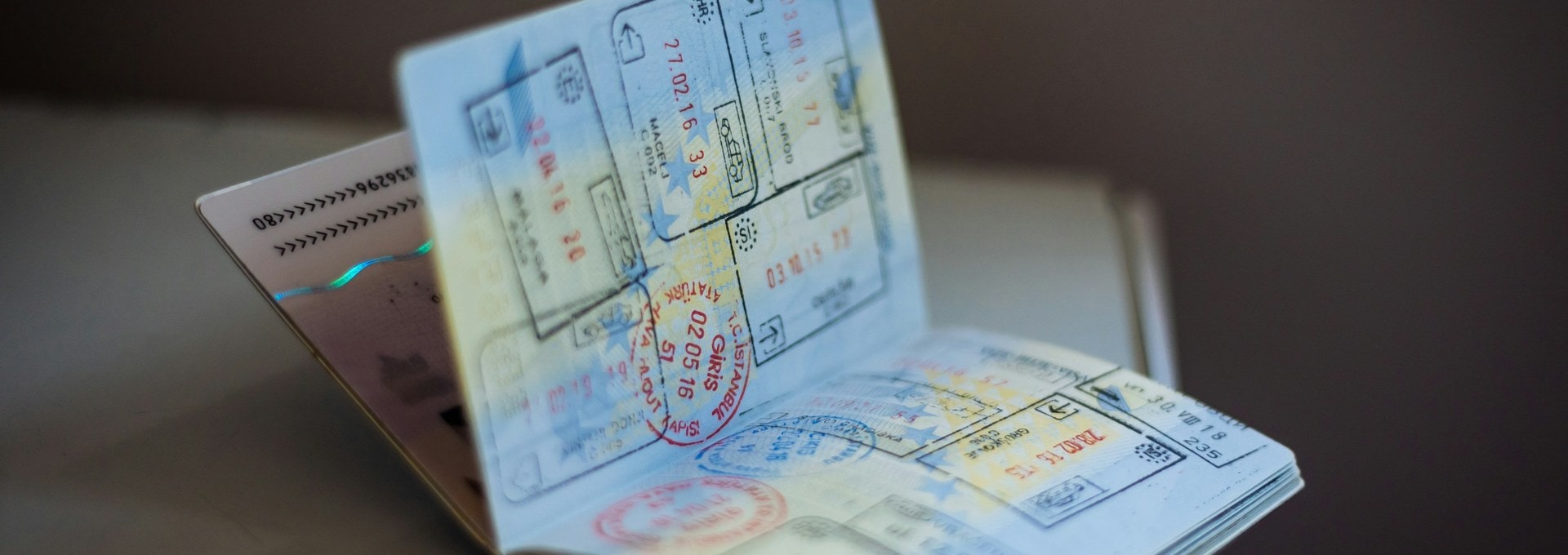
As of 2026, the most accessible option for most nationalities is the e-visa, which grants up to 90 days of stay (single or multiple entry) and is available to citizens of all countries. A single-entry e-visa costs US$25 and a multiple-entry e-visa costs US$50. E-visas can be applied for online at the official government portal. Note that e-visas cannot be extended from within Vietnam; if you need to stay longer, you must exit and reapply.
Long-stay expats in 2026 often handle this with a quick border run to Cambodia, Laos, or Thailand, though many also point out that the e-visa is not residency and gives no path to a long-term lease or a local tax ID.
Citizens of certain countries, including Germany, France, the UK, Italy, Spain, Japan, and South Korea, are exempt from visas for stays of up to 45 days under an exemption running through March 2028. Even without a visa requirement, your passport must still be valid for at least six months beyond your intended arrival date — Vietnam denies entry to travelers who do not meet this threshold, regardless of visa category. (U.S. State Department)
For longer-term stays, the business visa (DN1-2) allows multiple entries and a stay of up to one year, but requires a sponsor, usually your employer. Without a sponsor, a business visa can still be obtained for a maximum of 90 days.
If you plan to live and work in Vietnam on a permanent basis, a work visa (LD1-2) is required. It is valid for up to 2 years and is the basis for obtaining a temporary residence card. Your employer sponsors the application, which currently takes around 10 working days to process.
Retirement visas are not available in Vietnam. Retirees typically stay on e-visas or explore long-term residence options.
Online Declaration: Everyone entering Vietnam through Ho Chi Minh City’s Tan Son Nhat airport has to fill in an online declaration before they fly, and that includes visa-free arrivals. It’s free on the immigration department’s pre-arrival portal, asks for your passport, visa, flight, and Vietnam address details, and you can do it any time in the 3 days before you land. You get a QR code back to show at immigration. It doesn’t replace your visa. The same rule applies at Phu Quoc International Airport since June 1, 2026, and it is expanding to more airports over time, so check the portal before you fly into a different one.
Where to Live
Where you set up your new home matters considerably. Your choice depends on your job, your habits, and your taste. If you have money to spend and enjoy the energy of big cities, Vietnam’s major metros offer Western amenities set within an Asian urban landscape. If you can work remotely, quieter cities with a stronger local character are worth exploring.
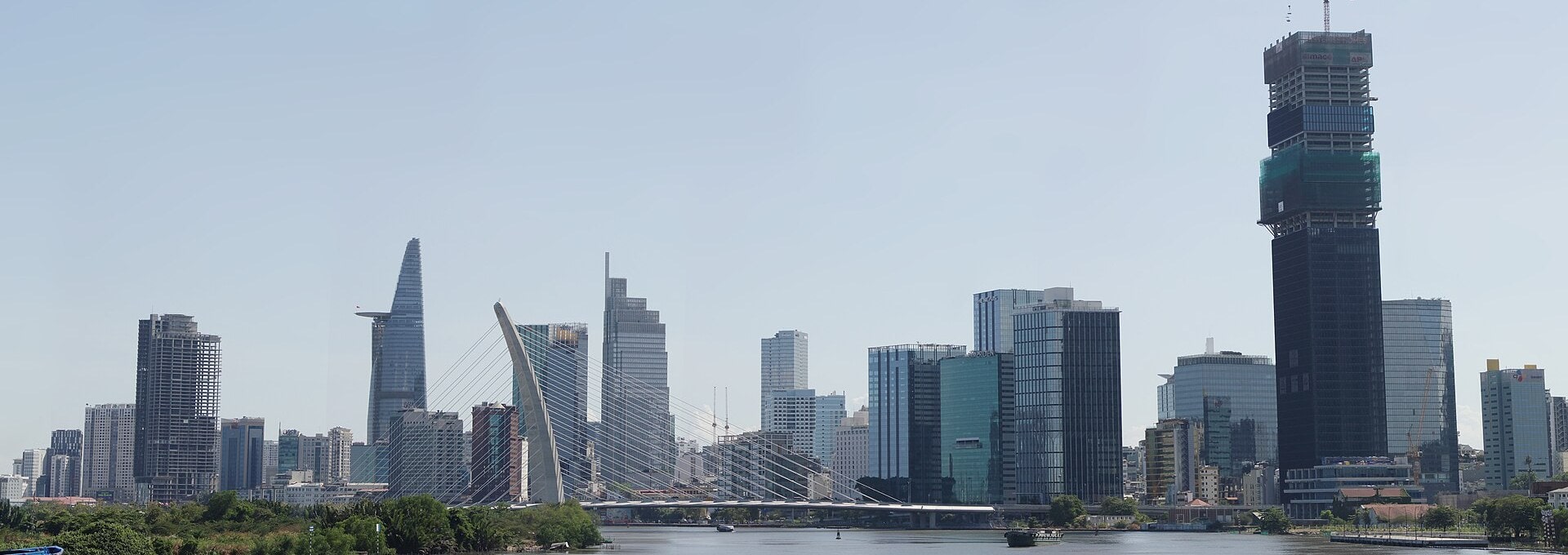
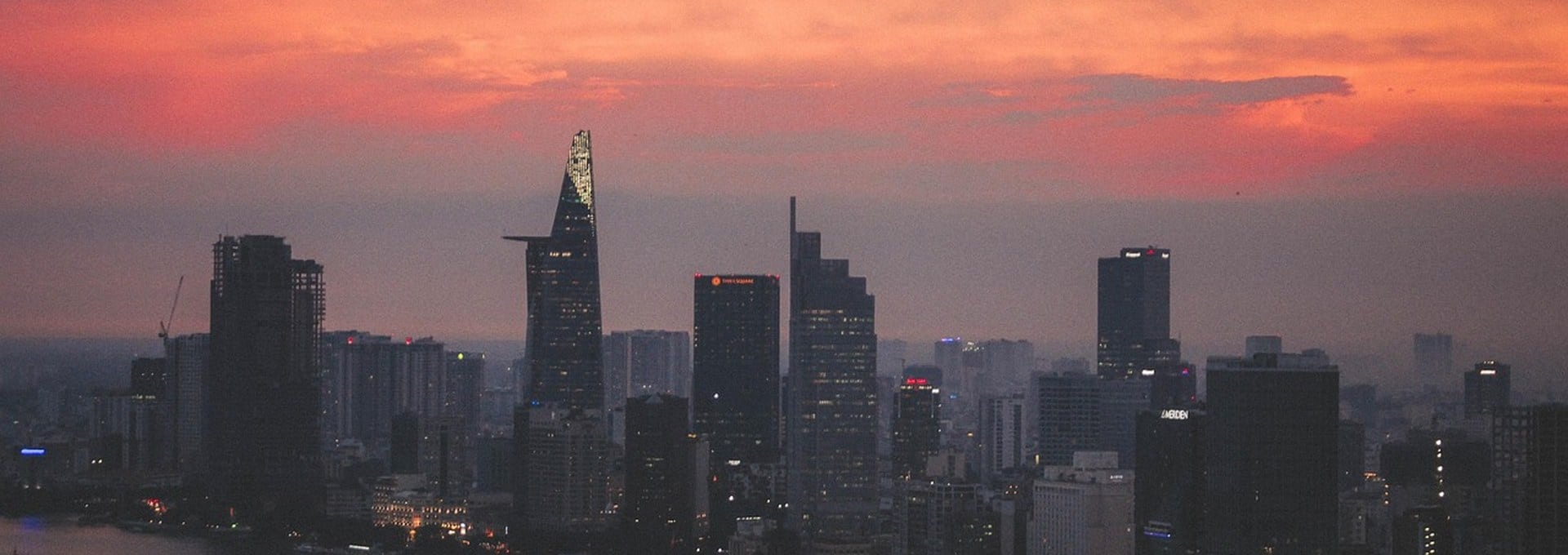
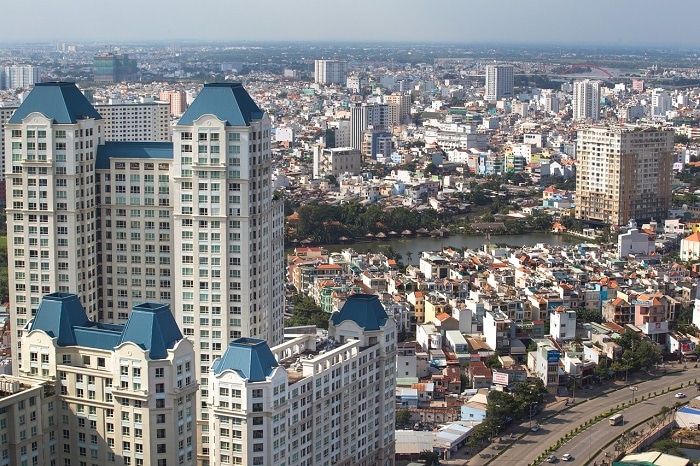
At the top of the list is Ho Chi Minh City, the southern economic powerhouse of Vietnam. The country’s busiest city, it welcomes people from all corners of Vietnam, which gives it a diversity that extends across the whole country.
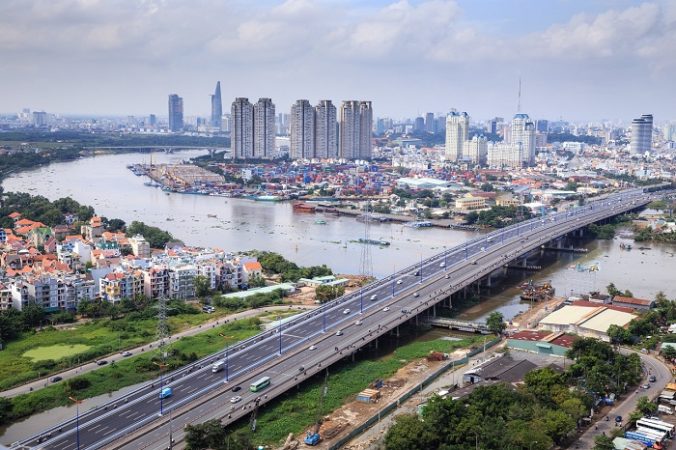
Ho Chi Minh City is the economic capital of South Vietnam and has the largest expat community.
HCM City is the top choice for most expats, as it is home to Vietnam’s largest expat community. The employment opportunities and range of experiences are unmatched elsewhere in the country. The city has premium facilities and services covering education, health care, international restaurants, and shopping malls, many of them run to Western standards or operated by Western brands. Neighborhoods like Thao Dien in District 2 have become established expat hubs with good international schools and cafes nearby.
There are downsides. The cost of living is higher than the rest of the country, and the large population brings traffic congestion, flooding, and the other pressures common to major cities.
Hanoi’s population of more than 8 million and its fast economic growth create strong job opportunities, which draw a large and growing expat community.
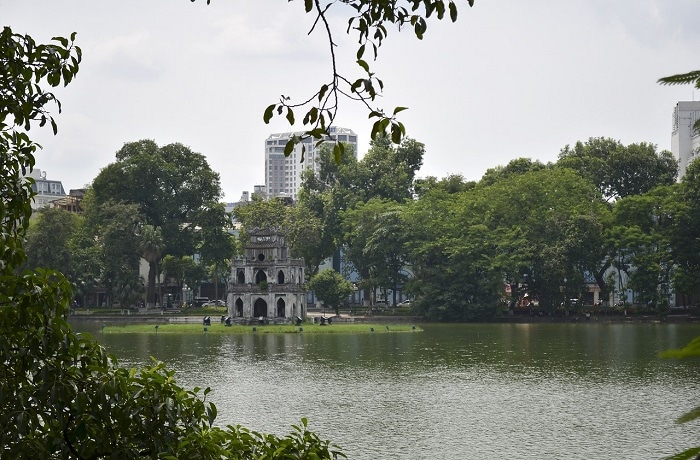
Similar to HCM City in the south, Hanoi offers a vibrant nightlife, international brands, great leisure facilities, fine restaurants, and quality health care. What distinguishes Hanoi is the cultural depth of a millennium-old capital. From tranquil Buddhist temples dating back to medieval times to majestic French colonial mansions, Hanoi offers a glimpse into Vietnam’s glorious past. Those looking for a base that balances modern amenities with historical character often find Hanoi a compelling option, particularly the Tay Ho (West Lake) area, which tends to have cleaner air than the city center.
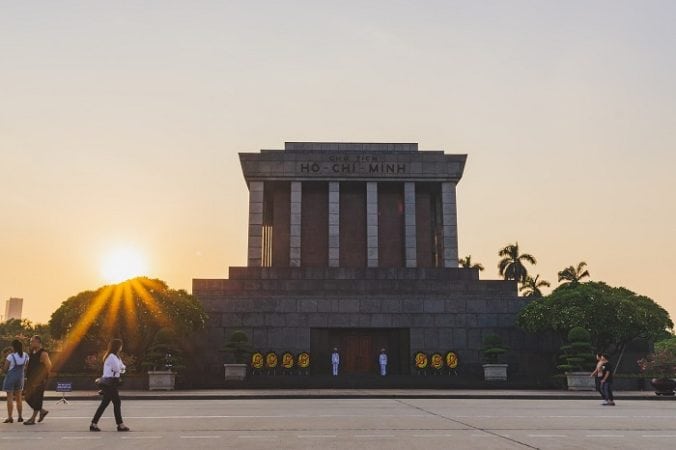
Hanoi has a great combination of history and modernity. The Ho Chi Minh mausoleum also lies here.
Not unlike HCM City, Hanoi also suffers from traffic jams, air pollution, and an increasing cost of living.
Da Nang
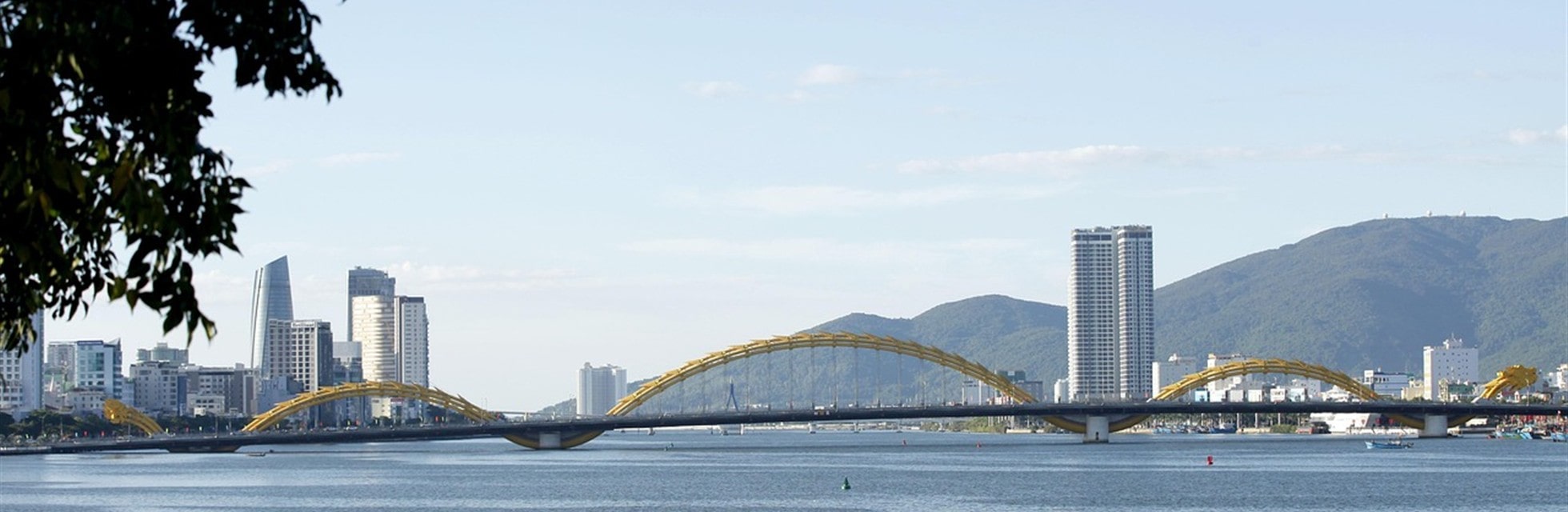
If diversity defines HCM City and history defines Hanoi, Da Nang stands out for the speed of its transformation. From a small coastal town, it has grown into one of Vietnam’s most liveable cities within a few decades.
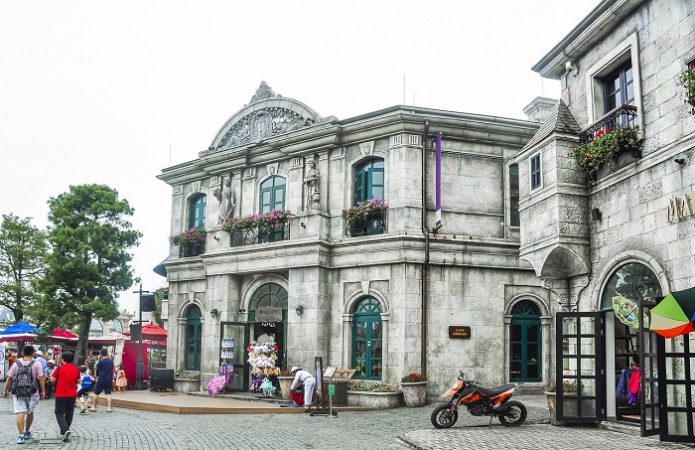
Da Nang is also known as Europe in Asia.
The city sits at a favorable position with world-renowned beaches to the east, forested mountains to the west, and a picturesque river running through the urban core.
In addition to its geography, there are a couple of reasons why Da Nang attracts expats:
It is a clean city in many senses: little litter and relatively low corruption.
Its people are known to be easy-going and considerate.
With the city’s business-friendly attitude and competent local government, many foreigners are eager to call it home. Remote workers on expat forums in 2026 increasingly describe Da Nang as the sweet spot, with beaches and a real city economy but rents and a pace of life that beat the two big metros. See our guide on safety in Da Nang for more context.
Others
Above are the three most popular destinations for expats building a stable life in Vietnam. For retirees or those keen to explore further options, there are more choices. Nha Trang (in Khanh Hoa Province) charms newcomers with internationally recognized beaches. The historic town of Hoi An (in Quang Nam Province) is now home to one of Vietnam’s fastest-growing expat communities.
Close to HCM City is the coastal city of Vung Tau (in Ba Ria – Vung Tau Province), where warm sunshine, excellent seafood restaurants, and colorful beaches make for a relaxed pace of life. Check our overview of the best places to retire in Vietnam for a closer look at options outside the major cities.
Moving to Vietnam
Let’s take a look at what you need to do in order to move to Vietnam.
Booking Flights
Unless you want to reenact Jules Verne’s “Around the World in Eighty Days”, you will probably travel to Vietnam by plane. Of the dozen or so international airports in Vietnam, only some handle international flights.
Tan Son Nhat Airport (HCM City) and Noi Bai Airport (Hanoi) are Vietnam’s two main international hub airports.
Other international airports such as Da Nang International Airport and Cam Ranh International Airport (Nha Trang City, Khanh Hoa Province) handle a smaller volume of international flights.
When flying to Vietnam, you will most often land in HCM City or Hanoi.
You can search for the best fares through a flight comparison site such as Kayak or Google Flights. There is no direct flight from Vietnam to several regions, including most of North America, so one or two stopovers are typically required.
Please note that there is no direct flight between Vietnam and several regions, for example North America, so a few stopovers or an overnight stay in another city are needed.
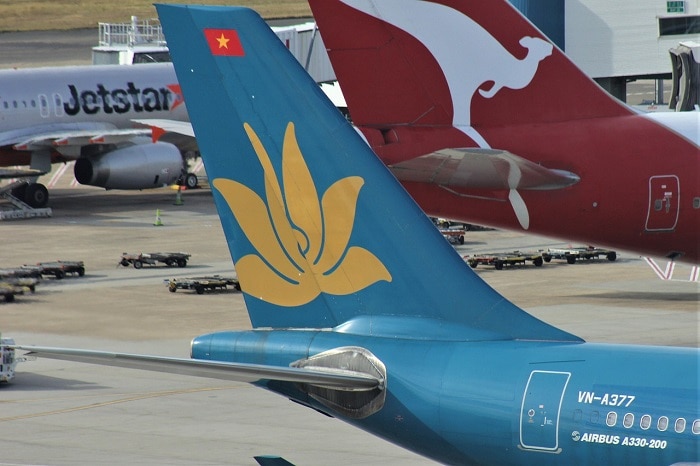
For internal flights within Vietnam there are several options. The best domestic carrier is Vietnam Airlines, Vietnam’s national flag carrier, which holds a 4-star Skytrax rating and operates the most comprehensive domestic network, though its fares tend to be higher.
Vietjet Air and Bamboo Airways offer competitive pricing on domestic routes. Jetstar Pacific Airlines rebranded as Pacific Airlines in 2020 and temporarily suspended operations in 2024 before resuming with limited service, so availability may be restricted. For price comparison without discounts, a one-way flight from HCM City to Hanoi costs roughly US$50 on Vietnam Airlines and US$30–US$40 on budget carriers.
Important Documents
Below is the list of important documents you must bring with you to Vietnam. Bring original copies where possible.
List of emergency contact numbers.
Passport: must be legible and valid for at least six months from your intended arrival date.
Driving license: for identification purposes. To drive legally in Vietnam, your home country’s license must be converted to a Vietnamese equivalent.
A valid Vietnam visa or e-visa.
Birth certificate.
Medical certificates or reports.
Marriage or divorce certificate.
Degree certificate and transcript.
These documents may need to be translated into Vietnamese or authenticated by your embassy.
What to Bring (and What Not)
Decide carefully what is worth bringing to your new home and what is better sold or stored. Heavy and excess items take up valuable space and incur significant baggage fees.
Specialty items such as foreign-language books, prescription drugs, and hard-to-find food products are good candidates to bring along. Basic furniture, household appliances, standard clothing, and common hygiene products are not, since similar items are readily available in Vietnam and often cheaper.
Bringing those items will not cause problems, but the following must be left at home:
Illegal drugs and weapons: recreational cannabis and personal firearms are legal in some countries but not in Vietnam. The consequences of being caught with these items can be severe.
Anti-government propaganda: materials critical of the current government are not permitted and may be confiscated. Printed maps that misrepresent Vietnam’s territorial boundaries in the South China Sea can also cause problems.
Pornography: keeping or distributing pornographic materials is against Vietnamese law. Unlabeled DVDs are checked at airports.
It also helps to know how Vietnam treats foreigners who break the law. A new decree, numbered 59/2026/ND-CP, took effect on 1 April 2026 and tightened the rules on deportation.
Under the old rules, a foreigner who could not pay an administrative fine could be held until they paid. Now the authorities can deport that person straight away instead. The decree also adds some protections: you must be told the reason for the deportation at least 48 hours before it happens, and you can contact your embassy or consulate. You can read the official notice on the government’s deportation regulations page.
Finding a Mover
Some people start a completely new life in Vietnam with very little from their previous home. Others move with a significant volume of belongings. For the latter, international moving companies can handle the logistics.
To find a reliable mover, check expat forums or join expat Facebook groups for reviews and recommendations. For moves within Vietnam, local companies tend to be more cost-effective.
To compare quotes from multiple international movers at once, you can use this form.
You can bring your pets to Vietnam. Required paperwork includes a health certificate (issued by a licensed vet within 7 days of travel and endorsed by a government veterinarian), an inoculation record, and a rabies vaccination certificate dated at least 30 days before arrival. For up to two pets, no import permit is required. Pets must enter via one of the approved international airports: Tan Son Nhat, Noi Bai, Da Nang, or Cam Ranh. Some breeds, including Pit Bulls and Japanese Tosa, face restrictions, so verify current rules with Vietnamese authorities before traveling.
Settling In
Once you are in Vietnam, it is time to settle in.
An early job is setting up a VNeID account, Vietnam’s national digital identity app. From 28 September 2026, any foreigner who has legally entered or is legally residing in Vietnam can register for one, with no temporary or permanent residence card needed first. That comes from Decree 320/2026/ND-CP.
Worth doing early: once your documents are integrated into VNeID, offices and businesses have to accept them from the app instead of asking you for physical originals or photocopies.
Finding a House
Finding a good place to live is essential to building a new life. Spend the first few days in a hotel to give yourself enough time to view several options without pressure.
Minimum rental periods vary, ranging from three months in some cases to one year in others. Landlords typically ask for one to two months’ rent in advance plus a deposit of one to three months, though this is negotiable.
There are several ways to find apartments: contacting a real estate agent, browsing active Facebook expat groups, or using property websites such as Batdongsan. Established expat neighborhoods include Thao Dien in Ho Chi Minh City and Tay Ho in Hanoi, both of which offer good access to international schools, cafes, and health facilities.
A majority of expats prefer to live in condominiums in Vietnam.
To sign a rental contract officially, you generally need a work permit or business visa. Most landlords prefer tenants with one of these. Some will lease to foreigners on tourist visas for short periods, but those arrangements carry less legal protection. Always view the property before signing anything.
There are four main rental options. A shared apartment, where you share space with other tenants, offers the lowest cost but no pets and is unsuitable for families. A serviced apartment gives you the whole unit to yourself on a flexible basis, but the same pet and family restrictions often apply. For families or pet owners, renting a whole furnished apartment or a house with outdoor space gives more room and privacy, though at a higher price (roughly two to three times more) and usually with a longer minimum contract.
Vietnamese law places restrictions on foreigners owning property outright, though it is permitted to buy a condo or house within a housing construction project. Alternatively, you can lease land and a house for a maximum term of 50 years.
Finding a Job
With a thriving economy and a growing middle class, Vietnam offers real job opportunities for those with the right skills. A tourist or business visa is usually sufficient to start job searching, after which your employer will sponsor you to obtain a work permit. Under Decree 219/2025, the work permit process now takes around 10 working days from submission of a complete application.
Qualifying as an expert is easier than it used to be. You now need two years of relevant experience instead of three, and just one year if you work in a priority field like finance, science, technology, innovation, or digital transformation. Specialists certified in those fields can even be exempt from a work permit altogether. And if you work for one employer across several provinces, the permit is handled by the province where the head office sits, instead of province by province.
Do not be tempted to start work before the permit lands. Under Decree 283/2026/ND-CP, in force from 10 September 2026, a foreign worker with no work permit or an expired one faces a fine of VND 15,000,000 to VND 25,000,000 and can be deported on top of that. Employers pay more: VND 30,000,000 to VND 45,000,000 for up to 10 unpermitted workers, rising to VND 60,000,000 to VND 75,000,000 for 21 or more.
One thing that affects your pay: if you work on a local contract of 12 months or more, you now have to join Vietnam’s compulsory social insurance scheme. A few people are exempt, such as staff transferred within a company and those already past retirement age.
If you are a native English speaker, teaching English is a natural first option. Big cities have a high demand for native-speaking teachers and assistants at language centers. Teaching credentials open doors to universities and international schools, which offer more stable, long-term contracts.
For other roles, expat forums and job boards are the main channels. Vietnam’s top job platforms are Vietnamworks, CareerBuilder Vietnam, and Mywork. The tech and startup sectors in particular have seen significant growth and are worth exploring.
Opening a Bank Account
To open a bank account, you need a passport valid for at least 6 months and a legal document proving you are permitted to stay in Vietnam for 12 months or more, such as a visa, resident card, or work permit.
Go to a bank branch and complete the required paperwork. Larger banks are more likely to have English-speaking staff.
Taxes in Vietnam are relatively low by global standards. Both Vietnamese citizens and resident expats are subject to Vietnamese personal income tax (PIT).
There is a difference in tax rates between residents and non-residents.
Non-residents pay PIT at a flat rate of 20% on their Vietnam-sourced income.
Residents pay taxes on a progressive basis on their worldwide income. The standard definition of a tax resident is someone who has lived in Vietnam for 183 days or more within a 12-month period.
A typical monthly salary package includes gross salary and mandatory social security contributions (currently paid by employers). PIT is calculated on the balance after deducting mandatory social insurance. As of 2026, Vietnam’s new PIT law (Law 109/2025) has increased the personal deduction to VND 15.5 million per month and the dependent deduction to VND 6.2 million per month per registered dependent. It also cuts the schedule from seven brackets to five and lifts the threshold for the top 35% rate from VND 80 million to VND 100 million of monthly taxable income. The updated monthly rates are:
Monthly Taxable Income
Tax Rate
Up to VND 10,000,000
5%
VND 10,000,001 – 30,000,000
15%
VND 30,000,001 – 60,000,000
25%
VND 60,000,001 – 100,000,000
30%
Above VND 100,000,000
35%
There is no 0% bracket, but all tax residents are entitled to the personal allowance automatically. The dependency allowance requires submitting relevant documents to the tax authority.
There is no special tax concession for expats in Vietnam. Foreign individuals may qualify for tax exemptions on certain employment benefits, such as housing allowances or school fees, if they meet the criteria set by the tax authorities.
School
Moving to another country is not a reason to disrupt your children’s education. The most popular option is enrolling in an international school with a curriculum similar to what is taught in your home country.
Be selective, though. Many schools in Vietnam market themselves as international while having little to justify the label beyond high tuition fees.
Vietnamese public schools charge lower fees and offer a more immersive local experience, but the majority teach in Vietnamese only.
For university students, Vietnamese institutions offer very affordable tuition, ranging from US$1,290 to around US$5,000 per year. Most top public universities offer programs in English. Well-regarded private options include FPT University, Hoa Sen University, and VinUniversity.
Healthcare
Vietnam’s public hospitals have improved considerably in recent years. They may still fall short of facilities in developed countries, but that gap is relative: hospitals in Vietnam’s large cities are often comparable to those in small towns in Europe or North America.
Private hospitals in Vietnam generally have better standards and higher fees. They offer strong customer service and well-trained specialists, and international health insurance is accepted at most. Dental care in Vietnam is also good and affordable by international standards.
Expats on contracts of more than three months are legally required to contribute to Vietnam’s compulsory health insurance scheme. In public hospitals, it covers at least 80% of treatment costs, excluding regular checkups, cosmetic surgery, drug rehabilitation, and a few other categories.
Most expats find the state scheme insufficient on its own. The usual approach is to combine it with a private plan, either provided by the employer or purchased independently. Health insurance options include providers such as Luma, Aetna, and April International, all of which work with a network of hospitals across Vietnam. For broker assistance, Tenzing Pacific is a well-regarded option.
Green space is scarce in Hanoi and HCM City. Air pollution is an ongoing issue in both cities.
Air pollution has become a serious issue for Vietnam’s major cities. Combined with limited green space, it poses real health considerations. Expats living in Ho Chi Minh City and Hanoi in 2026 report that the air quality index can spike above 150 during the dry season, so many keep an air purifier at home and check the daily reading before heading out. The tropical climate, including intense heat and a cold winter in the north, requires adjustment for newcomers. Street food is excellent and widely eaten, but hygiene standards vary, so choose vendors with visible turnover and freshly cooked items.
Healthcare facilities in rural and remote parts of Vietnam remain limited, so expats outside major cities should plan accordingly.
Gym chains and yoga studios have expanded rapidly across urban areas, making it straightforward for expats to maintain their fitness. Parks in big cities, though limited, are popular for cycling and morning exercise. In smaller cities, outdoor space is more accessible.
Vietnamese Language
Vietnamese is a tonal language with complex grammar and is considered difficult to master. Many expats stop at common phrases and basic conversational exchanges. The rewards of pushing further, though, are significant: speaking the local language opens doors socially and commercially.
The most direct way to learn is through daily interaction with Vietnamese friends, neighbors, or colleagues. Many Vietnamese people are warm toward foreigners and can manage basic English, so communication is rarely a barrier in cities.
Focus on the northern (Hanoi) or southern (Ho Chi Minh City) standard dialects. Central Vietnamese dialects are difficult to follow even for native speakers.
For a structured approach, sign up for a course at a language center. VietnamesePod101 offers hundreds of online lessons across all levels. Universities in the major cities, including Vietnam National University and the University of Education (both in HCM City and Hanoi), also offer Vietnamese language programs. Language centers offer flexible scheduling; universities offer fixed cohort classes.
Vietnam has good telecommunications infrastructure. The major mobile networks are Viettel, Vinaphone, MobiFone, and Vietnamobile, with Viettel leading in coverage and quality.
Prepaid SIM plans range from US$3–US$5 per month for a basic package with calling minutes and a few gigabytes of data, up to US$10–US$30 for higher-data plans.
The three main internet service providers are VNPT, Viettel, and FPT. Vietnam ranked among the top 10 globally for fixed broadband speed in 2025, with average speeds reaching 271 Mbps. Viettel leads with average speeds above 300 Mbps, and the cheapest entry-level plans start at around US$7–US$8 per month. Most providers offer 12-month plans with an additional 3 months free. For expats working remotely, Vietnam’s urban internet is genuinely reliable and fast.
Streaming services are increasingly dominant. Top options are FPT Play, Netflix Vietnam, VTVcab On, and K+. Most packages run US$5–US$8 per month.
Cybersecurity in Vietnam can be an issue. Consider using a VPN for added security and to access content that may be restricted.
No matter where you come from, there will be differences between how things work at home and in Vietnam. Some will cause awkward moments at first, but an open attitude goes a long way toward blending in.
Vietnamese people are easy-going and curious about foreigners. Do not be surprised if someone stares or waves at you.
The assumption that all expats are significantly wealthier than Vietnamese people persists, particularly among street vendors and shopkeepers, but it is weakening as Vietnam’s standard of living rises and its global integration deepens.
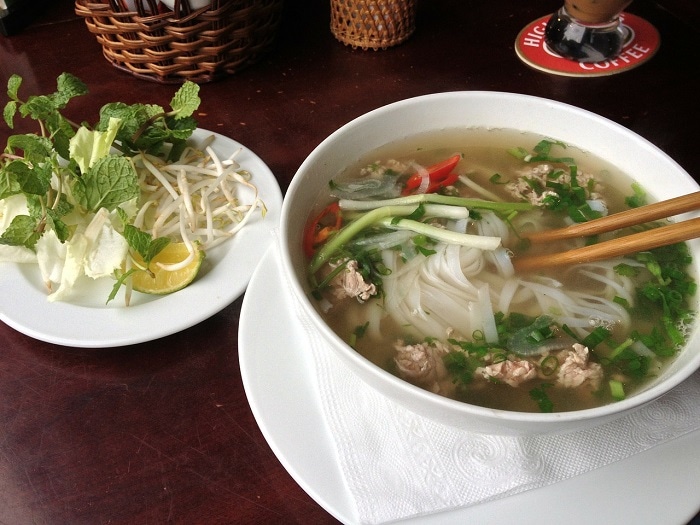
Pho is a staple of Vietnamese cuisine and widely available at all price points.
Elderly people hold an important position in the Vietnamese social hierarchy. Their advice carries considerable weight at home and at work, and treating them informally is generally seen as disrespectful.
Directness is not the default in communication. Vietnamese culture places a high value on harmony over confrontation, and people generally prefer to avoid open disagreement. Smiling is common and serves multiple purposes, including concealing awkwardness or embarrassment rather than expressing pure happiness.
Show respect for the country’s history and its national figures. The Vietnamese hold their historical leaders in deep reverence, and public criticism of them, including on social media, can have serious consequences. An American teacher who mocked General Vo Nguyen Giap online faced a public backlash and came close to deportation.
The Vietnamese are active on social media, with around 73 million Facebook users and 68 million TikTok accounts. A popular form of socializing is eating out together or going to karaoke after work, which colleagues treat as a team-bonding occasion. At group meals, the most senior person typically pays rather than splitting the bill. Stricter drink-driving penalties introduced in recent years have changed after-work drinking habits considerably. Nightclubs remain a largely expat-oriented activity.
Timeline
An e-visa application is typically processed within 3 to 5 business days, though urgent processing is available in as little as a few hours for a higher fee. Other applications take considerably longer.
Planning ahead is the key to a smooth move. Start several months before your planned departure by searching for airline tickets, researching neighborhoods, and deciding on your visa type. When the move is about one month away, apply for your visa, begin packing, and arrange what to do with the possessions you are leaving behind. Your old house? Your car? Time for a new owner!
Once you arrive, use this guide to get your bearings and build your new daily routine.
Now, on to You
You’ve just read everything there is to know about moving to Vietnam.
Hopefully you will find the country’s friendly locals, new lifestyle, diversity, and low cost of living much to your liking. And have a wonderful life in this beautiful country!
Living Your Life in Vietnam
Find common topics that will help you overcome the challenges of living, working, retiring, and starting businesses in Vietnam.
Vietnam’s new Pre-Arrival Information system and a separate border health declaration rule have foreigners confused about what’s actually required before landing. Here’s what each one covers, and what doesn’t yet.
Most visitors can’t extend a Vietnam e-visa or a 45-day visa-free stay. They get more time by leaving and coming back. Here’s what actually works, what it costs, and what happens if you overstay.
Vietnam offers expats a low cost of living, stable political environment, and a welcoming culture, but navigating visas, housing, healthcare, and daily life requires solid preparation before you arrive.
Vietnam has no digital nomad visa and no remote-work visa. Here’s how to actually stay long-term as a remote worker: the 90-day e-visa route most people use, who might genuinely qualify for a sponsored UĐ1 category, and the tax and border-run mistakes that catch people out.
A passport and a valid visa will open a Vietnamese bank account. Here’s who qualifies, the documents to bring, what four banks actually ask for, and how the biometric and account-name rules affect foreigners.
Ho Chi Minh City can cost as little as US$700 a month or well over US$3,000, depending on the neighborhood and the lifestyle. This guide breaks down real 2026 prices for rent, food, transport, and healthcare, district by district.
Vietnam remains one of Southeast Asia’s most affordable destinations for expats, with monthly budgets ranging from around US$700 for a frugal lifestyle to over US$2,500 for comfortable city living.
Choosing health insurance in Vietnam comes down to one question most expats never ask: is it community risk or individual risk? Here is how the options compare, what coverage levels make sense, and what a good plan really costs.
Foreigners can buy property in Vietnam, but what you’re buying is a 50-year lease on an apartment, and the land underneath stays with the state. This guide covers the 2023 and 2024 laws, the 30 percent quota that quietly kills deals, what it costs, and where buyers get burned.
Da Nang offers beachfront living, fast fiber internet, and a comfortable month under US$1,200, which is why it made Forbes’ top digital-nomad cities for 2026. Here is an honest look at the costs, neighborhoods, food, rainy season, and visa reality.





 Finance
 Moving