This article will take approximately 32 minutes to read. Don't have the time right now? No worries. Email the ad-free version of the article to yourself and read it later!
The free and paid resources that will help beginners become fluent in Vietnamese.
“Wait, you actually speak Vietnamese?” I’ve been hearing this almost every day since moving to Hanoi, Vietnam in mid 2018.
Actually learning Vietnamese is something of a long-running joke among the Expat community in Vietnam. Everyone thinks about it. Most attempt it. Few succeed. And it’s easy to understand why.
First, many Vietnamese city-dwellers speak excellent English, to the point you might never need to know a single word of Vietnamese to get by.
Second, Vietnamese is hard. Hard to the extent that many people give up once they realize they still can’t have a basic conversation after months and months of learning.
With that said, it is possible and fun and definitely worth it to learn Vietnamese.
In this guide I’ll explain why and how I learned Vietnamese, what resources – both free and paid – will help you most on your language-learning journey, and what to avoid by all means.
If you want to get started learning Vietnamese right away, check out Vietnamesepod101.com
Contents
- Key Takeaways
- Why I Learned Vietnamese
- How I Learned Vietnamese
- What Makes Vietnamese Difficult
- How Long Does It Take to Learn Vietnamese
- What Makes Vietnamese Easy
- Common Vietnamese Phrases to Start With
- How I Learned Vietnamese
- The Best Way to Learn Vietnamese
- Learn Vietnamese for Free
- Comparing Vietnamese Learning Resources at a Glance
- Now, on to You
- Frequently Asked Questions
- Can I get by in Vietnam without speaking any Vietnamese?
- Which Vietnamese dialect should I learn, northern or southern?
- Do I need to learn to read and write Vietnamese, or is speaking enough?
- How much should I budget for Vietnamese lessons?
- Is it worth learning Vietnamese if I'm only staying a few months?
- Can I learn Vietnamese completely online, without moving to Vietnam?
- Sources Cited
Key Takeaways
- Vietnamese is classified by the U.S. Foreign Service Institute as one of the hardest languages for English speakers, requiring around 1,100 hours to reach professional proficiency.
- The biggest challenges are the six tones and a set of vowel sounds that have no equivalent in English.
- Vietnamese grammar is simple: no conjugation, no cases, no grammatical gender, and a subject-verb-object word order close to English.
- Learning the phonetic Latin-based script is straightforward and gives you the ability to read any word once you know the rules.
- Start speaking with native speakers as early as possible, even before you feel ready, to avoid cementing textbook mistakes.
- A spaced repetition app like Anki, used with native audio, is one of the most effective tools for building vocabulary in a tonal language.
- Free resources including the TVO YouTube channel and language exchanges can take you a long way without spending anything.
- Private classes with a native teacher, whether in person or online via platforms like italki, remain the most effective way to improve quickly.
Why I Learned Vietnamese
It’s true that you can get by reasonably comfortably without a word of Vietnamese beyond em ơi.
But by learning the language, you’ll have a much richer experience in the country.
The most memorable experiences I’ve had in Vietnam – drinking rice wine with fishermen on a raft off of Cát Bà, singing karaoke and sharing life stories with a motley crew of people of different ethnic backgrounds in a shack in the mountains in Hà Giang, chatting to the old lady who serves me tea and lived through three different wars – have only happened because I can speak Vietnamese.
In other words, I learned Vietnamese because I want to live here, not just be a visitor.
How I Learned Vietnamese
Learning Vietnamese has been an odyssey, a multi-year slog of consistent effort, trial and error, frustration and triumph.
I can’t tell you that there’s a single method that brought my language skills to where they are now.
What I can do, however, is give you a list of all the methods and strategies I’ve used that have worked, as well as some that haven’t.
So, without further ado, let’s take a look at how you can learn Vietnamese.
What Makes Vietnamese Difficult
The United States Foreign Services Institute (FSI) categorizes the world’s most spoken languages and ranks them by difficulty for English speakers.
Vietnamese is placed as one of the hardest languages in category IV, the second highest category.
This means that while it’s somewhat easier than positively alien tongues like Japanese and Arabic, it’s considered harder than notoriously difficult languages like Russian, Turkish, and Xhosa.
So what makes it so hard? There are a couple of reasons.
Tones
If you didn’t already know, Vietnamese is a tonal language.
This means that you need to take your voice pitch into account when you say a word, lest you say a completely different word.
Vietnamese is usually considered to have six tones (although I count eight), so one syllable can be pronounced in six different ways.

The most famous example is ma, mà, má, mạ, mã, mả – all of these are valid words with completely different meanings.
Unless you already speak a tonal language like Thai or Chinese, this is going to be extremely unnatural for you.
You’re not used to paying attention to your voice pitch when you speak, and so doing it for every single word is difficult and mentally exhausting.
It can take many years to feel truly comfortable with this.
Pronunciation
A lot of people assume that tones are the reason Vietnamese people don’t understand them. They are wrong.
On top of six tones, Vietnamese has a set of 14 vowel phonemes, many of which are alien to us.
And on top of that, those vowels can be used to make a wide variety of diphthongs and triphthongs, and the distinctions between them can seem incomprehensible to non-native speakers.
Even when ignoring tones, pronunciation is very difficult.
Mỗi, mời, mũi, muỗi, mười, mọi, muối, môi, and mới will sound approximately identical to an English speaker, but completely different to a Vietnamese speaker.
Learning to distinguish between all these diphthongs is a key skill if you want people to understand your Vietnamese.
Alien Vocabulary
Most English speakers who speak another language choose to learn something like Spanish, French, or German – languages whose genetic relationships and common histories with English give them a large shared vocabulary.
It doesn’t take a genius to figure out that la motocicleta is the Spanish word for “motorcycle.”
Even extremely distant languages like Japanese and Korean have a huge body of English loanwords that can make your life a lot easier.
Vietnamese, in contrast, has very few of these.
Even words for modern technologies like motorbike, the Vietnamese typically choose to make their own words for it – xe máy, literally “machine-wagon.”
With that in mind, you’re given very few clues to the meaning of any new vocabulary you might hear, and you can generally expect to learn new words at a much slower rate than you would with many other languages.
Limited Learning Resources
From my experience this is the largest roadblock for anyone who dips their toes into Vietnamese.
There are few high-quality resources for Vietnamese language learners.
The sad fact is that very few people ever decide to learn Vietnamese seriously, and so the field of Vietnamese as a second language is small and underdeveloped.
We, Vietnamese learners, are not blessed with an endless supply of graded reading and listening materials. We cannot find easy answers to our questions just by googling them. And we have textbooks, but they’re usually overly traditional and dry.
To learn Vietnamese you have to improvise and work with what you can get.
You have to accept that most Vietnamese people can offer no explanation for some of their most basic grammatical structures beyond “that’s just the way we do it.”
If learning a more popular language is like taking a guided tour of a museum, where everything you need to know is pointed out and explained to you in a helpful order, then learning Vietnamese is to be thrown into the wilderness to fend for yourself.
It’s very easy to give up when you’re given so little guidance.
How Long Does It Take to Learn Vietnamese
The US Foreign Service Institute puts Vietnamese in Category IV, its second-hardest tier, and estimates around 1,100 class hours for a diplomat to reach professional working proficiency. That number sounds intimidating, so let’s break it into something closer to real life.
- At one hour a day, five days a week, expect a little over four years to reach that professional level.
- At two hours a day most days, expect roughly 18 months to two years.
- Living in Vietnam and using the language daily, plus a few structured lessons a week, many learners reach a comfortable conversational level, enough for daily life, taxis, markets, and small talk, within six months to a year.
Keep in mind the FSI figure is for professional proficiency, the kind a diplomat needs to negotiate in the language. You don’t need anywhere close to that to live comfortably in Vietnam, order food, chat with your neighbors, or get through a doctor’s visit. Most expats who put in consistent daily practice land at a solid conversational level well before the one-year mark.
What Makes Vietnamese Easy
It’s not all bad news, however.
It’s easy to overstate the difficulty of Vietnamese if you don’t pay attention to all the ways in which Vietnamese is actually easy.
Let’s look at a few examples.
Phonetic Alphabet
In 1910, the French enforced the Latin-derived chữ quốc Ngữ – literally “National Script” – as the official script of Vietnam, replacing Vietnam’s traditional Chinese-derived characters.
This is widely considered to have been a good decision.
The Vietnamese script is almost entirely phonetic, meaning you can read a new word and know how to pronounce it immediately.

The Vietnamese use of the Latin script is still very different from our own, and I don’t expect you to be able to pronounce nguyễn without fairly extensive training.
But once you’ve properly learned the script you’ll be able to read any word that you come across, which is an enormous advantage.
Simple Grammar
This may sound odd, but Vietnamese contains remarkably few grammatical rules just like learning Chinese.

To the relief of anyone who has had to rote-learn conjugation tables in say, Spanish or Russian, Vietnamese has no conjugation, no cases, no grammatical gender, no noun-verb agreement.
Each Vietnamese word is fixed, unchanging.
As such, expressing tense in Vietnamese is almost trivial. If you want to make something future tense, you put sẽ before the verb. To make it past tense, you put đã before the verb. That’s it.
Vietnamese sentence structure is not too different from English, since it follows a subject-verb-object sentence structure.
With that said, the largest structural difference between the two languages is that Vietnamese adjectives go after the noun – for example, “noodles” are mỳ and “hot” is nóng, so “hot noodles” are mỳ nóng.
In fact, Vietnamese grammar is so simple that you can often translate each word directly and still get a good idea of what the sentence means.
Take the sentence, Hôm nay tôi rất muốn về nhà ăn cơm, as an example.
You can translate it word-by-word as, “Today I very want go home eat rice,” and it’s not difficult to understand it means, “Today I really want to go home and eat rice.”
Helpful Locals
Perhaps due to the sheer rarity of Vietnamese learners, Vietnamese people are extremely welcoming to anyone who wants to learn their language and can be very generous in helping you.
It’s not uncommon to find people willing to help you practice your speaking skills for free, provided you buy them coffee and make good conversation.
Additionally, since Vietnam is full of English learners, it’s not difficult to find someone willing to do a language exchange with you.
Common Vietnamese Phrases to Start With
You don’t need to master six tones before you say your first word. A handful of phrases will get you through most everyday situations while you build up the rest.
- Xin chào (sin chow) means hello and works in almost any situation.
- Cảm ơn (gahm uhn) means thank you.
- Xin lỗi (sin loy) means sorry, or use it to politely get someone’s attention.
- Tạm biệt (tahm bee-et) means goodbye.
- Bao nhiêu tiền? (bow nyew tee-en) means how much does this cost.
- Tôi không hiểu (toy khom hyew) means I don’t understand.
- Tôi tên là… (toy ten la) means my name is.
- Được (duh-uhk) means okay or it’s fine.
Notice that most of these carry a tone mark. Get in the habit of pronouncing the tone every time you say a phrase, even at this early stage, so you’re not relearning the correct sound six months from now.
How I Learned Vietnamese
As I mentioned earlier, I don’t think there’s any one method of learning Vietnamese that will carry you from beginner to fluency.
I got to where I am now through a combination of different strategies and courses, some of which worked and some of which didn’t.
Here’s a brief overview of what I did.
Focus on Pronunciation First
Vietnamese phonology is both complex and extraordinarily different from that of English. You can’t simply repeat the sounds as you hear them and expect to be understood.
The first thing I did when learning Vietnamese was learn the spelling and pronunciation of every single sound in the language.
While I was far from perfect, it gave me a strong basis to go on and learn the rest of the language – from then on out, I could accurately pronounce any new word I learned. Language learners in 2026 frequently echo this advice, with many noting that they wished they had spent the first month on nothing but tones and phonetics before touching vocabulary.
Converse With Vietnamese People ASAP
It’s easy to be shy with a new language. You might feel embarrassed to start using your Vietnamese until you’re at a high level.
I can tell you now that this is a counterproductive way of thinking.
For one, Vietnamese people will be impressed with your skills if you can say literally anything, so there’s nothing to be embarrassed about.
It’s okay if it takes you half a minute to put together a simple sentence at first.
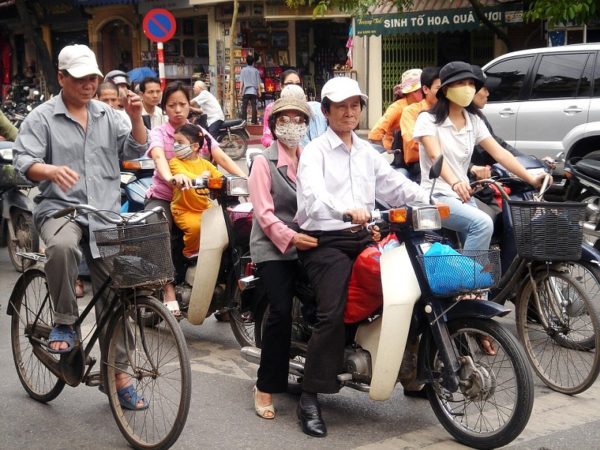
Secondly, you’ll find that there’s a big difference between how Vietnamese is taught to you in books and how it’s actually used.
It’s important to maximize your exposure to natural Vietnamese early on, so you don’t cement any mistakes.
I made a conscious effort to go out and interact with Vietnamese people (preferably those who didn’t speak any English) as soon as I could, and as a result I was fairly conversational within a matter of months. A recurring theme in Vietnamese learning communities is that consistent short practice sessions every day outperform sporadic marathon study; learners who commit to even 20 minutes daily typically make steadier progress than those who study intensively in occasional bursts.
Text Native Speakers
Face-to-face conversations can be terrifying and unproductive, especially if you’re a new learner.
Native speakers will speak much more quickly than you can follow, and it takes time to formulate a correct response, too.
For this reason, I spent much of my first few months in Vietnam conversing via text and Facebook messenger.
This helped me enormously, as it gave me time to look up any new vocabulary I encountered, fully comprehend what I was being told, and formulate a response.

Use a Spaced Repetition System
Outside of maximizing your exposure to the language, the best way to improve your vocabulary retention is by using what’s called a Spaced Repetition System (SRS).
This is a way of making sure you leave enough time to forget your new vocabulary, so that you can strengthen your memory even more when you practice it again.
By far the best known SRS for Vietnamese is Anki, an open-source app that’s free on all platforms except IOS for some reason.
My daily schedule involves putting 20 to 30 new words (although if you’re a beginner, five to 10 is more than enough) along with their definitions into my Anki deck, and then practicing all the new words it shows me.
This takes about half an hour per day, but my retention rates are amazing. It all but guarantees that I can learn 20 to 30 new words per day and remember them.
I cannot stress how much this has improved my rate of vocab learning. If you take away one piece of advice from this entire article, make it this one. Vietnamese learners writing in early 2026 consistently stress one caveat: every Anki card must include native audio, since tones cannot be learned from the spelling alone.
Please keep in mind: Anki has quite a steep learning curve, and if you just try to use it without learning what you’re doing first you’re going to go nowhere.
YouTube has some great guides for how to use Anki for language learning online, which you should watch before starting.
Take Private Classes With Real Teachers
This is the golden-standard, tried-and-true, guaranteed-results method to improve your skills in any language.
Taking private classes with a native Vietnamese teacher means you get:
- someone who understands your level and knows how to deliver the content in a way that makes the most sense to you;
- a practice partner who can correct your mistakes; and
- a source of natural spoken Vietnamese input.
Any time you spend with a private teacher is time well spent.
Group classes, in contrast, are a mixed bag. I find that they’re cheaper, and a great way to have fun and make friends.
But are they the most time effective way to learn Vietnamese? Probably not.
In my experience, having larger classes meant that the teacher had much less time to correct my mistakes and answer my questions, instead focusing on strict lesson plans with strict learning objectives that didn’t necessarily line up with my own.
I definitely ended up learning, just not at the best speed.
With all that said, you can also use a service like italki to find a private tutor online.
The Best Way to Learn Vietnamese
As a beginner, it’s important to have a proper teacher who will guide you through the basics, at least until you can hold a conversation for yourself.
Here’s a list of resources to get you started.
Online Class
While it’s a good idea to choose learning directly with a teacher over taking a materials-focused course, an online class is still a valid way to learn, especially at the beginner level.
There are a variety of such courses, some good, some bad, some very short, some designed to take you all the way up to an advanced level.
Here are some of them.
VietnamesePod101
VietnamesePod101 is a complete resource for learning Vietnamese online. It is run by Innovative Language, an ever-growing language-learning empire that offers courses for 34 different languages.
It’s no surprise that it covers every topic, word, and grammatical point that a beginner would need to achieve competency.

This is a good way to learn Vietnamese since you can study at home anytime you want.
To keep up with the incredible pace of output, VietnamesePod101 draws its videos from a variety of different creators, each with a distinct style.
These aren’t short, irrelevant videos either. The videos are often over an hour long and highly detailed.
With that in mind, many videos seem to be of a particularly high quality. The plus side is that it has a wealth of experience to draw from when designing its courses, with hundreds of lessons available from absolute beginner to advanced.
The drawback is that some content is shared across all the courses, so it can seem dry and unrelated to Vietnamese itself. It is not always clear how much you will gain from those particular videos.
However, with such an enormous pool of content to draw from, you can absolutely find high quality material that teach you Vietnamese step-by-step.
Duolingo
This is the one I get asked about the most.
Duolingo, if you didn’t already know, is a website and phone-app aimed at teaching languages through gamification, or turning language learning into a game.
Duolingo keeps you focused and engaged by offering you rewards for every correct answer, giving you a nice dopamine kick for high performance.

This formula has propelled Duolingo to the position of the most popular language learning app in the world, but the question remains: Is it right for Vietnamese? To which my answer is an emphatic no.
Duolingo is laser-focused on a specific method of learning, aimed to keep interaction to a maximum. It gives you a word, phrase, or short sentence in either Vietnamese or English, and then asks you to translate it back.
And that’s it.
There are myriad problems with this approach in itself, which Duolingo makes worse by relying on nonsense phrases, like “The boy is not an apple,” which has no real application to actual spoken Vietnamese.
In addition, Duolingo teaches you to write excessively formal, overly-grammatical sentences that any Vietnamese person would find wildly unnatural.
Lastly, Duolingo offers no way to improve your pronunciation, which is famously one of the hardest aspects of Vietnamese.
So in short, while Duolingo may be fun and may help you remember some basic vocabulary and grammatical structures, it falls far short of giving you a means to actually become fluent in Vietnamese.
You’ll unfortunately need to include more formal, less gamey approaches if you want to actually go somewhere with this language.
SVFF (Online)
I’ve already mentioned SVFF’s in-person classes earlier in this article.
In addition, SVFF offers an enormous selection of video lectures for every level from absolute beginner to C2, all specifically for the southern dialect.
It offers a beginner course and a separate pronunciation course, both focused on the southern dialect. Check svff.online for current lesson pricing.
The pronunciation course is worth prioritising, since the importance of correct pronunciation for this language cannot be overstated.
You can find a complete list of SVFF’s courses on their website.
Udemy Learn to Speak Vietnamese Like a Native
This Udemy’s course, created by Greg Vanderford, is one of the few courses available not created by a native speaker.
With three hours of lectures and more than 20 downloadable resources, Greg pays extra attention to practical Vietnamese skills – pronunciation, slang, and useful phrases.
The approach seems effective, with glowing reviews and a 4.5 star rating.
Language Courses
Fortunately, every major city in Vietnam will have a variety of schools, centers, and private teachers.
Here are some of the popular ones:
Tiếng Việt Ơi
While some Vietnamese teachers stick rigidly to vocabulary lists and textbooks, Tiếng Việt Ơi (TVO) prides itself on teaching Vietnamese as a tool for communication, with its lessons focused on natural, spoken Vietnamese.

The school runs classes in Hà Nội, Đà Nẵng and Sài Gòn, with prices ranging from US$7 to US$13 per hour for a group of five students.
If you don’t live in any of these cities, TVO also offers private online courses for both groups and individuals at similar rates.
Full disclosure: I collaborate with TVO to make content on a semi-regular basis, so I’m not completely unbiased here.
That said, I choose to collaborate with the school for a reason – it’s well organized, professional, fun, and most importantly knows how to teach Vietnamese so that non-native speakers will understand.
They also have an active YouTube channel.
123 Vietnamese
123 Vietnamese is one of the older and more well-established Vietnamese language centers and has a lot to show for it.
Many of its teachers have been teaching Vietnamese for decades, and it has a very well developed curriculum for students of all levels.
Personally, I’ve had two different teachers from 123 Vietnamese, both of whom were highly professional and one of whom remains a close friend of mine to this day.
123 Vietnamese has centres in several Vietnamese cities, including Hanoi, Ho Chi Minh City, Da Nang, and Hai Phong. Pricing changes over time, so check the school directly for current rates.
In addition, it has a fairly large online course for beginners consisting of 44 videos, which could help you enormously if you’re just starting.
SVFF
Northern Vietnamese, specifically the Hà Nội dialect, is considered the most formal variety of Vietnamese, so the majority of teachers and materials throughout Vietnam focus on teaching the Northern dialect.
This isn’t necessarily the best choice for everyone, however.
If you live in Sài Gòn, why not learn Saigonese, the language of media, business, and most importantly everyone you’re going to meet?
SVFF focuses specifically on teaching the Saigonese dialect, which could be ideal if you live in the south.
This school offers one-on-one classes both online and offline, plus online group classes. Check svff.online for current lesson pricing.
Learn Vietnamese for Free
It’s absolutely possible to become fluent in the language without spending a cent.
If you don’t think you can fork out the cash for an online course or in-person classes, there is an abundance of free resources you can use to learn and practice.
Here are some of the best resources I know of.
Tiếng Việt Ơi
On top of running classes, TVO has also been running one of the most active and popular Vietnamese YouTube channels since 2015, uploading new videos weekly for over two years.
As such, the channel has a huge set of videos on virtually every topic you could need, from the absolute basics to much more advanced topics, including:
- a 15-video playlist about pronunciation;
- a 19-video playlist for beginners;
- more than 30 videos teaching vocabulary, and more.
Despite being completely free, the videos are usually around 10 minutes long and of a comparable quality to what you’d get in a paid course.
The courses also come with TVO’s signature brand of humor that makes learning just a little bit more fun.
Language Exchanges
The demand for English learning is huge in Vietnam, so it’s extremely easy to find someone who will do an in-person language exchange with you in any city in the country.
To find an exchange partner, you’re going to need to join your local area’s main English-speaking Facebook group.
In Hanoi it’s Hanoi Massive Community, and in Saigon it’s “Expats in Ho Chi Minh City (Saigon) Vietnam.
Once you’ve joined, just make a post about how you’re an English speaker looking to do an exchange with a Vietnamese speaker and you’re all but guaranteed to get multiple responses.
HelloTalk
HelloTalk is a social media app aimed at helping people meet language exchange partners from all over the world.
It has both free and paid tiers, but the free tier still allows you to meet and converse with Vietnamese people who want to learn English.

While in-person exchanges will always be superior to virtual ones, HelloTalk is a good choice for anyone not yet living in Vietnam.
You can find out more on their website.
Comparing Vietnamese Learning Resources at a Glance
With so many options covered above, here’s a quick side-by-side to help you decide where to start.
| Resource | Cost | Best for |
|---|---|---|
| Tiếng Việt Ơi YouTube channel | Free | Structured video lessons and natural spoken Vietnamese |
| Anki (with native audio) | Free (paid on iOS) | Building and retaining vocabulary long term |
| HelloTalk / language exchange groups | Free | Speaking practice with native speakers |
| VietnamesePod101 | Paid subscription | Self-paced audio and video lessons at home |
| italki private tutor | Paid, per lesson | One-on-one correction and speaking practice |
| In-person language center (TVO, 123 Vietnamese, etc.) | Paid, per hour or per course | Structured classes with in-person accountability |
| Duolingo | Free / freemium | Casual vocabulary review, not a standalone method |
If I had to pick just two to start with, I’d go with a native-audio Anki deck for vocabulary and a private tutor on italki for pronunciation and speaking practice. Everything else is a bonus once those two habits are in place.
Now, on to You
There is no one-size-fits-all approach to learning Vietnamese. You must explore and find out what works for you yourself.
In order to do that, start testing out some of the resources I’ve written about in this guide. And most importantly, practice.
Whether you want to improve on speaking, reading, writing, or listening to Vietnamese, you must practice consistently.
Frequently Asked Questions
Can I get by in Vietnam without speaking any Vietnamese?
Yes, especially in Hanoi, Ho Chi Minh City, and Da Nang, where plenty of people in restaurants, shops, and hotels speak workable English. You’ll manage daily life fine. What you’ll miss out on is the deeper stuff: jokes, local news, honest conversations with older Vietnamese people who never learned English, and the kind of trust that comes from at least trying their language.
Which Vietnamese dialect should I learn, northern or southern?
Learn the dialect of wherever you actually live. Northern Vietnamese (the Hà Nội accent) is the more common choice for teaching materials and is treated as the more formal standard, but if you’re based in Ho Chi Minh City or the Mekong Delta, learning the local Saigonese pronunciation and vocabulary will help you understand the people around you faster than a northern-focused course would.
Do I need to learn to read and write Vietnamese, or is speaking enough?
For basic survival, speaking and listening matter more. But because the Vietnamese script is phonetic, learning to read it properly takes far less effort than learning Chinese characters or Thai script, and it pays off fast. Menus, street signs, and Zalo messages all become usable almost immediately once you know the rules.
How much should I budget for Vietnamese lessons?
Group classes at local language centers in Vietnam typically run somewhere in the US$7 to US$13 per hour range, while private one-on-one lessons, whether in person or through a platform like italki, usually cost more. Prices at individual schools shift over time, so treat any specific figure in this guide as a starting point and confirm current rates directly with the school.
Is it worth learning Vietnamese if I’m only staying a few months?
Full fluency, no. But learning the tones and a survival vocabulary of 100 to 200 words will change how locals treat you and how much you enjoy the trip, even on a short stay. If you already know your stay is temporary, put your limited time into pronunciation and common phrases rather than grammar or reading.
Can I learn Vietnamese completely online, without moving to Vietnam?
Yes. Between VietnamesePod101, italki tutors, HelloTalk exchange partners, and YouTube channels like Tiếng Việt Ơi, you can build real conversational skills before you ever set foot in the country. The one thing worth adding once you arrive is regular in-person practice, since natural spoken Vietnamese moves faster and drops more sounds than most online material prepares you for.







 Deutsch:
 Français:
 Español: