This article will take approximately 40 minutes to read. Don't have the time right now? No worries. Email the ad-free version of the article to yourself and read it later!
The best way to start learning Japanese is hiragana first, then katakana, then a beginner textbook or course, with about 30 minutes of practice a day. This guide shows where to start, how hard it really is and which courses are worth paying for.
Japanese has a reputation for being hard, and it does take years to master. Getting started is easier than it looks, though. The two phonetic alphabets take a few weeks, and you can hold simple conversations within a few months of steady study.
You also have more ways to learn than with most languages: online courses, private tutors, language schools in Japan, and a mountain of anime, manga, podcasts and TV.
Below, we cover how hard Japanese really is, a simple 3-month plan, the JLPT levels, the writing and grammar you’ll meet first, and the courses and free resources that work for beginners.
Contents
- Key Takeaways
- Why Should You Learn Japanese?
- Is Japanese Hard to Learn?
- A Simple 3-Month Plan for Complete Beginners
- The JLPT: Japan's Official Japanese Test
- What You'll Learn First: Writing, Grammar and Particles
- The Best Ways to Learn Japanese: Courses, Tutors and Schools
- Free and Cheap Resources for Beginners
- How to Learn to Speak Japanese Quickly
- Now, on to You
- FAQ
- Sources Cited
Key Takeaways
- Japanese has three writing systems: Hiragana, Katakana, and Kanji, and beginners should learn Hiragana first.
- The JLPT has five levels from N5 (beginner) to N1 (advanced), and N2 is the minimum for most Japanese-language jobs.
- Grammar and Kanji are the two main challenges, but casual daily Japanese requires far less than full mastery of either.
- Online courses, private teachers, and language schools in Japan are all effective options depending on your budget and goals.
- Free resources such as podcasts, anime, manga, and mobile apps can supplement structured learning at any level.
- Listening to Japanese every day, even for a short time, is one of the most effective ways to build fluency.
- Consistent daily practice, even 30 minutes, produces better results than occasional intensive study sessions.

Why Should You Learn Japanese?
Different people have different reasons to learn Japanese.
- Some want to learn it to get a better understanding of the unique and charming Japanese culture.
- Some want to learn Japanese because of their job.
- Some want to learn Japanese because they want to watch Japanese anime without having to read the subtitles.
- Some want to learn Japanese because they are living in Japan. While they can survive in the country without being able to speak Japanese, it constrains them significantly. Although it’s possible to find your way around and buy food, since many stations and restaurants have ticket machines with English menus, you will have quite the challenge dealing with minor issues in your life if you can’t speak Japanese. Japanese people often can’t speak English well, and then will decide not to even attempt it since they feel embarrassed.

How about you? What’s your reason for learning Japanese?
Is Japanese Hard to Learn?
Many people want to learn Japanese, but they end up giving up after hearing that Japanese is a difficult language.
But is it true?
The US government’s Foreign Service Institute puts Japanese in its hardest group of languages for English speakers. It estimates 88 weeks, or about 2,200 class hours, to reach professional working level.
While that’s true, it is better to phrase it like this: Japanese is not hard to learn but it’s difficult to master.
The main challenges in learning Japanese come from two main subjects:
- Grammar: Japanese grammar is difficult for English speakers because it has many rules and structures that don’t exist in English.
- Kanji: Kanji is a script that’s derived from Chinese. Each Kanji character has its own appearance, pronunciation, and meaning. To be able to read Japanese fluently, you are required to memorize at least 2,000 Kanji characters.
However, these two challenges are not a problem for casual Japanese.
For example, Japanese particles, which is one of the most confusing parts of Japanese grammar, are often omitted in a casual conversation. You won’t need to know how to read Kanji if you want to only focus on speaking and listening.
Other than that, Japanese is a straightforward language. Characters have exact pronunciations. Many Japanese words are used repetitively in many scenarios. You can also find some English words in Japanese as well.
On the good side, unlike learning Thai, learning Japanese is much more systematic. Courses and learning materials circle around the JLPT, or Japanese Language Proficiency Test, which we are going to explain in the next section.
There are also various types of additional resources for learning the language that you can’t find in other languages, such as manga and anime.
Japanese isn’t as difficult as you think it is. You only need to know where to start and how to correctly learn it.
A Simple 3-Month Plan for Complete Beginners
If you are starting from zero, this plan gets you reading basic Japanese and holding simple conversations in about three months of daily study:
- Weeks 1 to 2: learn all 46 hiragana. Write each one and say it out loud.
- Weeks 3 to 4: learn all 46 katakana, then practise reading loanwords like コーヒー (coffee) on menus and signs.
- Month 2: start a beginner textbook or course. Learn the basic sentence pattern, the main particles (は, を, に, で) and the polite ます form of verbs.
- Month 3: add your first 100 kanji, listen to a beginner podcast every day, and book a weekly conversation lesson with a tutor.
Aim for 30 minutes a day rather than a long session once a week. If you plan to live in Japan, our guide on whether you need Japanese to live in Japan shows which situations are hardest without it.

The JLPT: Japan’s Official Japanese Test
The JLPT, or the Japanese Language Proficiency Test, is the official Japanese language test in Japan. It can be said that everyone who learns Japanese should take this test once.
There are 5 JLPT levels, starting from N5, which is the beginner level, to N1, which is the highest level.
- Passing N4 and N5 shows that you can understand basic Japanese. However, you still can’t really use it in daily life.
- If you pass N3, it means you can start using Japanese in your daily life on many occasions.
- Passing N2 means you are quite fluent in Japanese. It is also the minimum requirement for positions that are related to Japanese language.
- N1 isn’t always necessary. If you pass this level, it means you are very fluent in Japanese and are able to understand complex reading material and conversations.
You can see a full definition of each level from the official JLPT website.
There are three main reasons why people take the Japanese Language Proficiency Test:
- To test their own Japanese
- To study in Japan
- To find work in Japan. Without the JLPT certificate, your work opportunity will be very limited.
JLPT tests are conducted twice a year, in July and December. In 2026, the test dates are July 5 and December 6. Test sites are available in many cities. Here’s a list of available test sites throughout the world.
What You’ll Learn First: Writing, Grammar and Particles
The main challenges of learning Japanese are Kanji characters, sentence structure, verb conjugations, and particles. If you want to master the language, you need to overcome all of them.
On the other hand, if you know you only want to be able to use Japanese in your daily life, you won’t need to deal with many of these challenges.
The Three Writing Systems
The very first challenge all Japanese learners encounter when learning Japanese is the alphabet.
There are three types of writing systems in Japanese:
- Hiragana: Hiragana has 46 characters. Each character has its own sound, but doesn’t have a meaning. To create a meaning, the Hiragana character needs to be combined with other Hiragana characters. Hiragana is used for words that are originally Japanese.
- Katakana: Katakana also has 46 characters. Katakana has the same sounds as Hiragana but the characters are written differently.
- Katakana is mainly used for words that are derived from other languages.
- A lot of Japanese people also write their name in Katakana in their daily lives since it’s easier to read than Kanji.
- If a Japanese woman marries a foreigner and wants to change to her husband’s surname, the surname is going to be written in Katakana as well.
- Nicknames are also commonly written in Katakana.
- Kanji: Kanji are basically Chinese characters that are only used in written Japanese.
- Each Kanji character has their own meaning, and can be combined with other Kanji characters to create a new meaning as well.
- In addition, many Kanji characters have multiple ways to pronounce them. For example, 日 which means “day”, can be pronounced as “hi”, “nichi”, “jitsu”, and “ka”.
- Although there are over forty seven thousand Kanji characters out there, only around two thousand Kanji are used in daily life.
- Kanji is significant in written Japanese. A lot of Japanese words have similar pronunciations. You only know the exact meaning once you see the Kanji used to write the word.
All of them are essential for Japanese learners.
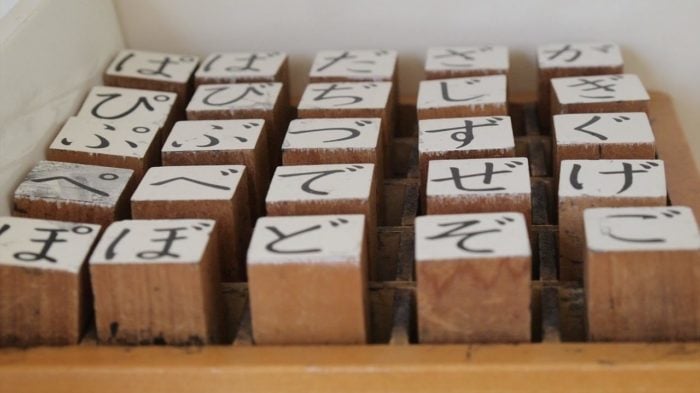
For beginners, you should start learning Hiragana. It’s very simple to learn. With practice, you should be able to memorize all of them within a week. Not everyone goes that fast, and that’s fine. Beginners on the learning forums often suggest small batches of about five characters every few days, with stroke order right before you speed up. After that, learn Katakana. Many learners master Hiragana quickly but then neglect Katakana, which creates a lasting gap in their reading ability, so give both systems equal attention from the start.
Each Hiragana and Katakana character has their own pronunciation. Once you are able to memorize them, you should be able to correctly pronounce Japanese words automatically.
In addition, there are only five vowels in Japanese, which are a, i, u, e, and o, in which you are going to learn them automatically from learning Hiragana and Katakana. This makes it quite easy to pronounce the sounds.
After that, you need to learn Kanji, which is the hardest part of the Japanese writing system.
How Many Kanji Do You Actually Need?
The official list of kanji for everyday use, the Jōyō kanji, has 2,136 characters. It is the government standard for newspapers, official documents and school education, so it is the realistic target for full reading fluency. (Verified October 2026.)
You don’t need all of them on day one. A sensible order looks like this:
- First 100 or so: numbers, days of the week, and the characters on station and shop signs.
- Next few hundred: the kanji in your textbook and JLPT N5 and N4 vocabulary.
- The rest of the Jōyō list: what you work through on the way to N2 and N1.
Learn each kanji inside real words, not on its own. That way the meaning and the reading stick together.
Sentence Structure
Japanese has a different sentence structure than English.
- In English, the grammar structure goes like this “Subject + Verb + Object”.
- In Japanese, it’s “Subject + Object + Verb”.
For example, if you want to say “I love you”, you need to say “I you love” in Japanese.
In addition, when it comes to explaining nouns, the position of Japanese words is also opposite to English. A noun that you want to explain will be put at the very end.
For example, if you want to say “a man who is eating noodles”. You need to say “noodles eating a man” in Japanese.
Verb Conjugations
Verb conjugation is another key part of Japanese grammar. Similar to adding “-ed” at the end of a verb in English in order to show past tense, you need to do the same in Japanese.
There are a lot of verb conjugations in Japanese. Each verb conjugation has their own rules.
For example, “eat” in Japanese (食べる) can be conjugated into
- 食べます if you want to say it politely
- 食べた if it’s a past tense
- 食べろ if you want to order someone to eat it
- 食べない if it’s a negative form
- 食べれば if it’s a conditional form
- 食べられる if you want to say you are able to eat it
It’s very important to learn and memorize how to use all of the verb conjugations. It’s a key part of understanding Japanese.
A good way to learn them is to read textbooks, or take some Japanese courses, to get some basic understanding about each verb conjugation.
After that, you can find something to listen to, like podcasts or movies. You will understand more once you hear how Japanese people use each verb conjugation in conversation.
Particles
Particles are one of the most confusing parts of Japanese. Basically, it’s a Hiragana character or sentence that is added between each word in order to connect them together.
Although many particles do not have their own meaning, they are a key part to show the function and motion of Japanese words.
For example,
- は (wa) marks the topic of the sentence, what you are talking about
- に (ni) is a particle that indicates places and time
- を (wo) marks the object, the thing the verb acts on
Some particles may also have similar functions as other ones. For example, you can use both “に” and “で” to indicate place. The difference is that “で” indicates an action that happens in that place.
Wikipedia has a list of Japanese particles. It also gives you a brief idea on how to use them.
A good thing about many particles is that they are often omitted in casual Japanese. However, if you need to use Japanese in writing, using the right particle is very important.
The Best Ways to Learn Japanese: Courses, Tutors and Schools
For most beginners, a structured course plus a weekly tutor lesson is the best mix of cost and progress. Which one you lean on depends on your time and budget:
- An online course is the cheapest structured option and lets you study at your own pace.
- A private tutor costs more per hour but gets you speaking and corrects your mistakes on the spot.
- A language school in Japan is the fastest route if you can take months off and move there.
This guide sticks to where to start. For a fuller rundown of online platforms, apps and tutoring sites, see our guide to learning Japanese online.
While there are a lot of learning materials out there, many of them are geared toward beginners. Materials for advanced learners are still quite limited.
JapanesePod101
JapanesePod101.com is a comprehensive online course for learning Japanese. Their courses are suitable for those who want to speak and understand Japanese in their daily lives.

Being an online course, you can learn at your own pace while practicing all Japanese skills at the same time, including reading, listening, writing, and even speaking.
There are thousands of lessons available on JapanesePod101 for four levels of Japanese learners: absolute beginner, beginner, intermediate, and advanced.
Each lesson comes with conversation, vocabulary, and grammar explanations, and are available in the form of video, audio, and lesson notes in both Japanese and Romaji (Japanese words spelled out with Latin characters).
Lesson notes can be downloaded in PDF format.
For a complete beginner, you can start by watching their lessons on how to write Hiragana and Katakana.
For intermediate Japanese learners, you can take a look at their lessons in the intermediate level, and study Japanese through various conversations.
For those who want to take JLPT examinations, you can also find practice lessons for N5 to N2 on Japanesepod101.com
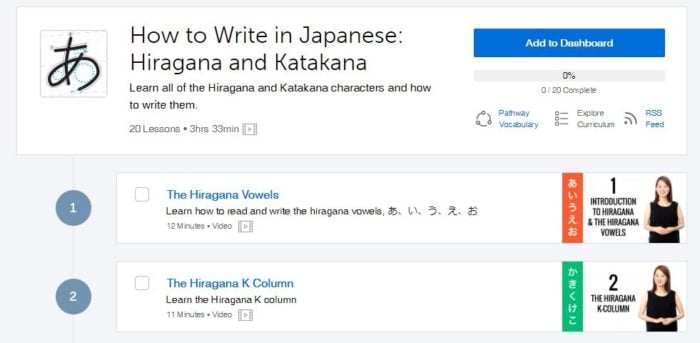
JapanesePod101 has three paid plans: Basic at US$4 a month, Premium at US$10 a month and Premium PLUS at US$23 a month, based on a 24-month subscription. (Verified October 2026.)
The US$10 Premium plan is good since it gives you access to everything you need to learn Japanese.
The US$23 Premium PLUS plan is for serious learners who want to speak with teachers from JapanesePod101.
The downside of JapanesePod101 is that it isn’t suitable for advanced learners who want to understand complex conversations, or those who want to take the JLPT N2 level and above.
Lessons available here can be too easy for those learners.
All in all, JapanesePod101 is a good course for those who want to get started in learning Japanese and those who want to be able to speak Japanese in their daily lives.
It is also cheaper than other methods. You pay only US$10 a month for unlimited hours, while other methods cost you around US$10-US$20 per hour on average.
You can check out our JapanesePod101 review here.
Private Teachers
Hiring a private teacher is another good way to learn Japanese. It can be expensive but it’s worth it. Private teachers dedicate their time to improving your Japanese skills.
A great benefit of learning with a private teacher that you can’t find from other methods is that a private teacher can instantly correct your mistakes and pronunciation, while explaining things that you don’t understand in detail.
You also have the chance of fully using your Japanese skills with your private teacher, which can quickly and significantly improve your Japanese.
Preply is a good way to find an online private teacher. It lists over 5,000 Japanese tutors with an average rating of 4.98 out of 5 (verified October 2026). You can review their profiles one by one and take a trial lesson with the one you feel most comfortable with. If the first tutor isn’t a match, you can try two more for free.
A lot of them can speak good English. Private teacher rates are normally in the range of US$10 to US$30 per hour.
Choosing a good private teacher is key. You should ask teachers for a trial lesson before committing to a full course. Although many private teachers are unable to give you a free lesson, they can give you a significant discount.
If you go with this route, you should at the very least spend an hour a week learning with a private teacher.
You should note that learning with a private teacher an hour or two a week can’t significantly improve your Japanese if you don’t do your own part by also learning on your own.
On the other hand, if you are seriously studying Japanese on your own, spending your time with a private teacher even an hour a week can make a big difference. You can use this chance to speak Japanese, and your teacher can point out your weakness and improve your Japanese as a whole.
Language Schools
If you have the budget and time, and are serious about learning Japanese, studying in a Japanese language school in Japan is one of the most effective ways of learning Japanese. Our guide to moving to Japan covers the practical side of getting there.
A lot of people become fluent in Japanese within a year or two through this option.
By studying at a language school in Japan, you will spend the whole time learning Japanese for 4 hours a day, 20 hours a week on average.

There are both short-term and long-term courses, from a few weeks to over two years.
Upon enrolling in the language school, you are required to do a Japanese proficiency test in order to examine your Japanese skill and put you in the right class. Students in these language schools are mainly from South Korea, China, and Hong Kong. They range in age from 20 years old to late 30s.
By studying at these language schools, you not only learn the language, but also culture. You can make new friends internationally.
Living in Japan also gives more opportunities to improve your Japanese. You can use it in your daily life and get more access to learning resources, such as Japanese TV programs and news. If you are considering renting in Japan while studying, knowing even basic Japanese makes the process significantly easier.
You can find these language schools in many provinces in Japan, including Tokyo, Osaka, and Sapporo. Some might even provide scholarships.
You can find some of them from this Japanese language school directory.
However, language schools are quite expensive.
You should expect to pay around 150,000 yen to 250,000 yen a month with this option. 50,000 yen to 80,000 yen a month goes to the language school, and the rest is for the accommodations.
Since you only need to study around 20 hours a week, it’s possible to take a part-time job there. Supermarkets and convenience stores are popular places. Japan’s minimum wage now runs from 1,085 yen to 1,280 yen an hour, depending on the prefecture, with Tokyo at the top. The new rates take effect prefecture by prefecture between October 1 and December 2, 2026. (Verified October 2026.)
In case you can’t fly to Japan and study, you can check out Japanese language schools in your own city. The Japan Foundation is a good place to start. They have language courses in many countries throughout the world.
Working Part-Time on a Student Visa
If you come to Japan on a student visa, you need separate permission before you can take a part-time job. The permit is called Permission to Engage in Activity Other Than That Permitted, and you apply for it through immigration. (Verified October 2026.)
Once you have it, the limits are strict:
- Up to 28 hours a week while classes are in session.
- Up to 8 hours a day (40 hours a week) during the school’s long spring, summer and winter breaks.
- No work at all in adult entertainment businesses, even within those hours.
Going over the limit can cost you your visa, so keep a simple log of your shifts if you work more than one job.
Free and Cheap Resources for Beginners
A good thing about learning Japanese is that you have tons of resources available. A lot of them are free. You just need to know where to look.
Let’s take a look at the resources you can use for learning Japanese.
*For online resources, read our complete guide to learning Japanese online.

Books
Books for learning Japanese are mainly based on JLPT levels.
Minna no Nihongo is one of the most popular book series for learning Japanese. It consists of four books in total: two books for beginners (Shokyu 1-2 for JLPT N 4-5) and another two books for intermediate learners (Chukyu 1-2 for JLPT N 3).
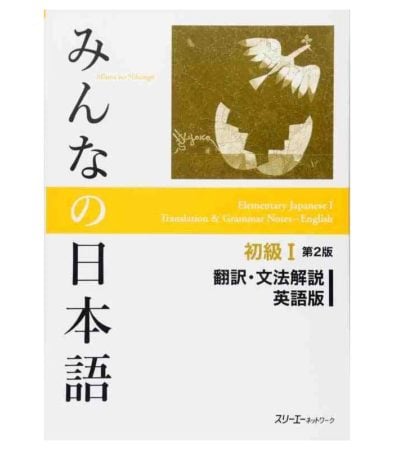
The books are translated into many languages, including English, French, German, and Spanish.
You should note that in some languages, such as Thai, there might be four books for Minna no Nihongo Shokyu instead of two.
Genki is another recommended book series for learning Japanese. However, there are only two books available for beginners (JLPT N4).
Genki gets a lot of love on the beginner forums this year. Learners who switched from app-only study say working through Genki I and its workbook, writing everything by hand, made grammar and vocabulary stick far better.
Movies and Anime
If you love watching movies, Netflix is a good source.
There are a number of Japanese movies and anime available on Netflix. You can watch them in Japanese with English subtitles. Some of them also have Japanese subtitles for intermediate learners and above.
The key benefit of watching Japanese movies and anime with Japanese subtitles is that it can surprisingly help you memorize Kanji that are regularly used. You see the same word appear many times in many different scenarios, which helps you to subconsciously memorize them.
You may even be able to know the meaning without knowing how to pronounce them correctly.
A key to using Netflix to learn Japanese is about choosing the right movies. For example, you can’t watch an investigation movie and expect to learn Japanese words for daily life.
Another point is that you should choose movies that you can rewatch many times.
Terrace House is a good Japanese series to start with. It’s an unscripted reality show putting six Japanese people together in a single house. You can learn how Japanese is really spoken from this series.

The real challenge of learning through movies is that it can be time-consuming and you might end up focusing more on the story than learning Japanese.
While watching anime is a fun way to learn Japanese, you should note that Japanese words used in anime are often different from what Japanese people really use in everyday speech.
If you speak the exact same way as in the anime to Japanese people, they may find it either funny or quite rude.
Manga
Japan is a land of manga (comics), with thousands of titles available in all genres.
The good thing about learning Japanese through manga is the furigana, or small hiragana to help you read Kanji. Unless it’s a book for learning Japanese, furigana normally only appears on difficult Kanji.
However, in Manga, furigana is shown for almost every Kanji character, making it another good resource for helping you to remember new Kanji.
Second hand stores such as Book Off are a great place to buy used Manga. They come with a significant discount. You can find a lot of titles there. And most of them are still in good condition.
Podcasts
Podcasts are a good way to learn Japanese. They’re free, and you can listen to them while doing something else that doesn’t need a lot of focus such as exercising, walking, commuting, and cleaning.
The more you listen, the more you are able to understand and speak Japanese.
However, podcasts are only recommended for those who have been learning Japanese for a while and know some basic Japanese words. If you are a complete beginner, it’s better to use other methods.
There are a lot of good podcasts for Japanese learners including:
Nihongo con Teppei
Nihongo con Teppei is made by a native Japanese person from Oita named Teppei. Teppei Sensei (sensei is a Japanese word meaning “teacher”) has been using podcasts to learn Spanish and English and decided to make one for Japanese learners.

Nihongo con Teppei is good for intermediate learners.
Teppei Sensei talks about his personal life, experiences, and stories in his podcasts, all in Japanese. Everything is unscripted. You are able to listen and understand how a native speaker naturally speaks.
When he uses difficult vocabulary, he will explain the meaning to you in either Japanese or English.
Each episode is around 10-12 minutes long. There are over 400 episodes as of now. New episodes are released every 2-3 days.
He also has another podcast channel for beginners titled “Nihongo con Teppei for beginners“.
Learn Japanese Pod
Learn Japanese Pod is hosted by Alex Brooke, a British man living in Tokyo. It is usually co-hosted by a native Japanese person who can fluently speak English.
Learn Japanese Pod normally starts the podcast with Japanese conversations before teaching you word by word later in the episode.
In addition to conversations and vocabulary, you will learn a lot of Japanese culture and traditions from this podcast. It is also more suitable for a beginner than Nihongo con Teppei, since English is the main language of this podcast.
On the other hand, it might not be suitable for intermediate or higher level learners.
Each episode of Learn Japanese Pod is quite long at 50 minutes on average.
Games
Good news for video game lovers. You can use video games to learn Japanese. There are both educational games, specifically for learning Japanese, as well as normal games that you can learn from.
Learn Japanese to Survive Kanji Combat is a good example of an educational game. The idea of the game is simple. You learn a set of Kanji and use them to go on your adventure and fight monsters.
For normal video games, you can take a look at the Tales series and Dragon Quest series. These two video game series are entertaining and easy to understand.
Mobile Applications
There are a number of both free and paid applications that can help you learn Japanese. Let’s take a look at some of them.
Duolingo
Duolingo is one of the world’s most popular applications for learning new languages. Japanese is one of the languages they offer.
It’s an interactive application coming with various forms of quizzes.
The application starts from teaching you the Japanese writing system, to basic grammar and vocabulary in various scenarios.
Although learning with Duolingo is free, there is a limit on how much you can learn per day. If you want to keep learning, you need to subscribe to one of their plans.
Duolingo’s teaching style is repetitive, where you will learn the same vocabulary and grammar again and again in various scenarios. It’s a good way to learn, but might not be suitable for those who expect quick progress.
On r/LearnJapanese, this is the common verdict: Duolingo is fine for drilling hiragana, katakana, and a starter vocabulary, but most learners find it stalls well before real fluency. The usual fix is to pair it with a dedicated kanji tool like WaniKani or Anki, add graded readers or native content for immersion, and book a tutor on italki once you want to actually speak.
JLPT N4 & N5 Vocabulary – Play & Learn – Minano
JLPT N4 & N5 Vocabulary – Play & Learn – Minano is a good application for those who read Minna no Nihongo. The applications come with vocabulary for all 50 chapters.
All vocabulary comes with audio and pictures. There’s also an autoscroll function, allowing you to learn new words without having to touch your phone.
Several forms of quizzes are also available, including flash cards, audio quizzes, and picture quizzes.
The application comes with ads and is completely free.
Learn Japanese N5~N1 (JPro)
Learn Japanese N5~N1 (JPro) is one of the most comprehensive applications for learning Japanese out there. You can learn Japanese from N5 to N1 within this one application.
It comes with a vocabulary list, Kanji, quizzes, sentence examples, reading essays, and grammar from several popular Japanese learning books.
You are also able to create your own quizzes with this application. The application also comes with an in-app dictionary.
Although the application is free, it’s full of ads making it almost unusable. To remove the ads, you need to purchase the full version at US$7.
KanjiSenpai
KanjiSenpai is often recommended by those who want to learn more Kanji.
The application is an interactive quiz with audio. Kanji is categorised into JLPT levels from N5 to N1.
To fully utilize the application, you need to purchase their additional audio packages at US$3 per 600 audio files on average.
How to Learn to Speak Japanese Quickly
Here are the steps you can take to help you learn how to speak Japanese quickly.
Take Japanese Courses
If you are serious about learning Japanese, taking any of the Japanese courses is a great way to start learning. They give you a good language foundation and you can use them to further improve your Japanese skills.
At the very least, taking a Japanese course should help you memorize and pronounce Japanese characters correctly, as well as understand the basic grammatical structures. They also give you a good set of vocabulary words that are often used in daily life.
There are various Japanese courses you can explore out there. You can take a look at online courses such as JapanesePod101. It’s cheap yet comprehensive. You can learn it at your pace.
Many online courses also have PDFs available. You can download and read them to memorize new words and grammar rules. Once your Japanese foundation is good enough, then, you can look at other resources.
Write Kanji Regularly
Writing is a great way to remember Kanji. You learn their appearance while you write and pronounce them.
The sound and the image of Kanji is going to be slowly added to your brain. The key here is that you should write down whole words, not just single characters.
For example, you should write down “学校” (Gakkō – school) instead of writing “学” and “校” separately.
Although each Kanji character has a different way to pronounce it, you shouldn’t pay much attention to it in the beginning. You will learn them automatically once you write down more words. Learning Kanji through the words that contain them, rather than as isolated characters, is an approach many learners find more effective since meanings and sounds stick together from the start.
A serious learner normally writes down 5-10 new Kanji words on a daily basis.
Study Grammar
Studying grammar significantly helps you understand Japanese, especially with verb conjugations and particles.
There are many cases where you know the meaning of every word in a Japanese sentence, but you can’t understand the real meaning. It’s because you don’t understand the grammar.
Sometimes, you might not be able to find a certain word in a dictionary. It’s because the verb is conjugated and you don’t know the dictionary form of that word.
Books are a good way to learn Japanese grammar. Please refer back to our book section on grammar to find out which books you can read.
Listen More
If you want to be fluent in Japanese, you should find time to listen to Japanese every day. It’s easy yet effective.
It can be Japanese music while you are driving to work, Japanese podcasts while you are exercising, or Japanese anime while you are taking a break.
When you listen to more Japanese, you are going to more easily understand Japanese grammar automatically. There are many times that you don’t understand it much when you read it from a textbook.

However, when you listen and hear the same grammar that you just learned, you will understand more on how Japanese people really use it.
This is the same for vocabulary. Memorizing through flashcards or textbooks alone is usually not enough. You will quickly forget within a few days.
But when you hear these words again and again from listening, your brain will mark them as important information, helping you to memorize them. Short daily sessions, even 30-35 minutes, consistently outperform intensive study spread across fewer days, so building listening into a daily routine matters more than the total weekly hours.
Use It
Learning Japanese alone isn’t enough. If you want to be fluent, you need to find opportunities to use it.
This is one of the main reasons why those who take a course at a Japanese language school in Japan can quickly become fluent.
They live in Japan and have opportunities to use it all the time. They need to speak Japanese in order to live and survive in Japan. For example, if you can’t speak Japanese, visiting a hospital in Japan is going to be a challenge.
In case you do not live in Japan, you can find a private tutor and speak Japanese with that person. You can use a website like Preply to find one.
Keep on Learning
Learning a new language is like running a marathon – slow and steady wins the race. You are not going to master the language within a few months. It’s going to take years.
You should keep on learning. Learning it even for a few minutes a day is better than not learning at all.
Now, on to You
Although learning Japanese seems to be hard for many people, it’s doable. Everything depends on your attitude.
There are millions of people out there who can speak Japanese as a second or third language. You can be one of them. If you are planning to move to Japan, learning Japanese is a must.
Therefore, be positive and involve yourself in Japanese. Be diligent and don’t give up.
FAQ
What is the best way to learn Japanese for beginners?
Start with hiragana and katakana, then work through a beginner textbook such as Genki or Minna no Nihongo, or an online course. Add a weekly tutor lesson once you know the basics, and aim for about 30 minutes of practice a day.
How long does it take to learn Japanese?
The US Foreign Service Institute estimates about 88 weeks, or 2,200 class hours, for an English speaker to reach professional working level. Basic conversation takes far less, often a few months of daily study.
What should I learn first in Japanese?
Start with hiragana, then katakana. Both have 46 basic characters and can be learned in a few weeks, and they let you read and pronounce any Japanese word written in kana.
How many kanji do I need to know?
The official Jōyō list for everyday use has 2,136 kanji. You can handle daily life with far fewer, and most learners build up to the full list on the way to JLPT N2 and N1.
When is the JLPT held?
Twice a year, in July and December. In 2026, the test dates are July 5 and December 6.
Can I work while studying Japanese in Japan?
Yes, with permission from immigration. Students can work up to 28 hours a week during term and up to 8 hours a day during long school holidays.
Is Duolingo enough to learn Japanese?
It is a good start for kana and basic words, but most learners need a course, a kanji tool and real conversation practice to get past the beginner stage.
Sources Cited
- US Department of State: Foreign Language Training: Japanese in Category IV, 88 weeks or 2,200 class hours.
- JLPT official site: 2026 test dates (July 5 and December 6).
- National Diet Library: kanji lists: the 2010 Jōyō kanji list of 2,136 characters.
- Ministry of Health, Labour and Welfare: FY2026 regional minimum wages, 1,085 to 1,280 yen an hour, effective October 1 to December 2, 2026.
- JASSO: student part-time work limits of 28 hours a week and 8 hours a day in breaks.
- Immigration Services Agency: permission to engage in activity other than that permitted.
- JapanesePod101 pricing: Basic US$4, Premium US$10 and Premium PLUS US$23 a month on a 24-month subscription.
- Preply Japanese tutors: over 5,000 Japanese tutors, average rating 4.98 out of 5.






 Deutsch:
 Français:
 Español: