
This article will take approximately 34 minutes to read. Don't have the time right now? No worries. Email the ad-free version of the article to yourself and read it later!
Thinking of renting in Bangkok? This practical guide covers real rental prices, best areas to live, condos vs houses, hidden costs, deposits, lease tips, and how to avoid common mistakes that catch many new expats off guard.
Before I moved to Bangkok, I looked up some places to live online. I thought it would be easy since the Thailand property market is booming. There are so many options you will come across with a quick Google search. It didn’t take me long to come across an apartment that looked absolutely stunning. But when I visited the place, it was actually a dump.
Pictures of the bedrooms had somehow hidden the fact that there were no windows.
In the end, it took me more than two weeks to find a good place.
This guide to renting in Bangkok was written to help you cut that two week-long search down to two days. Whether you’re a first-time expat or just wondering if you can find a better deal than you already have, this should make things significantly easier.
"*" indicates required fields
Disclaimer: This article may include links to products or services offered by ExpatDen's partners, which give us commissions when you click on them. Although this may influence how they appear in the text, we only recommend solutions that we would use in your situation. Read more in our Advertising Disclosure.
Most expats throw money away, get lost in red tape, and miss the local hacks that make life easier and cheaper. ExpatDen Premium gives you the secrets seasoned expats use to save, earn, and thrive beyond the basics, saving you thousands and opening doors you didn’t even know existed.
Here’s what’s inside:
- Housing Hacks: Slash your rent by 40% or more - because the locals are laughing at what you’re paying.
- Banking Mastery: Stop wasting on fees and get top exchange rates. Why give your money away?
- Healthcare for Local Prices: Quality treatment without the expat price tag.
- Visa and Legal Shortcuts: No more bureaucratic nightmares. Get the visa and residency secrets that others pay their lawyer dearly for.
- Deep Discounts: Find the savings locals rely on for groceries, dining, and more.
If you’re serious about making Thailand work for you, join ExpatDen Premium and make Thailand work for you.
Things to Keep in Mind When Looking for a Rental
Before you start looking for an apartment in Bangkok, you should know that apartment hunts don’t work here like they do back home.
Below are some of the most important things for you to consider.
Traffic and Weather
Traffic jams and hot, humid weather make traveling around Bangkok a slow and often wet experience.
You probably want to avoid getting around by car, bus, or bicycle during the day. Two-hour commutes or reaching your destination drenched in sweat or rain, depending on the season, is never fun.
This pretty much limits you to the BTS and MRT, boats, motorcycle taxis, and the odd road.
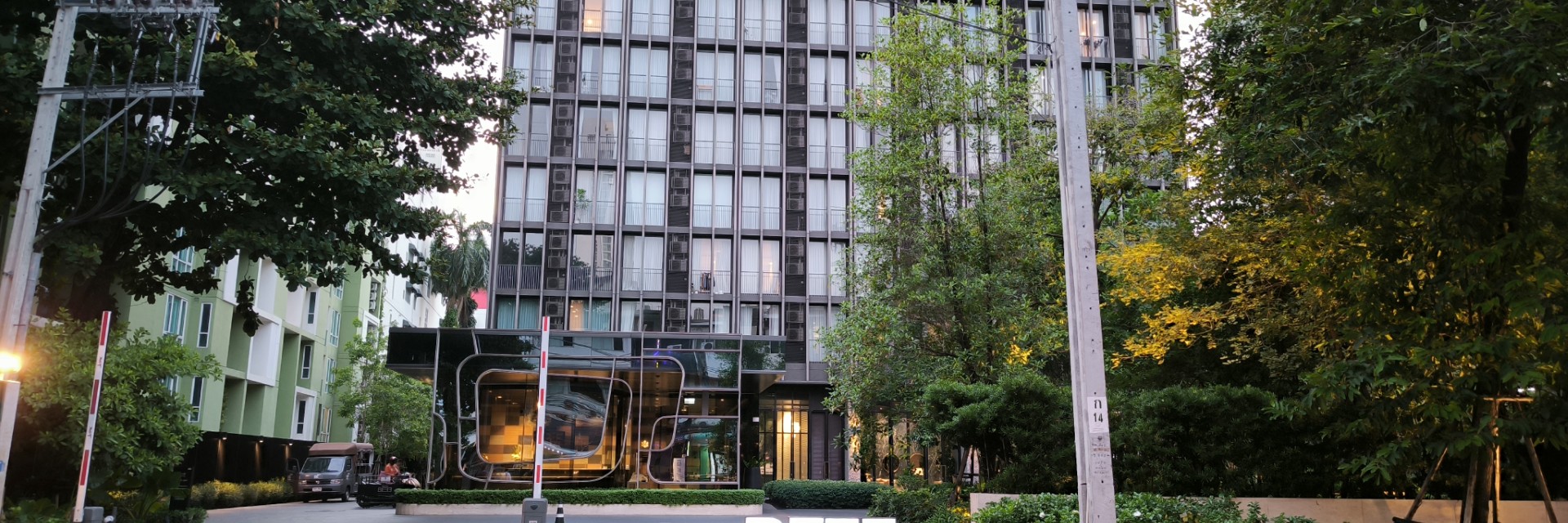
Because of the traffic and weather, I rent condos where I can easily walk to work in hot weather, or condos I can reach by the MRT or BTS without changing lines.
Tourism and Nightlife
Tourists tend to drive the prices of condos up and the quality of the surrounding areas down.
Areas with a lot of hotels or tourist sites are filled with souvenir stands and mediocre, overpriced restaurants.
Unless you have a daily need for nightlife, stay a street or two away from tourist epicenters such as
- central Surawong Road
- Silom Road
- the Nana BTS area
- Area between Sukhumvit Soi 3 and 11.
Even if you’re a night owl yourself, you want to avoid being right next door to bars. Otherwise, you may have noise problems 24 hours a day for the duration of your 12-month lease.
If you’re not sure about an area, you can always stay there for a weekend to see what it’s like.
Location
One of the most important things to consider when renting is location. Lower Sukhumvit (Asoke to Ekkamai), Sathorn, and Silom tend to pop up first when asking around for areas where expats like to live in Bangkok.
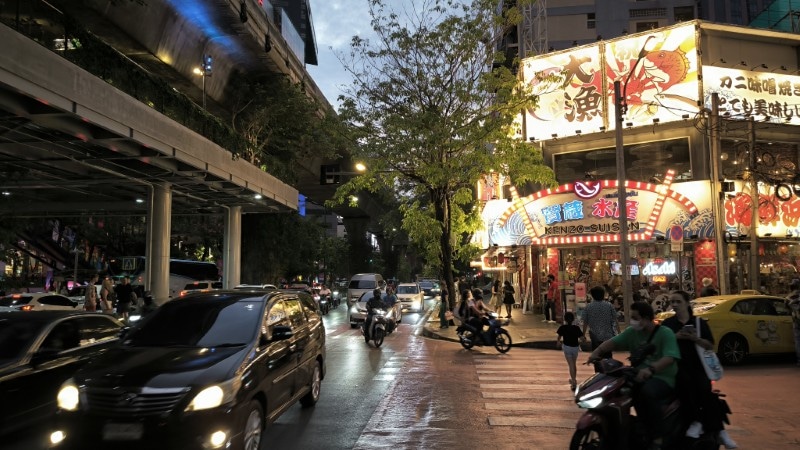
These business districts are full of office buildings and serviced offices, making apartments and condos more expensive than other areas in Bangkok.
Nowadays, you can get the best value for your money in other parts of the city like On Nut, Phra Khanong, and Rachadaphisek.
Easy Commutes
The length of your daily commutes is something you want to keep in mind when renting a place in Bangkok.

My advice would be to pick a place within walking distance from work or near the MRT or BTS.
Use Google Maps to check public transportation at the time you plan to arrive and leave work. It shows fairly accurate travel times for cars and the MRT and BTS.
Don’t trust travel times on Google too much, as they can be slower than expected because of traffic. Google Maps often underestimates how heavy Bangkok traffic can be. For example, it may show a delay of 10 minutes, but in reality, it can easily take more than 30 minutes.
Language Barriers
This depends on where you rent. If it’s in an expat-favorite area, such as along the Green BTS line or Ratchadapisek, you’ll often see ads in English, and many landlords or agents can speak English.
On the other hand, if it’s outside of expat areas, ads may be in Thai, with Thai-speaking landlords.
However, don’t be afraid of the language barrier. In my experience, you often get a better deal with a Thai-speaking landlord.
TM30
When you stay in Thailand, a property owner must inform the immigration office about your stay. This report is known as TM30. The landlord is responsible for submitting it.
- If a landlord has dealt with expats before, they normally know about this rule.
- If they rarely deal with expats, they may not be aware of it at all.
Even if they are aware, there is still a chance you may need to do it yourself by asking your landlord for the rental contract, house registration copies, and ID copies.
Read our article on how to file TM30 for more information.
The Cost of Rent in Bangkok
Prices vary depending on a lot of factors, including, but not limited to:
- length of lease
- quality of the neighborhood
- proximity to an MRT or BTS station
- extra facilities
- square meterage
- condition and age of the building
This means rental prices in Bangkok range from 4,000 baht a month for a dorm-like room to over 500,000 baht a month for a penthouse duplex in a trendy neighborhood.
Based on my observation, a majority of expats in Bangkok pay around THB10,000 to THB15,000 to rent a 30-40 square-meter studio or 1-bedroom condo in a location that’s close to a BTS station or MRT station.
Anyway, here’s a general estimate on the cost of rent here.
- Less than THB 5,000: This budget is usually too low for most expats in Bangkok. You’ll mainly find very basic rooms, older apartments, or places far from the city center. In many cases, these are better suited to local workers or students than long-term expats.
- THB 5,000 to THB 10,000: You can often find a room in an older building or apartment. Expect basic furnishings, limited facilities, and often a 10 to 15 minute walk to a BTS or MRT station. Outer Bangkok neighborhoods usually offer the best value in this range.
- THB 10,000 to THB 15,000: This is one of the most common ranges for expats. You can often rent a studio or one-bedroom condo in a decent building, sometimes close to a BTS or MRT station, especially outside prime areas like Sukhumvit or Silom.
- THB 15,000 to THB 20,000: At this level, you’ll have more choices. Expect newer condos, better facilities such as a gym and pool, and better locations with easier access to public transport.
- THB 20,000 to THB 30,000: This range gives you a comfortable Bangkok lifestyle. You can often rent a modern one-bedroom condo in popular expat areas like On Nut, Ari, Phra Khanong, or even a smaller unit in central Sukhumvit.
- THB 30,000 to THB 50,000: You can move into larger one-bedroom or two-bedroom condos in prime neighborhoods such as Ekkamai, Thonglor, Asoke, or Sathorn. Buildings are usually newer and come with strong amenities.
- Over THB 50,000: This is premium territory. Expect luxury condos, serviced apartments, large family units, or prime city-center locations such as Phrom Phong, Ploenchit, Chidlom, and Thonglor. Some luxury rentals can go well above THB 100,000 per month.
If you are curious about the general cost of living in Thailand, I’ve listed my expenses as an entrepreneur in Bangkok, and our editor has listed his cost of living for a family of four.
But everyone has their own lifestyle that can be a lot more or a lot less.
Rental Types
You have many options when it comes to renting in Bangkok. From budget studios to luxury condos and family houses, there’s something for almost every lifestyle and budget.
Here’s a simple breakdown of what to expect today.
Good to know about apartments and condos in Thailand: In Thailand, an apartment usually refers to a building owned by a single owner, often with more basic facilities. A condo usually refers to a more modern building with better amenities such as a gym, stronger security, a swimming pool, and other shared facilities.
Budget Apartments
Starting from around THB5,000 to THB8,000 a month, you’ll usually find older apartments in local neighborhoods. These can be good value, but expect basic furniture, older air conditioners, and limited facilities.
Some may not have a pool, gym, or parking. Electricity is sometimes charged at a higher private rate rather than the normal government rate.
Comfortable Studios
From around THB 9,000 to THB 15,000 a month, you can usually find a more comfortable studio or one-bedroom condo.
Expect:
- better furniture
- standard bathrooms
- security staff
- shared gym or pool
- easier access to BTS or MRT
This is where many expats in Bangkok rent. Areas slightly outside the city center often give the best value.
Newer Condos Near Transit
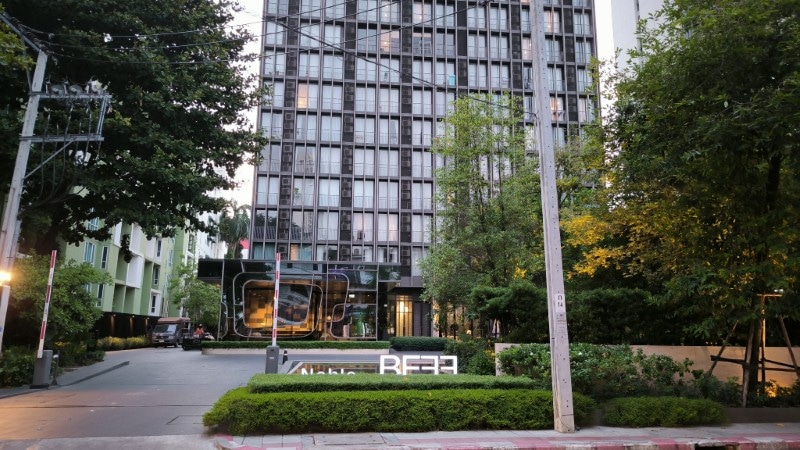
If you want a newer building within walking distance of a BTS or MRT station, prices often start from THB 12,000 to THB 18,000 a month for a smaller unit.
You’re paying more for convenience than space.
Older Apartments
Starting from around THB 15,000 to THB 25,000 a month, you may find units over 50 square meters, sometimes much larger in older apartments.
These are good for:
- couples needing space
- families
- home offices
- people who dislike cramped condos
The tradeoff is that buildings may feel dated, and facilities can be limited.
This is the type of property that ExpatDen’s founder, Karsten Aichholz, stayed in when he lived in Thailand.
Modern Condominiums
Modern two-bedroom condos usually start around THB 20,000 and can rise quickly depending on area and building quality.
Serviced Apartments
Serviced apartments are fully furnished rentals that often include cleaning, reception staff, and sometimes utilities. They are popular with those who want a hassle-free move.
Prices usually start around THB 25,000 a month, with many good options in the THB 35,000 to THB 75,000 range. Premium units can go far higher.
Luxury Condos
Bangkok has plenty of upscale rentals, especially in areas like Thonglor, Ekkamai, Phrom Phong, and Chidlom.
Expect:
- designer interiors
- top facilities
- concierge service
- city views
- prime locations
Prices often start from THB 50,000 and can exceed THB 200,000 a month.
Houses and Townhouses
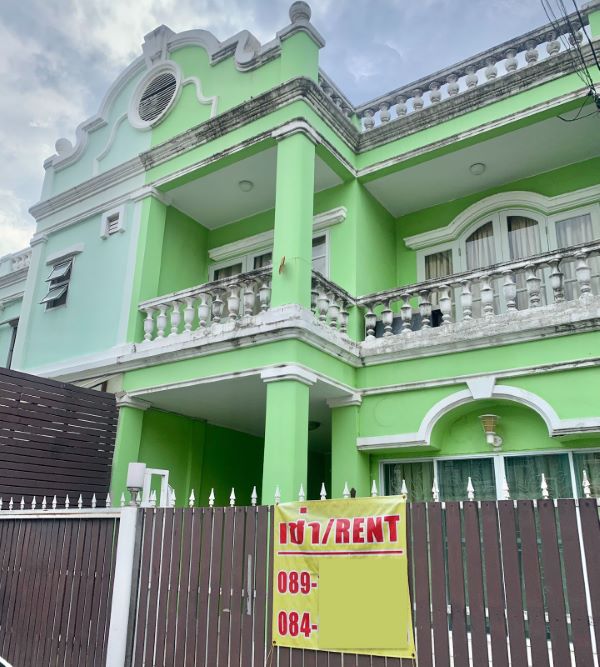
Often overlooked, houses and townhouses can offer excellent value if you need space. For example, you can rent a two-story townhouse with plenty of space for less than THB10,000 in a suburban area.
Some cost less than a central condo while giving you multiple bedrooms and parking. You’ll commonly find them in suburban areas or gated communities called muu baan.
They are ideal for:
- families
- pet owners
- people working from home
- anyone wanting more space
The downside is they are often farther from BTS or MRT stations, so transport becomes more important. Also, you may need to deal with the landlord who may not be able to speak English.
Which Type of Property Is Best?
This really depends on your lifestyle, budget, and how you plan to live in Bangkok.
- Digital nomads and people always on the go: If you need to commute every day or regularly go to networking events, it’s hard to beat a condo near the BTS Green Line. It makes getting around Bangkok much easier, gives you access to cafés to work from, and helps you stay social after work.
- Families or anyone who wants more space without overspending: If you have a family or just don’t want to live in a small box, older apartments or older condos can be a great deal. You usually get a lot more space for your money compared to newer buildings.
- Families, pet owners, or home-focused lifestyles: If you have kids, pets, want a small garden, or don’t need to commute every day, I’d seriously look at a townhouse or house. You’ll usually get more privacy and much more living space than a condo.
- Retirees and budget-minded renters: If you’re retired or simply want to keep costs down, a basic apartment or townhouse can be a good move. Rent is often cheaper, units can be larger, and the pace of life is usually calmer, especially outside central Bangkok.
I also don’t really recommend renting a studio condo smaller than 30 square meters unless you spend most of your time outside and only need a place to sleep. For a long-term stay, small units can start to feel cramped very quickly. If possible, aim for at least a one-bedroom condo.
Finding Apartments
The challenge of finding a place in Bangkok isn’t really about where to look. It’s more about how to find the right place for you.
Bangkok has a massive rental market. For example, when browsing rentals on DDproperty, you can easily see more than 60,000 listings available.
So in this section, I’ll show you the approach I personally use to find a place in Bangkok.
In short:
- I started by looking online first and searching for an older apartment in the area where I want to live.
- I contacted an agent or landlord to arrange a viewing.
- Then, I walk around the area and building where I’m planning to live before signing a lease.
The whole process usually took me around one to two weeks. Sometimes, it takes longer.
But if you don’t have time, you can simply use a real estate agent. Just make sure your budget is over THB 10,000 per month with at least a six-month contract.
Tip: Since the rental industry in Thailand is competitive. It’s possible to negotiate the price down by 40% if you know how to do it.

Start with Looking Online
Big property websites in Thailand include DDproperty and Hipflat. You can use them to:
- get a rough idea of prices and neighborhoods
- compare rental options without visiting each building
- narrow down areas that fit your budget
That said, many listings on these sites are posted by agents, and asking prices are often higher than what owners may actually accept.
You can sometimes find better deals on Facebook Marketplace (Facebook is huge in Thailand) or local rental groups such as Bangkok Apartment group.
There are two big downsides to searching online though:
- It can feel overwhelming because Bangkok has so many rentals. Searching can easily take longer than you expect.
- Photos can be misleading and often look better than the real unit.
Because of that, I never recommend signing a lease or paying a deposit online before seeing the property in person.
Walking Around
Don’t overlook the old-school method of simply walking around. I always do this before signing a contract.
You might not love doing it in Bangkok’s heat, but walking the area gives you a real feel for what it’s like to live there. After one stroll through a neighborhood, you’ll often know quickly whether it suits you or not.
I’d usually visit the same area at different times of day to check things like:
- noise issues, such as schools in the morning or afternoon, bars and clubs at night, or heavy traffic
- how safe the area feels after dark
- the condo environment, such as outside visitors coming and going or possible Airbnb problems
- food options nearby
- overall atmosphere and convenience
While walking around, you can also step into apartments and speak directly with the property manager or front desk staff. Just keep in mind that not everyone will speak English.
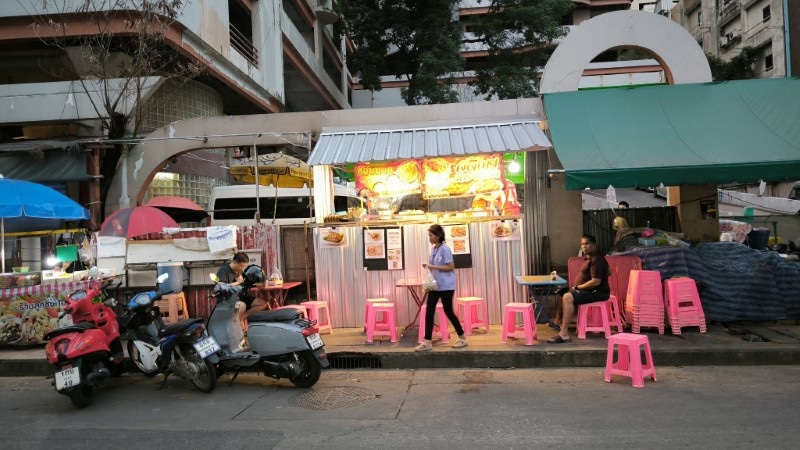
Another advantage is that you can often view a few available rooms without making an appointment first.
Personally, I know only a few people who found rentals just by walking into buildings, so I wouldn’t rely on this method alone. I’d use it more to get a feel for the neighborhood and shortlist buildings worth checking properly later.
Many people spend days walking around their preferred area and still come away empty-handed, so it’s best used alongside online searches.
Using Real Estate Agents
Using a real estate agent is the easiest way to find an apartment in Bangkok.
After you give them your budget, requirements, and preferred location, they will give you a list of properties they have on hand.
If you’re in Thailand, they can take you to the apartment. If there are many apartments in their listings within the same area, they may take you to view a bunch of apartments in one day.
However, there are four important points you should know:
- Regulations: Many real estate agents in Bangkok aren’t regulated. So, it’s possible you may find a professional agent or a freelance agent who acts as a real estate agent part-time for extra money.
- Free for you: It’s free for you to use real estate agents, as they get their commission from the landlord, which is usually one month’s rent per one-year contract.
- Database: Real estate agents in Bangkok tend to have their own database of listings. So, if they don’t have any properties you want, you should find other agents.
- Neighborhood: A majority of the listings they have are in central Bangkok and popular expat areas (like along the Green BTS line in Sukhumvit). It means if you prefer to find a place in the outer parts of the city, you may need to find it on your own.
To use a real estate agent, here are the two main requirements:
- Minimum contract: Most agents prefer to work with a minimum one-year contract. However, some may still be willing to work with a six-month contract.
- Budget: Your budget should be at least THB 10,000 per month.
Note that some agents may ask about your visa and work permit since they just want to make sure that you can rent long term.
A main disadvantage of using a real estate agent is that you lose negotiating power. This means it’s hard to get the best deal when using an agent.
Read our guide to a real estate agent in Bangkok to find out more.
Amenities
Let’s take a quick look at what usually comes with renting a condo in Bangkok.
Building Amenities
What you get depends on the type of property you rent.
If it’s a basic apartment, it may only come with a security entrance or keycard access.
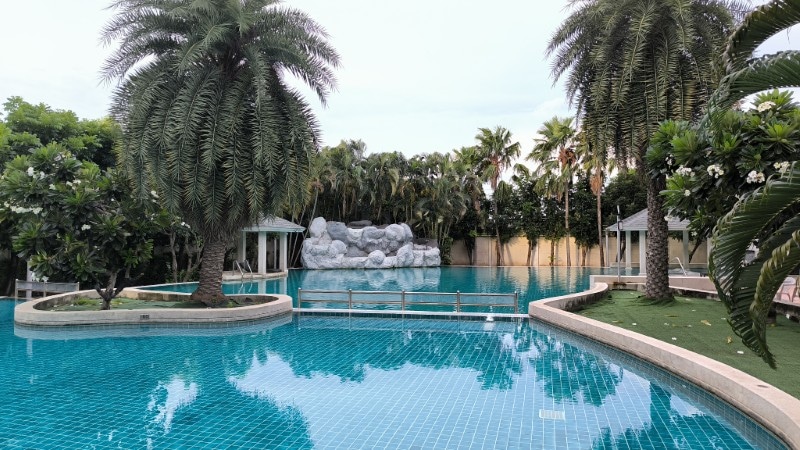
If it’s a condo, you can usually expect amenities such as:
- swimming pool
- gym
- better security
- parking
- shared common areas
Luxury condos may also include extras such as a sauna, co-working space, rooftop garden, or lounge areas.
Convenience Stores
Living in a condo can be very convenient. Many buildings have convenience stores such as 7-Eleven or a small supermarket on the ground or basement floor, and some also have restaurants inside.
Some buildings even have vending machines. This means you can often find food or basic essentials at almost any time of day.
Furniture
Many condos in Bangkok come fully furnished with the basics, such as:
- table
- sofa
- wardrobe
- bed
- air conditioners
Some may also include a refrigerator, microwave, and basic kitchenware.
Laundry
A washing machine may be included if you rent a higher-end condo. If not, there are often shared washing machines in the building, usually on the ground floor or in a common area.
 ?
? - A lesson structure to help you effectively learn Thai
- Thousands of Thai language lessons with lesson notes, podcasts, and quizzes
- Learn Thai on the go through their mobile application
- Personalized program to learn exactly on what you need
- Affordable price starting at only $8 a month
- 60-day moneyback guarantee

You can also use a laundry service. Many services will pick up clothes directly from your room, with prices often around THB 300 to THB 500 per month depending on how much laundry you have.
Utilities
Electricity
The highest costing utility is electricity.
Some landlords pass on the official electricity bill from the MEA to you, which is the ideal situation. The government electricity rate hovers between 4 and 5 baht per unit.
Others charge you an inflated rate that you pay to them, which is not ideal. Some condo management have been reported to charge up to 8 baht per unit.
If you use the air conditioner, monthly bills tend to be around 2,200 baht or more per bedroom, depending on how efficient the air conditioner is.
Without air conditioning, your bill could be less than 700 baht per month.
Some people with older air conditioning units and bigger homes pay up to 10,000 Baht per month.
Water
Costs for water are minuscule in Bangkok. Government water is 7 baht per unit in Bangkok but less scrupulous landlords can inflate that as high as 25 baht per unit.
Your water bills should not be more than a couple of hundred baht per month, and if you see them over 500, then something is wrong.
Internet
When you rent a condo in Bangkok, it is most likely that you will need to install an internet connection yourself.
It’s easy to do. You just need to show a rental contract to an internet provider. However, you should check with the landlord if this is possible and if it’ll incur any additional costs before you sign the lease.
Internet in Bangkok is fast and affordable. You can usually get speeds of at least 500 Mbps for around THB 600 per month.
If you rent an apartment, the building may offer its own internet package for around THB 500 per month. This is often less ideal because it is shared with other tenants and can have connection issues, especially during busy hours.
Signing a Rental Leases in Thailand
Once you’ve found a place to live, it’s time to sign the lease.
Contract Duration
The standard rental length in Bangkok is 12 months.
It’s possible to negotiate for a shorter term if you get in touch with the owners directly. They might be willing to accept a six-month lease.
For leases less than six months, you usually have to find a condo where all units are held by a single company. Staff at these places might let you sign shorter leases.
You will pay a premium, but this tends to be the only way to make it work.
Deposits
Similar to renting an office, it’s generally a 2+1 rule.
- 2 months as a security deposit
- 1 month rent in advance
So, you should be prepared with at least three months’ worth of rent before you move in.
In some cases, it can be a 1+1 rule:
- 1 month as a security deposit
- 1 month rent in advance
When paying for an apartment, there are generally two common scenarios:
- You pay one month’s rent as a holding deposit first and the remaining amount on the day you sign the lease
- You pay everything on the day you sign the lease
Good to know: In most cases, the deposit can’t be used to cover your last month’s rent. However, some property managers may allow you to use the deposit for the final month if they have already inspected the unit and confirmed there is no damage.
Maintenance and Repairs
It’s important to state in the lease who pays for minor repairs and maintenance, whether it’s a broken air conditioner, problems with the stove, or termite damage.
These costs can add up to 10% of your total rent, so you should clearly understand, ideally in writing, who is responsible for paying for them.
In general, major maintenance is the landlord’s responsibility. For minor repairs, the tenant usually pays.
Management Fee
If you rent a condo, there is a chance that a condo management fee applies. In most cases, the tenant is expected to pay it.
Good to Know About the Lease in Thailand
Coming from Germany, the language in the leases you encounter in Thailand has the potential to raise the hair on the back of your neck.
I’ve seen everything from “owner can raise the rent anytime” to leases that said I could get kicked out for violating the lease if I “created a nuisance for neighbors.”
Other contracts were entirely in Thai.
Thailand doesn’t have a Landlord Tenant Act, which means that you won’t find the tenant rights you’re used to back home in leases in Thailand.
Websites like Slice of Thai provide lease samples. If you’re in a position to ask your landlord to use one of them, they might be worth a look.
At the very least, it gives you an idea of things you can check in your own lease to see if they are specified at all, and if so, in whose favor.
While you might not be able to use your own contract template, your landlord might be willing to cross out or alter certain sections in theirs.
Depending on the landlord, he or she might have just pulled one from the internet as well. There are certain points you should be careful of before signing a lease.
While this is not always necessary, if you would like to play it safe with your lease, you can ask a lawyer to review it for you.
Paying for Your Rent
The best way to pay your rent is by transferring it directly to the landlord’s bank account. Then, send them the payment slip as proof.
Always keep a copy of the payment slip and clearly note what the payment is for to help prevent disputes in the future.
It’s also a good idea not to pay a real estate agent in Bangkok, or elsewhere in Thailand, directly. As mentioned earlier, the market is not heavily regulated, and there are some unprofessional agents who may disappear with your money.
If you need to pay in cash for any reason, always make sure it is written clearly in the contract and acknowledged by the landlord.
My Personal Tips on Dealing with a Landlord
Many landlords in Bangkok are familiar with renting a place to expats and are quite easy to deal with.
However, like other countries, there are landlords that are challenging to deal with.
My approach when I first arrived was to find owners and management that appear to be easy to work with.
I figured as long as they have the right attitude, minor misunderstandings caused by a language barrier shouldn’t be much of an issue.
As far as I can tell, the strategy worked out well.
Dealing with Rental Disputes
The most common disputes between tenants and landlords are usually about deposits. I’ve personally never had problems getting my deposit back, but I’ve heard plenty of stories from friends who have.
Case Study: Dealing with Deposit Disputes
One friend of mine had a landlord who wanted to keep 10,000 baht out of his 20,000 baht deposit for supposed water damage in the kitchen.
He argued that it was normal wear and tear.
Personally, I think the fact that he moved out on short notice might have contributed to the landlord holding half of his deposit.
In the end, he involved a Thai friend to help negotiate that down to 5,000 baht—a lot cheaper than involving a lawyer.
How to Improve Your Chances of Getting It Back
The best way to get your deposit back is to take pictures of furniture and spaces, keep good relationships with landlords, and treat the interior well.
- If you rent from a private owner, you have a better chance of getting your deposit back in full if you maintain the rental.
- If you rent from a property manager, it’s rare that you’re going to get your deposit back in full. They almost always take some of your deposit for curtain and rug cleaning, painting, and cleaning the room.
Anyway, landlords must return your deposit if there is no damage, but they do not have to pay interest on it.
If your landlord owns five or more units, houses, or townhouses, they must return your deposit within seven days. Otherwise, it often takes around two weeks.
Personally, I’ve never had a problem getting my deposit back, despite the horror stories you may hear. Read our exclusive guide on how to get 100% of your deposit back.
If You Can’t Resolve It
If your deposit doesn’t get returned, you can reach out to a lawyer we recommend or contact the Foundation for Consumers. Their staff may have limited English, so having a Thai speaker can help.
That said, in my experience, a calm negotiation for a partial refund is often faster and cheaper than pushing things legally.
Sometimes it’s worth calculating whether the fight is worth it. If you lose one month of deposit after staying somewhere for two years, that may only be around 4% of your total rent paid. It’s frustrating, but not always worth months of stress.
What Not to Do
I strongly recommend not publicly shaming your landlord. Libel and slander can be both criminal and civil matters in Thailand, and once legal action starts, things can become complicated quickly.
Also, while your deposit may be at risk, landlords are generally not allowed to take your furniture or appliances as compensation for unpaid rent or damages.
If the lease is canceled and you refuse to leave after it ends, the landlord may ask the police to remove you.
Extra Local Tips
If you’re friendly with the maintenance team, you can ask them for a small bucket of the paint. Since they mostly use one universal color, they always have some on hand.
To get on the maintenance team’s good side in advance, throw them a tip every Thai New Year (Songkran) holiday. They won’t forget you later on. If you can’t get a hold of your maintenance team, peel a piece of paint from the room and take it to HomePro. They’ll colour-match it for you.
In the end, accept that there’s a good chance of not getting your deposit back in full, even if you do everything correctly.
Moving Out Notice
The biggest point of contention I saw, aside from deposits, was the advance notice before moving out.
The landlord of our office expected a 30-day notice for a non-extension of lease—even though it wasn’t specified in the rental lease.
My advice is to inform your landlord earlier rather than later to give them a chance to find a new tenant.
Not having the place stand empty is also a good way to keep the landlord happy and with a new deposit in their hands, they’re less hesitant to return yours.
Find a Place to Rent for Families
For families moving to Thailand, things can be a bit tricky. You need to have a big space, and it shouldn’t be far from your kids’ school as well as your workplace.
For this kind of place inside a city area, you should expect to pay at least 30,000 baht a month. Sometimes, it can be easily over 50,000 baht if it’s inside a business area like Asok.
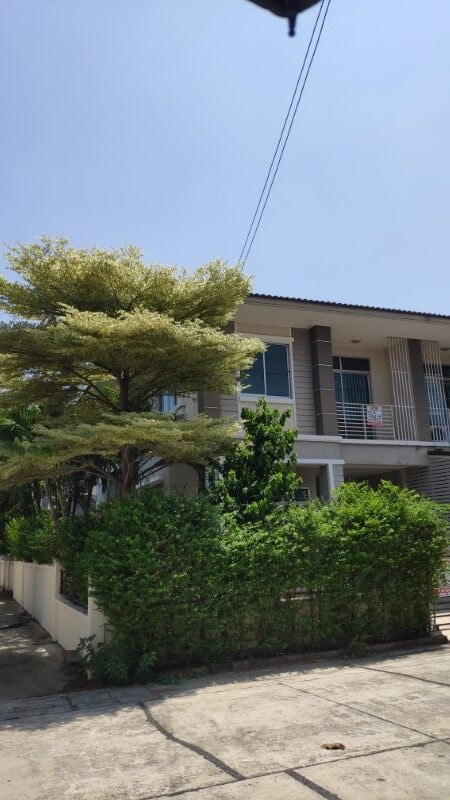
Alternatively, you can pick a place that’s outside the city for that extra bit of space but still has access to tollways, preferably without having to do a u-turn. Or you can live in a cheaper neighborhood like Bang Na.
In general, Google Maps is a resource to check out commuting times during rush hour. Select directions from your home to work or home to your son or daughter’s school at the time you plan to arrive and leave.
Finding a Place that’s Wheelchair Accessible
If you need to rent an apartment that is wheelchair accessible in Thailand, you’ll have to do some digging.
Although most Thailand rental websites won’t list them explicitly, most newer buildings will be wheelchair accessible. Either way, you should personally check nearby areas to really find out if it’s good for a wheelchair or not. This is because Thailand isn’t wheelchair friendly.
Roads can be crude and there might be trees or electric poles right in the middle of the footpath, which makes it hard for wheelchair users to navigate.
You can also use the Google Street View feature on Google Maps to check exactly what the nearby area looks like. Make sure your real estate agent knows about your specific accessibility needs.
Finding a Pet Friendly Condo
If you have a pet in Thailand, you might find yourself in another tricky situation.
Not a lot of apartments in Thailand allow pets. Even if they do, they will only allow a small breed.
Your best bet is to rent a house or a low-rise older building.
A barrier to your home hunting is that most Thailand real estate websites do not clearly say whether a building is pet-friendly or not. This is where using real estate agents is a good, fast, free option.
You can find out more from our exclusive content on how to find accommodations that allow pets in Thailand.
Finding a Short-Term Rental
For rentals shorter than six months, It might be easier to just rent a serviced apartment or use Airbnb. It’s cheap. And you can find thousands of properties there. If you want to use Airbnb, make sure to stay there for over 30 days for legal reasons.
Read our guide to finding a short-term rental in Bangkok for more information.
Finding a Lease Longer Than 3 Years
If you’re looking for a lease longer than three years, the lease must be registered at the Land Department. Landlords may be reluctant to offer a three-year lease because it can involve extra fees for them, and they may need a court order to cancel the lease early.
In addition, if they did not pay taxes on rental income in the past, it could create problems for them.
The maximum registered lease term is 30 years. At that point, though, there is a whole different set of issues that goes beyond the scope of this article.
Now, on to You
This article includes everything you need to know about renting in Bangkok. If you want something more in-depth, check out our premium subscription.
You’ll discover hidden gems in Bangkok, how to save 40% on rent, and how to avoid common mistakes that cost expats thousands of dollars a year.
Related Articles




 Deutsch:
 ไทย:
ไทย: Français:
 Português:
 Português:
 Español:
 Español:
 中文 (中国):
 Русский:
 Nederlands:
 العربية:
 Italiano: