
This article will take approximately 20 minutes to read. Don't have the time right now? No worries. Email the ad-free version of the article to yourself and read it later!
Shanghai, Beijing, Shenzhen, Guangzhou and Chengdu offer very different lives in China. This guide compares what each city costs, where expats live, the schools and hospitals, and the downsides of each.
Moving to China sounds like one decision, but the city you choose changes almost everything about daily life. A finance manager in Shanghai’s Lujiazui and an English teacher in Chengdu live in the same country and in very different worlds.
Most people don’t get a free choice, because your employer sponsors your work permit and the job sets the city. If you’re weighing offers, or lucky enough to pick, these are the five cities most worth comparing.
Key Takeaways
- Shanghai is the corporate hub, with the widest choice of international schools in China and the highest rent on this list.
- Beijing suits diplomats, journalists, academics and Mandarin students. Its air had its cleanest year on record in 2025, but winter smog hasn’t gone away.
- Shenzhen is the tech city, with the cleanest air of the five and Hong Kong just across the border.
- Guangzhou gives you big-city life in the south at close to Chengdu’s rent.
- Chengdu is the cheapest and slowest-paced, as long as grey winters and a short list of international schools don’t put you off.
- Whichever city you’re considering, spend a couple of weeks there living normally before you sign a lease.
How to Pick the Right City
Your job settles the question for most people, since your employer sponsors your work visa.
- Your work: Corporate and finance roles cluster in Shanghai, tech in Shenzhen and trade in Guangzhou. Beijing leans toward government-linked work, media and universities, and our guide to finding work in China covers the options in every city.
- Your family: Shanghai and Beijing have far more international schools than the other three, according to Hurun’s 2026 rankings. Fees at the best-known schools run well over RMB100,000 a year in all five cities.
- Your budget: Rent is where the cities split. A city-center one-bedroom in Chengdu or Guangzhou costs roughly half what it does in Shanghai or Beijing.
- Weather and air: Shenzhen and Guangzhou have cleaner air and long, sticky summers. Beijing has central heating and winter smog, while Shanghai and Chengdu have damp winters in homes without central heating.
Visit before you commit if you can. A couple of weeks of ordinary life there, from the commute to the grocery run, shows you things a short holiday doesn’t.
Shanghai
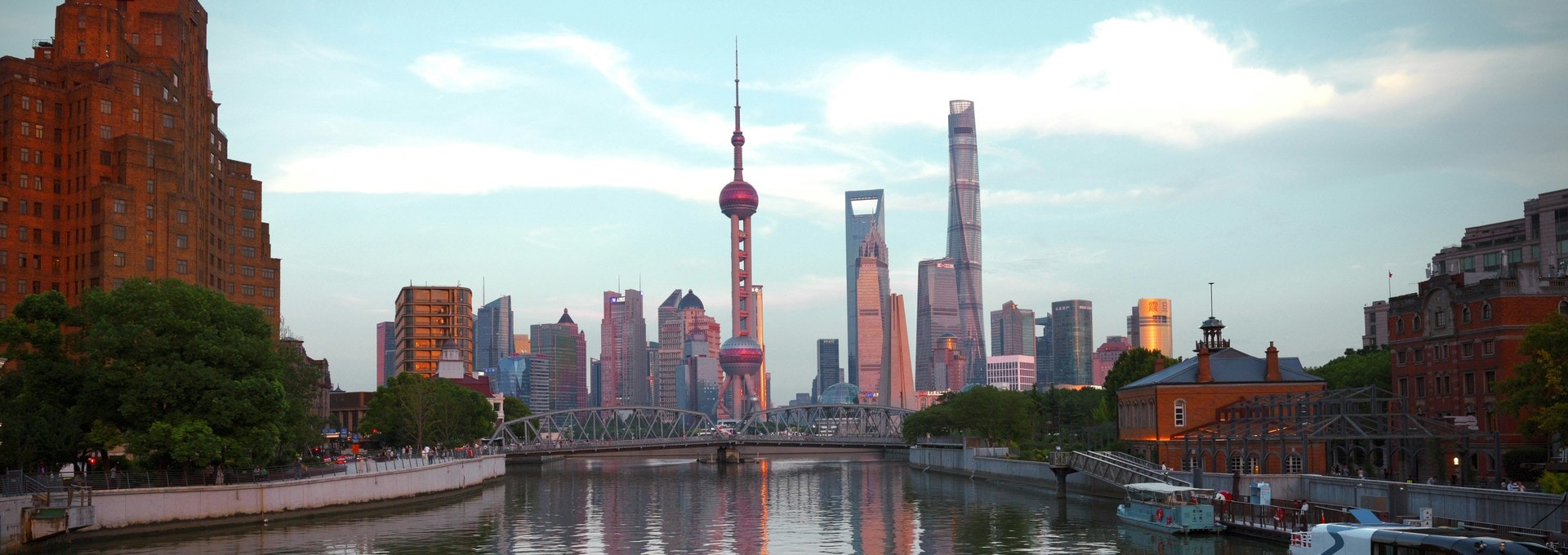
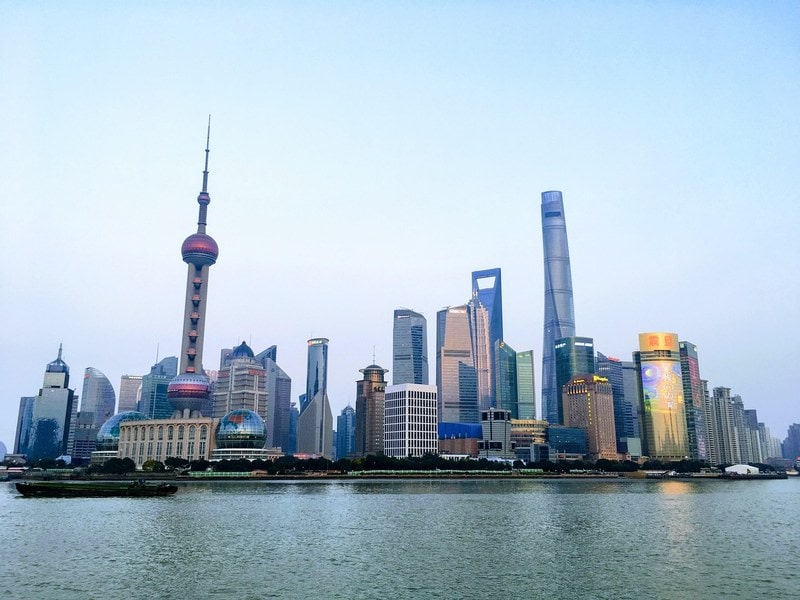
Shanghai is the corporate capital of mainland China, home to more than 1,000 multinational regional headquarters. Banks, consultancies and regional offices fill the towers of Pudong’s Lujiazui, and it’s the city most corporate relocation packages point to.
It’s also the most cosmopolitan of the five. The tree-lined streets of the former French Concession are full of cafés and restaurants, and central Shanghai is the one place on this list where you can get by in English for a while.
Cost of Living in Shanghai
Shanghai is the most expensive city on this list, and rent is the main reason. Our recommended budgets reflect that:
- Single expats who eat mostly local food say around RMB15,000 (US$2,240) a month is enough to live well in the city center.
- A single person who wants room for Western dining, travel and saving should aim for RMB22,000 (US$3,280).
- A couple without children needs a combined income of around RMB38,000 (US$5,660).
- A family with two school-age children needs a combined income of around RMB65,000 (US$9,690).
Rent in Shanghai
A city-center one-bedroom averages about RMB6,586 (US$980) a month on Numbeo, and the districts expats favor cost more than that.
- Xuhui, which covers much of the former French Concession, is walkable and leafy, with one-bedrooms from RMB8,000 to RMB10,000.
- Jing’an suits singles who want to be central and close to nightlife, at similar prices.
- Changning and Minhang are popular with families for their international schools; a two-bedroom in Minhang runs RMB8,000 to RMB14,000.
- Pudong has Lujiazui’s high-end apartments for finance workers and the villa compounds of Jinqiao, where villas start around RMB30,000.
Healthcare, Education, and Social Scene in Shanghai
Private care in English is easy to find at Shanghai United Family Hospital, Parkway Shanghai and Jiahui Health. Public hospitals like Huashan also run international medical centers for foreign patients, and good health insurance matters for anything bigger.
School choice is the widest in China. Shanghai American School, Concordia, Dulwich College Pudong and Wellington College all sit in Hurun’s 2026 top ten for foreign passport holders, and Dulwich College Pudong’s 2026-27 fees run from RMB282,000 for toddlers to RMB411,750 for the final two years.
Hurun’s report also notes that fewer foreigners live in China than before. In the expat forums, people describe a Shanghai community that’s smaller and more settled than it used to be, with nightlife that’s moved from foreigner-focused bars to mixed local venues.
The Downsides of Shanghai
- Rent is the highest of the five, and it climbs fast in the districts expats like most.
- Winters are damp, and most homes have no central heating, so the cold gets indoors.
- Local-hire corporate jobs are competitive, and fluent Mandarin speakers have a clear edge.
Read more:
- Best Places to Live in Shanghai
- Cost of Living in Shanghai
- International Schools in Shanghai
- Hospitals in Shanghai
Beijing
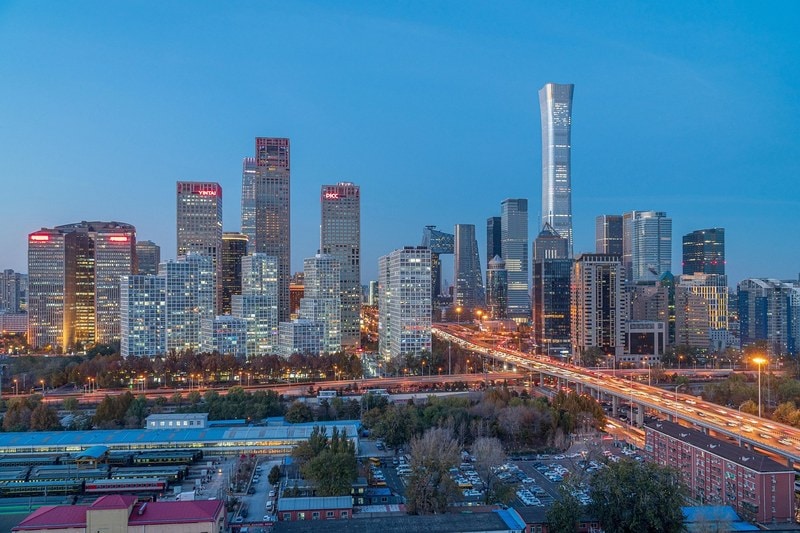
Beijing is the capital, and its expat community reflects that. Diplomats, foreign correspondents, NGO staff, academics and Mandarin students make up a big share of it, alongside corporate staff in the CBD and tech workers around Zhongguancun.
Glass towers in Chaoyang and the hutong alleys around Gulou are a short ride apart. A lot of expat life happens in the old lanes, where courtyard houses now hold cafés and bars.
Cost of Living in Beijing
Beijing runs a little cheaper than Shanghai, though heating season pushes utility bills up in winter.
- A frugal single person can live on RMB12,000 to RMB15,000 (US$1,790 to US$2,240) a month.
- A comfortable single lifestyle costs RMB25,000 to RMB32,000 (US$3,730 to US$4,770).
- A family of four with employer-subsidized schooling needs a combined income of RMB45,000 to RMB60,000 (US$6,710 to US$8,940).
Rent in Beijing
A city-center one-bedroom averages about RMB6,450 (US$960) on Numbeo. Two-bedroom rents vary a lot by area:
- Sanlitun and the CBD are central, busy and pricey, with two-bedrooms from RMB12,000 to RMB30,000.
- Wudaokou and Haidian suit students and budget renters near the universities, at RMB8,000 to RMB15,000.
- Shunyi is the family suburb near the airport and the big international schools, where two-bedrooms cost RMB6,000 to RMB10,000, but you’ll probably need a car.
- Gulou and the hutongs of Dongcheng and Xicheng have character in older housing, with high rents for what you get.
Healthcare, Education, and Social Scene in Beijing
Beijing United Family Hospital, Beijing Mingde Hospital (also known as Oasis International Hospital) and Raffles Hospital Beijing cover private care in English, but it’s expensive, so check what your insurance covers. Peking Union Medical College Hospital, one of China’s best-known public hospitals, runs an International Medical Services department for foreign patients.
The International School of Beijing in Shunyi ranked first in Hurun’s 2026 list of schools for foreign passport holders, with fees of RMB291,800 to RMB361,800 a year. Dulwich College Beijing and the British School of Beijing are nearby, and the Western Academy of Beijing sits on the Chaoyang side of Shunyi.

Sanlitun is the center of expat nightlife, and Wudaokou’s bars and cafés are packed with students.
The Downsides of Beijing
- Smog still comes back in winter, even after the city’s cleanest year on record in 2025.
- Winters are dry and bitterly cold outside, though central heating keeps homes warm.
- The city sprawls, and family suburbs like Shunyi mean long commutes.
Read more:
- Best Places to Live in Beijing
- Cost of Living in Beijing
- International Schools in Beijing
- Hospitals in Beijing
Shenzhen
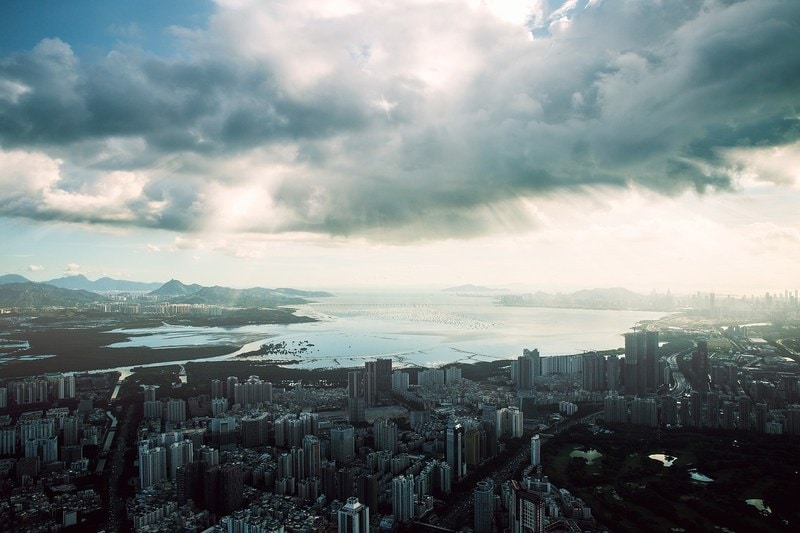
Shenzhen is China’s tech and hardware city, and it’s far younger than anywhere else on this list. It has grown from a small fishing village since it became a Special Economic Zone in 1980, and Huawei, BYD and DJI all have their headquarters here.
The expat crowd is smaller and more work-focused than Shanghai’s, and Hong Kong is right across the border for weekends away and international flights. Shenzhen also had the cleanest air of the five cities in 2025.
Cost of Living in Shenzhen
Day-to-day spending in Shenzhen runs close to Shanghai’s, at around RMB4,073 (US$605) a month for one person before rent on Numbeo’s figures. Rent is where you save.
Good to Know: Shenzhen and Guangzhou fall under the Greater Bay Area tax subsidy, which the Ministry of Finance has extended to the end of 2027. In Shenzhen, eligible overseas talent can claim back income tax paid above 15% of their taxable income. Ask your employer whether you qualify, and see our guide to personal income tax in China for the wider rules.
Rent in Shenzhen
A city-center one-bedroom averages about RMB5,134 (US$765) on Numbeo, and prices swing widely between districts:
- Nanshan and Shekou are the family favorites, with international schools, green space and the biggest expat community; one-bedrooms run RMB5,500 to RMB12,000.
- Futian is the central business district, best for professionals who want dining and nightlife close by, at RMB6,000 to RMB11,000 for a one-bedroom.
- Bao’an is cheaper and increasingly popular, with one-bedrooms from RMB3,200 to RMB6,000 and a quick commute to Nanshan.
- Luohu is older and grittier but central, at RMB3,500 to RMB6,500.
Healthcare, Education, and Social Scene in Shenzhen
The University of Hong Kong-Shenzhen Hospital runs an International Medical Center for foreign patients, and Shenzhen New Frontier United Family Hospital offers private care in English.
Many international schools sit in Nanshan and Shekou, including BASIS International School Shenzhen and QSI International School of Shenzhen, and a school for foreign children in Shekou joined Hurun’s top 30 for the first time in 2026. Shekou International School’s 2026-27 fees run from RMB190,000 for the youngest children to RMB329,900 for high school.
Social life centers on Shekou’s restaurants and bars and Futian’s nightlife, and plenty of people head to Hong Kong on weekends.
The Downsides of Shenzhen
- Summers are long and humid, and typhoon warnings can close schools and offices.
- There’s little old-town character compared with Beijing, Guangzhou or Chengdu.
- Local tech firms are known for long hours, and “996” schedules (9am to 9pm, six days a week) still come up in forum threads.
Read more:
- Best Places to Live in Shenzhen
- Shenzhen Apartments for Rent
- International Schools in Shenzhen
- Hospitals in Shenzhen
Guangzhou
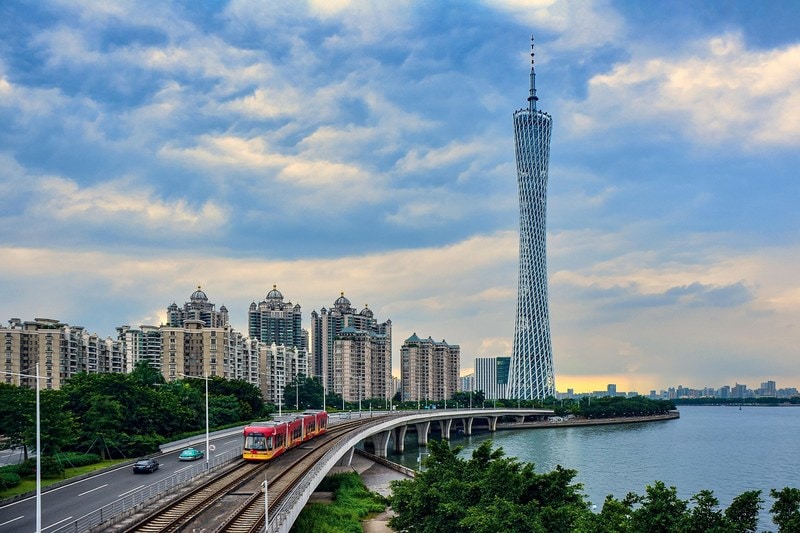
Guangzhou has been a trading port for more than 2,000 years, and trade still shapes the city. The twice-yearly Canton Fair, wholesale markets and export businesses bring in plenty of foreigners, alongside English teachers and staff at the region’s manufacturers and logistics firms.
Food is what people who love Guangzhou mention first, from morning dim sum to Cantonese roast meats, and the pace is calmer than in Shanghai or Shenzhen.
Cost of Living in Guangzhou
Rent is the big saving here, because everyday spending isn’t much lower than in Shanghai. Numbeo puts a single person’s monthly costs before rent at about RMB4,004 (US$595), within 3% of Shanghai’s.
Rent in Guangzhou
Numbeo puts a city-center one-bedroom at about RMB3,611 (US$540) a month and a three-bedroom at about RMB8,767 (US$1,305). Outside the center, one-bedrooms average RMB1,871 (US$280). Popular areas with expats include:
- Tianhe is the modern center and one of the most popular districts with expats, full of offices, malls and restaurants.
- Yuexiu is older, central and more affordable, with plenty of local character.
- Haizhu, south of the Pearl River, is quieter and mixes old and new buildings.
- Panyu and Baiyun suit families, with parks and international schools nearby, and Baiyun is close to the airport.
Healthcare, Education, and Social Scene in Guangzhou
Guangzhou United Family Hospital on Pazhou Avenue in Haizhu offers private care in English. Guangdong Provincial People’s Hospital, one of the city’s top public hospitals, runs the VIP Concord Medical Center for patients who want hotel-style rooms at lower prices than private hospitals charge.
International schools are spread across the city, from the American International School of Guangzhou on Ersha Island and in Huangpu to the British School of Guangzhou’s campus in Baiyun. Fees at the top American and British schools reach about RMB304,000 a year.
Expat social life is more local than in Shanghai. English is less common, and Cantonese is spoken widely alongside Mandarin.
The Downsides of Guangzhou
- Summers start early and run late, with heavy rain.
- There’s less English than in Shanghai, with Cantonese in the mix as well as Mandarin.
- International schools are scattered, so families often end up choosing a district around the school.
Read more:
- Best Places to Live in Guangzhou
- Renting an Apartment in Guangzhou
- International Schools in Guangzhou
- Hospitals in Guangzhou
Chengdu
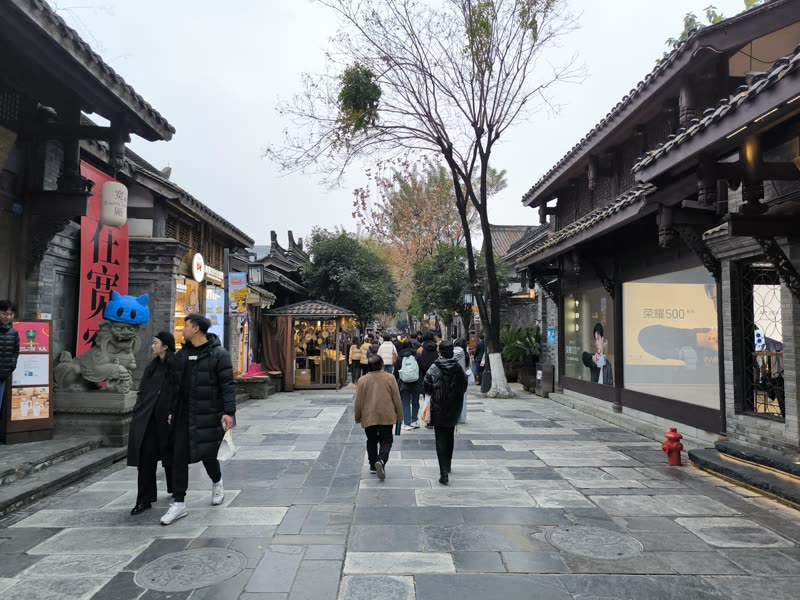
Chengdu is where people go for China at a slower pace. Life revolves around teahouses, hotpot and long evenings out, and the city has been a UNESCO Creative City of Gastronomy since 2010. The giant panda base is in the northern suburbs.
Most foreigners here teach English, though tech and gaming companies are a growing alternative. It’s the cheapest city on this list by a wide margin.
Cost of Living in Chengdu
Our recommended budgets show how far the money goes compared with the coastal cities:
- A single person living local-style needs RMB4,500 to RMB7,000 (US$670 to US$1,040) a month.
- A comfortable single lifestyle costs RMB14,000 to RMB24,000 (US$2,090 to US$3,580).
- One child at an international school adds RMB14,000 to RMB21,000 (US$2,090 to US$3,130) a month.
Rent in Chengdu
A city-center one-bedroom averages about RMB3,258 (US$485) on Numbeo, and studios in the northern districts start around RMB1,000.
- Tongzilin and Yulin in Wuhou are the main expat areas, walkable and on the subway, with four-bedroom apartments in expat compounds around RMB14,000.
- Jiuyanqiao, along the Jinjiang River, is the nightlife area, similar in rent to Yulin but noisier.
- The High-Tech Zone and Tianfu New Area have newer compounds near the international schools, but you’ll rely on cars or Didi.
- Chunxi Road is the commercial core and the most expensive place to rent.
Healthcare, Education, and Social Scene in Chengdu
West China Hospital of Sichuan University, the city’s big teaching hospital, runs an International Medical Center, and Global Doctors has a private clinic in Chengdu.
Chengdu International School charges RMB170,000 to RMB251,000 a year, and several international schools are in the High-Tech Zone and Tianfu New Area.
The expat community is smaller than on the coast but close-knit, and forum regulars say it feels less isolated than its size suggests. Nightlife centers on Jiuyanqiao Bar Street and the bars of Yulin.
The Downsides of Chengdu
- Winters are grey and damp, and air quality dips from November to February. Over a full year, Chengdu has the worst air of the five.
- There are far fewer international schools and corporate jobs than in the first-tier cities.
- It’s less connected than the east coast, with fewer direct international flights.
Read more:
Which City Is Right for You?
No city wins on everything, so it comes down to what you’re moving for. If your employer is a multinational, you’ll probably end up in Shanghai. If your work is tied to government, media or universities, Beijing makes more sense.
Shenzhen is the pick for tech, or if you want Hong Kong close by, and Guangzhou gives you a big southern city for much less rent. If a tight budget and a slower life matter more than clean winter air, Chengdu is hard to beat.
| City | Best for | City-center 1-bedroom | Key trade-off |
|---|---|---|---|
| Shanghai | Corporate careers, families who want the most school choice | RMB6,586 (US$980) | Highest rent, damp winters |
| Beijing | Diplomacy, media, academia, Mandarin study | RMB6,450 (US$960) | Winter smog, sprawl |
| Shenzhen | Tech and hardware, easy Hong Kong access | RMB5,134 (US$765) | Heat and typhoons, little old-town character |
| Guangzhou | Trade and sourcing, food lovers, mid-range budgets | RMB3,611 (US$540) | Long summers, less English |
| Chengdu | Teachers, tight budgets, a slower pace | RMB3,258 (US$485) | Grey winters, fewer schools and jobs |
Avoid this mistake: moving to a city before you have a job there. Visa-free entry doesn’t allow you to work, but citizens of more than 40 countries can use it to look around first, under a policy China has extended to December 31, 2026. Our overview of Chinese visas explains the options.
What About Other Cities?
These five aren’t the only options. Suzhou and Hangzhou are both a short train ride from Shanghai. Suzhou had 10 schools in Hurun’s 2026 international school rankings, and Hangzhou is home to Alibaba’s headquarters.
For the bigger picture before you choose, start with our guides to moving to China and the cost of living in China.
Sources Cited
- Numbeo cost of living pages for Shanghai, Beijing, Shenzhen, Guangzhou and Chengdu: rents and monthly costs, September 2026.
- European Central Bank euro reference rates: exchange rate, September 11, 2026.
- Shanghai Municipal Commission of Commerce: multinational regional headquarters in Shanghai.
- 2025 air quality reports from Beijing, Shanghai, Shenzhen and Guangzhou, with Chengdu figures from Sichuan Online and Sohu: air quality comparison between the five cities.
- Hurun Education 2026 international school rankings: ranked schools by city, top schools for foreign passport holders, and the fall in foreign residents.
- Ministry of Finance and State Taxation Administration, Caishui [2023] No. 34 and the Shenzhen Finance Bureau subsidy guide: Greater Bay Area tax subsidy.
- State Council Information Office: Shenzhen’s approval as a Special Economic Zone in 1980.
- UNESCO Creative Cities Network: Chengdu’s membership as a City of Gastronomy since 2010.
- Official company pages for Huawei, BYD and DJI: headquarters in Shenzhen.
- Chinese Social Sciences Net: Guangzhou’s history as a trading port.
- The State Council of the People’s Republic of China and the Ministry of Foreign Affairs: visa-free entry extension to December 31, 2026.