

This article will take approximately 27 minutes to read. Don't have the time right now? No worries. Email the ad-free version of the article to yourself and read it later!
Getting online in China means choosing between a local SIM tied to your passport and an international eSIM you install before you fly. This guide covers both: what each carrier charges, how to register, top up, and check your balance, and why none of it gets you past the Great Firewall on its own.
China runs one of the largest mobile networks on the planet, and none of it comes with an assumption that you already have a number. Every SIM card sold in the country, prepaid or postpaid, tourist or resident, gets tied to a real identity before it activates.
That’s true whether you’re stepping off a flight for a two-week trip or moving to Shanghai for a new job. The registration itself moves fast once you know where to go. What causes headaches is picking a plan that doesn’t match your length of stay, or assuming a Chinese SIM gets you onto WhatsApp the moment you land. This guide walks through the whole process, from choosing a carrier to keeping your number alive after you leave.
Disclaimer: This article may include links to products or services offered by ExpatDen's partners, which give us commissions when you click on them. Although this may influence how they appear in the text, we only recommend solutions that we would use in your situation. Read more in our Advertising Disclosure.

Key Takeaways
- China has three state carriers: China Mobile, China Unicom, and China Telecom. China Unicom is generally the easiest for foreigners, with English-speaking staff at its international counters.
- Every physical SIM requires real-name registration with your original passport, plus a live facial scan matched against your passport photo.
- A short-term tourist SIM with several gigabytes of data for a week or two runs roughly US$14 to US$42.
- If you only need data, a travel eSIM (Airalo, Holafly, Nomad, or Trip.com) works the moment you land and skips the passport queue entirely. Some cost as little as US$6 for two weeks. Just install it before you leave home.
- Domestic carrier eSIM only launched in October 2025 and works on just a handful of recent iPhone models bought inside mainland China, so it isn’t a realistic option for most visitors yet.
- A Chinese SIM alone does not get you past the Great Firewall. WhatsApp, Google, Instagram, and most Western sites stay blocked unless you add a VPN or use an eSIM with one built in.
- You can top up and check your balance through WeChat, Alipay, or the carrier’s app, and a prepaid number gets recycled after about three months at zero balance.
Do You Need a Chinese SIM Card?
Not everyone does, and this is worth settling before you queue at an airport counter. If you’re visiting for a week or two and mainly need data for maps, translation, ride-hailing, and messaging, an international eSIM installed before you fly usually covers it. It gives you a working connection the second you land, no passport check, and the better ones route around the Great Firewall so your usual apps still load.
A local mainland number earns its paperwork when you’re staying longer or living there. It’s useful for receiving SMS codes from mainland-only services, for delivery apps like Meituan that expect a +86 number (the same goes for most online shopping in China), and for the general friction of daily life that assumes everyone has a Chinese number. One thing that has changed: WeChat Pay and Alipay now let most visitors register and verify with a foreign number and a passport, so a Chinese SIM is no longer the hard requirement it once was just to pay for things.
Tip: Short trip, data only? Go with an international eSIM. Moving there, or need a local number for apps and services? Get a physical SIM once you arrive, and consider an eSIM as well for your first day before the SIM is set up.
Which Option Fits Your Stay?
The right choice depends mostly on how long you are staying and whether you need a +86 number. Here is the quick version, using the prices covered further down.
| Your situation | Best pick | Why |
|---|---|---|
| Trip under two weeks, data only | International eSIM (Trip.com, Airalo, Nomad, or Holafly) | Works on landing, no passport registration. Holafly includes a VPN; the others need your own. |
| Two weeks to three months, need SMS codes or delivery apps | China Unicom short-term tourist SIM (US$25 to US$42) | Gives you a real +86 number. Needs passport registration at a counter. |
| Moving to China for work or study | Monthly plan from a city carrier store | Your number links to your bank, lease and apps, and you will register it again with your residence permit details anyway. |
| Frequent visitor who wants to keep one number | China Unicom one-year international SIM (about US$70) | Its Keep-Your-Number service keeps the number alive between trips. |
Short trips are also when travel insurance matters most, so check our picks for travel insurance for China while you are sorting out your phone.
China’s Three Mobile Carriers
Every phone number in China runs on one of three state-owned networks. All three cover the major cities well, and coverage differences mostly show up once you head into rural areas or the far west of the country.
- China Mobile: the largest network by subscriber count, with the widest 4G and 5G reach outside the big cities. Its English-language support is thinner than Unicom’s, and some of its tourist plans are only sold through resellers like Trip.com rather than at a walk-up desk.
- China Unicom: the network most foreigners end up on. Its international department has staff who speak workable English, and its tourist SIM plans are built specifically for short stays, with passport-based registration handled at dedicated counters in major airports.
- China Telecom: stronger in some of the more remote provinces and sold to overseas travelers mainly through its CTExcel arm, which runs country-specific storefronts for buyers in the US, UK, Canada, and elsewhere.

If you’re only after a data connection and don’t care which carrier’s logo shows up in your settings, this decision barely matters. If you’re moving to China for work or study, it’s worth browsing our China guides for expats first, since your phone number gets linked to almost everything else you’ll set up in your first month, from your apartment lease to your food delivery app.
Tip: If you already know which city you’ll spend most of your time in, ask a local contact which carrier has the best signal in that specific neighborhood. Coverage inside dense apartment blocks can vary more between carriers than the national coverage maps suggest.
Physical SIM vs eSIM
Physical SIM
A physical SIM gets you a real Chinese phone number and full access to any China-based app or service that expects a local number, WeChat and Alipay included. It works in any unlocked phone with a SIM tray, which covers the overwhelming majority of devices people travel with.
Physical SIMs are becoming less popular here, though. China is intensely high-tech and largely cashless, so many visitors skip the card entirely and run a data eSIM alongside their WeChat and Alipay accounts instead. A physical SIM still matters when you need a real +86 number for a longer stay, but for a short, data-only trip it’s no longer the automatic choice.
The tradeoff is the setup: showing up in person with your passport, filling out a registration form, and having a facial scan taken. It’s a five to fifteen minute process at a proper carrier counter, longer if the queue is long or the staff aren’t used to foreign passports.
eSIM
China’s own carriers only started supporting eSIM very recently. The Ministry of Industry and Information Technology approved domestic eSIM service on October 13, 2025, and China Mobile, China Unicom, and China Telecom all switched theirs on within days.
The catch is device support. As of this writing, Apple’s own support documentation lists five phones as eSIM-compatible in mainland China: the iPhone 18 Pro, iPhone 18 Pro Max, iPhone Duo, iPhone 17e and iPhone Air. Each one only works if that specific unit was purchased inside mainland China. (Verified October 2026.) Activation still means visiting a carrier’s store in person with your ID. An eSIM profile from a carrier outside mainland China can’t be installed once you’re already inside the country, and a phone bought overseas can’t accept a mainland carrier’s eSIM either.
Good to know: For now, a domestic carrier eSIM is off the table for almost every foreign visitor. The eSIM that actually works for travelers is the international kind, described next.
The workaround that functions today is an international eSIM from a third-party provider such as Airalo, Holafly, or Nomad. These run on a Chinese carrier’s network under the hood but get sold and activated through the provider’s own app, so you install the profile before you fly and it’s live the moment you land, no counter visit and no passport check.
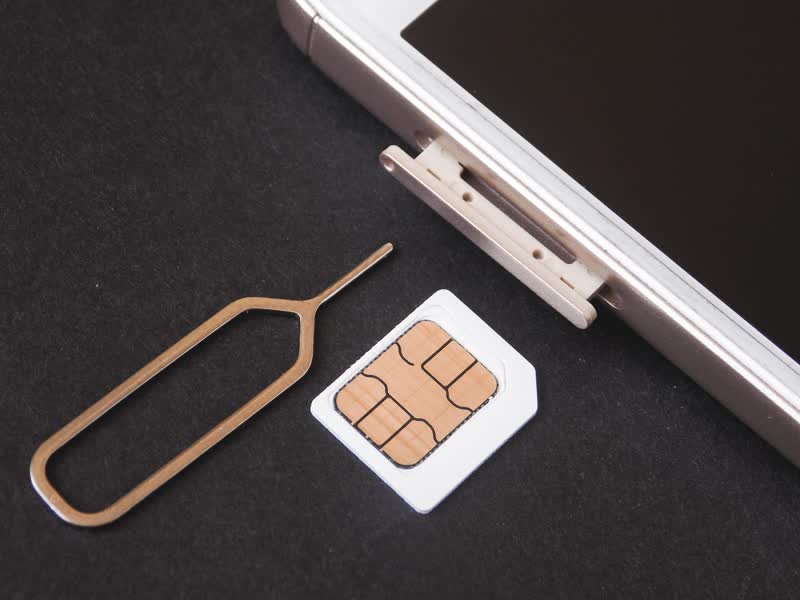
Good to Know: Install any international eSIM profile before you board your flight. Once you’re inside mainland China, the websites and app stores you’d normally use to download or activate an eSIM are themselves blocked by the Great Firewall.
Real-Name Registration: What You Need
Registering a SIM under your real identity has been a legal requirement in China since September 2013, under the Ministry of Industry and Information Technology’s Telephone User Real Identity Information Registration Regulations (MIIT Decree No. 25). Article 7 names “a foreign citizen passport” explicitly as an acceptable document alongside Chinese resident ID cards, so carriers can’t legally turn away a foreign passport at the counter.

What to bring to the counter:
- Your original passport. A photocopy or a photo on your phone won’t be accepted at an official store. Staff need to see and scan the physical document, and some also want to see your visa page.
- Your face for the camera. Since carriers layered biometric checks on top of the 2013 rule, most registrations now include a live facial scan matched against your passport photo at the point of sale. Airport kiosks sometimes can’t do this step, which is one reason an official city store is more reliable.
- Patience for the form. You’ll fill out a registration form with your passport number, visa type, and often a local address, even if that address is just the hotel you’re staying at.
- An unlocked phone. Any unlocked handset with a SIM tray works; a phone locked to a carrier back home won’t accept a Chinese SIM.
Unregistered SIM cards, sometimes sold informally on the street or through resellers who skip the passport step, still circulate in some cities. The government has run repeated crackdowns on these since 2015, and an unregistered number can be suspended without notice, sometimes mid-trip. It isn’t worth the savings.
Good to know: This only applies to local Chinese SIMs and eSIMs. An international travel eSIM, like the Trip.com one covered above, isn’t registered this way at all, since it roams on the network instead of being issued as a mainland number. When I visited with a Trip.com eSIM, I skipped registration completely. Not everyone wants to hand over a passport and sit for a face scan just to get online, and the eSIM route avoids all of that.
Where to Buy a SIM Card
Airport Kiosks
Major international airports, including Beijing Capital, Shanghai Pudong, and Guangzhou Baiyun, have carrier counters right past customs in the arrivals hall. This is the most convenient option if you land jetlagged and just want a number working before you leave the terminal. Staff at these counters deal with foreign passports constantly, so registration tends to move faster here than at a random city branch.
The catch is price. Airport tourist SIM packages typically cost 30% to 60% more per gigabyte than the same carrier’s plans sold downtown, and the selection is usually limited to two or three preset bundles rather than the full range.

City Carrier Stores
Official China Mobile, China Unicom, or China Telecom retail branches inside the city offer more plan choices and, once you’re past the language gap, better prices. In the expat forums, the consistent advice is to walk into an official carrier store rather than a corner phone shop, since only staff at official branches can complete the passport-based registration foreigners are legally required to go through.
Bring a translation of “prepaid data SIM” or a screenshot of the plan you want. Staff experience with English varies a lot by branch, and pointing at a number on your phone screen solves more problems than trying to explain a data plan out loud.
Buying Online Before You Arrive
Several carriers and travel platforms let you reserve a tourist SIM online and pick it up at the airport once you land, which skips the on-the-spot decision-making. This works well if you already know your travel dates and don’t want to gamble on airport stock. It’s less useful if your plans are flexible, since most reservations lock in a specific pickup date and location. Travel sites like Trip.com go a step further and sell data eSIMs outright, installed before you fly, which is the simplest route of all for a data-only visit.
Read more: Opening a bank account in China is the next practical step for anyone settling in longer than a tourist SIM covers, since a registered phone number is usually a prerequisite for the account application.
Plans and Prices
Prices vary by carrier, city, and how much data you actually need, but three rough tiers cover most situations.
| Plan Type | Typical Data | Validity | Price Range |
|---|---|---|---|
| Short-term tourist SIM | 5GB to 30GB | 7 to 30 days | US$14 to US$42 |
| Monthly prepaid plan | 15GB to 40GB | Renews monthly | US$12 to US$45 per month |
| Annual international SIM | 15GB to 50GB total | One year | US$30 to US$70 |
China Unicom’s short-term international traveler cards run roughly US$25 for seven days and 5GB, US$35 for fifteen days and 10GB with 75 voice minutes, and US$42 for thirty days and 30GB. Its longer prepaid tiers bill monthly, from around US$28 for 5GB up to US$45 for 40GB, and it also sells a one-year international SIM for about US$70 that includes 30GB spread across the year plus 100 minutes and 100 SMS each month.
China Telecom’s overseas travel plans, sold mainly through its CTExcel storefronts, tend to price out a little cheaper per gigabyte: roughly US$12 for 15GB over 30 days, US$15 for 30GB, and US$19 for 50GB, with a 90-day version of the 50GB plan for about US$24.

International eSIM Prices
International eSIMs price by data volume or as day-based plans, and they’re the simplest option for a short trip. A few current examples:
- Airalo: fixed-data China plans from around US$4 for 1GB up to larger bundles, plus longer day-based plans. No phone number and no built-in VPN, so you’ll want your own VPN for blocked apps.
- Holafly: unlimited-data China eSIMs at roughly US$1.50 to US$1.90 a day depending on plan length, or a monthly subscription around US$49.90 for 25GB and US$64.90 unlimited. Its big advantage is a VPN built into the connection at no extra cost, so WhatsApp, Google, and Instagram load without a separate app.
- Nomad: fixed-data plans from about US$4 for 1GB, and day-based unlimited plans from around US$12 for three days. No dedicated VPN feature marketed.
- Trip.com: the travel booking site sells data eSIMs for China at some of the lowest prices around, sometimes about US$6 for a 15-day plan. These are data-only, so you get mobile internet but can’t make regular phone calls.
On my own trip I used a Trip.com data eSIM, and for the price it’s hard to beat: a couple of weeks of mobile internet for the cost of a couple of coffees. Best of all, there was no registration to deal with. Because it’s an international eSIM rather than a mainland SIM, I never had to show a passport or sit for a face scan.
The one catch is that it’s data-only, so you can’t place a normal phone call on it, only use the internet, which is all most visitors actually need. Whether a given plan reaches blocked apps varies, so check that before you rely on it, or pair it with a VPN.
A phone plan is a small line item next to rent or health insurance, but it’s still worth planning for. If you’re mapping out a full monthly budget, check it against a general cost of living in China breakdown.
Tip: Watch for automatic monthly billing on prepaid plans. Some of China Unicom’s longer-term SIMs deduct the next month’s fee automatically on the first of the month, which can catch you off guard if you’re about to leave the country and forget to cancel.
How to Top Up Your SIM
Once your number is active, keeping it topped up is easy, and you have several options. You can recharge any of these ways:
- WeChat or Alipay: open the app, tap Mobile Top-up (话费充值), enter your number, choose an amount, and pay. This is the method most residents use day to day.
- The carrier’s own app: the China Mobile, China Unicom, and China Telecom apps all handle top-ups, plan changes, and balance checks in one place.
- By phone: call your carrier’s hotline (10086 for China Mobile, 10010 for China Unicom, 10000 for China Telecom) and follow the voice prompts.
- In person: any carrier-owned service hall can top you up over the counter.
One quirk to expect: the very first recharge, done when you register, usually has to be paid in person with cash or a UnionPay card (see our guide to using credit cards in China). App and WeChat top-ups work smoothly for every renewal after that.
Checking Your Balance and Data
The easiest way to see your remaining credit and data is the carrier’s own app or its WeChat mini-program (search the carrier’s Chinese name, such as 中国联通 for Unicom), both of which show your balance on the home screen once you’re set up.
If you’d rather not install anything, a short SMS to the carrier works too. These are the codes the Beijing government guide lists, where you text the command shown to the number shown:
| Carrier | Check Balance | Check Data |
|---|---|---|
| China Mobile | Text YE to 10086 | Text 10056 to 10086 |
| China Unicom | Text 102 to 10010 | Text 1071 to 10010 |
| China Telecom | Text 102 to 10001 | Text 3535 to 10001 |
Keeping Your Number Active
Chinese prepaid numbers don’t stay yours forever if you stop paying. Leave a prepaid SIM at zero balance for about three months and the carrier recycles the number, reassigning it to a new customer, and any leftover credit or data is gone with it.
This matters most if you leave China but want to keep the same number for a future trip, or because it’s tied to your WeChat, bank, and app logins. Keep a small balance topped up while you’re away and the number stays alive; let it run dry and you’ll be starting over, re-registering and re-linking everything, next time you’re back.
China Unicom’s English-language store sells a Keep-Your-Number service for US$32 a year for exactly this situation. Its international SIM can also be topped up by PayPal from abroad, and that airtime does not expire. (Verified October 2026.)
Common Problems and Quick Fixes
Most SIM and eSIM problems in China come down to a few simple causes. Check these before you queue at a carrier store:
- No signal at all on a new SIM: your phone may be locked to your home carrier. Ask your carrier to unlock it before you travel, because it is hard to do from China.
- SIM works for calls but not data: the registration may not be complete. Go back to the counter where you bought it with your passport.
- International eSIM shows no data: turn on data roaming for that eSIM line. Travel eSIMs connect as roaming, so they stay offline with roaming switched off.
- eSIM will not install: you probably tried after landing. Install the profile at home, since the download pages may be blocked once you are in China.
- Delivery or ride-hailing app acting up: switch your VPN off while you use Chinese apps, then switch it back on.
Getting Help
If something goes wrong with your plan, the fastest fixes are the carrier hotlines and apps:
- China Mobile: hotline 10086, plus the China Mobile app.
- China Unicom: hotline 10010, plus the China Unicom app and mychinaunicom.com. Unicom’s international counters and app are generally the most usable for English speakers.
- China Telecom: hotline 10000, plus the China Telecom app; overseas travelers are usually served through its CTExcel arm.
For anything that needs your identity re-verified, such as a lost SIM or a plan change, you’ll have to visit a carrier store in person with your passport, ideally the branch where you first registered.
The Great Firewall and VPNs
None of the three state carriers give you access to Google, Gmail, Google Maps, WhatsApp, Instagram, Facebook, YouTube, or most Western news sites. China blocks these deliberately as part of its internet infrastructure, generally known as the Great Firewall, and the block applies equally to a tourist SIM, a long-term contract, and most local eSIMs.
For anyone who needs those apps, whether for work, staying in touch with family, or just a map that doesn’t require a Chinese account, a VPN is close to essential, though three practical constraints shape whether one actually works when you need it:
- Install it before you land. VPN provider websites and app store listings are themselves blocked once you’re inside mainland China, so downloading one after arrival is difficult to impossible without another workaround already in place.
- Reliability isn’t constant. Connection speeds and stability shift from week to week, and service tends to get shakier around politically sensitive dates or major government events.
- Some local apps fight back. Chinese ride-hailing and food delivery apps can behave oddly with a VPN switched on, so many residents end up toggling it on and off depending on what they’re using.
For a deeper look at which providers actually hold up and how to set one up before you travel, ExpatDen’s VPN guide for China covers that ground in more detail.
The main exception is an international eSIM that routes your data through a server outside China from the start, rather than connecting you to the Chinese internet and then trying to tunnel out. Holafly’s China eSIM builds this in as a standard feature, which is part of why it costs more per day than a plain local data SIM.

Sort out your VPN before you fly. ExpressVPN has servers in 113 countries and 24-hour live chat support, and first-time users get a 30-day money-back guarantee. Install it at home, since VPN sites and app listings are blocked once you’re in mainland China. Get ExpressVPN (Sponsored)
FAQ
Can I use my home country’s SIM in China?
You can, through international roaming, but it’s almost always the most expensive option by a wide margin. Roaming rates from most Western carriers run several dollars per megabyte once you’re outside any bundled allowance, and a week of normal smartphone use can rack up a bill in the hundreds of dollars. It only makes sense for a very short trip where you barely touch data.
Do I need a Chinese phone number if I already have an international eSIM?
Not for basic connectivity, and WeChat Pay and Alipay now work for most visitors on a foreign number. A Chinese number still helps for mainland-only SMS codes and apps like Meituan, but if you’re visiting for a week or two and paying by app or card, an eSIM alone usually covers it.
What happens if I lose my Chinese SIM card?
Report it to your carrier and bring your passport to a branch to get a replacement issued against your existing registration. Since the number is tied to your identity rather than the physical card, carriers can usually reissue it, though the process runs faster at the branch where you originally registered.
Can I buy a SIM card without a passport?
No, not legally. Every SIM sold through an official carrier store requires passport-based real-name registration. Unregistered cards exist informally in some markets, but they carry a real risk of being cut off without warning, which is rarely worth the hassle.
Is it cheaper to buy a SIM at the airport or in the city?
City stores are usually cheaper per gigabyte, since airport counters charge a convenience premium and often limit you to a smaller set of preset bundles. If you can wait until you’re settled into your hotel, a downtown carrier branch will generally get you more data for the same price.
How do I keep my Chinese number after I leave China?
Keep a small balance on it. A prepaid number is recycled after roughly three months at zero balance, so topping up a little through the carrier app or WeChat before you run dry keeps the number, and everything linked to it, alive for your next trip.
Will a Chinese SIM let me use WhatsApp or Google Maps?
No, not on its own. Those services are blocked by the Great Firewall regardless of which local carrier you use. You’ll need a VPN installed before you arrive, or an international eSIM with a built-in VPN, to reach them while connected to a Chinese network.
Can I use a Chinese carrier eSIM on an iPhone bought abroad?
No. Apple says only certain iPhone models bought inside mainland China can install an eSIM from a mainland carrier. If your phone was bought elsewhere, use a physical SIM or an international travel eSIM.
How much does a China SIM card cost for a week?
China Unicom’s short-term tourist SIM costs US$25 for seven days with 5GB of data. International data eSIMs can be cheaper, from around US$6 for two weeks on Trip.com.

Can I keep my Chinese number while I live abroad?
Yes, if you keep it topped up. China Unicom also sells a Keep-Your-Number service for US$32 a year, and you can add airtime by PayPal from outside China.
Now, on to You
Getting connected in China comes down to one early decision: an international eSIM you install before you fly for a short, data-only trip, or a passport-registered local SIM if you’re staying longer and want a real +86 number. Sort that out before you land, keep a VPN or a VPN-equipped eSIM ready for the Great Firewall, and the rest, topping up and checking your balance, takes a couple of taps in WeChat once you’re set up. From there you’re free to get on with the trip.
Sources Cited
- Apple Support: eSIM in China mainland: which iPhone models can use a mainland carrier eSIM.
- China Unicom international store: tourist SIM prices, one-year SIM, Keep-Your-Number service and PayPal top-ups.
- MIIT Decree No. 25 (DigiChina translation): real-name registration rules and passports as accepted ID.