This article will take approximately 19 minutes to read. Don't have the time right now? No worries. Email the ad-free version of the article to yourself and read it later!
The China M visa covers commercial visits like client meetings and trade fairs, as long as you are not paid to work there. Here is what the application needs, what it costs, the 10-year option for US travelers, and when the new 30-day visa-free entry means you can skip it.
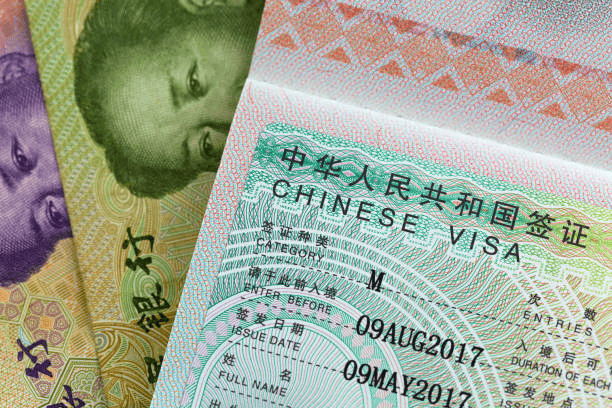
The China M visa is one for commercial only visits to China and covers trade activities such as visiting clients, meeting with business partners, and attending trade fairs. They are also issued to those who are participating in competitions.
Business or M visas are usually valid for three months, after which you must leave China or change your visa.
Before applying, note that for short business trips you may not need an M visa at all. As of 2026, passport holders from 50 countries, including most of Europe, the UK, Canada, Japan, South Korea, Australia, and New Zealand, can enter China visa-free for up to 30 days, and that policy explicitly covers business purposes such as meetings and trade fairs. For most of them it runs until 31 December 2026, so check that it has been extended before you book a later trip. The M visa still matters for longer or more frequent trips, and for nationalities not on the visa-free list.
M visas are issued on the condition that the person visiting China is not getting paid to work in China. While the activities conducted on the trip might lead to future business, getting paid directly for activities conducted in China is not legal on the M visa.
For work purposes, you must apply for a Z visa.
Contents
- Key Takeaways
- M Visa or Visa-Free Entry: Which One Do You Need?
- Applying For A Business Visa
- Requirements
- Cost of the M Visa
- M Visa Fees: US and UK Examples
- How and Where to Apply
- Applying Online Through COVA: What to Expect
- 10-Year Business Visa
- Can I Have a Business Trip with a Tourist Visa Instead?
- Frequently Asked Questions
- Can I get paid for work on the visa-free route?
- How do I count the 30 days?
- Can I stay longer than 30 days after entering visa-free?
- Do I need to tell the Chinese embassy before a visa-free trip?
- Do I need to give fingerprints in person for an M visa?
- Does my passport need 6 months of validity for visa-free entry?
- Now, on to You
- Sources Cited
Key Takeaways
- The M visa is for commercial, non-paid visits like client meetings and trade fairs; if you will be paid to work in China you need a Z visa instead.
- For short trips, many nationalities now skip the M visa entirely thanks to 30-day visa-free entry that also covers business.
- The core requirement is a business invitation letter from a Chinese partner or trade entity with specific applicant and host details.
- Your passport must have six months validity beyond the visa, blank pages, and be in good condition; China is strict on passport wear.
- US passport holders can get a 10-year multiple-entry M visa, though each stay is still capped at 60 to 90 days.
- Never do business on a tourist L visa; it risks deportation and a multi-year ban. Apply through a CVASC, ideally a month ahead.
M Visa or Visa-Free Entry: Which One Do You Need?
Check your passport first. If it’s on China’s visa-free list, you can enter for business without an M visa and stay up to 30 days.
Who Can Skip the M Visa
China’s embassies list 50 countries. They include France, Germany, Italy, Spain, the UK, Canada, Australia, New Zealand, Japan, South Korea and Brazil, plus most of the rest of Europe. The US isn’t on the list, so US passport holders still need a visa for a business trip. If you need a visa for another purpose, see our China visa overview. (Verified October 2026.)
What the Visa-Free Route Covers
- Purpose: business, tourism, visits to family or friends, exchange and transit. Conferences, exhibitions and sports competitions count too.
- Length: 30 calendar days, counted from the day after you enter.
- Entries: you can enter more than once. The embassies say there’s currently no limit on the number of entries or total days.
- Passport: an ordinary passport valid for at least your planned stay.
- No advance notice: you don’t need to tell a Chinese embassy before you go.
Border officers check your purpose when you arrive, and they can refuse entry if it doesn’t fit the rules. You also can’t do anything that doesn’t match the purpose you entered for.
Check the end date before you book. The embassy FAQ says the policy runs until 31 December 2026 for 48 of the countries. Russia’s runs to 31 December 2027 and Brunei has no end date. If your trip falls after 2026, confirm with the embassy that it was extended.
Need more than 30 days? Apply for a visa before you go. The M visa is the usual choice for a business trip. If a Chinese company will pay you, you need a Z visa instead.
Applying For A Business Visa
Before you do anything, you need to make sure this is the right visa for you. Be aware that anyone traveling with you may need a different type of visa if they are not named as the business person on the invitation letter. China has a different visa for every purpose, make sure you know which one you need.
Requirements
As with any visa, there are certain requirements for a successful application for a business visa. It is important to make sure you have all the necessary paperwork and accompanying documents as outlined below.
Business Invitation
You are required to have documents on the commercial activity issued by a trade partner in China, a trade fair invitation, or other invitation letters issued by relevant entities or individuals.
This is the key requirement of getting the China business visa.
The invitation letter should contain:
- Information on the applicant (full name, gender, date of birth, passport number)
- Information on the planned visit (purpose of visit, arrival and departure dates, place(s) to be visited, relations between the applicant and the inviting entity or individual, financial source for expenditures)
- Information on the inviting entity or individual (name, contact telephone number, address, official stamp, signature of the legal representative, or the inviting individual)
Passport
Your passport must be valid for 6 months after the validity of the visa.
So, if your visa expires in December, the passport needs to be valid at least until June. This may mean you need to apply for a new passport before you can apply for the visa so be sure to take this into consideration before planning your trip.
You will need at least a double page free for the visa and entry/exit stamps. These pages cannot have any other stamps or endorsement pages. If you are going to need multiple entries and exits in your line of business, it may be worth considering a larger passport when you next renew.


The passport must be in good condition, not frayed or coming apart, and must be signed by the passport holder. China is stricter about passport condition than many other countries. This writer once had a Chinese visa application declined because of a tiny bit of water damage on a passport that had been otherwise used without problems in 5 other countries!
Visa Application Form
This visa application form will need to be carefully completed. Follow the instructions and make copies of the completed form just in case. This form must now usually be completed online through the official Chinese visa application system provided by the embassy, consulate, or visa center responsible for your area.
Photographs
As with most things visa-related, the required photos have very specific guidelines and if not met, could result in a failed application.

Photos must meet the following criteria:
- Be exactly 48 mm tall by 33 mm wide
- Be printed on high-quality photo paper
- Not be affixed to your application, with no evidence of adhesive tape or staples
- Be taken within the last six months
- Be against an all-white background
- Show a full frontal view of your head, face centered in the middle, the tops of your shoulders.
- Display a neutral (non-smiling) expression with eyes open, mouth closed, and ears visible.
- No background light or shadows are permitted.
- You may not wear eyeglasses, jewelry, or headwear except for religious purposes.
- Do not wear a white shirt.
Proof of Legal Stay or Residence
If you are not applying for the visa in the country of your citizenship, you normally need to provide the original and photocopy of your valid certificates or visa of stay, residence, employment, or student status, or other valid certificates of legal staying provided by the relevant authorities of the country where you are currently staying.
Photocopy of Previous Chinese Passports or Previous Visas for China
This is only applicable to foreign citizens who were Chinese citizens and have since obtained foreign citizenship.
Cost of the M Visa
The price of your visa depends on several things. If you choose the regular service and collect your passport it will save you money compared to express service and return by post. The price is dependent on nationality, and the most recent prices can be found by choosing the city you will be applying in and following the prompts from the CVASC website.
For example, a UK citizen applying in London pays GBP130 on regular service for a visa valid up to two years, including the GBP66 service fee. The table below shows more fees.
M Visa Fees: US and UK Examples
Fees depend on your nationality, the number of entries and where you apply. Two published examples show the range. (Verified October 2026.)
| Where you apply | Fee | Notes |
|---|---|---|
| US embassy and consulates, US citizen | US$140 | Reduced fee, in place until 31 December 2026. Express service adds US$25. |
| US embassy and consulates, non-US citizen | US$23 to US$68 | Single entry US$23, double US$34, multiple entry for 6 months US$45, multiple entry for 12 months or more US$68. Some nationalities pay different fees. |
| London visa centre, UK passport, regular service | GBP130 | Visa valid up to 2 years. Includes a GBP66 service fee. Express is GBP161 and urgent is GBP182. |
| London visa centre, UK passport, longer visas | GBP194 to GBP257 | Regular service: GBP194 for a 5-year visa and GBP257 for a 10-year visa. |
Both the US and UK embassies say they’ll keep reduced fees until 31 December 2026. Check the notice for your own office before you budget, because fees differ by country and can change.
How and Where to Apply
In most cases, anyone wishing to visit China should apply for visas at a Chinese Visa Application Service Centers (CVASC). These service centers can be found in most major cities around the world including in Australia, France, Thailand, UK, and more.
In general, the application process cannot be completed online or by mail. If you live in a remote area, you will need to travel to complete the application in person. However, the steps may vary depending on the service center.
In many countries, you must first complete the visa application form online through the official Chinese visa application system, then print and sign it before submission. Depending on the rules of the Chinese embassy, consulate, or visa center responsible for your area, you may need to submit your documents in person, through an authorized agent, or by post/courier. Always check the latest instructions of the specific Chinese Visa Application Service Center or consulate you will use.
Despite having to make an appointment and being on time for it, several people will be given the same time and the order you are seen in is first come first served so make sure you are there early and be prepared to wait.
An alternative to submitting your application in person is to use a China visa agent. An agent can be pricey but using one takes a lot of stress out of the application process as they know the most up-to-date information and requirements and are therefore more likely to successfully obtain the visa the first time.

Be aware that even with an agent, you may be required to appear in person at the Embassy/Consulate-General for an interview or verification of the signature on application documents.
The processing time varies depending on the service you select. Most visas can be obtained in four business days. There is an express service which takes two or three days if you are in a hurry.
For minimal stress, if possible, you should begin the process at least a month before your intended travel date to ensure you have the visa in time. Also, bear in mind, your application could be rejected the first time or might require special approval from the Chinese Embassy in your country of application (for example, if you have a previous Chinese visa overstay infraction).

Applying Online Through COVA: What to Expect
Many Chinese embassies now take the application through China’s online visa system, COVA. The Chinese Embassy in the US launched the new version on 30 September 2025. Other offices run it differently, so follow the instructions for your area. (Verified October 2026.)
- Fill in the form online and upload your documents. For an M visa, that includes the documents from your Chinese trade partner.
- Wait for the status to read “Passport to be submitted”.
- Take your passport, the printed application page with the barcode and any originals the embassy asks for to the visa office.
- Check the status online. When it reads “Passport to be collected”, pick up your passport.
At the US embassy, regular service takes 4 business days on average and express takes 3. The clock starts when you hand in your passport, and some cases take longer. You don’t have to come in for fingerprints, but a consular officer can still ask you for an interview. A passport that expires within 6 months, or has fewer than 2 visa pages, won’t be accepted.
Before you fly, read up on getting a China SIM card and paying with China’s digital payment apps.
10-Year Business Visa
People who hold passports from the USA can apply for a 10-year multiple entry business visa. This type of visa does not allow you to stay in China for the whole ten years, rather it gives you the ability to travel to China for business frequently during that ten year period without visa reapplication.
You cannot stay in China for more than 60 days or 90 days without exiting the country with a ten-year visa.
Can I Have a Business Trip with a Tourist Visa Instead?
It might be tempting to visit China on a tourist L visa for meetings or other quick business trips, however this is not allowed and if you are found to be conducting any formal business on the tourist visa, you can be deported and receive a travel ban for China for many years. If your nationality qualifies for the 30-day visa-free entry, that route does cover business activities, so it is the legitimate alternative to a tourist visa for a short trip.
Frequently Asked Questions
Can I get paid for work on the visa-free route?
No. Visa-free entry covers the purposes listed above, and the embassies say you can’t do anything that doesn’t match your purpose of entry. If you’ll be paid to work in China, apply for a Z visa.
How do I count the 30 days?
The embassies say the 30 days are calendar days, counted from the day after you enter.
Can I stay longer than 30 days after entering visa-free?
You’re supposed to apply for the right visa before you go. If you have good reason to stay longer once you’re in China, the embassies say you can apply for a stay permit at the local public security exit and entry administration. Approval isn’t guaranteed.
Do I need to tell the Chinese embassy before a visa-free trip?
No. The embassies say eligible travelers don’t need to declare anything in advance.
Do I need to give fingerprints in person for an M visa?
Not at the US embassy. It says applicants aren’t required to visit in person for fingerprints, though a consular officer can ask you to come in for an interview. Check the rules for the office you use.
Does my passport need 6 months of validity for visa-free entry?
The embassies only ask for an ordinary passport valid for at least your planned stay. The M visa has its own rule, covered in the passport section above.
Now, on to You
China is at the forefront of production and manufacturing and is full of business opportunities such as the CIIE so despite the rigorous visa requirements, it is worth the effort. Make sure you have researched information in preparation for your trip such as travel insurance, shipping from China to the US, and finding a good manufacturer in China.
Sources Cited
- Chinese Embassy in the US, Frequently Asked Questions on Visa-free Entry into China (updated February 2026): 50 countries, 30-day rule, covered purposes, end dates, no advance declaration.
- Chinese Embassy in New Zealand, FAQs on Visa-free Entry into China (22 May 2026): current country list, Russia extended to 31 December 2027, stay permits, passport validity.
- Chinese Embassy in the US, Notice on Extension of Visa-Fee Reduction: US$140 for US citizens, non-US citizen fees, express surcharge, reduction until 31 December 2026.
- Chinese Visa Application Service Center, London visa fees: sterling fee schedule for UK passport holders and service fees.
- Chinese Embassy in the UK, Notice on Extension of Visa-Fee Reduction: reduced fees until 31 December 2026.
- Chinese Embassy in the US, Requirements and Procedures for Chinese Visa Application (updated September 2025): COVA launch, M and Z visa descriptions, invitation letter contents, processing times.
- Chinese Embassy in the US, Chinese Visa Application FAQs (updated September 2025): fingerprints, interviews, passport validity and pages, consular discretion on validity and stay.








 Deutsch:
 Français:
 Español: