
This article will take approximately 35 minutes to read. Don't have the time right now? No worries. Email the ad-free version of the article to yourself and read it later!
How to live in Mexico City as an expat in 2026: where to rent, what a month costs, how safe each area is, and how to handle altitude, water, earthquakes, healthcare, transport and visas.
Most expats in Mexico City live in Roma, Condesa, Polanco, Coyoacán, Del Valle or Narvarte. A one-bedroom in those areas rents for MXN21,000 to MXN40,000 a month, and a single person spends around MXN43,000 to MXN46,000 a month in total. To stay longer than a tourist visit, you need temporary residency, which asks for MXN79,771 a month in income.
This guide covers how to choose a neighborhood, how to rent, what to budget, and how to deal with safety, air quality, water, earthquakes, healthcare, transport and visas. Peso figures convert at MXN18.49 to US$1, the Bank of Mexico rate on October 16, 2026.
Disclaimer: This article may include links to products or services offered by ExpatDen's partners, which give us commissions when you click on them. Although this may influence how they appear in the text, we only recommend solutions that we would use in your situation. Read more in our Advertising Disclosure.
Key Takeaways
- A one-bedroom in Roma Norte rents for a median MXN27,700 (about US$1,500) a month; in Polanco it’s MXN40,000 (about US$2,160).
- Narvarte and Del Valle cost less and feel more local.
- Benito Juárez, the borough that holds Del Valle and Narvarte, has the lowest share of residents who say they feel unsafe in their city: 17.4% in June 2026, against 52.4% in Cuauhtémoc, home to Roma and Condesa.
- The city sits at 2,240 meters, and smog peaks from mid-February to early June.
- Drink purified water from 20-liter jugs. A refill costs about MXN69.
- A single remote worker spends around MXN43,000 to MXN46,000 (US$2,350 to US$2,490) a month before health insurance, but temporary residency asks you to prove MXN79,771 a month in income.
- You don’t need a car.

Quality of Life
Mexico City has 9.2 million people, and about 21.8 million in the wider metro area. If you live in one of the central neighborhoods, you can walk to most of what you need: a market, a supermarket, a park, a gym and a doctor.
The main reasons people move here are the museums, the food and the parks. The main complaints are noise, the altitude, air pollution, Spanish-only paperwork and rising rents in the expat areas. In the expat forums, people often say that “visiting is fun, it’s living there that’s challenging.“
What to check first depends on why you’re coming:
- Remote workers: Fast fiber is easy to get in the central neighborhoods, there are cafés and coworking spaces on every block of Roma and Condesa, and the social scene is easy to plug into.
- Early retirees: You get Mexico’s best private hospitals and endless things to do. Uneven sidewalks, walk-up buildings and the altitude matter more at 60 than at 30, so choose flat, quiet streets and a building with a lift.
- Relocating employees: Most corporate offices are along Reforma, in Polanco or in Santa Fe. Choose where to live based on your commute to the office.
Neighborhoods
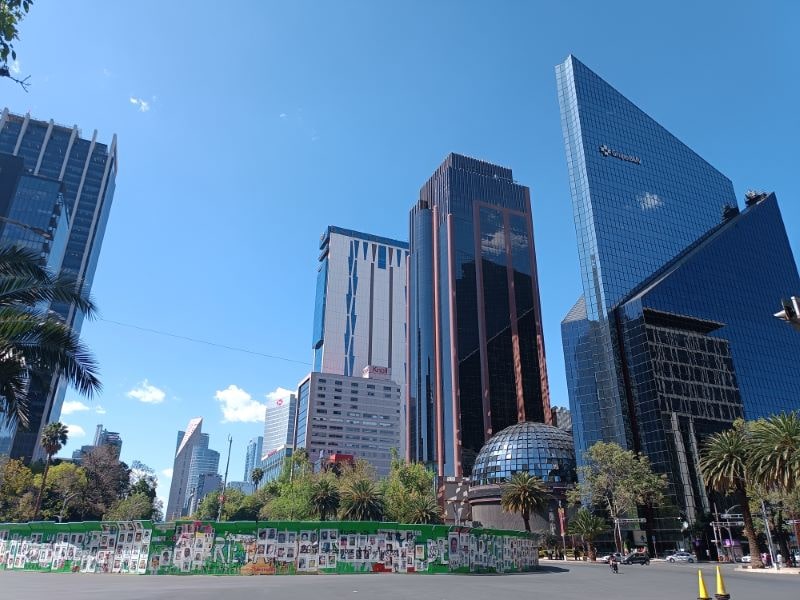
Most expats in Mexico City live in Roma, Condesa, Polanco, Coyoacán, Del Valle or Narvarte. To choose between them, compare rent, your commute, noise at night and how safe residents say the borough feels.
Mexicans call a neighborhood a colonia, and the city is split into 16 boroughs called alcaldías. The six main expat neighborhoods sit in these boroughs:
- Cuauhtémoc: Roma and Condesa
- Miguel Hidalgo: Polanco
- Benito Juárez: Del Valle and Narvarte
- Coyoacán: Coyoacán
Rents below are median asking prices from long-term listings we checked on October 19, 2026. The full table sits at the end of this section, and Rent explains how we got the numbers.
Roma Norte and Roma Sur
Roma Norte is the most popular expat neighborhood. It has tree-lined streets, early 1900s buildings, and cafés, bars and coworking spaces within walking distance. It’s the easiest place to start if you don’t speak Spanish yet.
A one-bedroom has a median asking rent of MXN27,700 (about US$1,500) a month.
Roma Sur, across Avenida Coahuila, is a little quieter and a little cheaper, at a median of MXN25,000 (about US$1,350) for a one-bedroom. The downsides of both are weekend noise and the number of apartments turned into short-term rentals, which many locals resent. In the forums, a common complaint is that “Digital nomads”, airbnbs, etc have completely transformed Roma and condesa from what it was even 10 years ago.“
Condesa
Condesa is the greenest of the central neighborhoods, built around Parque México and Parque España, with art deco buildings and quiet, walkable streets. It costs more than Roma: a one-bedroom has a median asking rent of MXN31,280 (about US$1,690), and a two-bedroom MXN47,500 (about US$2,570).
Condesa suits couples and remote workers who want green space without leaving the center. Like Roma, it fills with visitors on weekends.
Polanco
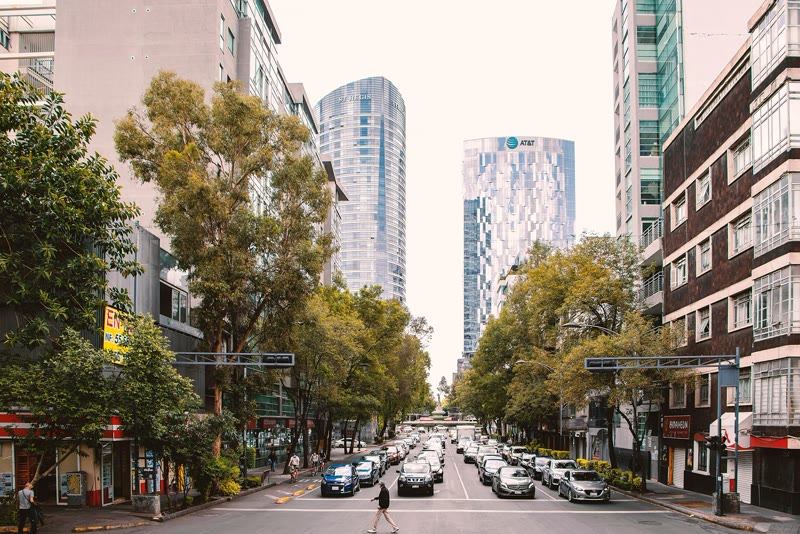
Polanco is Mexico City’s most expensive neighborhood, with a median one-bedroom rent of MXN40,000 (about US$2,160) and two-bedrooms at MXN67,500 (about US$3,650). You get embassies, luxury shopping on Avenida Presidente Masaryk, newer buildings with lifts and security, and Chapultepec Park next door.
Polanco suits relocating executives and families, partly because it’s close to the main business districts. One forum poster moved there for that reason: “I live in Polanco now because I was sick of spending an hour in the car each time I wanted to go somewhere.” It’s quieter at night than Roma.
Coyoacán
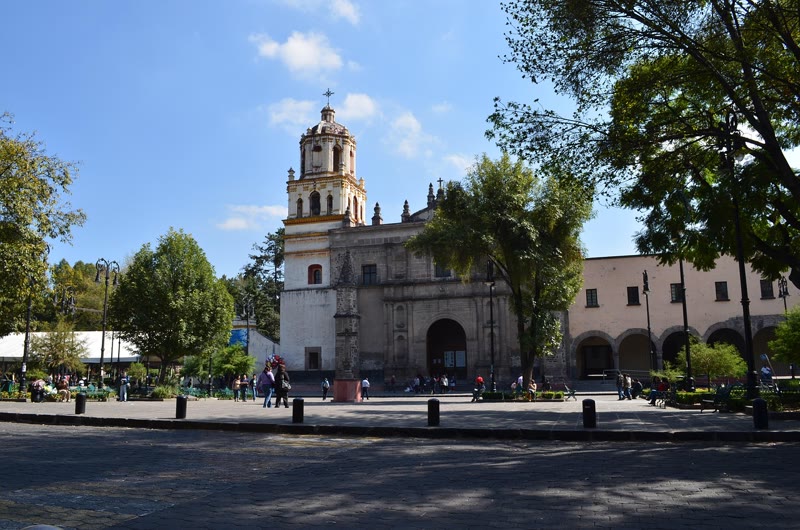
Coyoacán is a historic neighborhood in the south, with cobbled plazas, the Frida Kahlo Museum and a slower pace that suits retirees and families. It’s cheaper than the central neighborhoods. In October 2026 we found only five one-bedroom listings in Del Carmen, Coyoacán’s historic center, mostly between MXN13,000 and MXN20,000 a month, so treat that as a hint and not a price list.
The downside is distance. Getting to Polanco, Reforma or Santa Fe from Coyoacán can take an hour at rush hour, so it works best if you work from home or your office is in the south.
Del Valle
Del Valle is a residential neighborhood in Benito Juárez, the borough with the lowest share of residents who feel unsafe in all of Mexico City. A one-bedroom has a median asking rent of MXN23,600 (about US$1,280), and a two-bedroom MXN30,000 (about US$1,620).
Expect mid-rise apartment buildings, supermarkets, schools and parks, with more families than tourists. It’s flat and central, which makes it a strong pick for retirees and for couples who want space over nightlife.

Narvarte
Narvarte sits next to Del Valle and is known for its taquerías, with a median one-bedroom rent of MXN25,613 (about US$1,380) and two-bedrooms at MXN29,000 (about US$1,570). It’s well served by the Metro and Metrobús, so getting to Roma or downtown is quick.
Narvarte is the neighborhood locals most often recommend when a newcomer asks for something “other than Polanco, Condesa and Roma“. Expect more Spanish on the street and cheaper restaurants than in Roma.
Other Areas Worth a Look
A few more neighborhoods come up often in expat searches:
- Juárez: Right beside Reforma, full of new furnished buildings, bars and restaurants. Pricey for its size, at a median MXN34,156 (about US$1,850) for a one-bedroom.
- San Rafael: An older, theater-district neighborhood north of Reforma with the cheapest one-bedrooms we found in the center, at a median MXN21,000 (about US$1,140).
- Escandón: Just south of Condesa and a lot cheaper. One-bedrooms ran around MXN18,000 (about US$970), from a small sample of 10 listings.
- Santa Fe: A business district on the city’s western edge, with glass towers, malls and international schools nearby. One-bedrooms have a median MXN28,000 (about US$1,510). It suits people who work there and rarely leave.
| Colonia (borough) | 1-bedroom median | 2-bedroom median | Best for |
|---|---|---|---|
| Roma Norte (Cuauhtémoc) | MXN27,700 (about US$1,500) | MXN38,000 (about US$2,060) | Newcomers, remote workers, nightlife |
| Roma Sur (Cuauhtémoc) | MXN25,000 (about US$1,350) | MXN39,000 (about US$2,110) | Roma life with a bit less noise |
| Condesa (Cuauhtémoc) | MXN31,280 (about US$1,690) | MXN47,500 (about US$2,570) | Parks, dogs, couples |
| Polanco (Miguel Hidalgo) | MXN40,000 (about US$2,160) | MXN67,500 (about US$3,650) | Executives, families, short commutes |
| Del Valle (Benito Juárez) | MXN23,600 (about US$1,280) | MXN30,000 (about US$1,620) | Retirees, families, quiet |
| Narvarte (Benito Juárez) | MXN25,613 (about US$1,380) | MXN29,000 (about US$1,570) | Value, food, local life |
| Juárez (Cuauhtémoc) | MXN34,156 (about US$1,850) | MXN36,072 (about US$1,950) | Furnished apartments near Reforma |
| Santa Fe (Álvaro Obregón and Cuajimalpa) | MXN28,000 (about US$1,510) | MXN37,250 (about US$2,010) | People who work in Santa Fe |
Rent
A one-bedroom in Mexico City’s expat neighborhoods rents for a median of MXN21,000 to MXN40,000 (about US$1,140 to US$2,160) a month in October 2026, from San Rafael at the low end to Polanco at the top. (Verified October 2026.)
We built those figures from 924 long-term apartment listings on Mercado Libre, one of Mexico’s biggest property portals, on October 19, 2026. They’re asking prices.
Tip: Locals in the forums say walking the neighborhood and calling the number on a “Se Renta” sign can land you something MXN2,000 to MXN3,000 below what the portals show.
Lease Rules
Mexico City’s civil code gives tenants three protections that are easy to miss:
- One-year minimum: A residential lease runs at least a year.
- Capped increases: Your landlord can’t raise the rent by more than the previous year’s inflation, as reported by the Bank of Mexico.
- Registered contracts: The landlord has to register the lease with the city within 30 days of signing.
The law doesn’t cap the deposit. It only says the lease must state the deposit amount or the guarantor’s details, so the deposit is whatever you negotiate. (Verified October 2026.)
The Guarantor Problem
Most landlords ask for an aval or fiador: a guarantor who owns property in Mexico City with no mortgage on it. Almost no newcomer has one, so expats usually get around it in one of these ways:
- Póliza jurídica: A legal-protection policy you buy from a specialist firm. It vets your income and covers the landlord’s legal costs if things go wrong.
- Bigger deposit or rent upfront: Some landlords drop the guarantor for two or three months paid in advance.
- Your employer: Companies relocating staff often sign as guarantor or lease the apartment themselves.
- Furnished mid-term rentals: Pricier per month, but usually no guarantor at all.
Our guide to renting without a guarantor covers each option in detail.
How to Rent an Apartment
The safest way to rent in Mexico City is to arrive first and look in person. These are the steps expats in the forums recommend:
- Book a furnished place for your first month in the neighborhood you’re considering, so you can check the noise, the commute and the water supply.
- Search in person and online. Walk the streets you like and call the numbers on “Se Renta” signs, and check the property portals to compare prices.
- Visit before you pay. Never send a deposit for a place you haven’t seen.
- Check the owner. Ask to see the owner’s ID and the property deed.
- Sort out the guarantor. Agree on an aval, a póliza jurídica or a larger deposit (see above).
- Read the lease. Check the term, the deposit, who pays which bills and how the rent can rise.
- Pay by bank transfer so there’s a record.
Your lease and rent will be in pesos. If your income is in dollars, euros or pounds, Wise is a cheap way to move money into a Mexican account each month.
Short-Term Rentals
Mexico City requires Airbnb-style hosts and booking platforms to sign up to an official registry, which opened on May 22, 2026. The city’s tourism law also says a registered home can’t be rented short-term for more than half the year.
Airbnb has challenged the law in court, so the rules may still change. If you plan to start with a short-term rental, check that the listing is registered.
Read more:
- The Complete Guide to Renting an Apartment in Mexico City
- 10 Common Mistakes When Renting a Place in Mexico
Cost of Living
A single remote worker renting a one-bedroom in Narvarte spends around MXN43,400 (about US$2,350) a month in Mexico City before health insurance, and around MXN46,000 (about US$2,490) in Roma Norte. A retired couple in a two-bedroom in Del Valle spends around MXN50,800 (about US$2,750).
Rent is more than half of each budget, so choosing a cheaper neighborhood saves the most. Food is next. To spend less, shop at local markets and eat the comida corrida, a fixed-price set lunch sold at small neighborhood restaurants.
| Monthly cost | Solo, 1-bed in Narvarte | Solo, 1-bed in Roma Norte | Retired couple, 2-bed in Del Valle |
|---|---|---|---|
| Rent (median asking) | MXN25,600 | MXN27,700 | MXN30,000 |
| Electricity, gas and water (estimate) | MXN1,200 | MXN1,200 | MXN1,600 |
| Home internet (estimate) | MXN500 | MXN500 | MXN500 |
| Mobile plan (AT&T Premium, MXN330 each) | MXN330 | MXN330 | MXN660 |
| Drinking water (20-liter jugs at MXN69) | MXN276 | MXN276 | MXN552 |
| Groceries (estimate) | MXN6,000 | MXN6,000 | MXN9,000 |
| Eating out (estimate) | MXN5,000 | MXN6,000 | MXN6,000 |
| Transport, Metro plus rides (estimate) | MXN2,000 | MXN1,500 | MXN2,500 |
| Gym or coworking (estimate) | MXN2,500 | MXN2,500 | None |
| Total | About MXN43,400 (US$2,350) | About MXN46,000 (US$2,490) | About MXN50,800 (US$2,750) |
Health insurance sits outside these totals because it swings so much with age. A 35-year-old might add a few thousand pesos a month for a private plan, while a couple in their 60s can pay several times that. See Healthcare for the options.
Good to know: In the expat forums, newcomers often say their budget ran higher than expected, mostly because of rent and eating out in the expat neighborhoods.
Read more: Cost of Living in Mexico
Safety
How safe Mexico City feels depends a lot on the borough. In June 2026, 17.4% of adults in Benito Juárez said living in their city felt unsafe, against 52.4% in Cuauhtémoc and 73.3% in Iztapalapa. The average across Mexico’s 91 surveyed cities was 59.8%. (Verified October 2026.)
| Borough | Expat neighborhoods in it | Adults who feel unsafe |
|---|---|---|
| Benito Juárez | Del Valle, Narvarte, Escandón (part) | 17.4% |
| Miguel Hidalgo | Polanco | 39.3% |
| Coyoacán | Coyoacán | 43.2% |
| Cuauhtémoc | Roma, Condesa, Juárez, San Rafael | 52.4% |
| Álvaro Obregón | Parts of Santa Fe | 58.2% |
| Iztapalapa | Few expats | 73.3% |
The US State Department rates Mexico at Level 2, “Exercise Increased Caution“, in its May 2026 advisory. It tells US government staff to use taxis from regulated stands or apps like Uber and Cabify, and not to wave down taxis on the street. Follow the same rule yourself.
The crime expats mention most in the forums is phone theft by thieves on bikes and scooters. To avoid it:
- Keep your phone in a front pocket or a zipped bag on the street.
- Step into a doorway or shop to check a map.
- Take an Uber or DiDi home at night.
- Avoid Doctores, Tepito and Guerrero after dark, as locals advise.
Gentrification and Local Mood
Rising rents have made some locals resent foreigners. In July 2025, a protest in Mexico City against gentrification and mass tourism included xenophobic displays, which President Claudia Sheinbaum condemned while calling gentrification a legitimate problem.
In the forums, locals ask newcomers to learn Spanish, spend at local businesses and pay local prices. One local described the expat areas as a place where “it is only financially comfortable for tourists and visitors.“
Read more: Is Mexico Safe?
Altitude and Air Quality
Mexico City sits 2,240 meters (7,350 feet) above sea level, and air pollution peaks from mid-February to early June. Both affect how you feel in your first weeks.
Altitude
In the forums, newcomers report getting out of breath on stairs, headaches, poor sleep and feeling alcohol more than usual in their first week or two. To adjust:
- Drink more water than you would at home.
- Limit alcohol for the first few days.
- Keep exercise light in the first week.
- If you have a heart or lung condition, talk to your doctor before you move.
Air Quality
Mexico City’s air is poor on many days by Mexico’s own standards, and ozone is the main problem. In the first 224 days of 2025, the city had 39 clean days, when every pollutant stayed within the official limits, and ozone went over its one-hour limit on 158 days. Fine particles (PM2.5) stayed within their daily limit on 190 of those days. (Verified October 2026.)
For a healthy adult, that mostly means planning outdoor exercise around the ozone. For anyone with asthma or a heart or lung condition, it’s one of the biggest downsides of living here.
The worst months are the ozone season, from mid-February to early June, when warm, still days trap pollution in the valley. When the city’s air quality index passes 150 points, the government declares an environmental contingency (contingencia ambiental), adds driving restrictions and asks people to avoid outdoor exercise. Contingencies can happen outside the season too: one was declared on September 12, 2026.
To protect yourself on bad-air days:
- Check the live index on the city’s air quality site before exercising outside.
- Run or cycle early in the morning, before ozone builds up.
- Keep a HEPA air purifier in the bedroom, as many long-term expats in the forums do.
If pollution is a serious concern for your health, consider a less polluted city, since there’s little you can do about the air once you’re here.
If you drive, the Hoy No Circula program keeps many cars off the road one weekday each week, plus some Saturdays, depending on their emissions sticker. Cars with foreign plates follow the strictest category, which means one weekday and every Saturday off the road.
Water and Earthquakes
Mexico City’s water supply and earthquake risk both depend on the building you rent, so check them before you sign a lease.
Water
Mexico City’s government says its tap water is potable, but it also notes that most residents still drink bottled water. Do the same, because water can pick up contamination in old pipes and building tanks.
Most households buy 20-liter jugs called garrafones; a Bonafont refill costs MXN69 (about US$3.70). Use the tap for showers and dishes.
Water comes in on a schedule in some neighborhoods, a system called tandeo, so buildings store it. A cisterna is the underground tank, a tinaco is the tank on the roof, and a pump moves water between them. Before you sign, ask the landlord:
- Storage: Does the building have a cistern, and how big is it?
- Cuts: How often has the water run out in the past year?
- Cleaning: When were the tanks last cleaned?
Supply is better in 2026 than during the recent shortages. The Cutzamala reservoirs, a key source for the city, were 92.35% full on October 13, 2026. (Verified October 2026.)
Earthquakes
Earthquakes are a real risk in Mexico City, and the way to manage it is to choose your building carefully. Big, damaging quakes are rare: the two worst in living memory both struck on September 19, in 1985 and 2017, and brought down buildings across the city.

The risk isn’t the same everywhere. Much of the central city sits on an old lakebed of soft clay that a UNAM researcher calls a gran gelatina (big jelly), and that ground shakes far more than the hills. Your building matters as much as the ground, so before you rent, check:
- Soil zone: Look up the address on the city’s risk atlas (Atlas de Riesgos). The building code splits the city into hill, transition and lakebed zones, and the lakebed is the riskiest.
- Age: Ask when the building went up. The city updated its seismic design rules on December 15, 2017, after the second quake.
- Inspection: Ask whether the building was inspected after the September 2017 quake, and ask to see the report.
- Corner buildings: The city’s engineering standards note that a considerable share of the buildings that collapsed in 1985 and 2017 stood on corners, so look harder at older corner buildings.
Mexico City also has an earthquake early-warning system, SASMEX, that sounds through street loudspeakers 20 to 120 seconds before the shaking arrives, depending on where the quake starts. A quake on the Michoacán coast gives the city more than 100 seconds. When you hear the alarm, follow the city’s civil protection guidance:
- Low floors: If you can get out quickly, leave the building calmly.
- High floors: If there’s no time to get out, move to the safest spot on your floor, away from windows, and wait.
Find the stairs and the nearest open space on your first day in a new building.
Healthcare
Mexico City has Mexico’s best private hospitals, including Centro Médico ABC and Médica Sur, both accredited by Joint Commission International, and most expats pair them with private health insurance.
The big private hospitals expats use are:
- Centro Médico ABC: Two campuses, Observatorio (in Las Américas, close to Condesa and Roma) and Santa Fe. Both hold JCI accreditation.
- Médica Sur: In the south of the city, near Tlalpan, and JCI-accredited since 2014. Handy for Coyoacán.
- Hospital Ángeles: A private chain with several Mexico City hospitals, including Pedregal, Mocel and Metropolitano.
Private hospitals usually ask for a deposit or a card hold before they admit you, and in the forums expats say it’s the moment insurance matters most.
Many carry an international plan such as Cigna Global, which covers the private hospitals and travel back home. Residents can also buy into IMSS, Mexico’s public health system, as a cheaper backup. Our IMSS guide explains how.
For small problems, pharmacies with an attached doctor’s office are everywhere and cheap. In an emergency, call 911.
Read more:
Transportation
You don’t need a car in central Mexico City: a Metro ride costs MXN5, a Metrobús ride MXN6, and an Ecobici bike-share pass MXN588 a year. (Verified October 2026.)
One rechargeable card, the Tarjeta de Movilidad Integrada, costs MXN15, holds up to MXN500 and works across almost the whole public network, including:
- Metro and Metrobús
- The Cablebús cable cars and light rail
- Trolleybuses and city buses
- Ecobici
What each service is best for:
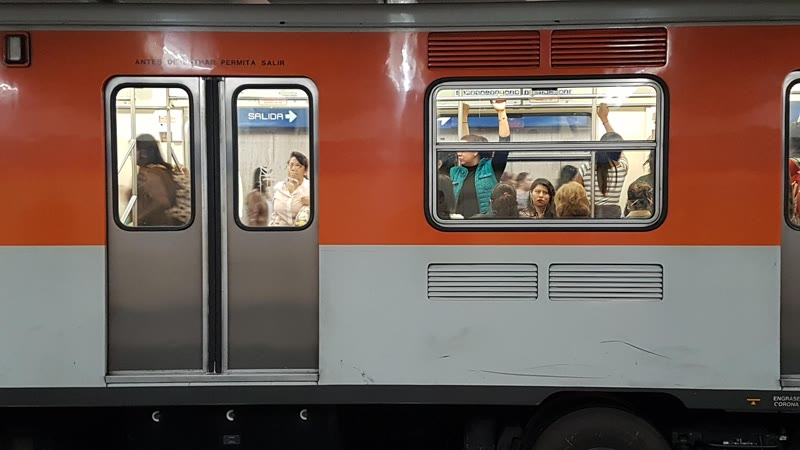
- Metro: Fast and cheap, with free transfers between lines. It gets brutally crowded at rush hour, and some cars are reserved for women and children.
- Metrobús: Buses in their own lanes along the big avenues. Line 4 runs to the airport and costs MXN30 to the terminals.
- Ecobici: The bike-share is the quickest way around flat Roma, Condesa, Juárez and Polanco. A one-day pass costs MXN134.
- Uber and DiDi: Cheap by US standards and the normal way to get home at night.
Traffic is heavy. In the forums, residents of Coyoacán and San Ángel describe hour-long drives to Polanco or Santa Fe at rush hour. If you commute, live near a Metro or Metrobús line that goes to your office, or close enough to walk or cycle.
Read more: Transportation in Mexico
Visas
Most expats who live in Mexico City hold a temporary resident visa, which in 2026 asks for monthly income of MXN79,771 (about US$4,310) or average savings of MXN1,344,373 (about US$72,700). (Verified October 2026.)
Many nationalities, including Americans, Canadians and Britons, can enter as tourists without a visa. The immigration officer decides how many days you get and stamps it in your passport, up to a maximum of 180. That’s fine for a trial stay, but you can’t live in the city on back-to-back tourist entries for long.
Residency thresholds are set in multiples of Mexico’s UMA, a daily reference value that was MXN117.31 in 2026. You apply at a Mexican consulate before you move:
| Visa | Income route | Savings route |
|---|---|---|
| Temporary resident | MXN79,771 a month (about US$4,310), shown for the last 6 months | MXN1,344,373 (about US$72,700) average balance over the last 12 months |
| Permanent resident (retirees) | Pension of MXN133,733 a month (about US$7,230), shown for the last 6 months | MXN5,378,664 (about US$290,800) average balance over the last 12 months |
Consulates convert these figures into their own currency at their own rate, so the dollar numbers vary. In 2026, the San Diego consulate asks temporary residents for US$4,510 a month or US$75,950 in savings, while Las Vegas asks for US$4,630 or US$78,025.
Both charge a US$56 application fee. Check your own consulate’s page before you gather documents.
Mexico has no dedicated digital nomad visa, so most remote workers apply for temporary residency on the income route. Once you have your resident card, you can open a bank account in Mexico and get a tax ID (RFC). Living here can also make you a Mexican tax resident, so read our income tax guide before your first year is out.
Read more:
- Mexico Temporary Resident Visa
- Permanent Residence in Mexico
- Visa Options for Remote Workers in Mexico
Daily Life
You can get by in English in Mexico City’s expat neighborhoods, but daily life gets much easier once you speak some Spanish.
Spanish
English works in cafés and restaurants in Roma, Condesa and Polanco. For leases, repairs, banks and immigration paperwork, you’ll need Spanish or someone to help. In the forums, people who arrive with basic Spanish say they manage.
Take classes in your first months, or book an online tutor before you arrive.
Making Friends
Making lasting friends takes time, because many foreigners leave after a few months. Expats in the forums recommend activities that put you with the same people every week:
- Language exchanges
- Running and cycling clubs
- Board-game nights
- Regular classes, such as dance, cooking or pottery
Meeting locals is easier once you speak some Spanish.
Noise
Mexico City is noisy from early morning: gas delivery trucks, street vendors with loudspeakers, scrap-metal buyers and barking rooftop dogs. Most buildings have concrete walls and single-pane windows. To reduce the noise, choose an apartment facing an inner courtyard rather than the street, and bring earplugs or a white-noise machine.
Weather and Apartments
Mexico City’s climate is mild, so apartments rarely have heating or air conditioning. In winter, expats in the forums say apartments can be colder inside than out in the morning, so bring warm clothes and plan to buy a small heater.
In the rainy season, roughly June to October, they describe sunny mornings followed by heavy afternoon storms that flood streets. Plan errands for the morning.
Remote Work
Fiber internet from Telmex, Totalplay or Izzi is easy to get in the central neighborhoods. Ask the landlord which provider the building uses and run a speed test before you sign.
Coworking spaces cluster in Roma, Condesa, Juárez and Polanco. Our guide to internet providers in Mexico compares the options.
Families and Relocating Employees
Relocating families in Mexico City usually choose a school first and a neighborhood second, because the commute decides the rest.
The well-known international schools are spread out:
- American School Foundation: In Las Américas, near Observatorio, an easy run from Condesa, Roma and Polanco.
- Edron Academy: A British school in Olivar de los Padres, in the southwest.
- Greengates School: An IB school just outside the city limits in Naucalpan, State of Mexico.
None of these publishes full fees as plain text on their sites, so ask admissions for the current schedule, including enrollment and building fees.
If your employer is moving you, agree on the package before you look at apartments. Ask about:
- A housing allowance that matches the rents in this guide
- School fees, including enrollment fees
- Health insurance for the whole family
- A company lease or company guarantor
- Flights home
When an employee asked in the forums what to negotiate for a transfer, one reply was: “Never underestimate how much the good life in Mexico costs.” See our guide to jobs for expats in Mexico City for local salary ranges.
Is Mexico City Right for You?
Mexico City is right for you if you want a big, cultured city at below-US prices and can handle noise, altitude and a lot of Spanish paperwork.
Reasons it works:
- Culture and food: More museums, restaurants and events than you’ll ever get through.
- Healthcare: JCI-accredited private hospitals across the city.
- No car needed: Cheap, wide public transport plus ride apps.
- Mild climate: No real summer heat, no snow.
Reasons it might not:
- Rent: The expat neighborhoods now cost close to a mid-sized US city.
- Air and altitude: Hard on some lungs, especially from February to June.
- Noise and crowds: Constant, and worse in the popular neighborhoods.
- Earthquakes and water: Manageable, but they shape where and how you rent.
Mexico City vs Other Mexican Cities
Mexico City is the most expensive and most exciting of Mexico’s big expat bases. The others trade some of the energy for space, calm or a beach:

| City | Pace | Climate | Best for |
|---|---|---|---|
| Mexico City | Big, busy, cultural | Mild, high altitude, dry-season smog | Careers, culture, singles and couples |
| Guadalajara | Big city, more relaxed | Warm, dry winters, rainy summers | Lower rent with big-city services |
| Mérida | Calm, colonial | Hot and humid | Retirees who want a quieter, safer feel |
| San Miguel de Allende | Small, arty, very foreign-friendly | Mild highland | Retirees who want an English-friendly town |
Read more: Best Places to Live in Mexico for Americans
Common Mistakes and Pitfalls
The mistakes expats make in Mexico City come up again and again in the forums, and most of them happen in the first month:
- Signing a lease from abroad: Photos don’t show the bar downstairs, the 6am gas truck or the water schedule.
- Picking Roma by default: It’s convenient, but Narvarte or Del Valle can save you MXN2,000 to MXN4,000 a month and feel safer.
- Paying before seeing: Rental scams on social media ask for a deposit to “hold” a place. Pay only after you’ve seen it and checked the owner’s ID and deed.
- Ignoring the building: Ask about the cistern, the soil zone and the building’s age before you fall for the balcony.
- Confusing the visa bar with the cost of living: You might live well on MXN45,000 a month, but temporary residency still asks you to prove MXN79,771.
- Waving down street taxis: Use Uber, DiDi or a taxi stand.
- Leaving Spanish for later: Immigration offices, banks and landlords give conflicting answers even in Spanish. In English, it’s harder still.
Some long-term expats also say the expat community can feel small after a few years, and that career options are limited. One wrote that “CDMX is great if you want to find a place to escape pressure. It’s not the right place when you want to put your foot on the gas professionally.“
Tip: Try living in Mexico City for one to three months in a furnished rental before you sign a long lease, apply for residency or ship your belongings.
FAQ
Is Mexico City safe for expats?
Mexico City is reasonably safe for expats in the neighborhoods they usually rent in, with phone theft as the most common problem. In June 2026, only 17.4% of adults in Benito Juárez, home to Del Valle and Narvarte, said they felt unsafe, compared with 59.8% across Mexico’s surveyed cities.
How much is rent in Mexico City?
A one-bedroom in Mexico City’s expat neighborhoods has a median asking rent of MXN21,000 to MXN40,000 (about US$1,140 to US$2,160) a month in October 2026. Polanco and Condesa are the most expensive; San Rafael, Del Valle and Narvarte are cheaper.
What’s the best neighborhood in Mexico City for expats?
Roma Norte is the easiest neighborhood for newcomers, Polanco suits executives and families, and Del Valle or Narvarte give the best mix of price, safety and local life. Coyoacán is the quiet choice if you rarely commute.
Can you drink tap water in Mexico City?
Mexico City’s government says tap water is potable, but most residents drink purified water from 20-liter jugs because of old pipes and building tanks. A refill costs about MXN69.
How long does it take to get used to the altitude?
Most newcomers in the expat forums say Mexico City’s 2,240-meter altitude stops bothering them within a week or two. Drink plenty of water and go easy on alcohol at first. If you have a heart or lung condition, ask your doctor before you move.
Do I need a car in Mexico City?
You don’t need a car in central Mexico City. A Metro ride costs MXN5, Metrobús MXN6, and Uber or DiDi covers the rest. A car mostly adds traffic, parking costs and driving bans on smog days.
How much income do I need to live in Mexico City legally?
To get temporary residency in 2026, you need monthly income of MXN79,771 (about US$4,310) over the last six months, or average savings of MXN1,344,373 (about US$72,700) over the last 12. Consulates convert to their own currency, so check yours.
Sources Cited
- Bank of Mexico, FIX exchange rate: MXN18.4930 per US$1 on October 16, 2026.
- INEGI, National Urban Public Safety Survey (ENSU), June 2026: share of adults who feel unsafe, by Mexico City borough and nationally.
- INEGI, Conociendo Distrito Federal: Mexico City’s altitude of 2,240 meters.
- INEGI, Census 2020: Mexico City population of 9,209,944.
- Secretaría de Economía, DataMéxico: Valle de México: metro-area population of 21,804,515.
- Diario Oficial de la Federación, visa guidelines (July 25, 2025): residency income and savings requirements in UMA days.
- INEGI, UMA 2026: daily UMA value of MXN117.31.
- Consulate of Mexico in San Diego and Consulate of Mexico in Las Vegas: 2026 temporary residency figures in US$ and the US$56 fee.
- GOV.UK, Mexico entry requirements: tourist stays of up to 180 days, set by the stamp on entry.
- Congress of Mexico City, Civil Code reform (2024): rent increases capped at the previous year’s inflation, one-year minimum lease and lease registration within 30 days.
- US Department of State, Mexico Travel Advisory (May 29, 2026): Level 2 rating and taxi guidance for US staff.
- Associated Press via KSAT, July 2025: anti-gentrification protest and President Sheinbaum’s response.
- Comisión Ambiental de la Megalópolis: ozone season dates, contingency thresholds and the September 12, 2026 contingency.
- Comisión Ambiental de la Megalópolis, 2025 ozone season review: clean days and days within the ozone and PM2.5 limits in Mexico City, January to August 2025.
- SEDEMA, Hoy No Circula: driving restrictions and the rule for foreign plates.
- Mexico City Tourism, Food Basics: tap water is potable but most residents drink bottled water.
- CONAGUA, Cutzamala System storage, October 2026: 92.35% full on October 13, 2026.
- CIRES, Mexican Seismic Alert System (SASMEX): warning 20 to 120 seconds before shaking arrives, and more than 100 seconds for a quake on the Michoacán coast.
- Mexico City Official Gazette, June 9, 2020, seismic design standards: the December 15, 2017 update and the corner-building collapses in 1985 and 2017.
- Gaceta UNAM: the old lakebed described as a “big jelly”.
- Coyoacán borough, what to do when the seismic alert sounds: civil protection guidance for low and high floors.
- Mexico City Tourism, Mexico City Metro Card: what the integrated mobility card covers, its MXN15 cost and MXN500 limit.
- Ecobici: MXN134 day pass and MXN588 annual plan.
- ADN40, December 2025: Metro fare kept at MXN5 for 2026.
- TV Azteca, June 2026: Metrobús fare of MXN6 and MXN30 to the airport.
- Centro Médico ABC and Médica Sur: campus locations and JCI accreditation.
- Bonafont and AT&T México: 20-liter refill and mobile plan prices.
- Mercado Libre Inmuebles: 924 long-term rental listings checked October 19, 2026, used for neighborhood rent medians.