This article will take approximately 27 minutes to read. Don't have the time right now? No worries. Email the ad-free version of the article to yourself and read it later!
Whether you’re shipping the belongings of your entire house or shipping a small package, sending goods from Mexico to the USA doesn’t have to be challenging.
Before you know it, your items could be packed, sealed, and in transit without so much as a dented box. In order to make the process flow as smooth as possible, however, you’re going to need a little insight.
With that said, this guide will help you pick a shipping company, file the correct paperwork, and estimate your costs – all while pointing out the common mistakes people tend to make when sending goods from Mexico to the USA.
If you want to save time and skip the lengthy read, fill out the form on our contact page and get five free quotes from international movers within 24 hours.
If you’re looking to send items to Mexico, check out our guide to shipping to from the United States to Mexico.
Contents
- Key Takeaways
- Paperwork
- Do You Need a Pedimento to Ship From Mexico?
- How to Write a United States Mailing Address
- Bulk Shipping from Mexico to the USA
- Shipping Small Items
- Customs
- Duties and Taxes
- What the End of Duty-Free De Minimis Means for Your Shipment
- US Tariffs on Goods That Do Not Qualify Under USMCA
- Prohibited and Restricted Items
- Common Mistakes
- Now, On to You
- Frequently Asked Questions
- Does the US$800 duty-free exemption still apply to shipments from Mexico?
- What is a pedimento, and do I really need one?
- Can I send a package from Mexico to the USA by mail instead of a courier?
- Will I owe Mexican export tax on personal belongings I am shipping out?
- Do USMCA-origin goods avoid the extra US tariff on Mexican imports?
- What happens if my shipment arrives without the correct paperwork?
- Are the shipping cost estimates in this guide still accurate?
- Sources Cited
Key Takeaways
- Every shipment from Mexico to the US requires a pedimento (Mexican customs export document); without it, your goods will not clear the US border.
- Incomplete or vague invoices are the leading cause of customs delays; use specific descriptions like “cotton men’s t-shirt” rather than “clothing” or “merchandise.”
- Cross-border shipments typically involve three separate carriers: a Mexican carrier to the border, a drayage carrier through customs, and a US carrier for final delivery.
- DHL is generally the most reliable carrier for Mexico-to-US shipments; FedEx and UPS have a worse track record for getting packages stuck in customs.
- The US$800 duty-free de minimis exemption was suspended for all countries in August 2025, so duty is now assessed on shipments whatever their declared value.
- A licensed customs broker can save time and money by applying the correct tariff codes, identifying duty reductions, and navigating CBP inspections.
- Certain items are prohibited or restricted from export: cash over US$10,000, some pre-Columbian artifacts, and agricultural products require special permits.
- For personal household goods moving back to the US, CBP may assess duties on items that were not originally purchased in the US, so keep original receipts.

Paperwork
Below is a list of the basic documents you’ll need when exporting goods from Mexico to the USA. But since each situation differs, ask the shipping company which documents you’ll need and confirm who has to complete each form.
Some you will need to complete, and others the shipping company will need to complete. Either way, be sure to keep copies.
Also, follow the shipper’s guidelines on the method and timing for submitting the paperwork and ask about translation services if needed.
- U.S. Customs Invoice: Describes the type, quantity, and value of the contents
- U.S. Commercial Invoice: Enables you to collect money for any goods being sold and facilitates customs clearance
- Inward Cargo Manifest: Consists of an itemized list of goods usually prepared by the shipping company based on the shipper’s input, acceptable as an electronic copy for Mexico-US border moves
- Bill of Lading: Issued to you by your transportation company to acknowledge receipt of your shipment and to enable the company to process the shipment and invoice
- United States-Mexico-Canada Agreement (USMCA) Origin Certification: Required when claiming preferential tariff treatment under the current trade agreement that replaced the North American Free Trade Agreement (NAFTA).
- Packing List: Delineation of items being shipped, including materials inside each crate; list should be available to U.S. Customs in case an inspection is needed
- Customs Declaration (CBP 6059B): Declares items being shipped with values shown in U.S. dollars (for personal shipping to the U.S.)
For freight shipments, you can download international shipping forms from the FedEx website.
Do You Need a Pedimento to Ship From Mexico?
You will notice “pedimento” does not show up on the document checklist above, but it is the one piece of paper that actually lets your shipment leave Mexico legally. A pedimento is Mexico’s official customs export declaration. It is filed electronically through the government’s single-window system (Ventanilla Unica de Comercio Exterior, VUCEM) and overseen by the Agencia Nacional de Aduanas de Mexico (ANAM), the agency that took over customs enforcement from the tax authority (SAT) in 2022.
You cannot file a pedimento yourself. It has to go through a licensed customs broker, an agente aduanal, who classifies your goods, applies the correct tariff fraction, and submits the declaration for you. That applies whether you are shipping commercial cargo or personal household goods (menaje de casa). Personal effects use their own tariff fraction and identifier code, but they still need a broker-filed pedimento.
In practice you rarely deal with this directly. Your moving company, freight forwarder, or courier either has an in-house customs broker or works with one, and the pedimento gets bundled into the service you are already paying for. One thing to confirm upfront: ask whoever is shipping your goods to show you the pedimento number once it is filed, and keep a copy. Without it, Mexican customs will not clear your shipment for export, so it never reaches the US border at all.
How to Write a United States Mailing Address
In the USA, the address is established by the United States Postal Service (USPS). Here is a sample of an address in the USA, and below is an explanation of each line of the address:
Ms. Jane Lane
10 Main Street, Apt. 1A
San Francisco, CA 94102
USA
Name
You may use an honorific title in front of the name, but it’s not necessary. In American English, the most common forms of respect include:
- Mr. for men or boys
- Ms. for women, Mrs. if married and using her husband’s surname (last name)
- Miss for young girls
If you’re sending mail of a professional nature, you may want to use a title that signifies the individual’s professional designation, such as Professor or Reverend. You can use the title of Dr. to address a medical doctor or an individual who holds a PhD (doctoral degree).
Street
The name of the street follows the house number. If there is an apartment (apt.), unit, or building number, that can go on the same line as the street address or on a line below the street address.

Some individuals and businesses prefer to have mail sent to a post office box (P.O. Box) rather than a home or office. In this case, a street address is optional but not required. The post office box number goes above the line for city, state, and zip code.
As an example, this would be written as: P.O. Box Number 1234.
City, State and Zip Code (Postal Code)
The city, state, and zip code go on the next line. For the state, use the two-letter abbreviation. In the above example, CA represents California. The USPS provides a list of abbreviations for U.S. states and territories.
The conventional zip code is a five-digit number. If unknown, refer to an online zip code finder. Entering a city and state in this tool will generate a zip code, but it’s better to use a street address in your search because large U.S. cities often have multiple zip codes.
Perhaps you have a zip code that contains an additional four-digit code, for example 94102-1234. Though not required, it is a good idea to use the extended zip code if you have it because it helps the postal carrier identify the property more accurately.
Country
On the list line, write USA
Bulk Shipping from Mexico to the USA
Goods can be transported between the USA and Mexico by land, sea, air, or a combination of these methods.
If you want information about your USA port of entry, you can visit the official website of the U.S. Customs and Border Protection. The site contains a port-of-entry map you can use to get information about each port.
Following are standard procedures for a shipment’s transit from Mexico to the USA:
- A shipping company in Mexico picks up the freight from the sender and transports it to a border city. Mexican port cities include Ensenada in Baja California and Veracruz facing the Gulf of Mexico.
- On behalf of the sender, a Mexican customs agent officially presents the shipment to a U.S. customs agent, a required step for the shipment to leave the country legally.
- On behalf of the USA party who will receive the cargo, the USA customs officer files the documents for customs clearance. This allows entry into the USA.
- Once the goods are cleared by U.S. Customs and Border Protection (CBP), a third-party moving company ships your goods across the border and delivers the goods to the USA carrier’s facility.
- The USA moving company delivers the cargo to the designated party.
Preparing Shipments
If you’re shipping bulk items like furniture and equipment from Mexico to the USA, hire a professional moving company.
As they will likely advise, it’s generally in your best interest to let the transporter’s crew do all the packing for you.
Not only will professional packing with the appropriate materials reduce the risk of damage, but items packed by the moving company are eligible for insurance coverage.
If you do pack anything yourself, PBO (packed by owner) will be notated on the paperwork. The mover may not take responsibility for damages to these items.
If goods you packed yourself are broken in transit and you submit an insurance claim, the insurance company can deny the claim.
If you’re relocating, there are steps you can take to prepare even if you’re not doing the packing. Before the moving surveyor takes an inventory of what is to be shipped, walk through your home and make lists of what can be discarded, sold, and donated.
The less you bring to your new home, the lower the shipping cost.
Container Shipping
If you’re moving furniture and other household items, your moving crew will load your boxes into a steel container, which would be placed on a ship or train.
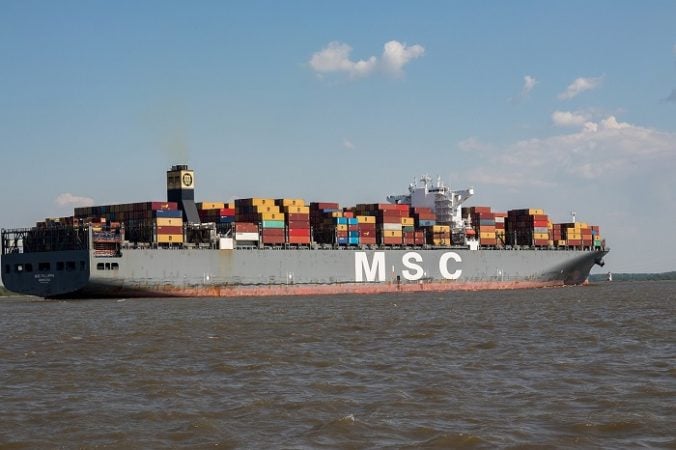
The most common container sizes are 40-foot and 20-foot. The size of your family and departure home will generally drive the volume of your load.
Although it’s possible to ship by rail from Mexico to the United States, shipping by sea is still a popular option when it comes to bulk shipping.
When you contact a moving company, someone will be assigned to survey your goods, either in person or virtually.
Based on your estimated volume, the surveyor will evaluate which type of container you need and if you have enough goods to fill up the container. This is referred to as FCL or LCL:
- FCL is a full-container load
- LCL is less than a full-container load
If your volume will not fill up a container, you may opt for LCL, which is more cost effective for smaller moves. However, there are some benefits to FCL:
- Charges for an FCL are typically a flat rate whereas LCL charges are based on volume.
- Waiting time should be reduced with FCL because you’re not sharing the container with other people.
- An LCL requires additional handling, which increases the risk of damage in transit.
Freight Forwarders
Freight forwarders play an important role in international transit. This service provider oversees the flow of the cross-border shipment.
They also coordinate with the carriers, transfer agents, and customs officers. An effective freight forwarder works to ensure everything is in order, tracks progress, and keeps you informed of any roadblocks.
Your freight forwarder acts as your primary point of contact, serving as an intermediary between all relevant parties. Search for a freight forwarder you would like to work with.
Incomplete or vague invoices are the single most common cause of customs delays. Use specific item descriptions (“cotton men’s t-shirt” rather than “clothing”) and accurate declared values. A customs broker acts on your behalf to cover the customs clearance process. Ask your shipping company or freight forwarder for a list of names to help you locate an experienced professional.
You can also refer to the broker finder on the CBP website.
Costs
You may find this online freight calculator useful to get an idea of your cost for different modes of shipment.
As an example, here is a comparison of rates for a shipment worth US$15,000 transported from Veracruz, Mexico to San Francisco, California, USA.
| SHIPMENT MODE | ESTIMATED RATE |
| 40-foot full-container load | US$2,800 – US$3,800 |
| 40-foot full-truck load | US$2,200 – US$3,200 |
If you were to send an air shipment of 250 kilograms (about 550 pounds) from Veracruz to San Francisco, the estimated rate would be US$1,200 to US$2,000.
For personalized quotes from shipping companies, use this form.
Shipping Small Items
Logistics companies that can arrange your small-item shipments from Mexico to the USA include FedEx, United Parcel Service (UPS), and DHL. Expats with experience shipping between Mexico and the US consistently rate DHL as the most reliable; FedEx in particular has a reputation for getting packages stuck in customs longer than necessary.
For a side-by-side comparison of one-day delivery options, following are sample shipping rates to transport a 10-kilogram package (about 22 pounds) from Monterrey (Nuevo Leon), Mexico 64000 to San Francisco, California 94102, USA, valued at MX$2006.10 (US$100).
| SERVICE | ESTIMATED TRANSIT TIME | COST |
| FedEx International Priority | 1 day | US$170 – US$250 |
| UPS Worldwide Express Plus | 1 day | US$170 – US$250 |
| DHL Express Worldwide | 1 day | US$150 – US$240 |
Preparing Small Shipments
If you’re shipping small items, check UPS guidelines for preparing your package. They will advise you on how to pack properly and how to measure your package. Here are some basic packing tips:
- Buy new, sturdy boxes if you can. If you must reuse boxes, remember to remove old labels.
- Use corrugated boxes because the parallel grooves and ridges add a layer of protection.
- Arrange the items to avoid touch points with the box by enclosing each item in a cushion of foam or a recyclable material.
- Use bubble sheets and loose-fill products.
- Close the package with pressure-sensitive plastic, or use tape that is reinforced with nylon. The sealing material should be a minimum of 5.08 centimeters (2 inches) wide.
- Complete the label, and affix it to the top of the package, being careful not to place the label over the taped seams.
This gives you a general idea of the container sizes you may need for your wrapped items:
| VOLUME | DIMENSIONS | TYPICAL CONTENTS |
| 1/2 cubic meter | 66.04 centimeters high by 106.68 centimeters by 73.66 centimeters | Dishes, pots and pans, linens, and toys |
| 2 cubic meters | 104.14 centimeters high by 139.7 centimeters by 137.16 centimeters | Small furniture like an end table, small chair, or small-to-medium sized television |
| 2 1/2 cubic meters | 129.54 centimeters high by 139.7 centimeters by 137.16 centimeters | Small furniture to include a baby crib disassembled |
FedEx

FedEx Freight de México partners with Auto Líneas América, S.A. de C.V. (ALA), based in Monterrey, Mexico. The company offers pickup and delivery to, from, and within Mexican borders.
For small shipments, you can locate FedEx offices in Mexico using their online map.
To get a quick estimate for your package, use the rate calculator on the FedEx website. Following is an example:

| SERVICE | ESTIMATED TRANSIT TIME | COST |
| FedEx International First | 1 day (8 a.m. delivery) | US$220 – US$300 |
| FedEx International Priority | 1 day (10:30 a.m. delivery) | US$180 – US$250 |
| FedEx International Economy | 3 days | US$150 – US$210 |
UPS

Using the UPS rate calculation tool, you can find these options:
| SERVICE | ESTIMATED TRANSIT TIME | ESTIMATED COST (2026) |
|---|---|---|
| UPS Worldwide Express Plus | 1 day (early morning delivery) | US$190 – US$270 |
| UPS Worldwide Express | 1 day (morning delivery) | US$160 – US$230 |
| UPS Express Saver | 1–2 business days | US$140 – US$210 |
| UPS Worldwide Expedited | 2–3 business days | US$130 – US$190 |
| UPS Standard (ground, cross-border) | 5–9 business days | US$60 – US$120 |
DHL

DHL offers express delivery services and international shipping. The least expensive option is DHL Express International.
To ship a 10-pound package from Mexico to the USA, you can expect a rate of US$90 – US$160. The delivery time ranges from one to six business days.
Customs
In the USA, CBP is responsible for the management and control of the border, which includes customs, border security, immigration, and agricultural protection.
The CBP website contains useful information about restricted and prohibited items as well as duties.
Customs duties are taxes attached to products transported across international borders. The duty rate is a percentage of the article’s value based on purchase price.
Customs officials refer to the Harmonized Tariff Schedule of the United States (HTSUS) to determine duties.
Your items must be declared, or revealed, to customs officials. Some of the documentation referenced in the paperwork section at the beginning of this article requires HTS codes. The coding helps customs authorities determine any duties you may owe.
Your customs broker can help you classify your goods to be sure you use the correct HTS codes.
Duties and Taxes
CBP provides the following general guidance on customs duties:
- One liter of alcohol for personal use is duty-free.
- If you buy items in a duty-free shop in the USA and send them to Mexico and then send them back to the USA, they are subject to customs duty upon return.
- Accompanied household goods are duty-free if the items have been used for at least one year and are not intended for another person or for sale.
- Personal effects more than one year old are usually duty free.
- Duties are assessed on vehicles.
Household effects include furniture, floor coverings, artwork, dishes, glassware, silverware, stereo equipment, and linens.
Also included are items you use for a trade, such as professional books, tools, and instruments.
Customs officials consider photography equipment as part of personal effects. Other personal items include clothes, jewelry, portable radios, and vehicles.
Do not confuse that shipping rule with the personal exemption you get as an arriving traveler, which still applies and depends on your residency status:
- U.S. resident: US$800
- Non-U.S. resident: US$100
Up to US$1,000 above the exemption is assessed duties at a flat rate of 3%. Customs duties must be paid in U.S. currency with a check made payable to U.S. Customs and Border Protection.
Some locations may allow credit card payments. If the amount due is $50 or less, you can pay by government check, money order, or traveler’s check.
Under the USMCA, which replaced NAFTA in July 2020, goods grown, manufactured, or produced in Mexico can enter duty-free or at reduced rates provided they meet the rules of origin.
What the End of Duty-Free De Minimis Means for Your Shipment
This is the update that matters most if you’ve read an older guide to shipping into the US. The US$800 duty-free allowance on shipments, known as the de minimis exemption under Section 321 of the Tariff Act, is gone for all practical purposes.
Executive Order 14324 suspended duty-free de minimis treatment for every country, effective 29 August 2025. US Customs and Border Protection (CBP) then issued rules in June 2026 that made the suspension indefinite, covering both couriers and the international postal network, plus a new postal entry process for mail. And Congress has legislated the exemption out of existence altogether from 1 July 2027.
In plain terms: a package no longer skips customs just because it’s worth less than US$800. Almost everything you ship, by courier or by mail, now needs a formal or informal customs entry, and duty is charged on the declared value no matter how small the shipment is.
A few things still work in your favor:
- Goods that qualify for USMCA preferential treatment can still enter duty-free or at a reduced rate, whatever happens to de minimis.
- Genuine gifts fall under a separate provision from the de minimis exemption, so check with CBP or your carrier rather than assuming a gift is caught by the same rule.
- Personal household goods you already owned and used (as opposed to items bought for resale) are treated differently from commercial cargo. Ask your mover or broker how CBP will handle your specific shipment.
This rule has moved more than once in the past two years, so don’t rely on any fixed dollar figure, including ones you find elsewhere on this page or on other sites. Check CBP’s own guidance before you ship, or ask your customs broker what applies to your shipment today.
US Tariffs on Goods That Do Not Qualify Under USMCA
This is where the USMCA certification of origin from the paperwork checklist earns its keep. Goods that meet the USMCA rules of origin and travel with a proper certification of origin (it doesn’t have to be a particular form, just a document carrying the required data elements) generally enter the US duty-free or at normal rates.
Goods that don’t qualify have been carrying an extra tariff on top of the standard rate, most recently around 10%. Treat that figure as a moving target, not a settled fact: the legal basis for it has been imposed, struck down in court, and replaced more than once since 2025, and the rate has shifted with it.
If you’re shipping anything of real commercial value, ask your customs broker or freight forwarder to confirm the current treatment before you ship, or check the Office of the US Trade Representative for the latest determination. For used personal effects and household goods this is less likely to bite, but confirm it if your shipment includes anything bought new.
Prohibited and Restricted Items
CBP works with other U.S. agencies and in compliance with U.S. federal and state laws to establish prohibited and restricted items.
Following are examples, but these are not all-inclusive lists. On the CBP website, expand each item to read the parameters.
You may also contact the respective agencies for more information.
The following items are prohibited, meaning they are forbidden under U.S. law:
- Dog and cat fur, according to the Dog and Cat Protection Act
- Cars that fail to meet U.S. federal standards for fuel-emission, theft prevention, and safety as established by the U.S. Department of Transportation (DOT) and Environmental Protection Agency (EPA)
- Bush meat (derived from African wildlife) and other foods that do not meet requirements set by the U.S. Food and Drug Administration (FDA)
- Drug paraphernalia and controlled substances such as Rohypnol. Absinthe is a special case rather than a banned substance: it can be imported if it is thujone-free and labelled to the Alcohol and Tobacco Tax and Trade Bureau’s rules.
The following items are restricted. Some may require a license or permit for legal entry:
- Alcohol, governed by state laws (Check the laws of the state where the goods are being delivered.)
- Firearms, regulated by the Bureau of Alcohol, Tobacco, Firearms and Explosives (ATF)
- Some fruits and vegetables, regulated by the U.S. Department of Agriculture-Animal and Plant Health Inspection Service (USDA-APHIS)
- Pets, in compliance with the Centers for Disease Control and Prevention (CDC)
A permit is required for the following food to enter the USA from Mexico:
- Stone fruit
- Apples
- Mangoes
- Oranges
- Guavas
- Sopote
- Cherimoya
- Sweet limes
Avocados from Mexico are subject to inspection if they have been peeled or halved and if the seeds have been removed. To pass inspection, these avocados must be in a liquid form or vacuum-packed.
Common Mistakes
One of the mistakes people make when shipping from Mexico to the U.S. is not anticipating delays and consequential charges caused by incomplete paperwork, undeclared items, and inspections required for restricted items.
This is important because delays can result in additional fees being charged to you, such as port storage and container demurrage. Demurrage refers to the delay in unloading cargo.
If a freight carrier is forced to remain in possession of a container beyond the allotted time period, the carrier can charge you demurrage fees for the extended use of the container.
Charges can also be incurred for unclaimed shipments, so be sure to track your shipment and collect it as soon as possible.
If freight is unclaimed, CBP will arrange for the goods to be placed in a bonded warehouse or public storage facility. This generates storage, transportation, handling and demurrage fees.
If still unclaimed after six months, the goods will be put up for auction. For mailed packages, the United States Postal Service will return mail to the sender if not claimed within 30 days.
Now, On to You
At this point, you should fell confident about the shipment you plan to send from Mexico to the USA.
Use the tips and resources provided in this article to plan your approach, help you select a shipping company, and leverage their expertise.

The more prepared you are, the less likely it will be for you to encounter surprises, though every move is unique.
Related articles:
- Moving to Mexico: A Guide for Expats to Live Here
- Shipping from USA to Mexico: Procedure, Cost, and Customs
- The Complete Guide to Becoming a Digital Nomad in Mexico
- Retiring in Mexico: The Complete Guide
- The Complete Guide to Mexico Visas for US Citizens
Frequently Asked Questions
Does the US$800 duty-free exemption still apply to shipments from Mexico?
No. The US suspended the Section 321 de minimis exemption for all countries with effect from 29 August 2025, and CBP made that suspension indefinite in June 2026. Nearly all shipments now go through a formal or informal customs entry with duty assessed on the declared value, however small. Check cbp.gov for the current rule before you ship.
What is a pedimento, and do I really need one?
A pedimento is Mexico’s official customs export declaration, filed by a licensed customs broker. You need one for essentially any shipment leaving Mexico, commercial or personal. Without it, Mexican customs will not release your shipment for export in the first place.
Can I send a package from Mexico to the USA by mail instead of a courier?
Yes, through Correos de Mexico connecting into the US international mail network, though transit times run longer and less predictably than a courier. Mail shipments are covered by the same end of de minimis treatment, with their own postal entry process.
Will I owe Mexican export tax on personal belongings I am shipping out?
Mexico does not generally impose an export tax on used household goods (menaje de casa) or ordinary personal effects. You still need the broker-filed pedimento, but that is a processing requirement, not a tax. Commercial goods can follow different rules depending on the tariff classification, so confirm with your broker if you are shipping for resale.
Do USMCA-origin goods avoid the extra US tariff on Mexican imports?
Generally yes. Goods that meet the USMCA rules of origin and carry a proper certification of origin typically enter duty-free or at standard rates, separate from any additional tariff applied to non-qualifying goods. This matters most for commercial shipments; used personal household goods are treated differently.
What happens if my shipment arrives without the correct paperwork?
Expect delays and possibly extra fees. CBP can hold a shipment for inspection or further documentation, and if it sits too long you can be charged storage fees on top of any duty. This is the most common way a routine shipment turns expensive, so check the paperwork with your broker or carrier before the goods leave Mexico.
Are the shipping cost estimates in this guide still accurate?
Treat them as ballpark ranges, not quotes. Courier and freight rates move with fuel surcharges, tariff changes, and each carrier’s own pricing updates. Use the figures here to compare shipping modes, then get a live quote from the carrier or a freight forwarder’s own calculator before you commit.
Sources Cited
- U.S. Customs and Border Protection: e-commerce and de minimis guidance
- U.S. Customs and Border Protection: prohibited and restricted items
- Agencia Nacional de Aduanas de Mexico (ANAM): import and export guide
- Office of the U.S. Trade Representative
- Harmonized Tariff Schedule of the United States (USITC)







 Deutsch:
 Français:
 Español: