This article will take approximately 27 minutes to read. Don't have the time right now? No worries. Email the ad-free version of the article to yourself and read it later!
Wondering if Kuala Lumpur is safe? This detailed guide covers crime, scams, neighborhoods, tips for women, and what travelers should know before visiting
If you’re thinking about traveling to or moving to Kuala Lumpur and wondering how safe it really is, this guide is for you.
Overall, Kuala Lumpur is a safe city, especially when it comes to violent crime, which is rare, particularly against foreigners. Of course, there are still some things to watch out for, like bag snatching by motorcyclists, road safety issues, and some concerns for female travelers.
I’ve been to Malaysia many times and am quite familiar with the country. In this article, I’ll share my personal experience along with safety data from official sources and insights from other travelers, so you get a full picture based on both facts and real-life situations.
Traveling around Asia? ACS Globe Traveller pays medical bills in full up to €150,000, €300,000 or €500,000 (your choice) with no deductible, and covers medical evacuation and repatriation. It’s valid worldwide for trips up to 12 months and open to travelers of any nationality under 66. You can even buy it after you’ve left home (an 8-day waiting period applies). (Advertisement)
Contents
- Key Takeaways
- Crime in Kuala Lumpur
- Petty Theft
- Women’s Safety
- Walking Alone
- Scams
- Food Safety
- Mosquitoes
- Air Pollution
- Road Safety
- Emergency Contact
- Final Verdict: Is Kuala Lumpur Safe?
- Frequently Asked Questions
- Is Kuala Lumpur safe to visit right now?
- Is Kuala Lumpur safe at night?
- Which areas should I avoid in Kuala Lumpur?
- Is public transport safe in Kuala Lumpur?
- Is Kuala Lumpur safe for solo female travelers?
- Do I need to worry about tap water or street food in Kuala Lumpur?
- Is Kuala Lumpur safer than Bangkok or other regional capitals?
- What's the emergency number in Kuala Lumpur?
- Sources Cited
Key Takeaways
- Kuala Lumpur in general is a safe city, but it also has some safety concerns like any big city in the world.
- Violent crime is rare, especially against foreigners.
- Petty theft like bag snatching and phone grabbing by motorcyclists is the biggest safety issue
- Neighborhood safety varies. For example, KLCC, Bangsar, and Mont Kiara are very safe. Chinatown and Chow Kit require more caution, especially at night.
- Solo female travelers may experience unwanted attention in certain areas, but many still feel safe overall. Avoid revealing clothes remote areas at night
- Driving can be chaotic with confusing roads, traffics, and aggressive drivers.
- Public transport is safe, reliable and cheap, especially in central areas.
- Food and water are generally safe, but stick to freshly cooked meals and bottled water.
- Air quality is good. There’s some seasonal haze once in a while, but it usually doesn’t last long.
Crime in Kuala Lumpur
According to Numbeo, KL’s safety index sits around 41 as of mid-2026. It’s not a great number, since several nearby cities score noticeably higher, including Singapore, one of the safest cities anywhere, at around 77.
However, I’m not that sure how accurate the number is. Based on what I’ve seen, Kuala Lumpur is pretty much a safe country. I know many people who have traveled there many times and never had a safety issue. Also, when looking at the comments section of Numbeo, many people also agree with me.
But there are 3 main points you should know:
- Violent crimes are very rare, especially among foreigners. Most of the reported crimes are mainly disputes among drunk tourists.
- There’s a big safety difference between each neighborhood. For example, the Chinatown area isn’t that safe.
- If you are female, there’s additional safety concern since someone may stalk you in certain areas. I’ll talk more about it in the section below.
Other than that, if you stay in a tourist area that’s well lit and populated at night, you should be fine. Of course, it isn’t as safe as Singapore or Penang, but it’s still safe enough.
Also, Malaysia has been doing a really good job to improve the country’s safety, especially in Kuala Lumpur, especially when it comes to violent crime. According to data from the Department of Statistics Malaysia (DOSM), the number of reported assault cases in Kuala Lumpur fell from 3,776 in 2016 to just 940 in 2023, a decline of over 75% in seven years.
Worth flagging for balance: nationwide, Malaysia’s overall crime index ticked back up 11.1% in 2024, to 58,255 recorded cases versus 52,444 in 2023, and the Kuala Lumpur-Putrajaya federal territory still records the country’s highest crime index ratio. That’s a national trend rather than a Kuala Lumpur-specific one, but it’s fair context alongside the longer-term improvement above.
Petty Theft
If you ask me what the biggest safety concern in Kuala Lumpur is, I’d say petty theft. The main thing to watch out for is phone snatching or bag grabbing by motorcyclists. You can see this dashcam clip shared on Instagram as an example. A woman got her bag snatched while crossing a busy street in Bukit Bintang in broad daylight, around 2pm on Sunday.
Another Reddit user shared a similar experience in which he nearly lost his phone in Bukit Bintang to a snatcher. Of course, this kind of thing doesn’t happen all the time. But it still happens.
Areas to watch out: Based on what I gathered, hotspots for these types of thefts include Bukit Bintang, Petaling Street, and quieter stretches near some LRT stations after dark. While Chow Kit isn’t always listed, many locals suggest being extra cautious in that area too, especially if walking alone late at night.
- Avoid walking too close to the road with your phone in hand
- Don’t wear a handbag that can be easily grabbed
- Be extra careful when crossing the street. A snatcher might take the chance when you’re distracted to grab your stuff
The good news: this has been improving. Kuala Lumpur City Hall rolled out a network of 10,000 AI-powered CCTV cameras citywide, a roughly RM500 million investment since 2020, and it cut snatch theft by 57.6% and overall reported crime by about half in 2025 alone. Worth staying alert, but the trend is heading the right direction.
ATM card skimming is a smaller but real risk too. Stick to ATMs inside banks or malls with a security guard nearby, cover your hand when entering your PIN, and consider carrying a Malaysia-friendly credit card with fraud alerts as backup.
Also, if you’re at a mamak restaurant, don’t leave your valuable items on the table. If possible, put your bag somewhere hard to steal, like behind your back while sitting.
Women’s Safety
Another safety concern is women’s safety. Of course, this doesn’t happen to me since I’m male. But many women have shared that they feel uncomfortable in certain areas or situations. These reports often involve:
- Excessive staring
- Unwanted filming or photographing
One Reddit user said, “We were taking pictures and they circle around you and even photobomb your photos in Petronas (Twin Towers).” She also mentioned it might be because of her clothes. While they weren’t very revealing, they were different from what’s common there. She wore a high-waist, knee-length skirt and a cropped top.

Of course, this doesn’t happen to everyone. Many solo female travelers also say they feel very safe traveling around Kuala Lumpur.
Most of these incidents aren’t physically dangerous, but they can still be stressful or make you feel uneasy, even when you’re with female friends.
Also, in places like Petaling Street, strangers might approach you, sometimes even in broad daylight.
So, if you’re a female traveler and want to stay safe in Kuala Lumpur, here are my personal tips:
- Avoid wearing clothes that are too revealing. But make sure they’re still breathable since Malaysia is hot and humid
- If possible, don’t carry a handbag (to avoid snatching like I mentioned earlier)
- If you plan to visit Petaling Street, go during the day and be a bit more mindful of how you dress
- Don’t go to quiet or remote areas, especially at night
Still, it’s a good idea to remind you again that many women travel solo in KL without any issues and they feel safe here.
The same common sense applies to meeting people safely, including through dating apps: arrange first meetups in busy public places and let someone know where you are going.
Walking Alone
In general, it’s safe to walk alone in Kuala Lumpur in daylight except for a certain condition like a female wearing revealing cloth walking in a Petaling Street as mentioned earlier.
In most cases, you can just walk safely, especially in busy public spaces like malls, KLCC Park, and the main roads around Bukit Bintang.
However, if it’s at night, you do need to be more cautious. Areas like Chinatown, and some quiet streets can feel very different after dark. Of course, they’re not necessarily dangerous, but they tend to be poorly lit and less populated, which can make you feel unsafe.
However, in an area like Pavilion, Bukit Bintang, and KLCC, it’s safe to walk, even at night.
Scams
There are two main scams in Malaysia. Both are classic scams you’ll find in many parts of the world.
Taxi Scam
The first one is the classic taxi scam, especially at the airport, where a taxi refuses to use a meter or charges you a very high price and takes you on a long ride around the city.
Good to know about KL airport taxi
In Malaysian airports, all taxis are supposed to be managed by one company. It’s a monopoly system run by the airport, but at least it helps prevent scams. You’ll see signs pointing to the official taxi counter, or you can just ask at the customer service desk.
You go to the counter, tell them your destination, pay upfront, and they’ll give you a ticket. Then just walk to the taxi queue, hand over your ticket, and get in the next available taxi.
If you skip the official taxi system and go with someone who approaches you directly, there’s a high chance you’ll get scammed. These guys are just targeting foreigners and giving all taxi drivers a bad name.
Also, when getting around the city, regular taxis often have a reputation for not using the meter. Just use an app like Grab or InDrive to avoid this.
Show Me Your Money Scam
The second common scam is the classic “show me your country’s money” trick. A stranger might randomly approach you and ask to see some banknotes from your home country. Then they either snatch the money and run, or they just use the excuse to spot where your wallet is, so someone else can come steal it. This usually happens in crowded areas like Chinatown or malls around KL Sentral.
(Not sure why, but Indian tourists seem to experience this one more often.)
Malaysian police have also been cracking down hard on organized online scam operations. In September 2025, raids in Kuala Lumpur dismantled two syndicates targeting victims in China and Japan through cryptocurrency investment schemes, and in a bigger multi-agency operation in May 2026, police arrested 187 people and seized RM57.68 million in assets tied to an international online scam network. WhatsApp investment schemes and romance scams remain the most common formats. Avoid any unsolicited contact via WhatsApp, Telegram, or social media from people you do not know, no matter how friendly or convincing the approach seems.
Fake Police Officer Scam
A less common but nastier scam: someone posing as police or a government official stops you on the street, flashes a fake warrant card, and claims you’re under investigation for something like money laundering. They’re trying to scare you into handing over cash or transferring money to a “safety account.”
This isn’t just street-level chancers. In January 2025, Singapore and Malaysian police jointly took down a 16-member syndicate based in Kuala Lumpur that had run over 1,100 fake-official scam cases between January and October 2024, costing victims more than US$120 million combined. Most targets got contacted online first, but tourists have reported in-person approaches too.
- Real Royal Malaysia Police (PDRM) vehicles carry the official logo on the doors and a rectangular siren box on the roof
- Ask to see ID, and don’t hand over cash, cards, or your passport on the street
- If someone claims you’re in legal trouble, insist on going to the nearest police station rather than settling it on the spot
- Keep a photo of your passport and your Malaysia Digital Arrival Card on your phone, so you can show proof of legal entry if anyone questions it
Food Safety
The overall food hygiene really depends on what you see. Eating inside a restaurant usually means better food standards compared to hawker stalls or mamak restaurants. Overall, I’ve found food hygiene here to be okay.
Of course, everyone has different stomach sensitivity. I’ve seen some people get an upset stomach here, but I’ve been totally fine. It might be because of the spices in Malay food.
One thing I tend to avoid is food in mamak restaurants that’s been sitting out for a while. You just don’t know how long it’s been there. I’ve even seen some shops just reheat the food in a microwave.
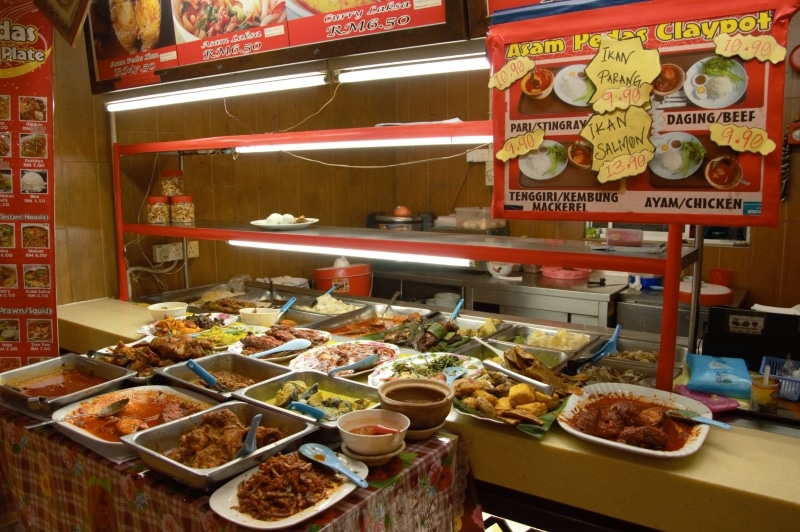
So, I usually go for food that’s freshly cooked and served hot, like a noodle dish made right in front of you by grandpa. Also, keep in mind that food in KL can sometimes be oily. It’s safe to eat, but for me, it’s not something I’d want every day.
As for water, just stick to bottled water and you’ll be fine. Iced drinks are also okay.
Alcohol and Methanol Poisoning
In November 2025, the UK Foreign Office added Malaysia to its list of countries with a methanol poisoning warning, part of a wider wave of alerts across Southeast Asia. Methanol is an industrial alcohol, tasteless and odourless, and it sometimes gets mixed into cheap or counterfeit spirits to cut costs. Even a small amount can cause blindness or death within 12 to 48 hours.
Malaysia’s had methanol poisoning outbreaks before, most seriously in 2018, when tainted liquor killed dozens of people across Selangor, Kuala Lumpur, and nearby states. The risk comes almost entirely from unlicensed or bootleg alcohol, not from drinks at licensed bars, hotels, or restaurants.
- Stick to licensed bars, hotels, and restaurants for drinks, and buy bottled spirits only from proper retailers
- Be wary of unusually cheap drinks, especially at street stalls or unlicensed venues
- Watch for symptoms like blurred vision, confusion, or stomach pain after drinking, and get to a hospital immediately if they show up
It’s rare, but it’s exactly the kind of situation where a decent grasp of Malaysia’s healthcare system and quick access to a hospital actually matters.
Mosquitoes
Malaysia has a problem with dengue fever, just like neighboring countries such as Thailand, Vietnam, and Indonesia. For me, it’s just a common issue in any tropical country.
However, you don’t need to worry much about it in Kuala Lumpur. The city is highly developed and urbanized, so the risk is very low. In most cases, you won’t even think about it. Mosquitoes aren’t really a problem here unless you go to parks or green areas.
For full details on dengue and how to stay safe, you can check the World Health Organization’s guide.
Weather
Kuala Lumpur is hot and humid all year round, with temperatures usually around 31–33°C (88–91°F). So, be prepared to sweat a lot when you’re outdoors.
For most people, it’s fine. But for me, because of my sensitive skin, I get rashes after a few days. It might be because I’m outside a lot and sweat a lot too. But my friends are totally fine, so this is probably just a personal issue.
Anyway, when you’re out and about, wear loose and breathable clothing. It really helps. And just a reminder, if you’re female, wearing revealing clothes isn’t recommended.
Also, don’t forget the essentials:
- Sunscreen, especially if you’re walking during the day
- A hat or umbrella. In Malaysia, when it rains, it really pours
- Water bottle. Keep drinking and stay hydrated
Good to know: There’s no real “cool season” in KL, but afternoon showers are common. So, carrying a small umbrella or a lightweight rain jacket in your bag is always a good idea.
Air Pollution
When it comes to air pollution, Kuala Lumpur is generally okay. According to IQAir, the city’s annual average PM2.5 level in 2023 was around 16–18 µg/m³, which is considered moderate. It’s not ideal, but still better than many nearby countries like Thailand and Indonesia, where major cities often record higher levels.
For comparison, the World Health Organization (WHO) recommends that the average annual PM2.5 level should not exceed 5 µg/m³. So while Kuala Lumpur’s air quality is better than many places in the region, it still doesn’t meet WHO standards. However, there’s only a handful of countries in the world that meet these standards, like New Zealand, Iceland, and some parts of Canada.
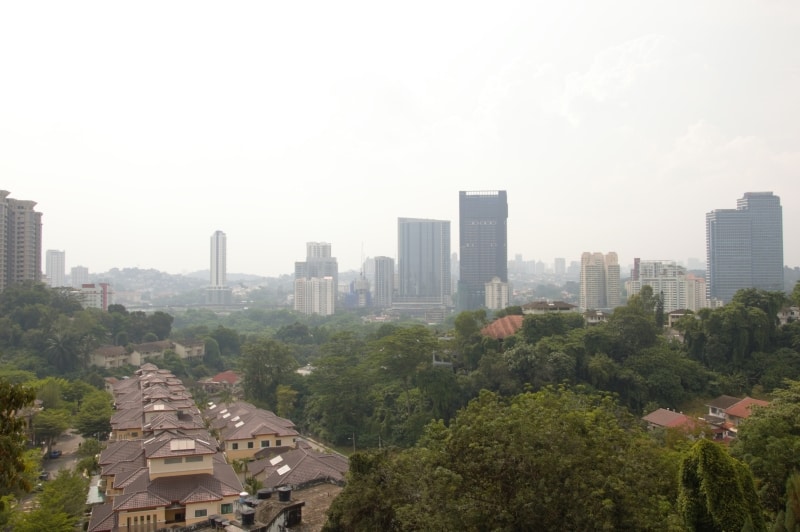
Therefore, unless you have respiratory issues, retirees, or are very sensitive to air quality, it shouldn’t be a big concern.
One thing to keep in mind is the seasonal haze caused by forest fires in Indonesia. It’s the same issue Singapore deals with. But from what I’ve seen, the situation has improved in recent years and doesn’t happen as often or as severely as before.
Road Safety
Kuala Lumpur (and many cities in Malaysia) isn’t pedestrian-friendly at all. The city planning isn’t great, and walking in some areas can be a hassle. Sometimes, there’s no proper crosswalk, or you’ll find yourself stuck trying to cross a busy street with no clear way across. Motorcycles can also come out of nowhere, even on sidewalks, so you really need to stay alert.
Driving in KL isn’t much better. Roads can feel chaotic and confusing. If you miss a junction, it might take a while to find a U-turn or a way back. And traffic, especially during peak hours, can get really bad.
From my own experience, here are a few tips for driving in KL:

- If there’s any space between your car and the one in front, someone may cut in, often without signaling and really close to your car. It’s very common here.
- I’ve seen cars from the left lane suddenly U-turn along with me. So be careful even when you’re doing something simple.
- In a traffic jam, I always assume the car in front is tailgating. I try to keep a safe distance and stay alert to brake.
- At traffic lights, I stay focused, motorcyclists may run red lights without hesitation.
- Get car insurance if you want to drive here.
The good thing is, public transportation in Kuala Lumpur is quite good and affordable thanks to the country’s low cost of living. You can get around the city easily with the MRT, LRT, and monorail. The trains are clean, air-conditioned, and cover most key areas like KLCC, Bukit Bintang, and KL Sentral.
Some areas don’t have great coverage, and walking to a station might be annoying due to poor sidewalks. But overall, if you stick to central areas, it’s reliable and budget-friendly.
So, you may have some concerns about road safety at first, but it’s not as bad as you think. You’ll get used to it quickly.
Tip: If you are female traveling alone, you can take the women-only train cars on the KTM Komuter trains. They’re marked in pink and reserved for female passengers. It gives you a bit more space and comfort, especially during rush hour when trains can get packed.
Neighborhood Safety Overview
Another important point I should mention about Kuala Lumpur is that safety can vary a lot depending on the neighborhood. For example, many of the safety concerns people talk about tend to happen around Chinatown, especially in the Petaling Street area.
On the other hand, places like KLCC are very safe, even at night. It’s well-lit, full of tourists, and has plenty of security around.
If you’re new to KL or just visiting, here’s a quick overview of how safe each neighborhood is:
KLCC Safety
Safety Rating: High
KLCC is one of the safest neighborhoods in Kuala Lumpur. It’s modern, clean, and well-lit, with lots of tourists, high-end hotels, and security guards around. It’s safe to walk here even at night.
Bukit Bintang Safety
Safety Rating: Moderate
Bukit Bintang is a popular area for nightlife, shopping, and dining. It’s generally safe, but you should stay alert in crowded areas as scams and pickpockets can happen. Petty theft is more likely here than in KLCC.
Chinatown (Petaling Street) Safety
Safety Rating: Low
Chinatown, especially around Petaling Street, tends to feel more chaotic. It’s crowded and often male-dominated, especially after dark. Many solo female travelers have reported feeling uncomfortable here, so it’s an area where you should stay alert.
Bangsar Safety
Safety Rating: High
Bangsar is trendy, laid-back, and popular with both locals and expats. It has a good mix of bars, restaurants, and cafes. The area stays lively late into the evening and is generally considered very safe.
Mont Kiara Safety
Safety Rating: High
Mont Kiara is a quiet, upscale residential area favored by expats. Street crime is rare here, and the environment is calm and suburban. It doesn’t have as much of a local cultural feel, but it’s one of the safest parts of the city.
Grab and E-Hailing Safety
Grab is by far the safest way to get around Kuala Lumpur, and most locals and expats use it over street-hailed taxis. The app shows you the driver’s name, photo, plate number, and fare upfront, so most of the guesswork that leads to scams just disappears.
- Check the plate number matches before getting in, not just the car’s color and model
- Share your trip status with a friend or family member through the app, especially for late-night rides
- If a driver asks you to cancel the app booking and pay cash instead, decline and book another ride
You’ll want a local SIM or data plan to book rides. Once you’ve settled in, it also helps to open a Malaysian bank account, since linking a local card or e-wallet makes paying for rides way smoother than relying on a foreign card. Want to drive yourself instead? You’ll need a Malaysia driving license, but for most visitors, e-hailing is just easier.
Emergency Contact
Another great thing about Kuala Lumpur is healthcare. If something goes wrong, the city has solid emergency and medical services.
There are just many good private hospitals like Prince Court and Gleneagles that are clean, modern, and very expat-friendly, with English-speaking staff and fast service. I haven’t needed to use them myself, but I know expats in Malaysia who’ve gone in for everything from food poisoning to more serious treatment. They all had good experiences.
In case of an emergency, here are the main numbers to know:
- Police: 999
- Ambulance: 999
- Fire Department: 994
You might also notice tourist police in busy areas like KLCC and Bukit Bintang. They’re generally helpful and approachable if you need directions, have safety concerns, or lose something.
If you’re moving here rather than just visiting, a proper travel insurance in Malaysia plan (or local health insurance once you’ve settled) covers you if something does go wrong. It’s also worth plugging into local expat groups through networking in Malaysia communities, since they’re often the fastest way to hear about a new scam or an unsafe pocket of the city before it makes the news.
You might want to read: Health Insurance in Malaysia for Expats: What You Need to Know
Final Verdict: Is Kuala Lumpur Safe?
If you’re wondering whether Kuala Lumpur is safe, the short answer is: yes, but with some things to watch out for. Violent crime is rare, especially toward foreigners. Most safety concerns here are minor.
The biggest issue in KL is petty theft. These don’t happen all the time, but they do happen, especially in areas like Chinatown and Bukit Bintang.
Snatch-and-run cases by motorcyclists are also real, so keep your phone and bag secure, especially when walking near the road or crossing the street.
For women, safety can depend on where you go and what you wear. Most female travelers I know have felt safe overall, but there are reports of harassment or discomfort, especially in crowded or less touristy areas.
So overall, while KL has its issues, like any big city, it’s still a safe place to visit or live in. Just stay alert, trust your instincts, and you’ll likely have no problems at all.
You can stay up-to-date with travel safety information and crime trends from the official sources below:
Frequently Asked Questions
Is Kuala Lumpur safe to visit right now?
Yes. The US State Department, UK Foreign Office, and Australian Smartraveller all rate Malaysia at their lowest risk tier, so normal travel precautions are all you need. The one exception is the maritime area off eastern Sabah, far from Kuala Lumpur, where there’s an ongoing kidnapping risk warning.
Is Kuala Lumpur safe at night?
Central, well-lit areas like KLCC, Bukit Bintang, and Pavilion are fine to walk through at night. Quieter streets and parts of Chinatown feel different after dark, mostly because they’re poorly lit and empty, not because violent crime is common there. If you’re not sure, just take a Grab instead of walking.
Which areas should I avoid in Kuala Lumpur?
Chinatown, Petaling Street, and Chow Kit need extra caution, especially after dark. None of them are off-limits, but they’re where most petty theft and scam reports cluster. KLCC, Bangsar, and Mont Kiara are consistently the safest neighborhoods.
Is public transport safe in Kuala Lumpur?
Yes. The MRT, LRT, and monorail are clean, air-conditioned, and cover most key areas. KTM Komuter trains even have women-only carriages, marked in pink, if you want extra space during rush hour.

Is Kuala Lumpur safe for solo female travelers?
Most solo female travelers say they feel safe in Kuala Lumpur. The more common complaints are unwanted staring or photographing, especially around Petaling Street, not physical danger. Dress modestly in that area and skip quiet streets at night, and most of the discomfort goes away.
Do I need to worry about tap water or street food in Kuala Lumpur?
Stick to bottled water to be safe. Street food and hawker stalls are generally fine too, just go for freshly cooked, hot food, and skip anything that’s been sitting out a while.
Is Kuala Lumpur safer than Bangkok or other regional capitals?
By Numbeo’s crowd-sourced safety index, Kuala Lumpur scores lower than Singapore and a few other Southeast Asian capitals. Even so, violent crime against foreigners is rare in KL. Most of what drags the score down is petty theft and traffic chaos, not serious danger.
What’s the emergency number in Kuala Lumpur?
Dial 999 for police or ambulance, and 994 for the fire department. Tourist police patrol busy areas like KLCC and Bukit Bintang too, if you need help with something less urgent.
Sources Cited
- Numbeo Crime Index – Kuala Lumpur – Current crime/safety index figures (crime index 59.04, safety index 40.96 as of Aug 2026).
- The Rakyat Post – KL’s 10,000 AI-Powered CCTVs Cut Snatch Theft By More Than Half – 57.6% snatch-theft reduction, RM500 million CCTV investment, ~50% overall crime drop in 2025.
- Department of Statistics Malaysia (DOSM) – Crime Statistics, Malaysia, 2024 – National crime index up 11.1% in 2024 (58,255 vs 52,444 cases); KL-Putrajaya highest crime index ratio.
- U.S. State Department Travel Advisory – Malaysia – Confirms current Level 1 advisory, updated Feb 2026; Sabah maritime kidnapping risk carve-out.
- UK Foreign Travel Advice – Malaysia (gov.uk) – Confirms current advisory status and the November 2025 methanol-poisoning warning addition.
- Australian Smartraveller – Malaysia – Confirms current Level 1 (green) advisory status.
- Singapore Police Force – joint operation press release, Jan 2025 – Verified figures for the fake-government-official scam syndicate bust in Kuala Lumpur.
- The Edge Malaysia – 187 arrested, RM57.68 million seized in scam syndicate bust – May 2026 multi-agency online scam syndicate operation figures, used to replace an unverifiable prior claim.






 Français:
 Español:
 Deutsch: