
This article will take approximately 23 minutes to read. Don't have the time right now? No worries. Email the ad-free version of the article to yourself and read it later!
Davao City is the cheapest of the three Philippine cities expats actually shortlist. A one-bedroom condo here rents for about half what the same unit costs in Cebu City and a third of what it costs in Makati. Electricity is the one line that ruins budgets.
Most people arrive in Davao from elsewhere in the Philippines rather than straight off a plane from abroad, after a year in Manila or a stretch in Cebu. The question is whether the third city is a real alternative or just a quieter version of the same bill.
Davao is cheaper on housing and roughly the same on everything you buy in a shop.
This guide prices everything in Philippine pesos, converted at around ₱62 to US$1, a rate that has moved in favour of anyone earning abroad. Every figure below comes from a utility advisory, a government wage order, a school’s fee schedule, or live rental listings checked on the day of writing.
Disclaimer: This article may include links to products or services offered by ExpatDen's partners, which give us commissions when you click on them. Although this may influence how they appear in the text, we only recommend solutions that we would use in your situation. Read more in our Advertising Disclosure.
Key Takeaways
- A single person living like a local gets by on ₱23,000 to ₱31,000 a month, or about US$370 to US$500.
- A comfortable condo life, with air conditioning, supermarket groceries and Grab instead of jeepneys, runs ₱51,000 to ₱67,000 a month.
- One-bedroom condos in Davao list at ₱23,000 to ₱27,000. The equivalent in Cebu IT Park is ₱33,000 to ₱50,000, and in Makati’s Rockwell it’s ₱50,000 to ₱65,000.
- Electricity is the budget killer. Davao Light’s rate has climbed more than ₱3 per kilowatt-hour since December 2025, and heavy air conditioning can add ₱5,000 or more to a month.
- Public transport barely dents a budget: the jeepney base fare is still ₱13, because the increase approved in March 2026 was suspended and never took effect.
- A full-time housekeeper is legal and affordable: the regional minimum for domestic workers is ₱6,500 a month.
- Davao has no true international school publishing fees. The strongest private option, Ateneo de Davao’s junior high, estimates ₱142,000 to ₱150,000 a year per child.
Budget Tiers in Davao
What you spend in Davao depends almost entirely on two choices: whether you rent a condo and whether you run air conditioning. Food, transport and internet cost roughly the same either way.
The cheapest tier is local-integrated: a plain apartment, fans and a bit of evening aircon, jeepneys, and food cooked at home or bought from a carinderia. Above that sits the condo life most working expats land in, then a family with a car and household help.
| Lifestyle | Monthly total | In US$ | Rent | Food |
|---|---|---|---|---|
| Local-integrated single | ₱23,000 to ₱31,000 | US$370 to US$500 | ₱10,000 to ₱15,000 | ₱8,000 to ₱10,000 |
| Comfortable single | ₱51,000 to ₱67,000 | US$820 to US$1,080 | ₱23,000 to ₱27,000 | ₱15,000 to ₱20,000 |
| Family with car and help | ₱98,000 to ₱150,000 | US$1,580 to US$2,420 | ₱35,000 to ₱75,000 | ₱30,000 to ₱45,000 |
School fees sit outside all three tiers. Private school tuition for two children adds the equivalent of a second rent.
Good to Know: Davao City’s inflation rate was 6.8 percent in July 2026, up from 6.2 percent in June, driven by housing, water, electricity and gas. Budget with headroom rather than to the peso.
Accommodation
Rent is where Davao earns its reputation, and the gap against Cebu and Manila is wide. One-bedroom condos across the city were listing at ₱23,000 to ₱27,000 a month when this guide was written, and plain apartments go for a fraction of that.
Davao City is enormous by land area, so where to live matters more here than in a compact city. The districts below are where foreigners end up.
Poblacion and Bajada
The old downtown core and the strip up J.P. Laurel Avenue holds the offices, the Bureau of Immigration, Abreeza Mall and most of the city’s business life. Avida Towers Davao on C.M. Recto Avenue, about 1.8 kilometres from City Hall, lists one-bedrooms around ₱22,000.
In the expat forums, Bajada and the Abreeza area come up constantly for people who want to walk to a mall and skip a car. The trade-off is noise, and residents mention flooding in heavy rain as often as the convenience.
Matina and Ecoland
Matina is the middle-class heart of the city and the most popular landing spot for foreigners. One Oasis Davao, on Eco-west Drive in Matina, lists studios with balconies from around ₱18,000 to ₱22,000, one-bedrooms at ₱25,000 to ₱32,000 and two-bedrooms at ₱35,000. Three-bedroom units come up less often, so treat any specific asking price for one as a starting point to negotiate from.
Older stock nearby is much cheaper. Semi-furnished one-bedrooms in older buildings around Matina, such as GSIS Heights, have been advertised as low as ₱14,000, though listings like these turn over fast and are worth confirming directly before you count on the price. Houses in Matina Crossing run from ₱75,000 for three bedrooms up to ₱125,000 for five.
Ecoland, next door, is the transport hub and sits opposite SM City Davao. Longtime residents rate it highly for that reason: you can reach most of the city without a car.
Lanang, Sasa and Buhangin
The northern corridor toward the airport is the newer, glossier side of Davao, anchored by SM Lanang Premier. One-bedroom condos in Sasa list around ₱23,000. Arezzo Place Davao, on Doña Pilar Avenue in Barangay Pampanga about four kilometres from SM Lanang, lists furnished one-bedrooms at ₱23,000 and studios at ₱20,000.
Amani Grand Citygate in Buhangin, beside Gaisano Grand Mall, lists superior studios at ₱25,000. Four-bedroom houses in Buhangin were asking ₱75,000.
Ma-a, Talomo and Toril
Head inland or south and the prices drop sharply. One-bedroom apartments in Ma-a list at ₱15,000, two-bedrooms at ₱25,000, and three-bedroom houses from ₱35,000. A four-bedroom house in Talomo was asking ₱35,000, and a three-bedroom in Catalunan Grande ₱20,000.
Toril is the far southern district, roughly 45 minutes from downtown, and where retirees who want quiet tend to settle. Expats there describe it as close to a market and a mall, away from the main traffic, and near a small hospital.
What a Lease Actually Costs to Start
Philippine landlords typically want two months’ deposit and one month advance, so a ₱25,000 condo needs ₱75,000 before you have keys. Budget separately for a bed, a fridge and a washing machine if the unit is unfurnished, as many cheaper apartments are.

Tip: Ask in writing whether condo association dues are included in the rent. The usual arrangement in the expat forums is that the owner covers the dues while the tenant pays electricity, water, internet and cable, but it isn’t universal and it’s an easy ₱2,000 or ₱3,000 a month to get wrong.
Read more: Moving to the Philippines
Transportation
Getting around Davao is close to free if you ride a jeepney, and moderately expensive the moment you don’t. There’s no rail and no city bus network, so the choice is jeepney, taxi, Grab, or your own vehicle.
Jeepneys
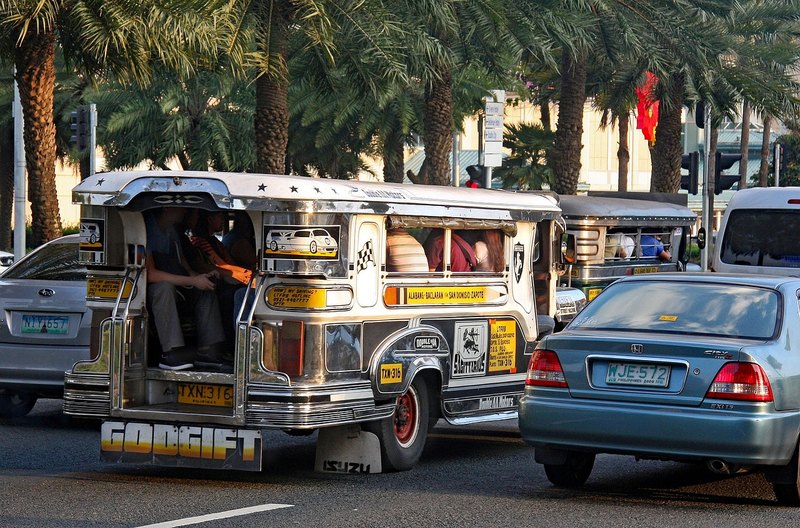
The base fare on a traditional jeepney is ₱13 for the first four kilometres, then ₱1.80 for each kilometre after. Plenty of sources still quote ₱14, because the Land Transportation Franchising and Regulatory Board approved that rise in March 2026.
Taxis and Grab
Davao taxis start at ₱50 flag-down, then ₱13.50 for each succeeding kilometre and ₱2 a minute for waiting time. Crossing the city typically lands between ₱150 and ₱300.
Grab operates here, and its base fares also sat out the March 2026 increase: ₱45 for a sedan, ₱55 for an SUV or AUV, ₱35 for a hatchback. Surge pricing does most of the damage.
Someone using Grab twice a day rather than jeepneys should expect ₱4,000 to ₱6,000 a month. Anyone thinking of buying a car should price fuel, insurance and parking against that first. That choice often separates the first budget tier from the second.
The Davao Bus Project
Davao has been promised a proper bus system for years. The Davao Bus Project, formerly the High Priority Bus System, has slipped repeatedly, and in March 2026 the Department of Transportation targeted the first phase for the third or fourth quarter of 2027, with full implementation in late 2028 or 2029.
Land acquisition is the stated hold-up. Three terminals are planned, at Bunawan, Toril and Calinan, and the Davao City Overland Transport Terminal will close once the system runs fully. Plan your transport budget as if it isn’t coming.
Health and Fitness
Davao has the best hospitals in Mindanao, which is a lower bar than it sounds and still enough for most needs. For anything complex, expats fly to Manila or Singapore, and that belongs in a serious budget.
Public Hospitals
Southern Philippines Medical Center is the Department of Health’s regional referral hospital and the biggest in Mindanao. Care is heavily subsidised and the equipment decent, but queues are long, so most foreigners use it only for emergencies or treatment private hospitals can’t provide.
Private Hospitals and Clinics
Davao Doctors Hospital on E. Quirino Avenue is the default private choice. It runs satellite Davao Doctors Care Centers at Dumoy, SM Lanang Premier and SM City Davao for check-ups, laboratory work and imaging.
Philippine hospitals don’t publish room-rate cards the way Thai or Malaysian ones do, so precise numbers are hard to pin down. Ask for an itemised bill and check it line by line: billing errors on foreign patients are a recurring complaint in the forums.
PhilHealth and Health Insurance
PhilHealth is the national scheme and foreign residents can enrol. The premium is 5 percent of monthly income, with an income floor of ₱10,000 and a ceiling of ₱100,000, so contributions run from ₱500 to ₱5,000 a month.
PhilHealth covers a slice of a private hospital bill, not the whole thing. Most expats pair it with a local HMO plan or international health insurance, and anyone staying long-term should treat that as a fixed cost.
Gym
Anytime Fitness has a branch at Abreeza Mall and there are local gyms across the city, but none publish current Davao rates online, so walk in and ask. Many condo buildings include a gym and pool in the association dues, so check before paying for a membership.
Read more: Hospitals in the Philippines
Education
Davao’s weakest point for families is schooling. No British, IB or American-curriculum school here publishes fees the way Manila’s international schools do, and that alone sends some families to Cebu or Manila.
Davao has a strong tier of Philippine private schools instead. Ateneo de Davao University’s junior high estimates annual costs of ₱142,000 to ₱150,000 per child, with a typical yearly adjustment of 5 to 7 percent, and announced no tuition increase for the 2026 to 2027 school year. A 10 percent down payment confirms enrolment.
At university level the numbers are far lower than newcomers expect. Philippine Women’s College of Davao charges ₱766.50 per unit for regular college classes, and Holy Cross of Davao College listed ₱909.18 per unit for the first semester of 2026 to 2027, with total registration fees of about ₱9,000.
Tip: Philippine private schools quote tuition, then add miscellaneous fees, books, uniforms and a development fee on top. Ask for the full annual figure before you compare two schools.
Groceries
Local produce in Davao is as cheap as anywhere in the Philippines, and imported goods are as expensive as anywhere in the Philippines. The grocery budget turns on which of those two baskets you fill.
Davao is the country’s fruit basket. This is the durian capital, and mangoes, pomelo, bananas and cacao grow within an hour’s drive. Buying fruit and vegetables at a public market rather than a supermarket halves that part of the bill.
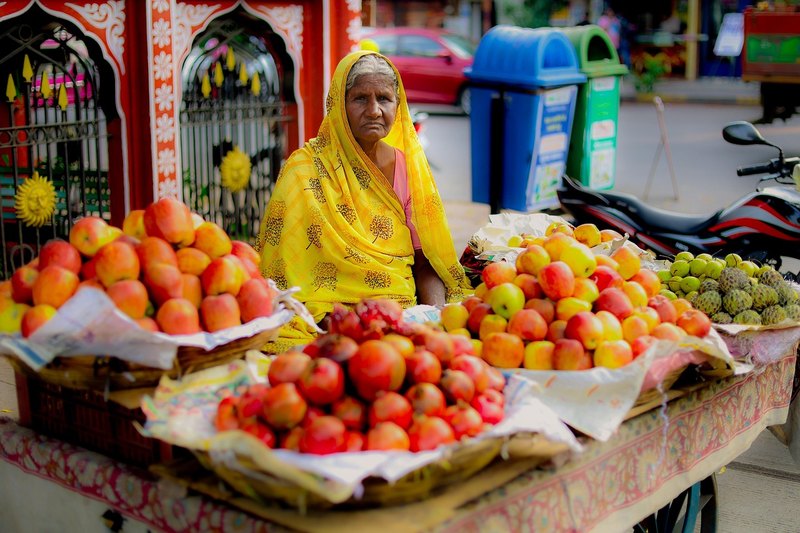
The supermarkets sit inside the malls: SM City Davao at Ecoland, SM Lanang Premier, Abreeza, Gaisano and NCCC. Prices are consistent across the city, and Davao City’s food and non-alcoholic beverages price index eased slightly in July 2026.
Where budgets break is on imported cheese, wine, breakfast cereal and anything that arrived in a container. Two people cooking mostly local food spend ₱15,000 to ₱20,000 a month; the same two shopping for European groceries can double it without eating better.
Dining Out
Eating out in Davao is cheap at the bottom and unremarkable at the top. A carinderia meal, rice and a dish scooped from a tray, costs less than a coffee at the mall, and a mall restaurant dinner costs a fraction of the same meal in Makati.

What Davao lacks is Cebu’s or Manila’s density of good foreign restaurants. There’s Japanese, Korean and Chinese food and a handful of decent Western places, but a food-driven expat notices within a month. Several people in the forums use one word for the city: boring.
Tipping
Restaurants add a service charge, and by law most of it goes to staff, so tipping on top is optional. Rounding up for a taxi driver or leaving ₱50 to ₱100 after a good meal is normal, but nobody expects it.
Utilities and Mobile Plans
Electricity decides whether Davao feels cheap or not. Rent savings against Cebu and Manila are real, but the Philippines has the highest average residential electricity rate in Southeast Asia according to the Department of Energy, and Davao has felt that through 2026.
Electricity
Davao Light is still the cheapest of the four distributors in the region. Northern Davao Electric Cooperative was at ₱14.00 per kilowatt-hour and Davao Oriental Electric Cooperative at ₱13.01 over the same period.
A 1,200-watt air conditioner running four hours a day for a month uses about 144 kilowatt-hours, roughly ₱1,900 at the current rate. Run it eight hours a day and you’re at ₱3,800 for that appliance alone. Residents running inverter units around the clock report monthly bills of ₱5,000 to ₱6,000.
Tip: If your landlord bills you through a sub-meter rather than passing on the Davao Light bill, ask what rate they charge per kilowatt-hour. Tenants regularly report being charged ₱15 to ₱20 per kilowatt-hour against an official residential rate of ₱13.09. Over a year that markup is worth more than a month’s rent.
Water
Davao City Water District covers most of the city, and water stays trivial.
A couple in a condo should budget ₱400 to ₱600 a month and a family in a house ₱800 to ₱1,500. Davao City Water District has asked for another 30 percent across 2026 and 2027, which has not been approved, so treat it as a risk rather than a cost.
Internet and Mobile
Fibre is widely available and reasonably priced. A mobile plan with plenty of data runs ₱500 to ₱1,000 a month. Prepaid is cheaper and most people stay on it, though every SIM has to go through SIM registration before it works.
Reliability is street-by-street rather than provider-by-provider. Ask your neighbours which line works on your block before you sign anything, and if you work online, keep a mobile data plan as backup. Brownouts happen.
Entertainment and Other Luxuries
Davao’s entertainment budget is small because Davao’s entertainment options are limited. That’s the trade for the low rent and the low crime, and it’s what people who leave usually cite.
The city runs on malls: cinemas, restaurants and shops at SM Lanang Premier, SM City Davao, Abreeza and the Gaisano centres. Nightlife is modest by Philippine standards, partly by design: the city enforces a liquor ban in the small hours and a strict public smoking ordinance.
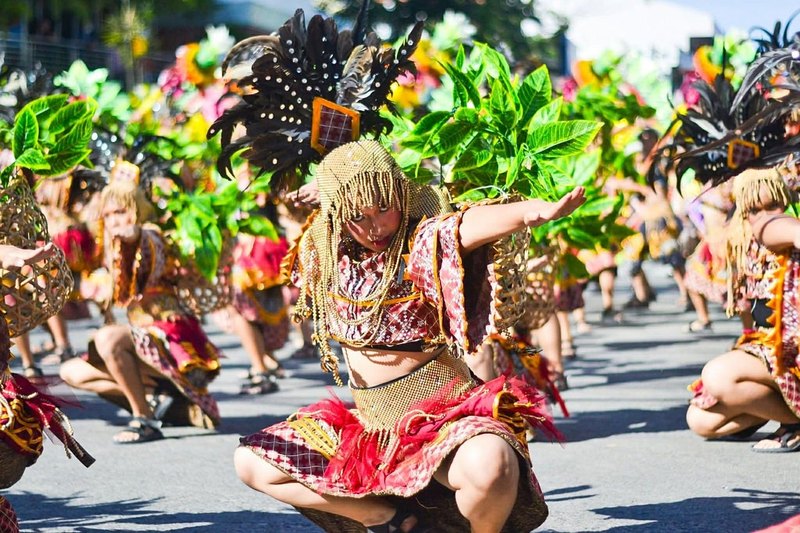
Davao pays you back on weekends. Samal Island is a short barge ride across the gulf. Eden Nature Park and Resort, up in the hills at Toril, charges ₱980 for an adult weekend day package with buffet lunch, ₱680 for the weekday set-lunch version, and ₱150 to ₱500 for its individual rides and activities.
The Kadayawan festival in August is worth planning around. Budget ₱5,000 to ₱10,000 a month for leisure and you’ll struggle to spend it unless you’re flying somewhere.
Davao Compared to Manila and Cebu
Housing is where the three cities separate, and it separates sharply. The table below uses one-bedroom condo listings pulled from the same portal on the same day, so it compares like with like.
| Item | Davao City | Cebu City | Metro Manila (Makati) |
|---|---|---|---|
| 1BR condo, typical listing | ₱23,000 to ₱27,000 | ₱30,000 to ₱50,000 | ₱40,000 to ₱65,000 |
| 2BR condo, typical listing | ₱25,000 to ₱40,000 | ₱60,000 to ₱85,000 | ₱70,000 to ₱125,000 |
| Residential electricity | ₱13.09 per kWh | ₱14.96 per kWh | Meralco, higher than both |
| Water, first 10 cbm | ₱214.20 | ₱259.16 | Maynilad and Manila Water |
| Daily minimum wage | ₱540 | ₱540 | Highest in the country |
| Traffic | Bad at peak, survivable | Notorious | Worst in the country |
The national picture behind these numbers is covered in our guide to the cost of living in the Philippines. Against Cebu, Davao wins on rent and loses on almost everything social.

Cebu has the international flights, the dive sites an hour away, the restaurant scene and a much larger foreign community. Davao has cheaper housing, cheaper power, lower inflation, and a reputation for order that Cebu has never had.
Against Manila, it isn’t close on cost. A Makati one-bedroom costs roughly double a Davao equivalent, and Manila’s traffic is in a category of its own. Manila has the international schools, the specialist hospitals and the embassies, which is what families and retirees with complex medical needs care about.
How Much Do I Need?
A single person with US$1,000 a month lives well in Davao. That covers a decent one-bedroom condo, air conditioning without watching the meter, groceries from the supermarket, Grab rather than jeepneys, and eating out several times a week.
Below that, the picture changes but doesn’t collapse. At US$500 a month you’re in an apartment rather than a condo, using fans and evening aircon, riding jeepneys and buying food at the market. Plenty of people live that way by choice.
Anyone retiring in the Philippines on a fixed pension should work from that number. A couple should plan on US$1,200 to US$1,600 for a comfortable life without children.
Add a car and household help and you’re at US$1,600 to US$2,400. Add private school for two children and the annual tuition alone is worth another US$200 a month per child.
Setup costs bite hardest in month one. Between deposit and advance rent, furnishing an unfurnished unit, connection fees and a few weeks of finding your feet, budget an extra US$1,500 to US$2,000 before counting anything as monthly spending.
FAQ
How much do I need to live comfortably in Davao?
A single person needs ₱51,000 to ₱67,000 a month, about US$820 to US$1,080, for a one-bedroom condo, air conditioning, supermarket groceries and regular meals out. Living like a local in a plain apartment brings that to ₱23,000 to ₱31,000.
Is Davao cheaper than Cebu or Manila?
Yes, and mostly on housing. A one-bedroom condo lists at ₱23,000 to ₱27,000 in Davao against ₱30,000 to ₱50,000 in Cebu City and ₱40,000 to ₱65,000 in Makati. Electricity is cheaper too, at ₱13.09 per kilowatt-hour against Cebu’s ₱14.96.
What’s the average rent for a one-bedroom in Davao?
Condo one-bedrooms cluster at ₱23,000 to ₱27,000 across Matina, Sasa, Poblacion and the Abreeza area. Older buildings and plain apartments go lower, sometimes to ₱14,000 to ₱15,000 for a semi-furnished one-bedroom, though these listings are worth confirming directly since they turn over fast.
Why is electricity so expensive in Davao?
Generation charges. Davao Light buys about 40 percent of its power from the Wholesale Electricity Spot Market, and spot prices rose sharply through 2026 after plant outages and a major earthquake in Southern Mindanao. The Philippines has the highest average residential electricity rate in Southeast Asia, per the Department of Energy.
How much is public transport in Davao?
A jeepney costs ₱13 for the first four kilometres and ₱1.80 per kilometre after. Taxis start at ₱50 with ₱13.50 per succeeding kilometre. There’s no metro or city bus network yet; the Davao Bus Project’s first phase isn’t expected before late 2027.
Are there international schools in Davao?
Not in the sense a family relocating from Europe or North America would mean. Davao has strong Philippine private schools, with Ateneo de Davao’s junior high estimating ₱142,000 to ₱150,000 a year per child, but no British, IB or American-curriculum school publishing fees. Families who need one choose Cebu or Manila.
Can I hire a housekeeper in Davao?
Yes, and it’s normal. The regional minimum wage for domestic workers is ₱6,500 a month, set by Wage Order RB XI-DW-04 and effective from March 2026. Live-out help for a few days a week costs proportionally less.
Sources Cited
- City Government of Davao: Davao Light’s residential rate from ₱9.71 per kWh in December 2025 to ₱13.09 for the July to August 2026 billing period.
- SunStar Davao: the rate history, Davao Light’s 40 percent spot-market exposure, the Nordeco and Doreco comparison, the suspension of disconnections through October 2026, and the Department of Energy’s Southeast Asia finding.
- GMA News Online: the Davao City Water District tariff, including the ₱214.20 minimum for the first 10 cubic metres and the bands above it.
- National Wages and Productivity Commission: Wage Orders RB XI-24 and RB XI-DW-04, the ₱540 daily minimum wage from 1 September 2026, and the ₱6,500 monthly minimum for domestic workers.
- Philstar: President Marcos suspending the March 2026 public transport fare increase.
- BusinessWorld: the Department of Transportation confirming in August 2026 that the jeepney fare hike remains suspended.
- GMA Regional TV: the ₱50 taxi flag-down, ₱13.50 per succeeding kilometre and ₱2 per minute waiting time, per LTFRB-11.
- SunStar Davao: Davao City’s 6.8 percent July 2026 inflation rate and the Davao Bus Project timeline from the Department of Transportation.
- PhilHealth: the 5 percent premium, ₱10,000 floor, ₱100,000 ceiling and ₱500 to ₱5,000 monthly range.
- Ateneo de Davao University: junior high annual costs of ₱142,000 to ₱150,000 and no tuition increase for 2026 to 2027.
- Philippine Women’s College of Davao and Holy Cross of Davao College: per-unit college tuition of ₱766.50 and ₱909.18 respectively.
- Eden Nature Park and Resort: the 2026 day package and activity rates.
- Converge ICT: Super FiberX plan pricing from ₱1,349 to ₱2,599.
- Dot Property and Rentpad: live rental listings for Davao City, Cebu City and Makati, checked 31 August 2026.