This article will take approximately 23 minutes to read. Don't have the time right now? No worries. Email the ad-free version of the article to yourself and read it later!
Cebu City sits between Manila and Davao on price, and the gap between a lean month here and a comfortable one is wide. Here’s what rent, utilities, healthcare and schooling actually cost, line by line.
Cebu is the country’s second city and the one most expats settle on when Manila feels like too much and a smaller island feels like too little. It has an international airport, two large private hospitals, a business district packed with remote workers, and dive sites within a few hours’ drive.
What it doesn’t have is one answer to “how much do I need.” A retiree renting outside the centre and eating local food can hold a month to ₱35,000 (US$580). Someone in a furnished one-bedroom in IT Park with the aircon running all night and a Grab habit will spend three times that without feeling extravagant.
Every figure below is in Philippine pesos, converted at roughly ₱60 to US$1. The utility tariffs, fares and hospital rates come from Cebu operators and regulators directly. The day-to-day prices come from current crowd-sourced data for Cebu, cross-checked against local listings and against what people in the expat forums say they actually pay.
Disclaimer: This article may include links to products or services offered by ExpatDen's partners, which give us commissions when you click on them. Although this may influence how they appear in the text, we only recommend solutions that we would use in your situation. Read more in our Advertising Disclosure.
Contents
Key Takeaways
- A single person can live in Cebu on ₱35,000 to ₱50,000 (US$580 to US$830) a month, but a comfortable expat lifestyle in a central condo runs closer to ₱65,000 to ₱90,000 (US$1,080 to US$1,500).
- Rent is the biggest lever you control. A one-bedroom in the city centre averages ₱31,060 (US$520) a month; the same unit outside the centre drops to ₱19,050 (US$320).
- Electricity is the line item that blindsides people. Visayan Electric charges about ₱15 (US$0.25) per kWh, and a nightly aircon habit can push a bill past ₱6,000 (US$100).
- Cebu costs roughly 14% less than Manila overall and about 14% more than Davao, with the rent gap far wider than the food gap in both directions.
- Public transport is genuinely cheap. A jeepney ride starts at ₱14 (US$0.23) and a taxi at ₱50 (US$0.83), so a car is a lifestyle choice rather than a necessity.
- A ward bed at Chong Hua Hospital costs ₱1,200 (US$20) a day and a premier suite ₱14,490 (US$240), which is the whole argument for carrying private health insurance rather than relying on PhilHealth alone.
- School fees, rather than rent or food, are what turn a comfortable family budget into an expensive one. Cebu International School charges ₱546,571 (US$9,110) plus US$2,025 a year for a returning Grade 1 student.
Budget Tiers in Cebu
Crowd-sourced data puts a single person’s monthly costs in Cebu at about ₱34,688 (US$580) excluding rent, and a family of four at ₱122,575 (US$2,040) excluding rent. Add rent and those numbers roughly double for the single person. The spread between a lean month and a comfortable one is enormous, so the averages matter far less than which lifestyle you’re buying.
A local-integrated single person rents a modest studio outside the centre, cooks most meals, rides jeepneys, and runs the aircon sparingly. That lifestyle lands between ₱35,000 and ₱50,000 (US$580 to US$830) a month. It’s a real way to live in Cebu and plenty of retirees do it, but it means eating Filipino food most days and accepting a warm bedroom.
The comfortable tier is where most working expats and digital nomads end up. A furnished one-bedroom in or near IT Park, aircon most nights, a mix of home cooking and restaurants, Grab instead of jeepneys, a gym membership, and private insurance. Call it ₱65,000 to ₱90,000 (US$1,080 to US$1,500).
Premium means a two or three-bedroom in a central tower, eating out most nights, a car or daily Grab, and comprehensive insurance. That starts around ₱135,000 (US$2,250) and climbs quickly. A family paying international school fees should add a great deal more on top, as the education section below sets out.
| Lifestyle | Monthly Total | Rent | Food | Transport |
|---|---|---|---|---|
| Local-integrated single | ₱35,000 to ₱50,000 (US$580 to US$830) | ₱12,000 to ₱19,000 (US$200 to US$315) | ₱10,000 (US$165) | ₱1,500 (US$25) |
| Comfortable single | ₱65,000 to ₱90,000 (US$1,080 to US$1,500) | ₱25,000 to ₱31,000 (US$415 to US$515) | ₱18,000 (US$300) | ₱6,000 (US$100) |
| Premium or couple | ₱135,000+ (US$2,250+) | ₱50,000 to ₱67,000 (US$830 to US$1,120) | ₱35,000 (US$580) | ₱15,000 (US$250) |
Good to Know: Central Visayas has been running hotter on inflation than the country as a whole. Regional inflation hit 8.7% in July 2026 against a national figure of 6.2%, so budget a little more headroom than a national average would suggest.
For a view across the whole country rather than one city, our guide to the cost of living in the Philippines covers the national picture.
Accommodation
Rent swallows the largest share of almost every Cebu budget, and where you sign matters more than what you sign. A one-bedroom apartment in the city centre averages ₱31,060 (US$520) a month, while the same size outside the centre averages ₱19,050 (US$320). Three-bedroom units run ₱67,025 (US$1,120) central and ₱39,400 (US$660) outside.
Cebu City is compact enough that “outside the centre” often means a fifteen-minute drive rather than a different world, which makes the discount unusually good value here.
IT Park and Cebu Business Park
These two districts are where most foreign professionals and remote workers live. Both are walkable, both have 24-hour security and backup generators, and both carry a premium for it. Expect ₱25,000 to ₱35,000 (US$415 to US$580) for a furnished one-bedroom, with studios starting around ₱17,000 (US$285) and larger or newer units running past ₱40,000 (US$670).
You’re paying for convenience rather than space. A 22 square metre studio at ₱20,000 (US$335) is normal here, and the same money buys nearly double the floor area a few kilometres out.
Lahug, Mabolo, and Banilad
Lahug wraps around IT Park and shades from expensive to reasonable as you climb the hill. Older buildings there rent one-bedrooms from about ₱15,000 (US$250).
Mabolo sits between the business park and the coast, with studios from roughly ₱15,000 (US$250). Banilad, north along the main road, offers a similar range with easier access to the schools and the malls along Gorordo Avenue.
These three are the sweet spot for anyone who wants central access without IT Park pricing.
Talamban and the Mandaue Border
Talamban is further north, quieter, and popular with families because several schools sit nearby. Houses rather than condos dominate, and rents fall accordingly. The Mandaue border areas near Parkmall and Mandani Bay trade a longer commute for newer buildings and lower prices.
Traffic is the tax you pay out here. In the expat forums the consistent warning is that a commute which looks like twenty minutes on a map runs closer to an hour at 8am.
What You Pay Upfront
Philippine landlords typically ask for two months’ deposit plus one or two months’ advance rent, so signing a ₱25,000 (US$415) condo means finding ₱75,000 to ₱100,000 (US$1,250 to US$1,670) before you move in. Condo association dues sometimes sit on top of the quoted rent, and long-stay discounts of 10% to 15% are normal on a twelve-month lease.

Tip: Foreigners get quoted higher rents than locals often enough that it’s worth benchmarking. Check Facebook Marketplace and local listing sites for the same building before you view, and negotiate from that number rather than the agent’s.
Read more: Where to Live in the Philippines
Transportation
Getting around Cebu is cheap and slow. Transport will barely register in your budget, but traffic should shape where you choose to live.
Jeepneys and Buses
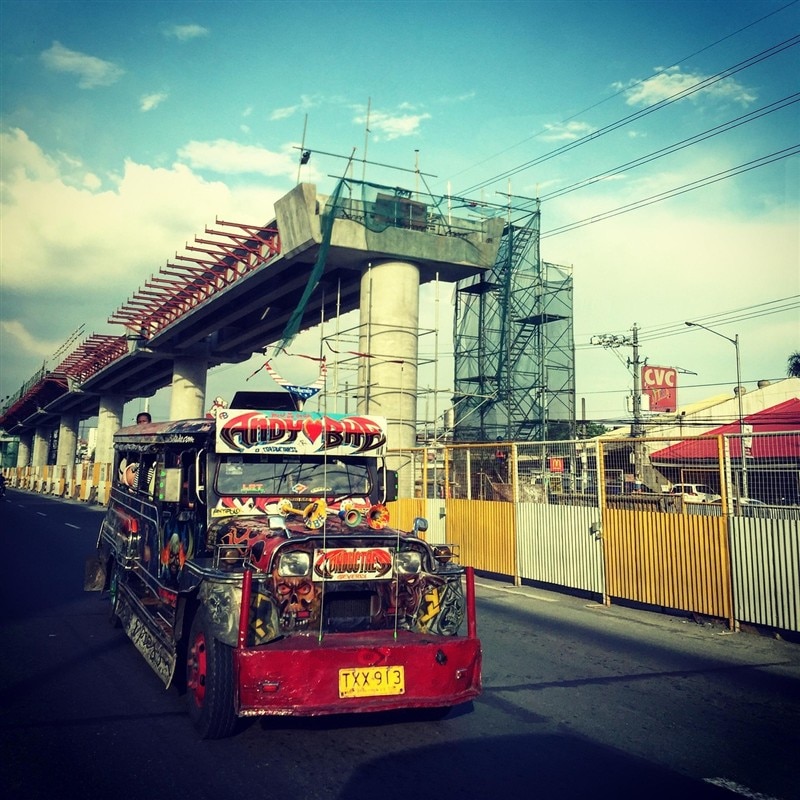
The traditional jeepney is still the backbone of the city. Since the March 2026 fare adjustment approved by the Land Transportation Franchising and Regulatory Board, the minimum fare is ₱14 (US$0.23) for the first four kilometres, with ₱2 added per kilometre after that. Modern air-conditioned PUVs start at ₱17 (US$0.28) with ₱2.40 per succeeding kilometre.
MyBus runs air-conditioned services linking SM City, SM Seaside, Ayala Center, IT Park and the airport, which covers most of the routes an expat actually needs.
Taxis, Grab, and Motorbike Taxis
Metered taxis start at a ₱50 (US$0.83) flagdown, then ₱13.50 per kilometre plus ₱2 for every two minutes of waiting. Cross-city trips rarely break ₱300 (US$5). A petition to raise the flagdown to ₱60 is pending with the LTFRB but hasn’t been approved.
Grab charges more. Base fares rose in March 2026 to ₱65 for a sedan, ₱75 for an AUV, ₱55 for a hatchback and ₱165 for premium vehicles, plus a per-kilometre pickup fee. Airport taxis have their own tariff, starting at ₱115 for the first 500 metres.
Motorbike taxis are the workaround locals and long-term expats swear by. In the forums they come up constantly as the only way to move across the city at rush hour without losing an hour to traffic.
Running Your Own Vehicle
Petrol runs about ₱81 (US$1.35) a litre, and a new compact car costs upward of ₱1.2 million (US$20,000). Most single expats conclude a car isn’t worth it in a city where parking is scarce and a taxi across town costs ₱200 (US$3.35). Families and anyone living out toward Talamban tend to reach the opposite conclusion, and our guide to how to buy a car in the Philippines covers what that involves.
Health and Fitness
Cebu is one of the few Philippine cities outside Manila with genuinely good private hospitals, which is a large part of why retirees pick it. What you pay depends almost entirely on whether you walk into a public or a private one.
Public Hospitals
Government hospitals such as the Vicente Sotto Memorial Medical Center charge very little and treat anyone. The trade-off is queues, crowded wards and long waits for non-urgent procedures. Expats generally use the public system for emergencies and little else.
Private Hospitals
Chong Hua Hospital and Cebu Doctors’ University Hospital are the two most expats use. Chong Hua publishes its room rates, which gives an unusually clear picture of what a stay costs.
| Room Type | Chong Hua Cebu | Chong Hua Mandaue |
|---|---|---|
| Ward | ₱1,200 (US$20) / day | ₱1,600 (US$27) / day |
| Semi-private | ₱1,500 to ₱1,800 (US$25 to US$30) / day | ₱2,000 (US$33) / day |
| Regular private | ₱2,800 to ₱3,300 (US$47 to US$55) / day | ₱3,300 (US$55) / day |
| Junior or superior suite | ₱4,300 to ₱6,510 (US$72 to US$110) / day | ₱6,550 (US$110) / day |
| Premier suite | ₱14,490 (US$240) / day | ₱16,750 (US$280) / day |
Room rates are only the bed. Doctors’ fees, tests, drugs and theatre time all bill separately, which is how a short admission turns into a six-figure bill. Our guide to private hospitals in the Philippines goes into what to expect from admission.
PhilHealth and Health Insurance
PhilHealth is the national scheme. Under the contribution schedule issued for the Universal Health Care Act, direct contributors pay 5% of monthly basic salary against a ₱10,000 (US$165) floor and a ₱100,000 (US$1,670) ceiling, so contributions run ₱500 to ₱5,000 (US$8 to US$83) a month.
PhilHealth knocks a fixed amount off an admission rather than covering it. In the expat forums the advice on this is close to unanimous: treat PhilHealth as a discount, not as cover, and carry a private HMO or an international policy on top. Our guide to health insurance in the Philippines compares what’s available.
Gym
A monthly gym membership averages about ₱2,033 (US$34). Chain gyms in the malls and IT Park sit at the higher end, and neighbourhood gyms undercut them substantially.
Education
Schooling is the single largest swing factor in a family budget, and Cebu International School is the clearest illustration because it publishes its full fee schedule. For the 2025-2026 school year a returning Grade 1 student pays ₱546,571 (US$9,110) plus a US$2,025 dollar fee. Grades 6 to 8 pay ₱766,423 (US$12,770) plus US$3,705, and Grades 11 and 12 pay ₱1,041,668 (US$17,360) plus US$3,705.
New students pay a one-time entrance fee on top, which pushes a first-year Grade 1 place to ₱665,673 (US$11,090). There’s also a ₱50,000 (US$830) reservation fee to hold the seat, deductible from tuition later.
Spread across twelve months, one child in the middle grades adds roughly ₱64,000 (US$1,070) a month to your costs, which is more than most single expats spend on rent and utilities combined. Other international options in Cebu, including Singapore School Cebu and Bright Academy, don’t publish tuition and quote on inquiry.
Local private schools charge a fraction of these figures and are what many long-term foreign residents with Filipino spouses choose. A private full-day preschool averages about ₱17,361 (US$290) a month.
Groceries
Filipino staples are cheap and imported goods are not. That single fact explains most of the variation in expat food budgets.
- Rice (1 kg): ₱62 (US$1.05)
- Chicken fillets (1 kg): ₱282 (US$4.70)
- Eggs (12): ₱126 (US$2.10)
- Milk (1 litre): ₱121 (US$2)
- Local cheese (1 kg): ₱626 (US$10)
- Beef (1 kg): ₱475 (US$7.90)
- Bananas (1 kg): ₱89 (US$1.50)
- Apples (1 kg): ₱213 (US$3.55)
- Domestic beer (0.5 litre bottle): ₱79 (US$1.30)
Bananas cost ₱89 a kilo and apples ₱213: what grows here is cheap, what ships in isn’t. Cheese, cereal, wine and anything labelled organic carry a heavy premium.
Expats in the forums consistently split their shopping. Wet markets for produce, fish and meat, a mid-range supermarket for the rest, and a bulk store only for the imported things they can’t do without. If carrying it home is the problem, online grocery delivery now covers most of Metro Cebu.
Dining Out
Eating out is where Cebu feels genuinely cheap, provided you eat where Filipinos eat. A meal at an inexpensive restaurant averages ₱250 (US$4.15), and a carinderia plate costs a fraction of that. A three-course dinner for two at a mid-range restaurant runs about ₱1,500 (US$25).

Western restaurants in IT Park and Ayala Center charge closer to European prices for a main course. A domestic draft beer is ₱110 (US$1.85) in a bar, an imported bottle ₱140 (US$2.35), and a cappuccino ₱158 (US$2.65).
Tipping
Tipping isn’t obligatory in the Philippines and many restaurants add a 10% service charge already. Where there’s no service charge, rounding up or leaving 10% is normal and appreciated.
Utilities and Mobile Plans
Utilities in Cebu cost more than newcomers expect, and electricity is the reason. Basic utilities for an 85 square metre apartment, covering electricity, cooling, water and garbage, average about ₱7,583 (US$125) a month.
Electricity and Water
Visayan Electric supplies Metro Cebu, and its residential rate reached ₱14.96 (US$0.25) per kWh in August 2026, a fifth consecutive monthly increase. The rate is recalculated every month, so treat ₱15 (US$0.25) per kWh as a working figure rather than a fixed one.
At that price aircon dominates the bill. A single inverter unit run overnight adds a few thousand pesos a month; two older non-inverter units running most of the day push a bill well past ₱6,000 (US$100). Aircon is the line most newcomers leave out of their first budget.
Water is cheap by comparison. The Metropolitan Cebu Water District completed a phased tariff increase on 1 April 2026, the last step of its first adjustment in a decade.
Residential connections on a half-inch meter pay a ₱259.16 (US$4.30) minimum for the first 10 cubic metres, then ₱28.64 per cubic metre from 11 to 20, ₱33.71 from 21 to 30, and ₱82.52 above 30. A typical household lands between ₱400 and ₱700 (US$7 to US$12) a month.
Tip: Some landlords bill submetered electricity at ₱17 to ₱25 per kWh rather than passing through the real Visayan Electric rate. Ask to see the actual bill and agree in writing that you’ll pay the utility’s published rate.
Internet and Mobile
Fibre is widely available across Cebu City and reliable enough for remote work. Converge, one of the main providers, charges ₱1,349 (US$22) a month for up to 200 Mbps and ₱1,599 (US$27) for up to 400 Mbps. Broadband of 60 Mbps or better averages about ₱1,745 (US$29) across providers.
A mobile plan with calls and 10GB or more of data averages ₱937 (US$16) a month. Remote workers in the forums almost universally recommend keeping a prepaid SIM from a second network as a backup, since outages happen and a dropped client call costs more than the SIM.
Coworking is concentrated in IT Park, where Regus and The Company both operate. Neither publishes membership rates openly, so you’ll need to ask for a quote. Expect somewhere in the region of ₱6,000 to ₱10,000 (US$100 to US$165) a month for a dedicated desk, and less for a hot desk you only use a few days a week.
Entertainment and Other Luxuries
A cinema ticket costs about ₱350 (US$5.85), an hour on a weekend tennis court ₱407 (US$6.80), and a bottle of mid-range wine ₱390 (US$6.50). Mall culture is central to Cebu life and browsing is free, which keeps a lot of weekends cheap.
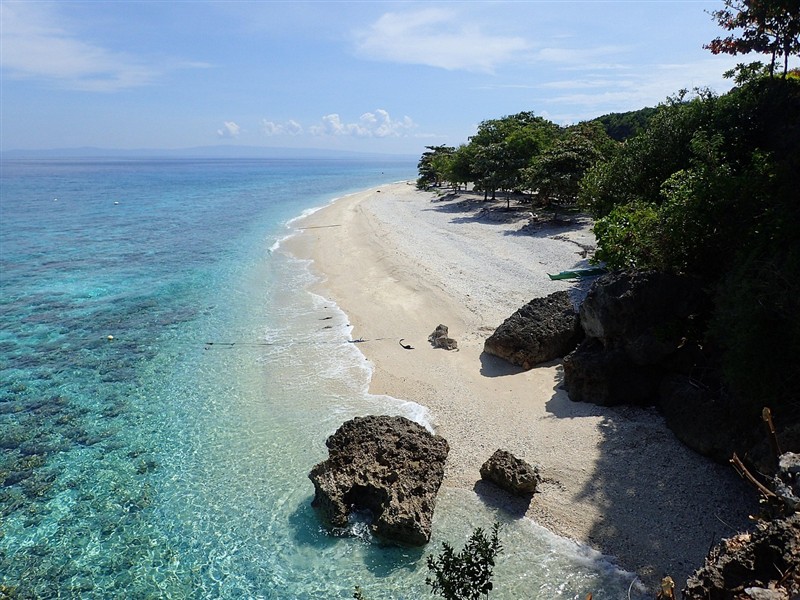
The real draw is what’s outside the city, and weekend travel deserves its own line in a Cebu budget. Cebu island is long and thin, so Moalboal on the west coast and Malapascua off the northern tip are both weekend trips rather than expeditions.
Diving is priced consistently across the island. At Cebu Fun Divers in Moalboal a shore dive costs ₱1,900 (US$32) and a boat dive ₱2,100 (US$35), with full equipment rental at ₱350 (US$5.85) per dive and a ₱100 (US$1.65) marine park fee.
A ten-dive package drops the per-dive cost to ₱1,890 (US$32), and a PADI Open Water course runs ₱24,900 (US$415).
Two dive weekends a month, with gear rental and park fees, adds around ₱10,000 (US$165) to a budget. Anyone moving to Cebu for the water should build that in from the start rather than treating it as an occasional treat.

Cebu Compared to Manila and Davao
Cebu’s position between the two is consistent across every category, and the differences are large enough to matter when you’re choosing a city.
| Category | Manila vs Cebu | Davao vs Cebu |
|---|---|---|
| Overall cost including rent | 14.3% higher | 13.7% lower |
| Rent | 35.8% higher | 44.3% lower |
| Restaurants | 10.1% higher | 8.1% higher |
| Groceries | 4.7% higher | 8.0% lower |
| Local purchasing power | 18.3% higher | 27.6% lower |
Rent drives almost the entire gap in both directions. Manila costs about 14% more overall but 36% more to rent in, and Davao costs 14% less overall while renting for 44% less. Groceries and restaurant meals barely move between the three cities, and Davao restaurants are actually slightly dearer than Cebu’s.
Living costs aren’t the whole comparison. Manila buys you the widest job market, the most international schools and the best specialist medicine, at the price of the country’s worst traffic, and our guide to renting in Manila shows what the housing market looks like there.
Davao is cheaper and calmer, with a smaller expat scene and fewer direct flights. Cebu is the compromise most people take: a real city with an international airport, good private hospitals and beaches close enough for a weekend.
For a reader weighing Southeast Asia more broadly, Cebu comes in about 28% cheaper than Bangkok excluding rent, with rent about 36% lower.
How Much Do I Need?
Take the tiers and attach them to real situations rather than to a single average.
- A retiree living quietly: ₱40,000 to ₱55,000 (US$670 to US$920) a month covers a one-bedroom outside the centre, local food, jeepneys and modest aircon use. Add insurance premiums on top, which rise sharply with age.
- A digital nomad or remote worker: ₱65,000 to ₱90,000 (US$1,080 to US$1,500) for a furnished one-bedroom near IT Park, fibre, a gym, Grab most days and eating out several times a week.
- A couple: ₱90,000 to ₱120,000 (US$1,500 to US$2,000). Two people share rent and utilities, so the second person adds far less than the first cost.
- A family with one child in international school: ₱200,000 (US$3,330) and up, with school fees alone accounting for ₱46,000 to ₱64,000 (US$770 to US$1,070) a month depending on the grade.
The single biggest variable is how much of your old life you keep importing. Imported groceries, Western restaurants, constant aircon and daily Grab rides will each quietly double a line item.
Read more:
FAQ
Rent and electricity account for most of the variation in the answers below, which is why two people in the same city can report budgets that differ by a factor of three.
How much do I need to live comfortably in Cebu?
Between ₱65,000 and ₱90,000 (US$1,080 to US$1,500) a month for a single person in a furnished central one-bedroom, eating out regularly and using Grab. A leaner but still pleasant life outside the centre runs ₱35,000 to ₱50,000 (US$580 to US$830).
Is Cebu cheaper than Manila?
Yes. Overall costs including rent run about 14% lower than Manila, and rent specifically is around 36% cheaper. Food and groceries are much closer between the two cities.
What’s the average rent for a one-bedroom apartment in Cebu?
About ₱31,060 (US$520) a month in the city centre and ₱19,050 (US$320) outside it. IT Park and Cebu Business Park sit at the top of the central range.
Do I need private health insurance in Cebu?
Effectively yes. PhilHealth reduces a hospital bill rather than covering it, and private rooms at Chong Hua run ₱2,800 to ₱14,490 (US$47 to US$240) a day before doctors’ fees, so most expats carry a private HMO or an international policy.
How much does public transport cost in Cebu?
A jeepney starts at ₱14 (US$0.23), a modern PUV at ₱17 (US$0.28), and a metered taxi at ₱50 (US$0.83) plus ₱13.50 per kilometre. Monthly transport costs under ₱2,000 (US$33) if you avoid ride-hailing.
Why is electricity so expensive in Cebu?
The Visayas grid runs tight and relies heavily on the wholesale spot market, which pushed Visayan Electric’s residential rate to ₱14.96 (US$0.25) per kWh in August 2026. Rates are recalculated monthly and have risen for several months running.
Sources Cited
- Visayan Electric: August 2026 residential rate of ₱14.96 per kWh.
- Metropolitan Cebu Water District: residential water tariff effective 1 April 2026.
- Land Transportation Franchising and Regulatory Board: jeepney, taxi and ride-hailing fare adjustments of March 2026.
- Chong Hua Hospital: published patient room rates for Cebu and Mandaue.
- PhilHealth: premium contribution rate, income floor and ceiling.
- Philippine Statistics Authority: Central Visayas inflation for July 2026.
- Cebu International School: published school fee schedule for 2025-2026.
- Converge ICT: residential fibre plan pricing.
- Cebu Fun Divers: published dive and course rates for Moalboal.
- Numbeo: Cebu consumer prices, average rents, and the Manila and Davao comparisons.






 Español:
 Français:
 Deutsch: