This article will take approximately 11 minutes to read. Don't have the time right now? No worries. Email the ad-free version of the article to yourself and read it later!
Pre-existing conditions are one of the most confusing parts of expat health insurance. And one that can seriously affect your coverage.
If you misunderstand how they work, you might pay for a plan for years, only to find out a claim isn’t covered when you actually need it.
The tricky part is that the rules aren’t always clear.
- Does a small past issue count?
- What about something from years ago that never came back?
- And is it still possible to get covered?
To make things clearer, we spoke with Carsten Creutzburg, an insurance expert with over 20 years of experience who now runs his own brokerage.
Here’s what he told us.
Disclaimer: This article may include links to products or services offered by ExpatDen's partners, which give us commissions when you click on them. Although this may influence how they appear in the text, we only recommend solutions that we would use in your situation. Read more in our Advertising Disclosure.
Contents
- Key Takeaways
- What Counts as a Pre-Existing Condition?
- Do Minor or Old Issues Still Matter?
- How Insurers Treat Mental Health
- Can You Still Get Health Insurance If You Have a Medical History?
- What Happens When You Apply?
- Serious Conditions and Real Cases
- Common Conditions Expats Have
- What Outcomes Should You Expect?
- What Does an Exclusion Really Mean?
- Moratorium vs Full Medical Underwriting
- What If You Don’t Disclose Something?
- What If You Develop a Condition Later?
- Should You Switch Insurance Providers?
- Other Practical Questions
- Final Advice for Expats
- About Carsten Creutzburg
Key Takeaways
- Almost anything treated before your policy counts as a pre-existing condition
- Even minor issues (like a healed fracture) are technically included
- Chronic conditions are usually excluded
- You can still get coverage, just not for everything
- Not disclosing a condition can void your policy

What Counts as a Pre-Existing Condition?
ExpatDen: To start with the basics, what exactly counts as a pre-existing condition?
Carsten:
It varies a bit from provider to provider, but in general terms any medical condition occurred prior the start date of the policy.
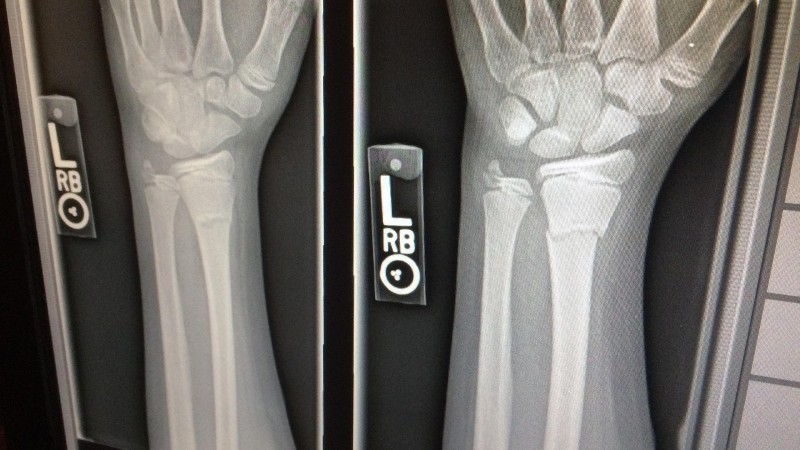
It doesn’t matter if it’s chronic or not; even a broken arm which is completely healed is a “pre-existing condition”.
Basically anything one needed medical attention, including mental health issues.
The variation starts at the time frame. Some insurance providers only want to know the last 5 years prior to the start of the new insurance, others ask to disclose everything since birth, which is very questionable.
Do Minor or Old Issues Still Matter?
ExpatDen: About a broken arm, in practice, do insurers usually exclude minor past issues like a fully healed broken bone or short-term infections?
Carsten: Yes they do, because in their “world” it is still a pre-existing condition.
ExpatDen: Also, in my case, I had issues with tonsillitis many years ago and needed to go to a hospital about once every quarter. And like a decade ago, I needed to check EKG for some cardiac reasons. Would that count as a pre-existing condition as well?
Carsten: Most definitely and it’s considered to be chronic, since you need regular check-ups. This will most likely be excluded.
How Insurers Treat Mental Health
ExpatDen: How do insurers usually treat mental health history, such as depression, anxiety, or therapy?
Carsten:
Same as any other medical condition, if there is a diagnosis and treatments were received, then it is a pre-existing condition.
Can You Still Get Health Insurance If You Have a Medical History?
ExpatDen: Many expats worry they won’t be able to get coverage at all if they have a medical history. In reality, how much do pre-existing conditions affect someone’s ability to get insured?
Carsten:
Well, that depends on the nature of the pre-existing condition as well as if the existing condition needs to be covered as well.
There are always options with Moratorium terms under which no medical history question needs to be answered, but especially pre-existing chronic conditions will not be covered through Moratorium.
However, it is possible to get insured for anything else.
What Happens When You Apply?
ExpatDen: When someone applies for health insurance and declares a medical condition, what usually happens next?
Carsten:
The insurer will review it and may have some follow up questions.
If it is a small minor non-chronic condition without the need of further treatments, then this might be covered, perhaps with a premium loading.
However, unfortunately in most cases international private medical insurance providers usually simply exclude the condition entirely.
If it is a severe condition, perhaps even chronic with the need of regular medication, then the insurer might even reject the application and deny coverage completely.
Therefore, it is advisable to speak with an independent advisor who does not work for the insurance company, before submitting the application to the insurer.
Serious Conditions and Real Cases
ExpatDen: If someone had cancer years ago and is now cancer-free, can they still get insurance?
Carsten:
Cancer depends on the time frame and the insurer and the questions in the medical questionnaire.
If cancer has occurred a couple of years ago and it’s now cleared, then it’s better to go with Moratorium, because the insurer will most likely exclude it if it has been declared.
Common Conditions Expats Have
ExpatDen: From your experience working with expats, what are the most common medical conditions that come up?
Carsten:
Heart conditions, high blood pressure, elevated cholesterol levels, cancer, diabetes.
ExpatDen (follow-up):
Are these usually considered pre-existing conditions too?
Carsten:
Yes of course. Again, any condition treated prior to the application is a pre-existing condition.
| Situation | Counts as Pre-existing? | Usually Covered? |
|---|---|---|
| Broken arm (healed) | Yes | Sometimes |
| Influenza last year | Yes | Usually |
| Diabetes | Yes | No |
| Cancer (recent) | Yes | No |
| Old condition, no symptoms for years | Yes | Sometimes |
What Outcomes Should You Expect?
ExpatDen: What are the most common outcomes in these situations?
Carsten:
There is no general outcome, as it really depends on the condition and the overall situation and assessment of the applicant.
A 20 year old is reviewed differently than a 60 years old.
However, most providers do lean towards exclusions rather than providing a fair offer and choice to their potential clients.
ExpatDen (follow-up):
Can you explain more about how a 20-year-old is reviewed differently from a 60-year-old? Also, would a 35-year-old with high cholesterol be treated differently from a 65-year-old?
Carsten:
No, I can’t, sorry. It was an example and it always comes down to the individual case.
Generally speaking a 20 year old is usually much more resilient than a 60 years old and therefore existing conditions may affect older people more.
It is the decision of the underwriter and it’s sometimes difficult to understand.
What Does an Exclusion Really Mean?
ExpatDen: If an insurer decides to exclude a condition, what does that actually mean in practice?
Carsten:
The condition and most important any condition related to the excluded condition, will be excluded from cover as well.
Any new condition which has emerged as a result of the excluded pre-existing condition will therefore not be covered as well.
ExpatDen (follow-up):
For example, if you have diabetes and then develop kidney symptoms because of it, it won’t be covered too, right?
Carsten:
Most likely not, depending on the individual case, the diagnoses and underlying cause.
ExpatDen (follow-up):
If someone has high blood pressure excluded, would a stroke or heart attack also be excluded?
Carsten:
Not necessary, but similar answer, depending on the individual case, the diagnoses and underlying cause. The insurer decides if it is covered or not.
Moratorium vs Full Medical Underwriting
ExpatDen: Can you explain the difference between moratorium underwriting and full medical underwriting?
Carsten:
There are no waiting periods for pre-existing conditions, either they are covered or they are not under Full Medical Underwriting. Another term is Moratorium, through which existing conditions might be covered after the Moratorium period of usually 2 years. This can be mistaken with a waiting period, but it’s actually not, because it’s kind of rolling.
The Moratorium period starts always all over again if a condition needs treatment or even simply shows symptoms. Therefore again, chronic conditions for example can never be covered under Moratorium.
However, a condition which doesn’t need any regular check-ups anymore, nor any medication, might be covered after 24 continuous months of coverage through Moratorium underwriting.
What If You Don’t Disclose Something?
ExpatDen: What could happen if someone leaves out important medical information?
Carsten:
Cancellation of the policy from the beginning. It happens.
What If You Develop a Condition Later?
ExpatDen: What happens if someone already has health insurance and later develops a medical condition?
Carsten:
Then it is not pre-existing. That’s why you buy a health insurance policy in the first place.
Any new condition after the start of the policy will be covered, if not pre-existing after all.
Should You Switch Insurance Providers?
ExpatDen: If an expat already has insurance and later switches providers, will conditions developed under the previous policy be considered pre-existing?
Carsten:
Yes. Therefore it is never a good idea to change a health insurance policy if already experiencing chronic conditions which need regular check-ups or medication.
Other Practical Questions
ExpatDen: Are some insurers generally more flexible than others?
Carsten:
There are some providers which have a slightly fairer approach than others. Best to speak with an advisor beforehand if there are any options which have a better chance to provide cover for certain existing conditions.
ExpatDen: If someone has a condition that insurers won’t cover, what options do they still have?
Carsten:
Accepting it with the exclusion, or check for another options.
ExpatDen: Does the country where an expat lives affect their chances of getting insurance?
Carsten:
Nope, it has nothing to do with it.
ExpatDen: For someone who already knows they have a medical history, when is the best time to start looking?
Carsten:
As early as possible, but again, it depends on one’s individual circumstances.
Final Advice for Expats
ExpatDen: What is the most important advice you would give expats with pre-existing conditions?
Carsten:
Speak to an advisor of your choice openly about the medical history, so that they can actually help or at least be honest if there is no chance.
About Carsten Creutzburg
Carsten Creutzburg has over 20 years of experience in the insurance industry, working across Germany, China, and Southeast Asia in both public and private sectors.
In 2018, he founded Creutzburg Insurance Consultancy (CIC) to offer a more holistic approach, helping clients find the right balance between coverage and cost across different types of insurance.
Today, he works closely with expats worldwide, helping them navigate insurance in a practical and straightforward way.
If you need help with insurance, you can reach out to Carsten to discuss your situation and see what options are available.