This article will take approximately 27 minutes to read. Don't have the time right now? No worries. Email the ad-free version of the article to yourself and read it later!
A passport and a valid visa will open a Vietnamese bank account. What catches people out is the biometric check, the name that ends up on the account, and which branch they walk into. Here’s how you can open a bank account in Vietnam step-by-step.
Walk into a branch with your passport and visa, sit through a short in-person biometric check, and most people leave with an account the same day. The paperwork is straightforward once you know which four documents to bring and which local banks actually take foreigners without a residence card.
None of that makes the account harder to get, just more paperwork-heavy. The process stays firmly in-person for foreign customers, and a lapsed passport or visa will quietly switch it off.
This guide walks through all of it: who qualifies under Vietnamese law as opposed to bank policy, the documents to bring, what four banks that publish their foreigner requirements actually ask for, how the biometric step works when you don’t hold a Vietnamese chip ID card, which deposit products are closed to foreigners, and the mistakes that send people back to the branch a second time.
The conversion rate used in this article is VND26,200 to US$1.
HSBC Vietnam and Shinhan Bank Vietnam both post their document lists online. Bring the originals of everything:
- Your passport. HSBC wants at least 60 days left on every document you hand over.
- A visa, visa-equivalent document or visa-exemption proof. Shinhan also wants a resident card. HSBC doesn’t.
- Proof of address. Shinhan asks for one in Vietnam and one abroad.
- Your face, at a branch. The biometric check happens in person, so you can’t do it from home.
Got an employment contract? Bring that too, since HSBC lists it “if any”. Then budget a morning. (Verified October 2026.)
Contents
- Key Takeaways
- Why You Need a Vietnamese Account
- Who Can Open an Account
- Documents You Need
- Best Banks for Foreigners
- How to Open the Account, Step by Step
- Tips for Opening a Vietnamese Bank Account
- Biometric Verification and Digital ID Rules
- Savings Accounts and Term Deposits
- Foreign Currency Accounts and Debit Cards
- What It Costs
- Sending Money Out of Vietnam as a Foreigner
- Maintaining Your Vietnamese Bank Account
- Common Mistakes
- Frequently Asked Questions
- Can I open a Vietnamese bank account on a tourist visa?
- Do I need a temporary residence card?
- Can I complete the whole thing online?
- Why can't I open a savings account?
- What happens to my account when my visa expires?
- Can a foreigner get a debit card in Vietnam?
- Can I keep US dollars in a Vietnamese bank account?
- Can I send money abroad from my Vietnamese account?
- Can someone else close or use my account if I leave Vietnam?
- How to Get Your Account Opened the First Time
- Sources Cited
Key Takeaways
- You need a passport plus a valid entry visa, a document in lieu of a visa, or proof of visa exemption.
- Vietnamese law lets non-residents hold dong accounts. The stricter tests you meet at a branch counter are the bank’s own policy, not a legal ban, and they vary from bank to bank.
- Biometric verification has been mandatory for individual accounts since 1 January 2025, and because you’re presenting a passport rather than a chip ID card, the bank has to check your biometrics in person.
- The January 2026 rule that ended passport-based banking applies to Vietnamese citizens. Foreigners still bank on a passport.
- Since 1 April 2026 your account name must match your identity document, so the spelling and order of your name matter more than they used to.
- Savings deposit products are limited to Vietnamese citizens. Foreigners cleared to stay six months or more can hold term deposits instead.
- Let your passport or visa expire without telling the bank and expect withdrawals, payments and interest to stop.
Why You Need a Vietnamese Account
There are a few good reasons to have a Vietnamese bank account.
Cashless Payment via QR codes
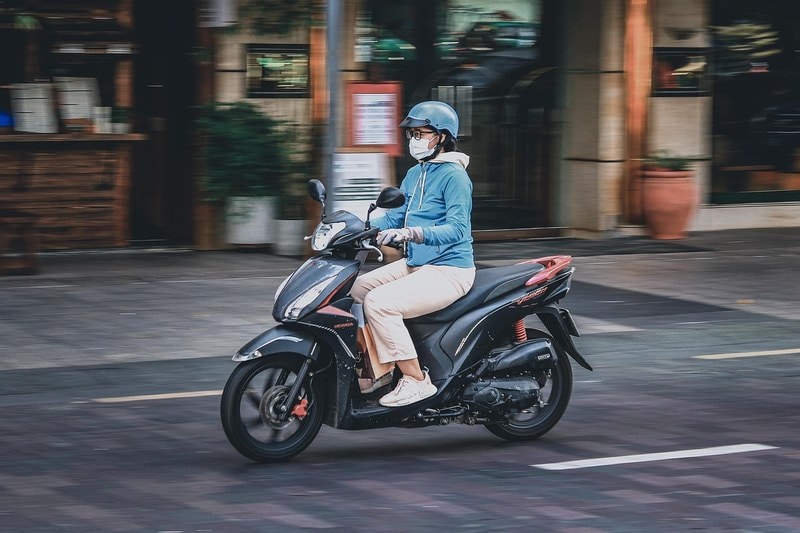
The biggest reason is cashless payment by QR code. Vietnam uses it for everything: rent, utility bills, a bowl of noodles, a motorbike repair. Almost everything settles straight from a domestic bank app.
Avoiding Foreign Card Fees
A foreign card still works at ATMs and at larger retailers, but you’ll pay conversion margins on daily spending and end up carrying cash for everything else.
Getting money into the country in the first place is its own separate task, with its own set of choices. We cover that in the guide to transferring money to Vietnam.
Receiving Salary
If you’re employed by a Vietnamese company, you’ll need a local account for them to pay your salary into. This won’t apply if you’re working remotely for a company abroad, but most local employers require it.
Who Can Open an Account
There are two separate questions here, and mixing them up is where most of the online confusion comes from:
- What Vietnamese law actually allows.
- What a specific bank has decided it’s willing to do.
What the law actually says
Vietnam’s Ordinance on Foreign Exchange splits foreigners into residents and non-residents.
You count as a resident if you’re in the country for 12 months or more, unless you’re here for tourism, study, or medical treatment, or working for a diplomatic mission or a foreign organisation’s representative office, in which case you’re a non-resident no matter how long you stay. That’s Article 4, and it’s where the widely repeated “you need 12 months to bank here” claim comes from.
However, being a non-resident doesn’t stop you from opening a dong account. Circular 16/2014/TT-NHNN says non-resident individuals and resident foreigners alike may open and use Vietnamese dong accounts at licensed banks.
To put it simply, you don’t need to be here for at least 12 months to open a bank account in Vietnam. Even a tourist counts as a non-resident, and a tourist can still open one.
What banks ask for in practice
Banks are free to set a higher bar than the law does, and they do. Some want a temporary residence card, some want a work permit and an employment contract, and some are content with a visa.
For example, HSBC Vietnam publishes its criteria plainly:

- you must be at least 18
- reside in Vietnam
- and hold “a valid visa, visa equivalent document or visa exemption document if you are a foreigner residing in Vietnam”.
They don’t require a residence card or a minimum stay.
On the other hand, Timo by BVBank asks for a passport plus a visa, a temporary resident card or a permanent resident card. Shinhan Bank Vietnam asks for more than either: passport, visa or equivalent, a resident card, and proof of both an overseas address and a current address in Vietnam.
If you’re on a tourist visa
Expect friction. The big banks generally decline tourist-visa applicants, and in the expat forums the consistent report is that outcomes vary more by branch and by the person behind the counter than by which bank’s logo is above the door. People turned away at one branch get approved at another branch of the same bank.
If you’re weighing up a longer-term move to Vietnam, sort the visa first and the banking gets a lot more straightforward.
Where an account does get opened on a short visa, it tends to come with fewer features attached. Timo, for example, ties products to how long you can prove continuous residence: 180 days for a term deposit, 360 days for a Visa Debit card.
Tip: If a branch turns you down, ask which document is missing rather than which rule you failed. The answer is usually a specific piece of paper you can go and get, not a policy you can’t do anything about.
Documents You Need
Bring originals, and bring more than you think you need. A second branch visit costs an afternoon, and the documents that get asked for late in the process tend to be the ones that live at your landlord’s house.
The core set
Every bank in this guide asks for the same four things, in one wording or another.
- Passport. The original, not a copy on your phone. HSBC Vietnam requires every document submitted to have at least 60 days of validity remaining.
- Visa or residence document. An entry visa, a document in lieu of a visa, or proof of visa exemption. A temporary or permanent residence card covers this and opens more products.
- A Vietnamese address. Shinhan asks for proof of your current address in Vietnam and proof of an address abroad.
- Your face. Biometric capture is mandatory and it happens at the counter, which is why none of this can be done from your sofa.
What some banks ask for on top
An employment contract comes up often, and HSBC lists it among the documents required “if any”. If you’re opening the account to receive a salary, take the contract with you.
Sort out a Vietnamese phone number before you go, too. Shinhan verifies that the mobile number belongs to the account holder when you register internet banking, so a number in someone else’s name creates a problem at exactly the wrong moment.
Best Banks for Foreigners
The four banks below all publish their requirements for foreign customers in English on their own sites, which is the reason they’re the ones listed here. Plenty of other Vietnamese banks serve foreigners perfectly well; they just don’t say so anywhere you can check before you travel to a branch.
| Bank | Who they’ll open for | What you need | Worth knowing |
|---|---|---|---|
| HSBC Vietnam | 18 or over, residing in Vietnam, holding a valid visa, visa-equivalent document or visa exemption document | Passport with valid entrance visa, biometrics captured at a branch, employment contract if relevant | No residence card required. Keep a minimum credit balance of VND300,000 within 12 months of opening and a minimum monthly average balance of VND3 million, about US$115 |
| Shinhan Bank Vietnam | Foreigners residing in Vietnam | Passport, entry visa or equivalent, resident card, proof of an overseas address and a Vietnamese address | Free account opening and free Visa Debit card issuance. Accounts available in ten currencies including VND, USD, EUR, GBP, JPY and SGD |
| Techcombank | Foreign individuals, subject to branch requirements | Standard foreign individual documents | An account opened by eKYC needs an in-branch upgrade before you get full functionality. Cardholder names are capped at 19 characters and auto-abbreviated beyond that |
| Timo by BVBank | Foreigners aged 15 and over | Original valid passport plus a visa, temporary resident card or permanent resident card | Term deposits need 180 days of proven continuous residence, a Visa Debit card needs 360 days |
Two things separate them in daily use rather than at the counter: how much of the mobile app is genuinely in English, which is what expat forums rate banks on more than anything else (the smaller private and digital banks usually come off better here than the big state-owned ones), and your branch. Pick one in a neighbourhood with a lot of foreign residents and the whole process moves noticeably faster, since the staff have done this before.
How to Open the Account, Step by Step
Budget a morning. The paperwork itself is short, but the biometric capture and the data entry take time, and you’ll be waiting alongside everyone else in the branch.
Before you go
Get a Vietnamese SIM registered in your own name and check that your passport and visa both have comfortable validity left on them. Photocopy the passport photo page and the visa page; branches usually make their own copies, but having them saves a trip to the machine in the corner.
Write down exactly how your name appears in your passport, in the same order, and use that spelling on every form. This matters more than it sounds, for reasons covered further down.
At the branch
- Hand over your documents. Passport, visa or residence document, and anything else the specific bank asked for.
- The bank runs its checks. Legality, validity and consistency of your paperwork, then its standard anti-money-laundering screening.
- Biometric capture. A staff member checks your face against your passport in person. This is the one step that can’t be skipped or done remotely, and here’s why: where a customer presents a chip ID card, the bank just reads the chip, but where you present a passport, the bank has to meet you in person to check the document and confirm your biometric information matches what’s on it. HSBC says the same thing more bluntly: biometric information is mandatory and “You need to visit a branch or transaction office for this.”
- Sign the account-opening forms. Read what you’re signing. Staff are generally helpful if you ask a question mid-form.
- Fund the account and collect your card. Some banks issue a debit card the same day; others mail it or have it ready at a set pickup date.
That biometric step is also the mechanical reason foreigners can’t complete app-only onboarding in Vietnam. HSBC’s self-service account opening through its app is offered to Vietnamese citizens, not to you.
After you open
Set up the mobile app while you’re still in the branch, so someone can help if the OTP doesn’t arrive.
Then put your visa expiry date in your calendar with a reminder a month out. Accounts don’t survive on autopilot, and the section below explains why.
Tips for Opening a Vietnamese Bank Account
A few habits make the difference between a one-visit account and a second trip back to the branch.
- If one branch says no, try another. Foreigner-account policy is set by the bank, but it gets applied branch by branch. In the expat forums, people turned down at one location routinely get approved at a different branch of the same bank a few days later.
- Pick a branch near where you actually live. Some follow-up procedures, like updating an expired passport on file, are easiest done at the branch that opened your account.
- Bring more paperwork than the checklist says. A proof-of-address document, a second form of ID, or a printed employment contract costs nothing to bring and can save you the return trip if a staff member wants to see it.
- Avoid lunchtime and Monday mornings. Branches slow down when local staff and customers are handling their own banking at the same time. A mid-morning or mid-afternoon visit on a weekday tends to move faster.
- Write your name down before you go. Match the exact order and spelling on your passport, and hand that written version to the staff member typing it in. It’s a two-minute step that avoids a months-later problem.
Biometric Verification and Digital ID Rules
Three separate changes landed between January 2025 and April 2026, and they’re regularly muddled together in guidance written for a Vietnamese audience and then wrongly applied to foreigners. Here’s each one on its own.
The shift to digital ID
From 1 January 2026, Vietnamese banks stopped accepting passports as identification and moved customers onto chip-based ID cards, standard ID cards or a Level 2 electronic ID. That change targets Vietnamese citizens, who could previously identify themselves with a passport.
It does not strip foreign nationals of the passport. You keep opening and operating accounts on a passport plus a visa or residence document.
Getting a Level 2 electronic ID
If you hold a temporary or permanent residence card, you’ve been able to get a Level 2 electronic identification account since 1 July 2025. It lives in the VNeID app.
You can apply in person at an immigration management agency under the Ministry of Public Security, using Form TK01. The procedure is free. Among its listed uses are verifying information in banking transactions, registering rentals, accessing public services, and storing an electronic copy of your residence card.
Tip: If you hold a residence card, get the Level 2 e-ID sorted before you need it. It’s the closest thing a foreigner has to the chip ID card the rest of the banking system is now designed around.
The real-name account rule
Starting 1 April 2026, your payment account name has to match the name on your identity document, and banks must show the account number and account name accurately on payment documents. The custom account nicknames some banks offered are being retired.
For you, this raises the stakes on how your name got typed in on day one.
- Vietnamese names run family name, then middle name, then given name, the reverse of the Western given-name-first order.
- Take a name like John Michael Smith: in Western order that’s given name John, middle name Michael, family name Smith.
- A Vietnamese system built around family-name-first order doesn’t automatically know Smith is the surname, since nothing about a Western name tells it that.
Some banks keep your passport order exactly as written; others reorder it to put what they judge to be the surname first.
Check your card and account documents and confirm they read in the same order as your passport, not reversed. Forum threads are full of people discovering the mismatch months later, when a transfer bounces because the beneficiary name on file doesn’t match what a sender typed in.
Techcombank’s card terms show how little room there is: a cardholder name runs to a maximum of 19 characters including spaces, and anything longer gets abbreviated automatically to a set pattern. Check what the bank has recorded before you leave the branch, because a long name will be shortened whether you like it or not.
Savings Accounts and Term Deposits
As a foreigner, you can’t open a savings account. Vietnamese law reserves those for Vietnamese citizens. What you can get instead is a term deposit, a different product under a different rule. It works similarly to a savings account, just without the passbook.
If a member of staff tells you that you can’t have a savings account, that’s the law talking rather than a judgement about you. Ask for a term deposit instead.
Foreign Currency Accounts and Debit Cards
You can hold dollars or euros in a Vietnamese bank, but your everyday spending still runs through a dong account. Here’s how it works at the two banks that spell it out. (Verified October 2026.)
- HSBC Vietnam: a foreigner gets a Visa debit card only if they also hold a dong account. The dong account is the primary one for purchases, ATM withdrawals and card fees. Your foreign currency account is the secondary one, used only for ATM cash withdrawals.
- Shinhan Bank Vietnam: accounts come in ten currencies: VND, USD, EUR, JPY, AUD, CHF, GBP, CAD, SGD and NZD. Free Visa Debit card issuance comes with the account.
One more limit to know about. HSBC says it can’t move money between two of your own foreign currency accounts, so you can’t flip your USD balance into EUR inside the bank that way.
These are two banks’ own rules. Ask yours how its card and currency accounts are linked before you choose where to park your savings.
What It Costs
Opening an account is often free. Shinhan advertises free account opening and service registration, and free Visa Debit card issuance with it. HSBC Vietnam’s account is free too. Its debit card has no issuance or annual renewal fee.
Techcombank’s Visa Debit Card Classic follows the same pattern: free to issue, with the annual fee waived in year one and set at VND90,000, around US$3.40, a year from year two onward. Treat that as a general benchmark rather than a fixed number, since card fees vary by bank. (Verified October 2026.)
Sending Money Out of Vietnam as a Foreigner
You can send money abroad from a Vietnamese account, and the proof the bank asks for depends on which account the money sits in. (Verified October 2026.)
- Money in a foreign currency account: HSBC says it processes the transfer without supporting documents.
- Money in a dong account: the bank might ask for supporting documents. HSBC says a foreigner with legal dong income can send it overseas, and the bank converts the dong to the foreign currency for you.
- A salary paid in dollars: HSBC will convert and send it to an overseas account in another currency, once it has checked that the money has a legitimate source.
So the paperwork the bank wants is about where the money came from. Keep your employment contract and payslips handy if your salary goes into a dong account and you plan to send a lot of it home.
Ask before you plan a big transfer. This is HSBC’s published answer. Other banks can ask for different papers or set their own limits, so check with yours first. Bringing money in is a separate job, covered in our guide to transferring money to Vietnam.

Maintaining Your Vietnamese Bank Account
There are a few things you need to do to maintain your Vietnamese bank account, and they vary by bank. HSBC, for example, asks you to:
- keep a minimum credit balance of VND300,000, roughly US$11, within 12 months of opening,
- have a minimum monthly average balance of VND3 million, around US$115,
- and have at least one debit transaction in the previous 24 months.
Fall short and the account can be suspended or closed. HSBC, for instance, suspends accounts where the ID or passport has expired or valid biometric information is missing.
Common Mistakes
Most of the mistakes we’ve seen happen after the account is open rather than during the application.
- Letting documents lapse. Shinhan warns foreign customers that if a passport or residence document expires or isn’t submitted on time, term deposit auto-renewal, interest payments and withdrawal or payment transactions may be suspended. In the forums, a frozen account after a visa renewal is one of the most common complaints, and unfreezing it means going into a branch in person with the new document.
- Assuming you can do it from your phone. The biometric step requires a person to check your face against your passport. App-based self-onboarding is built for chip ID cards, not for you.
- Inconsistent name entry. Give the bank the exact order and spelling from your passport, and check the account name before you leave. Since April 2026 it has to match your ID document anyway.
- Reading a Vietnamese-audience rule as your own. The end of passport-based banking in January 2026 is about Vietnamese citizens. It hasn’t taken your passport out of the system.
- Taking one branch’s answer as final. Approval outcomes vary between branches of the same bank, and branches used to foreign customers move faster.
- Going quiet. Dormancy rules are real. A forgotten account with no transactions can be suspended or closed, and a zero balance for six months will do it at HSBC without anyone asking you first.
Frequently Asked Questions
These five come up more than anything else, and the answers to the first two are less restrictive than the internet suggests.
Can I open a Vietnamese bank account on a tourist visa?
While Vietnamese law doesn’t prohibit it, whether a particular bank will do it is a separate matter, and most of the large ones prefer applicants with a longer-term visa or a residence card.
Do I need a temporary residence card?
Not universally. HSBC Vietnam’s stated criteria ask only for a valid visa, visa-equivalent document or visa exemption document. Shinhan does ask for a resident card.
A residence card widens your options and unlocks the Level 2 electronic ID, so it helps, but it isn’t a blanket requirement. Which route leads to one depends on why you’re in the country, and the Vietnam retirement visa is one of them.
Can I complete the whole thing online?
No. Because you’re identifying yourself with a passport rather than a chip ID card, the bank has to meet you in person to check the document and match your biometrics. Some banks let you start an application by eKYC, but Techcombank’s terms confirm that an eKYC account needs an in-branch upgrade before it works fully.
Why can’t I open a savings account?
Circular 48/2018/TT-NHNN restricts savings deposit products to Vietnamese citizens. You can hold a term deposit instead once you’re cleared to reside in Vietnam for six months or more, which serves much the same purpose without a passbook.
What happens to my account when my visa expires?
Update the bank as soon as you have the new document. Shinhan states that an expired or unsubmitted passport or residence document can lead to suspension of withdrawals, payments, interest and term deposit auto-renewal, and HSBC lists an expired ID or passport as a suspension trigger. Restoring access means presenting the renewed document at a branch.
Can a foreigner get a debit card in Vietnam?
Yes, but the terms differ by bank. Shinhan advertises free Visa Debit card issuance with its account. Timo by BVBank gives a Visa Debit card only to foreigners who can prove 360 days of continuous residence. HSBC issues one only if you also hold a dong account.
Can I keep US dollars in a Vietnamese bank account?
At banks that offer it, yes. Shinhan lists accounts in ten currencies including USD and EUR, and HSBC runs foreign currency accounts for foreigners alongside its dong accounts. Everyday card spending still comes out of a dong account.
Can I send money abroad from my Vietnamese account?
Yes. HSBC says a transfer from a foreign currency account needs no supporting documents, while a transfer from a dong account may need them to show where the money came from. Check your own bank’s rules first.
Can someone else close or use my account if I leave Vietnam?
At HSBC, yes. You fill in an Authorization Form at a branch, and your representative brings supporting documents of their own, as the bank requires. Other banks set their own procedures, so ask before you fly out.
How to Get Your Account Opened the First Time
None of this is hard once you know which questions to bring answers to. Show up with a passport that has months of validity left, the right visa or residence document, and a piece of paper with your name written exactly as it appears on your passport, and most branches will have you banked within the hour.
The part that actually catches people out happens later: a passport that quietly expires, a visa renewal nobody told the bank about, an account that sits untouched for two years. Put a reminder in your calendar next to your visa expiry date and you’ll avoid most of it.
Sources Cited
- Ordinance on Foreign Exchange No. 28/2005/PL-UBTVQH11: the definition of resident and non-resident foreigners, including the 12-month test and the tourism, study and medical treatment exclusions.
- Circular 16/2014/TT-NHNN: confirmation that non-resident individuals and resident foreigners may open and use Vietnamese dong accounts.
- Circular 17/2024/TT-NHNN: the rules on opening and using payment accounts, the documents required from foreign individuals, the minimum age of 15, and the biometric verification requirement.
- Circular 25/2025/TT-NHNN: the August 2025 amendments widening accepted identity documents for foreign nationals.
- Circular 30/2025/TT-NHNN: the requirement from 1 April 2026 that a payment account name match the holder’s identity document.
- Vietnam Government Portal on biometric updating: the 1 January 2025 start date for mandatory biometric verification on individual accounts.
- VietnamPlus on the April 2026 account name rule: confirmation that account names must match identity document information from 1 April 2026 and that nickname services end.
- Vietnam Government Portal on passport-based transactions: confirmation that the January 2026 end of passport identification applies to Vietnamese citizens.
- VietnamPlus on the January 2026 ID change: the accepted replacement identity documents for Vietnamese citizens.
- Level 2 electronic identification for foreigners: the 1 July 2025 start date, eligibility for residence card holders, Decree 69/2024/ND-CP, and the banking uses of the account.
- Vietnam Briefing e-ID registration guide: Form TK01, the in-person application at an immigration management office, and confirmation the procedure is free.
- Circular 48/2018/TT-NHNN and Circular 49/2018/TT-NHNN: the exclusion of foreigners from savings deposits and their eligibility for term deposits at six months of permitted residence.
- HSBC Vietnam Current Account: eligibility criteria, required documents, the 60-day document validity rule, balance requirements, and the suspension and closure triggers.
- Shinhan Bank Vietnam Demand Deposit Account: the documents required from foreign customers, the in-person biometric procedure for passport holders, available currencies, and free account and card issuance.
- Shinhan Bank Vietnam notice to foreign customers: the consequences of expired residence documents and the discontinuation of magnetic stripe card transactions.
- Techcombank notice on foreigners’ savings deposits: confirmation that foreigners are not eligible for savings deposit products.
- Techcombank account terms and conditions: the 19-character cardholder name limit, the in-branch upgrade for eKYC accounts, and the 365-day dormancy closure rule.
- Timo by BVBank regulations for foreigners: the minimum age of 15, accepted documents, and the 180-day and 360-day residence thresholds.
- HSBC Vietnam Accounts FAQ: foreign currency accounts and the debit card rule, overseas transfers by foreigners, and the authorization form for a representative.







 Español:
 Français:
 Deutsch: