
This article will take approximately 21 minutes to read. Don't have the time right now? No worries. Email the ad-free version of the article to yourself and read it later!
Ho Chi Minh City can cost as little as US$700 a month or well over US$3,000, depending on the neighborhood and the lifestyle. This guide breaks down real 2026 prices for rent, food, transport, healthcare, schooling, and visas, then shows what US$1,000, US$2,000, and US$3,000 a month actually buys.
Vietnam’s biggest city runs on contrasts. A bowl of pho costs less than a coffee back home, but a serviced apartment in Thao Dien can rent for as much as a one-bedroom in a mid-size European city. The gap between the cheapest and most expensive version of life here is enormous, and most of that gap comes down to two choices: where you live and how much you eat out.
This guide uses 2026 pricing from Numbeo, local rental platforms, and Vietnamese providers, cross-checked against what expats report paying in the forums. Every dong figure converts at roughly VND26,200 to US$1, the mid-market rate as of early August 2026.
Disclaimer: This article may include links to products or services offered by ExpatDen's partners, which give us commissions when you click on them. Although this may influence how they appear in the text, we only recommend solutions that we would use in your situation. Read more in our Advertising Disclosure.
Key Takeaways
- Rent is the biggest swing factor: a studio in Binh Thanh runs around US$400, while a furnished 3-bedroom in Thao Dien can top US$4,000.
- A single expat in a well-located one-bedroom who eats out several times a week and takes Grab everywhere typically spends US$1,200 to US$1,800 a month.
- Shoestring living around US$700 to US$900 a month is realistic if you eat mostly at local com tam and pho stalls and share a serviced apartment outside the center.
- Electricity is the wildcard utility bill. Running air conditioning around the clock can double what you pay each month.
- International school is the single biggest line item for families, at roughly US$11,000 to US$38,000 a year per child.
- Ho Chi Minh City runs roughly 10% more expensive than Hanoi overall, and rent specifically runs about 30% higher.
- A basic consultation at a reputable private hospital like FV Hospital costs around US$24, a fraction of the same visit in the US or Europe.
- Paying six to twelve months of rent upfront is standard here and can knock 15% to 20% off the monthly rate.
Budget Tiers in Ho Chi Minh City
Three expats can live in the same city on wildly different budgets. The table below shows what each tier actually buys, based on 2026 pricing from rental platforms and cost-of-living trackers, converted at the current mid-market rate of roughly VND26,200 to US$1. For a wider view of how these numbers compare across the whole country, see ExpatDen’s cost of living in Vietnam guide.
| Budget Tier | Monthly Total | What It Buys |
|---|---|---|
| Shoestring | US$700-1,000 | Studio or shared room outside the center, mostly local food, motorbike taxi or bus |
| Comfortable | US$1,200-1,800 | One-bedroom in Binh Thanh or Phu Nhuan, regular Grab use, dining out several times a week |
| Luxury | US$2,800 and up | Two- or three-bedroom in Thao Dien or District 1, international schooling, private health insurance, weekly imported groceries |
The shoestring number assumes you’re eating like a local, not like a tourist. Once Western groceries, gym memberships, and imported beer enter the picture, even a modest lifestyle climbs past US$1,000 fast. The worked monthly budgets further down show exactly where the money goes at each level.
Tip: Build in a buffer of at least US$100 a month for your first three months. You’ll overpay for things a longer-term resident wouldn’t, from taxi fares to apartment deposits, until you learn the local prices.
Rent in Ho Chi Minh City
Rent decides more of your monthly budget than any other line item, and it varies more by neighborhood here than almost anywhere else in Southeast Asia. A one-bedroom that costs US$1,200 in Thao Dien might rent for US$500 a ten-minute drive away in Binh Thanh. For a broader look at what’s on the market right now, ExpatDen’s guide to renting an apartment in Ho Chi Minh City covers the search process in detail.
| District | Studio | 1-Bedroom | 2-Bedroom |
|---|---|---|---|
| District 1 | US$600-1,000 | US$900-1,800 | US$1,500-3,300 |
| Thao Dien (District 2 / Thu Duc) | US$700-1,200 | US$800-1,500 | US$1,200-2,500 |
| Binh Thanh | US$400-600 | US$600-1,200 | US$800-2,000 |
| Phu Nhuan | US$350-550 | US$430-650 | US$650-1,000 |
District 1
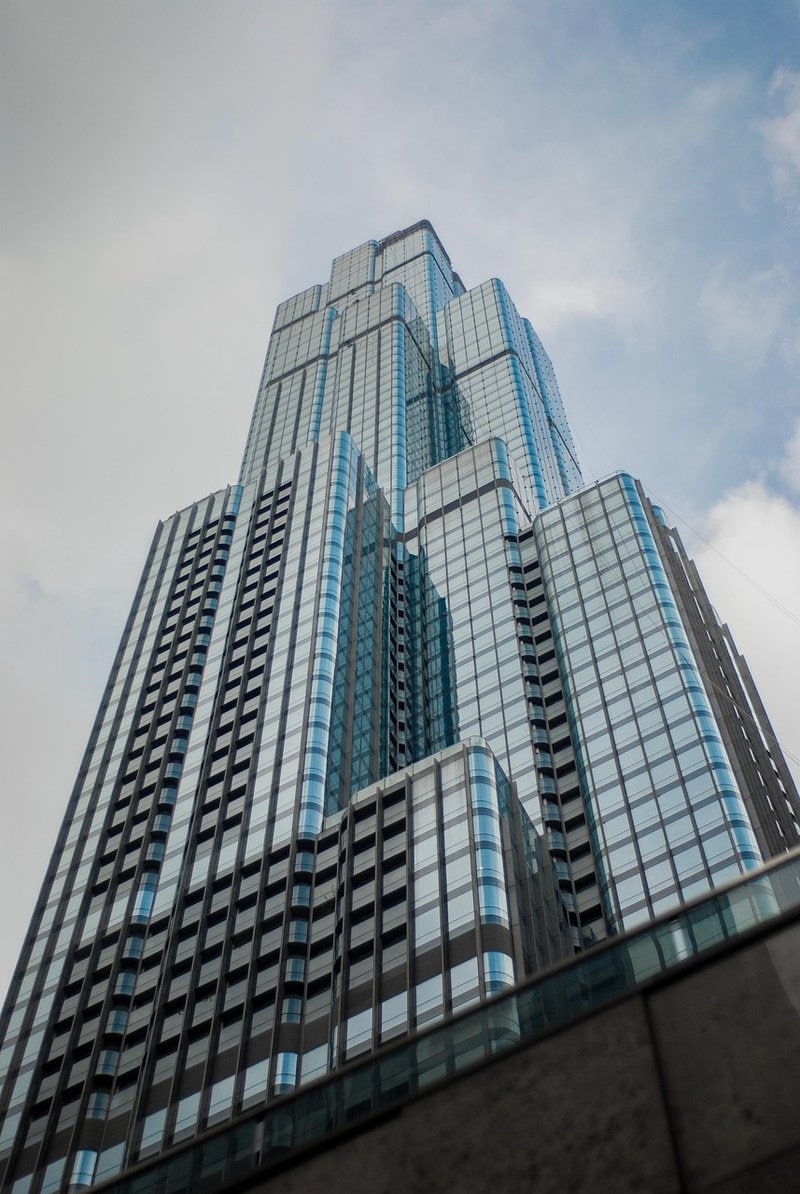
District 1 puts you within walking distance of the Bitexco Tower, Ben Thanh Market, and most of the city’s rooftop bars and international restaurants. It’s also the priciest patch of the city. Older walk-ups still rent cheap by comparison, and one long-term resident on the expat.com forum reported paying just US$500 a month there while still banking about a third of their income.
The same thread flags a real downside: “This city is far from great for people with mobility issues. If you’re in a wheelchair, forget it!” Narrow, motorbike-choked sidewalks are a District 1 problem as much as a citywide one.
Thao Dien (District 2)
Thao Dien, officially part of Thu Duc City since the 2021 merger, is where most Western families and long-term professionals end up. It has the widest concentration of international schools, Western-style supermarkets, and gyms, and rents reflect that. A furnished two-bedroom with a pool and gym in the building runs US$1,200 to US$2,500; push into the newer Thu Thiem towers across the river and three-bedroom units start around US$1,800 and climb past US$4,000 for the best units.
Binh Thanh
Binh Thanh sits between District 1 and Thao Dien geographically and in price. It’s popular with expats who want a short commute to District 1 without District 1 rent, and it has its own growing cluster of cafes and coworking spaces along Nguyen Huu Canh street. Expect to pay 20% to 30% less than a comparable unit in Thao Dien.
Phu Nhuan
Phu Nhuan rarely makes the “best districts” lists, which is exactly why it’s worth a look. It sits close to the airport and to District 1, has a dense local food scene, and its serviced apartments consistently undercut the more marketed neighborhoods. A one-bedroom here in the VND10,000,000 to VND15,000,000 range is common, and that gets you a location most tourists never visit but most long-term residents rate highly for daily life.
Tip: Landlords in Ho Chi Minh City routinely offer a discount of 15% to 20% for tenants who pay six or twelve months upfront. You don’t need an agent to rent here, but a good one costs you nothing since landlords, not tenants, pay the commission.
Most listings quote a base rent that excludes electricity, water, and management fees, so always ask what’s bundled before comparing two units side by side. Serviced apartments are the exception: they typically include weekly cleaning, a basic internet connection, and sometimes a gym or pool in the building, which is why they often list at a premium over an unfurnished unit of the same size. A standard deposit runs two months’ rent, held by the landlord and returned at lease end minus any agreed deductions for damage.
Food and Groceries
Food is where the local versus imported gap opens widest.
- A plate of com tam or a bowl of pho at a street stall runs VND40,000 to VND60,000, roughly US$1.50 to US$2.30.
- Sit-down Vietnamese restaurants charge US$7 to US$12 for a main course
- Western-style brunch or Italian dinners run US$15 to US$25.
Groceries follow the same split. Shopping at wet markets and local grocery chains like Bach Hoa Xanh keeps a single person’s monthly grocery bill between US$120 and US$220. Lean toward imported cheese, wine, and packaged Western food from stores like AEON or Annam Gourmet, and that same budget can double to US$300 or more, since almost everything imported carries import duty on top of shipping.
- Wet markets and local grocers: cheapest option for produce, meat, and staples; no English required but prices are non-negotiable at most chains
- Vietnamese supermarkets (Co.opmart, Bach Hoa Xanh): mid-range prices, wider selection, air conditioning
- Western grocers (AEON, Annam Gourmet, Kingfoodmart): imported goods at a real markup, useful for specific items you can’t substitute
Coffee is its own category worth budgeting for separately, since it’s woven into daily life here more than in most cities. A ca phe sua da from a sidewalk stall costs VND15,000 to VND25,000, while a specialty pour-over at one of the third-wave cafes clustered around District 1 and Thao Dien runs VND50,000 to VND80,000. Neither is expensive by international standards, but drink two or three a day and it adds up to a real line item by month’s end.
Transport
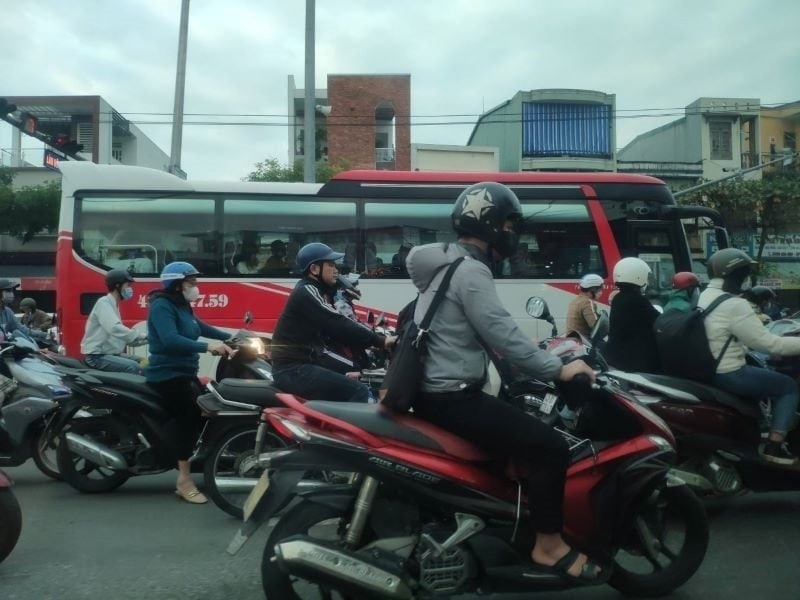
Most residents get around by motorbike, either their own or on-demand through GrabBike. Buying a used motorbike costs US$300 to US$700 upfront and pays for itself within a few months if you’re commuting daily.
| Mode | Typical Cost |
|---|---|
| GrabBike (per ride, short hop) | VND15,000-35,000 |
| GrabCar (per ride, short hop) | VND90,000-140,000 |
| Local bus fare | VND6,000-7,000 |
| Monthly bus pass | VND300,000 |
| Gasoline (1 liter) | VND23,000 |
Grab dominates the app-based market and covers bikes, cars, and food delivery from a single wallet. Fares run on a base charge plus a per-kilometer rate, and both roughly double during heavy rain or rush hour, so budget for surge pricing if you’re commuting at 6pm on a Friday. The public bus network is cheap and expanding but slow, and it’s rarely a primary transport option for expats living outside the city center’s main corridors.
Metro
Metro Line 1, running from Ben Thanh Market out to Suoi Tien in the east, opened in December 2024 and now covers 14 stations. Fares scale with distance, from VND12,000 for a short hop to VND18,000 or more for the full run, with a monthly pass at VND300,000, the same price as the bus pass. It’s a genuinely useful option if your apartment sits near a station along the eastern corridor, less so if you’re in District 1 proper or west of the river, where the network hasn’t reached yet.

Between motorbike ownership, Grab, buses, and now the metro, most residents mix two or three of these depending on the trip. A short errand near home is a walk or a GrabBike; a cross-town meeting during rush hour is often faster on the metro than sitting in traffic.
Utilities and Mobile
Basic utilities average around US$79 a month for a standard 85-square-meter apartment (electricity, water, and garbage collection), but that number swings hard with how much you run the air conditioning. Electricity is billed on a rising tier system, from roughly VND2,204 per kWh at the lowest tier to over VND3,350 per kWh once you cross 400 kWh a month, so keeping the AC on 24/7 can double your bill compared to using it only at night.
Mobile and internet are cheap relative to almost anywhere else. A prepaid SIM with several gigabytes of data a day from Viettel, the largest carrier, runs around VND135,000 a month, and its unlimited monthly data pack (UMAX300) costs VND300,000. Home fiber internet starts around VND195,000 a month for roughly 300 Mbps, plus a one-time installation fee near VND300,000.
Tip: Ask your building management or landlord whether electricity is billed at the government rate or a marked-up “apartment rate.” Some smaller buildings charge tenants a flat per-kWh rate well above what Vietnam Electricity actually charges, and it’s a fair thing to negotiate before signing a lease.
Healthcare
Most expats use private or international facilities for anything beyond a routine check. Public hospitals in Vietnam are inexpensive but come with long waits, language barriers, and inconsistent English-speaking staff.
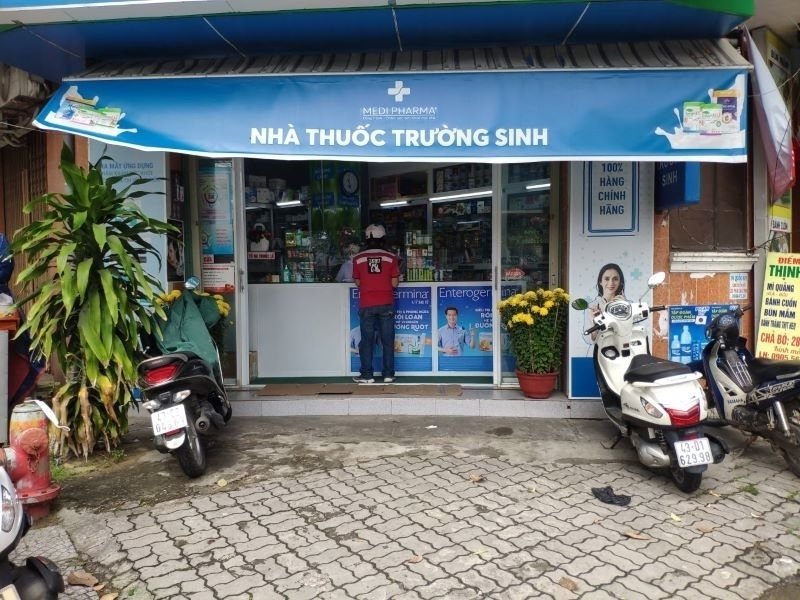
FV Hospital in District 7 is the most commonly recommended option for serious or urgent care, largely because of its French-Vietnamese ownership history and international accreditation. A basic consultation there costs around US$24, and the hospital has said publicly that it aims to keep fees near half of what comparable international hospitals charge, with subsidies available for uninsured patients.
Family Medical Practice, with several locations across the city, is the more common choice for everyday GP visits and works entirely in English. For a full rundown of facilities across the country, see ExpatDen’s guide to hospitals in Vietnam.
An overnight stay at an international hospital averages VND20,000,000 to VND24,000,000, which is why nearly every long-term expat guide recommends carrying expat health insurance rather than paying out of pocket for anything beyond a routine visit.
Personal Care
This is a category where you choose your own price. Go local and it’s almost free; go to the expat-facing places in Thao Dien and District 1 and you’ll pay something closer to Western rates.
- Gym membership: a neighborhood gym runs VND400,000 to VND900,000 a month (US$15 to US$34). A Western-style chain like California Fitness runs VND2,500,000 to VND4,500,000 a month (US$95 to US$172), usually on an annual contract.
- Haircut: VND60,000 to VND90,000 (US$2 to US$3.50) at a local barber; around VND290,000 (US$11) at an expat-area salon, more for full grooming.
- Dental cleaning or check-up: US$20 to US$40 at an international-standard clinic, with a general consultation often free or under US$15.
- Private health check-up: a general package at a private hospital like Vinmec runs VND440,000 to VND1,800,000 (US$17 to US$69) depending on how much it covers.
Entertainment and Nightlife
A night out costs whatever you want it to. Local beer at a street-side quan nhau is pocket change; a rooftop cocktail overlooking the river is priced for the view.
- Local beer: a bottle of Bia Saigon or Tiger costs VND11,000 to VND17,000 (under US$0.65) at a shop, or around VND30,000 (US$1.15) for a draft at a casual bar.
- Craft or imported beer: several times the local price once you’re in a District 1 craft bar.
- Rooftop cocktail: VND280,000 to VND450,000 (US$11 to US$17) at the marquee sky bars.
- Cinema ticket: around VND90,000 (US$3.44) at a CGV or Lotte multiplex, from VND55,000 for off-peak seats.
Education
For families, international school is the line item that dwarfs everything else. Annual tuition in Ho Chi Minh City runs roughly US$11,000 to US$38,000 per child depending on the school and grade, with most mainstream international schools landing between US$25,000 and US$35,000 a year for the upper grades. The International School Ho Chi Minh City (ISHCMC), the British International School (BIS), and the Australian International School are the best-known names, and all layer one-time enrollment or development fees on top of tuition.
Vietnamese language lessons are far gentler on the budget. A private tutor runs from about VND250,000 an hour (US$9.50), and experienced or expat-oriented tutors charge US$10 to US$30 an hour. It’s one of the cheaper ways to make daily life here smoother, and worth budgeting a few lessons a month.
Domestic Help, Laundry, and Streaming
The small conveniences that cost a fortune back home are cheap here, which is a big part of why the city feels comfortable on a modest salary.
- House cleaner: about VND90,000 an hour (US$3.35) for a part-time cleaner, or VND40,000 to VND125,000 an hour through an app like bTaskee. A full-time live-out helper runs VND7,000,000 to VND12,000,000 a month (US$267 to US$458).
- Laundry: a wash-and-fold service costs VND15,000 to VND40,000 per kilo at a local shop, or around VND30,000 per kilo with pickup and delivery.
- Streaming: Netflix Vietnam runs VND74,000 a month for the mobile plan up to VND273,000 for 4K (US$2.80 to US$10.45). A VPN, useful for accessing your home country’s services, adds US$3.50 to US$13 a month.
Visa and Legal Costs
Your visa is a recurring cost worth building into the budget, especially in your first year before you sort out longer-term status. Vietnam reset its official immigration fee schedule under Circular 28/2026/TT-BTC, effective April 1, 2026, and the government fees now sit at:
| Document | Government Fee |
|---|---|
| 90-day e-visa (single entry) | US$25 |
| 90-day e-visa (multiple entry) | US$50 |
| Business visa | US$25 to US$50 |
| Temporary Residence Card (up to 2 years) | US$145 |
| Temporary Residence Card (2 to 5 years) | US$155 |
Those are the government fees only. Going through an agent, which most people do for anything beyond the online e-visa, adds a service fee of roughly US$15 to US$100 depending on the visa type and how fast you need it. ExpatDen’s guide to moving to Vietnam covers the visa routes in more detail.
Living in Ho Chi Minh City on US$1,000, US$2,000, and US$3,000 a Month
Category prices are useful, but most people want to know what a round monthly number actually gets them. Here’s how three common budgets play out for a single person, rent included.
US$1,000 a Month
This is a real, comfortable-enough local lifestyle if you’re disciplined about rent and food. It means a studio or small one-bedroom in Binh Thanh, Phu Nhuan, or further out (US$400 to US$550), eating mostly Vietnamese food at markets and local restaurants, getting around by your own motorbike or GrabBike, and keeping Western groceries and nights out as occasional treats. You won’t save much, but you’ll live well by local standards.
US$2,000 a Month
This is the sweet spot most single expats aim for. It covers a modern one-bedroom with a pool and gym in a good area (US$700 to US$1,000), a mix of local and Western dining, regular Grab rides, a gym membership, and a healthy entertainment budget, with room left over to save or travel. A frugal couple can also make US$2,000 work by sharing rent.
US$3,000 a Month
At US$3,000 a single person lives comfortably with money to spare, or a couple lives well. This buys a two-bedroom in Thao Dien or District 1, frequent dining at Western restaurants, a Western-chain gym, weekly imported groceries, private health insurance, and a house cleaner. The one thing this budget does not stretch to is international school: add a child in the system and you’re into a different bracket entirely, since tuition alone can run more than US$2,000 a month per child.
Tip: Numbeo pegs a single person’s monthly costs excluding rent at around US$480, and a family of four at about US$1,720 excluding rent. Layer your actual rent on top of those figures for a quick sanity check against the budgets above.
Ho Chi Minh City vs Hanoi and Da Nang
Ho Chi Minh City is Vietnam’s most expensive city, but the gap to its two closest rivals is smaller than the reputation suggests.
| City | Overall Cost vs HCMC | Rent vs HCMC |
|---|---|---|
| Hanoi | About 10% cheaper | About 30% cheaper |
| Da Nang | About 5-6% cheaper | About 4% cheaper |
Hanoi’s rent gap is the real story here. Overall living costs between the two cities aren’t far apart, but apartments in Hanoi’s expat pockets, like Tay Ho, cost roughly a third less than equivalent units in Thao Dien.
Da Nang runs closer to Ho Chi Minh City on paper, but the day-to-day experience is different: smaller city, easier traffic, and a beach a short drive from most neighborhoods. Anyone weighing a coastal alternative should read ExpatDen’s guide to living in Da Nang before deciding.
How Much Do You Need Per Month?
Putting it all together, here’s the short version by household type:
- Single, frugal: US$700 to US$1,000 a month for a local-style life outside the center.
- Single, comfortable: US$1,200 to US$1,800 for a modern one-bedroom, regular dining out, and Grab everywhere.
- Couple: US$2,000 to US$2,800, depending on how much you eat and drink Western.
- Family with one child in international school: US$4,500 and up, with tuition the single largest cost by a wide margin.
Now, on to You
Ho Chi Minh City rewards knowing where the money goes. The same US$2,000 that buys a cramped, stressful month if you try to live a fully Western life buys a comfortable one if you lean local on food, transport, and daily services and save the imported stuff for when you actually want it. Sort out rent and your first-month buffer, keep an eye on that electricity bill, and the city is one of the best value-for-money places to live in Southeast Asia.