

This article will take approximately 15 minutes to read. Don't have the time right now? No worries. Email the ad-free version of the article to yourself and read it later!
Foreigners can buy property in Vietnam, but what you’re buying is a 50-year lease on an apartment, and the land underneath stays with the state. This guide covers the 2023 and 2024 laws, the 30 percent quota that quietly kills deals, what it costs, and where buyers get burned.
The way this usually goes wrong isn’t dramatic. You pay the deposit, sign the contract, wait for the tower to go up, and then find out the building’s foreign quota filled before your paperwork reached the top of the pile. Your money is in. Your name isn’t going on the certificate.
Vietnam rewrote the rulebook with the Housing Law 2023 and the Land Law 2024, both in force since August 2024. The reforms improved things, especially on resale. They also made most of the guides still sitting online wrong.
As for the money, CBRE put new Ho Chi Minh City apartments at VND80 million to VND120 million per square meter in late 2025, roughly US$3,040 to US$4,560, with the top projects past VND150 million. Conversions below use US$1 to VND26,300.
Keep the scale in mind, too. Between 2014 and mid-2023, about 3,050 foreigners bought homes in all of Vietnam, 1,765 of them in Hanoi. Nobody has worn a smooth path through this market for you, which is part of why so much of it still gets settled case by case at a local office.
Disclaimer: This article may include links to products or services offered by ExpatDen's partners, which give us commissions when you click on them. Although this may influence how they appear in the text, we only recommend solutions that we would use in your situation. Read more in our Advertising Disclosure.
Key Takeaways
- Foreigners buy the building, never the land: apartments, plus some houses inside approved projects, on a 50-year lease that’s renewable once.
- The Housing Law 2023 finally lets you resell to another foreigner, which is what makes an exit realistic.
- Foreign buyers are capped at 30 percent of the units in any condo building. Once that fills, nobody else foreign can buy there, whatever the sales office tells you.
- Viet Kieu who kept Vietnamese nationality are treated as citizens and can buy land.
- Budget 1.5 to 4 percent in closing costs: a 0.5 percent registration fee, 10 percent VAT on new units (usually in the price), plus a maintenance fund.
- The annual land tax is trivial, around US$20 to US$200, but selling costs you 2 percent of the transfer price.
- Mortgages are rare. Most foreigners pay cash or use a developer installment plan.
- The biggest risk is an off-plan developer running years late on handover or the pink book, so check their completed projects and get the foreign quota confirmed in writing before you deposit.
Can Foreigners Legally Own Property in Vietnam?
Foreigners can legally own residential property in Vietnam, but as a leasehold rather than outright. A foreign individual owns an apartment or house inside an approved commercial project for a 50-year term, renewable once, under the Housing Law 2023. The law puts it plainly: ownership runs “not exceeding 50 years from the date of grant of Certificates, which may be extended once for another 50 years.”
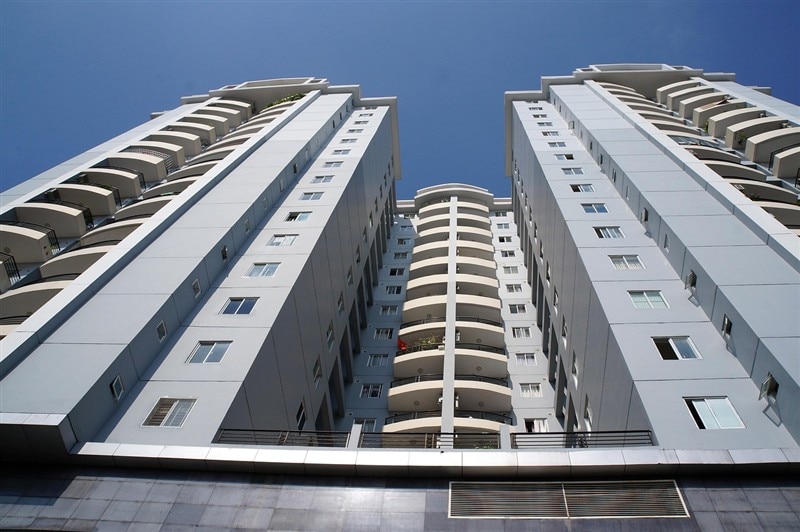
That 50-year clock and its single renewal give you a maximum of 100 years, which in practice is longer than most people plan to hold a property. When the term runs down, you apply to extend it. What you never get is the indefinite land-use right a Vietnamese citizen holds, because in Vietnam all land is collectively owned by the state. You own the building; you lease the ground it sits on.
The legal foundation shifted recently. The Land Law 2024 and the Housing Law 2023 both took effect on 1 August 2024, five months earlier than first legislated, after an amending law moved the date forward. Between them they rewrote the rules foreigners had lived with since 2015. If you’re reading an older guide, assume it’s stale.
What You Can and Cannot Buy
The line here is simple once you see it. You can buy the structure, not the land.
What foreigners can buy:
- Apartments and condos in licensed commercial housing projects. This is where almost all foreign buyers end up.
- Landed houses (villas and townhouses) inside approved projects, subject to the tight quotas covered below.
What foreigners cannot buy:
- Land on its own. You can’t hold land-use rights directly the way a citizen can.
- Property outside approved projects, including most standalone houses (nha pho) and villas bought directly from private owners on the open market.
- Anything in a restricted zone, such as land near military installations or areas flagged for national defense and security.
If a deal has you buying a house directly from a Vietnamese seller with no project or developer involved, stop. That’s a citizen’s transaction. Putting it in a Vietnamese nominee’s name to get around the rule works right up until it doesn’t, and when it fails you have no legal claim to anything.
In the expat forums this is the one question that gets a unanimous answer, and the answer is don’t. The failure modes posters describe are always the same: the nominee sells or mortgages the property without you, and you have no enforceable claim because the arrangement was illegal from the start. One poster put it as well as anyone: if it needs a key and you can’t put it in your own name, don’t buy it.
What the Law Actually Lets Foreigners Do
The 2023 and 2024 reforms expanded what a foreign owner can actually do with a property. That’s the real improvement.
- Own on a 50-year renewable lease: hold the apartment for 50 years, then extend once.
- Resell to another foreigner: the change that matters most. The 2014 law never clearly said whether you could, so notaries and registration offices handled it inconsistently and resale value suffered for it. The 2023 law spells it out, which makes an exit realistic.
- Rent it out, inherit, and use it as collateral, within the limits of your leasehold term.
Overseas Vietnamese Get a Better Deal
If you’re an overseas Vietnamese (Viet Kieu), your position comes down to one thing: whether you still hold Vietnamese nationality.
- Viet Kieu with Vietnamese nationality: the Land Law 2024 treats you as a domestic citizen. You get the same land rights as someone living in Vietnam, so land and landed houses are open to you rather than only apartments inside approved projects. That’s a major upgrade from the old law.
- People of Vietnamese origin without Vietnamese nationality: you keep the more limited rights that apply to foreigners generally.
If you have any claim to Vietnamese nationality, confirm your status before you buy. It changes what you’re allowed to own entirely.
The Foreign Ownership Caps
Vietnam limits how much of any development foreigners can hold, and hitting a full quota is one of the most common ways a purchase falls apart late.

Condominiums
Foreign buyers can own no more than 30 percent of the units in a single condominium building. In a 200-unit tower, that means 60 apartments can go to foreigners, and once that cap is full, no more foreign purchases are allowed in that building. Decree 95/2024 is explicit that where several blocks share a common base, the cap applies to “each unit or block” separately, so one full tower doesn’t close off the rest of the development.
Landed Houses
For villas and townhouses, the limit is tighter. Foreigners can collectively own up to 250 landed houses within an area equivalent to a ward, defined as roughly 10,000 people. Within a single project, foreign ownership of landed homes is also capped at a small share of the total.
That ward figure is a population count rather than a line on a map, which matters more than it sounds. Decree 95/2024 fixes the threshold at 10,000 people “regardless of administrative unit level”, so the 2025 provincial mergers that consolidated 63 provinces into 34 and dissolved two-thirds of Vietnam’s wards left the cap intact. What you actually need is the list. Your provincial People’s Committee draws up which projects foreigners may own in, so ask which list your project sits on before you count on a quota.

Tip: Before you pay a deposit, ask the developer for written confirmation that the foreign quota in your specific building still has room, and get it in the sale contract. A unit reserved for you means nothing if the building’s 30 percent is already spoken for when your pink book application goes in.
The Buying Process Step by Step
A typical purchase from a developer runs through a predictable sequence.
- Reservation and deposit: you place a booking deposit to hold the unit while contracts are drawn up.
- Sale and Purchase Agreement (SPA): you sign the SPA, which sets the price, the payment schedule, the handover date, and the foreign-ownership terms. Read the handover and pink book clauses closely.
- Payment schedule: for off-plan units you pay in installments tied to construction milestones. For completed units it’s closer to a lump sum.
- Handover: the developer hands over the finished unit.
- Pink Book (So Hong): the ownership certificate is registered in your name. This is the document that proves you own the property, and it’s the step that most often runs late.
Since the 2025 administrative reform, first-time certificates are issued by commune-level People’s Committees, because the district tier that used to handle them no longer exists.
Bring in an independent Vietnamese property lawyer for the SPA rather than relying on the developer’s paperwork alone. The contract either contains your protections or it doesn’t.
In the expat forums the consistent advice is to hire your own lawyer before you sign anything, because buyer protections are thin and people have paid in full and still lost the unit. The scenario that comes up most is a developer who can’t repay the construction loan, which can leave the apartment owners carrying it. There’s also no cooling-off period on a new build, so once you commit, you’ve committed.
Costs When Buying
Beyond the purchase price, budget for the transaction costs. Most foreign buyers should expect total closing costs somewhere between 1.5 percent and 4 percent of the price.
| Cost | Amount | Notes |
|---|---|---|
| Registration fee (le phi truoc ba) | 0.5% of property value | Paid when the pink book is registered in your name |
| VAT | 10% on new units | Usually baked into the developer’s quoted price; confirm before you sign |
| Maintenance (sinking) fund | ~2% of value, one time | A contribution to the building’s maintenance fund |
| Legal and admin fees | Varies | Your lawyer, notarization, and any agent fees on top |
Taxes to Know
The ongoing and exit taxes are lighter than in many countries, which is part of the appeal. Both the income tax and VAT rules changed in 2026, so numbers from older guides are wrong.
| Tax | Rate | When it applies |
|---|---|---|
| Transfer tax (PIT on sale) | 2% of the transfer price | When you sell. Technically the seller’s tax, and often a negotiating point |
| Rental income, PIT | 5% on revenue above VND500 million a year | Only if you let the property out and clear the threshold |
| Rental income, VAT | 5% | Same VND500 million threshold, in force since 1 January 2026 |
| Non-agricultural land use tax | 0.03% of the government land price | Every year. Apartment owners pay a share based on their unit’s floor area |
The 2 percent transfer tax survived the 2026 overhaul. Vietnam passed a new Personal Income Tax Law (109/2025/QH15) in December 2025, in force since 1 July 2026, and there was a lot of noise beforehand about taxing property gains at higher rates or by holding period. None of that made the final law. Article 14 still sets the tax at “the transfer price multiplied by the tax rate of 2%”.
Most small landlords now owe nothing. The threshold for both VAT and personal income tax on rental revenue rose to VND500 million a year, roughly US$19,000, so a single apartment let at an ordinary rent usually falls under it. Clear the threshold and you pay 5 percent PIT on the excess plus 5 percent VAT.
There is an annual tax, and it’s tiny. Vietnam charges non-agricultural land use tax at 0.03 percent of the government land price on residential land, condominiums included, with apartment owners paying a share worked out from their unit’s floor area. Because it’s assessed on the state price table rather than market value, it usually lands somewhere between US$20 and US$200 a year. Nothing resembling a Western property tax bill, but the line isn’t zero.
Can a Foreigner Get Financing in Vietnam?
Mostly, no. This one surprises people. Local mortgages for foreign buyers are rare and hard to secure, because banks are wary of lending against a leasehold held by someone who may leave the country. A handful of banks offer products to foreigners with local income and residency, but the terms are restrictive and most foreign buyers don’t qualify.
In practice, foreigners buy one of two ways:
- Cash: the most common route, and the cleanest.
- Developer installment plans: for off-plan units, developers spread payments across construction milestones, which functions as a form of financing without a bank.
One thing worth setting up from the start: bring your purchase funds into Vietnam through proper banking channels and keep the records. When you eventually sell and want to move the proceeds back out, a clean paper trail showing the money came in legally is what makes repatriation possible.
Common Pitfalls
The market is full of legitimate deals and a fair number of traps. These are the ones that catch foreign buyers most often.
- Off-plan developer risk: buying pre-construction from an unproven developer causes more grief than anything else on this list. The most common dispute foreigners run into is a developer running years late on handover or on issuing the pink book. Check the developer’s track record on completed projects before you commit.
- A full foreign quota: if the building’s 30 percent cap is already reached when your paperwork goes in, you can’t get your pink book, even after paying in full. Confirm the quota in writing first.
- Ghost projects and forged pink books: fake developments that never get built, and forged ownership certificates, both circulate. On a resale, the forum advice is to physically see the seller’s pink book before you sign anything, then verify it independently. Holding a certificate and holding a genuine one are different problems.
- Condotels dressed up as apartments: condotel and other hospitality-style units often don’t carry the same residential ownership rights. Know exactly what category you’re buying.
- Short remaining land-use term: on some projects the underlying land lease is already partway through its term, which quietly shortens what you actually get. Ask for the remaining term on the underlying lease before you look at anything else.
Is It Worth Buying?
For the right buyer, Vietnam’s market makes sense. Prices are still reasonable next to the rest of the region, and the reforms finally made resale realistic. For anyone expecting to own land outright or flip an off-plan unit quickly, it’s a harder fit.
If you’re still weighing whether to buy at all, it’s often worth renting an apartment in Ho Chi Minh City first to test a neighborhood before you commit capital. Go in understanding you’re buying a leasehold. Verify the developer and the quota before any money moves, and put an independent lawyer on the contract. Do that, and buying in Vietnam is a straightforward transaction rather than a cautionary tale.
Read more: