

This article will take approximately 15 minutes to read. Don't have the time right now? No worries. Email the ad-free version of the article to yourself and read it later!
Malaysia is rolling out a new biometric border system called MyNIISe. For anyone flying into Malaysia, the headline is reassuring: for now, almost nothing you do changes. Your passport still opens the gates, staffed counters are still there, and the app is optional.
The point of the switch is speed. Once it is fully running, clearance is meant to take four or five seconds. The catch is the changeover itself, which has already caused two bad mornings at the border this year.
This guide sticks to what that means for you: what is actually different at the airport, what to sort out before you fly, and the mistakes that cost people time.
Disclaimer: This article may include links to products or services offered by ExpatDen's partners, which give us commissions when you click on them. Although this may influence how they appear in the text, we only recommend solutions that we would use in your situation. Read more in our Advertising Disclosure.
Key Takeaways
- For now, nothing you are required to do changes: your passport still opens the autogates and staffed counters remain. MyNIISe is the new system running behind the scenes, replacing one Malaysia had used since the 1990s.
- The payoff is speed: clearance is meant to drop to four or five seconds once the system is fully in place, which the government is targeting for September 2026.
- Clearance works three ways: facial recognition, a QR code from the MyNIISe app, or your physical passport. The passport option is not going away.
- MyNIISe and the MDAC are two different things. The MDAC is a digital arrival card you file before you fly; MyNIISe is the border system itself.
- MM2H and other long-term pass holders are exempt from the MDAC and are already on the official autogate eligibility list.
- The MyNIISe app is optional for foreigners and, judging by its app-store ratings and the forum threads, still rough. Passport chip scanning is where it usually falls over.
- Carry your physical passport whichever method you use. No app replaces the document.
What MyNIISe Is
MyNIISe is the software running Malaysia’s borders. There’s an app with the same name, but nobody is making you download it. It replaces MyIMMs, the system the Immigration Department had run since the 1990s.
The reason for the change is that the old one kept crashing. A five-hour outage on 28 May 2026 stranded travelers at most of Malaysia’s 114 checkpoints, the second failure in a month. MyNIISe pools passenger data in one place and adds face matching at the gate, which is where the promised four-to-five-second clearance comes from.
What it means for you: when the system works, you move through faster. While it is still being switched over, you may hit the occasional outage and a long manual queue. Everything below is about staying on the fast side of that.
What Changes at the Airport
You get a choice of three lanes instead of one:
- facial recognition
- a QR code
- your passport
Pick whichever suits you. The passport lane is not going away, so if you do nothing at all, you still get through.
Facial Recognition
The gate matches your face against the biometric record Immigration already holds for you. If you’ve been through a Malaysian manual counter before, that record exists. If you haven’t, it doesn’t, which is why a first arrival still goes through a staffed counter.
QR Code
You pull up a code in the MyNIISe app and hold it to the reader at the gate. The code is time-limited, so do it as you walk up rather than in the taxi.
MyNIISe has one genuine advantage over the older MyBorderPass system. A group can clear on a single QR code instead of scanning each person separately, which matters if you’re traveling with family.
Passport
You scan the chip in your passport at the autogate exactly as you do now, and Immigration has confirmed this option stays. When confusion spread in January 2026 about whether the app was becoming mandatory, Immigration director-general Zakaria Shaaban said plainly that MyNIISe is not compulsory, and that physical passports and MyBorderPass both still work at the e-gates.
Good to Know: MyBorderPass is for Malaysian citizens only. MyNIISe is the one open to foreign nationals, and it also accepts MDAC submissions.
Where Things Stand for Your Next Trip
You don’t need to follow the rollout to travel. The one thing worth knowing is that it is uneven, and it will stay that way for a while.
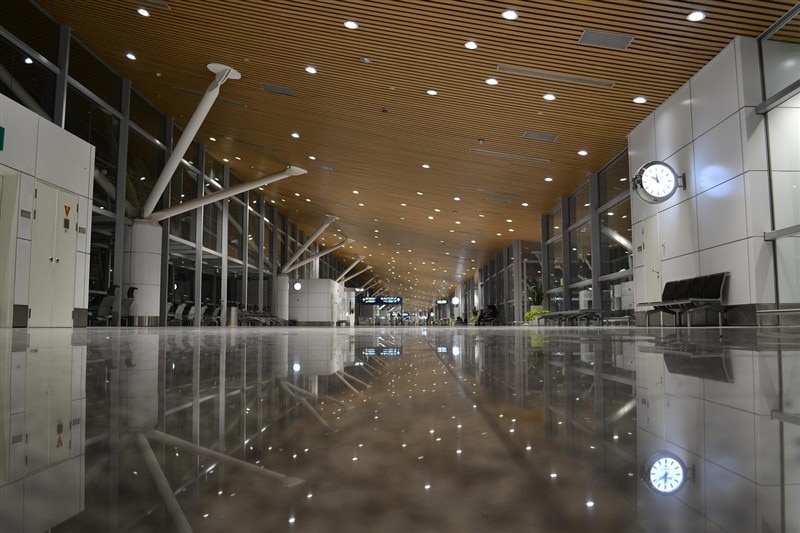
The full system is targeted for September 2026, but the autogate hardware is still being installed and won’t be finished until 2028. The face and QR lanes are already live at KLIA and the main airports, while smaller airports and land crossings are further behind. So the checkpoint you use next month might have new gates, or it might look exactly as it does today.
What it means for you: leave yourself a buffer while the switch is on. There have already been two nationwide outages in five weeks, and Home Minister Saifuddin Nasution Ismail has openly said he can’t promise there won’t be more, blaming “the old system that we have inherited for so long.” On a tight connection, that margin is the difference between making your flight and missing it.
Who Can Use the Autogates
The Immigration Department publishes a short eligibility checklist on its own MDAC portal. You have to clear every line on it. The right nationality on its own won’t get you through.
- Nationality: business and social travelers from the 63 eligible countries, which covers the UK, US, Canada, Australia, New Zealand, most of Europe, Japan, South Korea, China, Hong Kong, Taiwan, Singapore, Brunei, Türkiye, Jordan, and the GCC states.
- Passport: you must hold an e-passport, meaning one with a biometric chip.
- Arrival card: the MDAC has to be filed within three days before you arrive. Malaysian permanent residents and long-term pass holders are exempt.
- Departure-only nationalities: travelers from Thailand, Cambodia, Laos, the Philippines, Vietnam, Myanmar, Indonesia, and Timor-Leste can use the gates on the way out but not on the way in.
The department has also opened the gates to eligible long-term pass holders, and to diplomatic staff and their immediate families.
The entry and exit lists don’t match. When the QR trial started in Johor in September 2025, 63 nationalities could use a code to enter Malaysia while 71 could use one to leave.
Tip: The MDAC portal has a “Check Egate Eligibility Status” tool that takes your passport number, nationality, and category (social visit, permanent resident, or long-term pass holder) and tells you whether the gates will accept you. Run it before you fly rather than finding out at the gate.
MyNIISe and MDAC
These get conflated constantly, and they do different jobs. The MDAC is a form. MyNIISe is the border.
| MDAC | MyNIISe | |
|---|---|---|
| What it is | The Malaysia Digital Arrival Card, a pre-arrival declaration | The immigration system itself, plus an optional traveler app |
| Who needs it | Most foreign visitors; PR and long-term pass holders are exempt | Nobody is required to use the app |
| When you do it | Within three days before arrival | At the gate, or not at all |
| Cost | Free on the official portal | Free |
| What it gets you | Entry, and eligibility for the autogates | A QR lane instead of a passport scan |
You can now file the MDAC inside the MyNIISe app rather than on the web portal, which is where a lot of the confusion comes from. Filing through the app doesn’t change the rules. The same three-day window applies, and the same people are exempt.
Read more: Malaysia Digital Arrival Card (MDAC): The Complete 2026 Guide
MM2H and Long-Term Pass Holders
If you hold an MM2H pass, an employment pass, a residence pass, or a student pass, the new system asks less of you than it asks of a visitor. Long-term pass holders are exempt from the MDAC for as long as the pass is valid, and they sit on the official autogate eligibility list alongside permanent residents.
The exemption is tied to the pass, not to you. The day your pass lapses you’re a social visitor again. The MDAC obligation comes back, and the three-day window applies to your next arrival.
In the expat forums, the recurring warning about the foreigner e-gates has nothing to do with MyNIISe. It’s about entry records. Expats who cleared through a gate instead of a counter have struggled to prove their entry and exit dates later, usually when changing employers or renewing a pass.
If your immigration history matters for a pending application, a stamped passport is still the cleanest evidence you can hold. Forum regulars also advise taking the printed clearance slip the gate produces, and asking at the service desk for one if the gate doesn’t hand it over.
Tip: Long-term pass holders have historically had to register once at a foreigner e-gate counter in the KLIA arrival hall before the gates would accept them. Reports vary on whether that’s still enforced, so check your status on the official eligibility tool before assuming you can walk straight through.
Read more:
The MyNIISe App
The app is optional for foreigners and still rough around the edges. If the passport lane is working for you, there’s no reason to force it.
Registering means scanning the chip in your passport over NFC, then taking an eKYC selfie so the app can match your face to the passport photo. Both steps trip people up, and the app itself is unreliable at the moment.
- On the Apple App Store the app carries a rating of 1.7 out of 5, and the reviews name the problem precisely. One reads “This app requires an NFC scan of your passport, and will not provide alternatives if the scan fails.”
- In January 2026, Malaysian tech press put the ratings at 1.4 on the App Store and 1.8 on Google Play, with NFC problems named as the main cause.
The app is still being worked on, so don’t count on it working every time.
Travelers on the Singapore forums who cross the Johor land border regularly report the same things: the passport scan hanging on a loading screen, better results on flagship iPhones than on mid-range Android handsets, and codes that only work at certain lanes.
What to Do Before Your Next Flight
None of this needs much effort, and most of it is checking rather than doing.
- Confirm your passport has a chip. No e-passport, no autogate, whatever else you’ve arranged. Check for the small camera-shaped symbol on the cover.
- File the MDAC in the three-day window if you’re a visitor rather than a pass holder, and file it on the official portal or in the app. Both are free.
- Run the eligibility check. Two minutes on the portal beats discovering at 6am that the gate won’t take you.
- Carry the physical passport. Immigration has said this every time the question comes up. No app is a travel document.
- Build in a buffer during the transition. Two nationwide outages in five weeks is a fair warning, and the minister has said he can’t rule out more.
- If you’re arriving in Malaysia for the first time, plan on a staffed counter so your biometrics get enrolled. The gates can’t match a face they’ve never seen.
Common Mistakes and Pitfalls
The mistakes here are all avoidable, and most of them happen before anyone reaches an airport.
Assuming the App Is Mandatory
It isn’t, and Immigration has said so directly more than once. A working passport lane beats a failed app registration, so treat MyNIISe as an option you test at home rather than something to sort out in the terminal.
Walking to the Autogate on a First Arrival
Travelers on the community boards describe this one repeatedly. Skipping the manual counter on a first entry can leave your arrival unrecorded, and you won’t find out until you try to leave.
Letting the Pass Lapse and Forgetting the MDAC
The long-term pass exemption ends with the pass. Expats between passes have arrived expecting the exemption to still apply and found themselves filing on arrival, which loses them the autogate lane and puts them back at a staffed counter.
Treating September as a Hard Switch
September 2026 is the ministry’s target for full implementation of the system. Autogate installation runs to 2028. Entry and exit eligibility lists differ, and individual checkpoints will move at their own speed. Expect a mixed picture for a while yet.
Frequently Asked Questions
Do I have to download the MyNIISe app?
No. Immigration confirmed in January 2026 that MyNIISe is not compulsory, and physical passports and manual counters remain available at entry and exit points.
Will my passport still be stamped?
If you clear at a manual counter, yes. Autogate clearance, whether by passport chip, QR code, or face, doesn’t produce a stamp. If you need documentary proof of your entry and exit dates, use a counter.
Does MyNIISe replace the MDAC?
No. The MDAC remains a separate pre-arrival requirement for visitors, and the three-day submission window is unchanged. The app just gives you a second place to file it.
Are MM2H holders affected?
Only positively. MM2H holders are exempt from the MDAC while the pass is valid and appear on the official autogate eligibility list. The clearance methods change around you; your entitlements don’t.
What happens if the system goes down while I’m traveling?
Everything falls back to manual processing, which is what happened across most of Malaysia’s 114 checkpoints on 28 May 2026. Expect long queues and no useful way around them, and give yourself margin on tight connections while the transition is on.
Can I use the autogates if I’m arriving for the first time?
Plan on a staffed counter for a first arrival so your biometrics can be captured. From the next trip onwards the gates should accept you, assuming your nationality, passport type, and MDAC status all check out.
Is facial recognition optional?
You can choose your clearance method, and the passport lane stays. Immigration captures biometrics at the manual counter as a matter of routine, so there’s no opting out of the system altogether.
Sources Cited
- Bernama, 4 May 2026: Home Minister Saifuddin Nasution Ismail’s statement that MyNIISe would be fully implemented in September.
- The Star, 5 May 2026: the four-to-five-second processing target and the three clearance methods.
- Bernama, 8 May 2026: MyNIISe replacing MyIMMs, the transition risk, and the minister’s quote on disruptions.
- Malaysian Immigration Department, MDAC eGate eligibility: the official autogate eligibility conditions, the 63-country list, the three-day MDAC rule and the PR and long-term pass exemption.
- Malaysia Digital Arrival Card portal: the official, free MDAC submission and eligibility-check tools.
- Malay Mail, 29 May 2026: the 28 May outage, the Immigration DG’s comments on MyIMMs, and Malaysia’s entry-point counts.
- Malay Mail, 18 September 2025: the start of the Johor trial, the trial end date, group QR clearance, and Johor’s daily traveler volume.
- The Star, 22 September 2025: lane counts at BSI and KSAB, and the 63-country entry and 71-country departure eligibility split.
- Malay Mail, 10 October 2025: the extension of QR clearance to motorcycle lanes at BSI and KSAB from 15 October 2025.
- Lowyat.NET, 30 January 2026: the Home Ministry statement on 46 pedestrian e-gates at five airports from 1 March 2026.
- The Vibes, 23 December 2025: the 635-autogate program, the 75 gates then operational, and the categories of traveler the gates accept.
- The Star, 15 January 2026: the Immigration DG confirming MyNIISe is not mandatory.
- SoyaCincau, 14 January 2026: MyNIISe being open to foreign citizens, foreigners keeping the existing login, and the app’s early ratings.
- The Iskandarian, 6 July 2026: the 19.48 million QR transactions, 2.4 million downloads and 1.27 million registered users as of 28 June 2026.
- MyNIISe on the Apple App Store: the current rating, the reviewed NFC failure, and the version 1.4.8 release notes of 12 August 2026.