This article will take approximately 22 minutes to read. Don't have the time right now? No worries. Email the ad-free version of the article to yourself and read it later!
As an expat or digital nomad, the country you choose to live in can have a big impact on the amount of taxes you pay. In fact, it could mean the difference between paying 50 percent or 1 percent in taxes every year.
If the latter sounds like a better number, then you have to pick a country to live in that offers a great tax residency program.
Luckily for you, we’ve compiled a list of all the countries with the best tax residency programs for expats and digital nomads alike.
With that said, let’s jump in.
Contents
- Key Takeaways
- What Does it Mean to be a Tax Resident?
- Why Become a Tax Resident in Another Country?
- Residential Tax Vs. Territorial Tax Vs. Zero Tax
- Best Tax-Free Countries to Become a Tax Resident
- Best Countries to Get Tax Residency for Digital Nomads
- Honorable Mentions
- Tax Residency For US Citizens
- Now, on to You
- Sources Cited
Key Takeaways
- Tax residency is established by meeting a country’s physical presence or legal requirements; most countries use a 183-day rule as the standard threshold.
- The UAE is a top choice for personal income tax, which it does not charge, though businesses now pay 9% corporate tax on profits above AED375,000.
- Territorial systems such as Panama and Costa Rica leave foreign income untaxed, which suits anyone earning from abroad.
- Tax rate alone should not drive the decision; residency rules, double taxation treaties, cost of living, and business infrastructure all matter.
- US citizens cannot escape US tax obligations simply by establishing foreign tax residency; citizenship-based taxation means a US tax return is still required.
- Tax laws change; any plan to shift tax residency should be reviewed by a qualified cross-border tax advisor to avoid penalties or unintended obligations.
What Does it Mean to be a Tax Resident?
A tax resident is an individual who is required to pay taxes to a certain country that they are a citizen or resident of. This means the tax resident must pay taxes to this country on any income made within the country and, in some cases, worldwide income.
For example, if you’re a citizen of Canada but are currently a tax resident of New Zealand, you pay taxes on your worldwide income to the New Zealand government but won’t have to to pay taxes to the Canadian government.
Why Become a Tax Resident in Another Country?
There are many benefits of being a tax resident in a foreign country. Let’s look at some of the major advantages below.
Lower Your Overall Tax Payload
One of the biggest benefits of becoming a tax resident in a different country is that you may be charged lower tax rates than your home country, lowering your overall tax payload.
Avoid Paying Income Tax
Subject to you meeting a country’s criteria, you could become a tax resident in a country that doesn’t charge tax on their citizen’s income, regardless of the amount they earn. This, too, means that you would not have to pay taxes on earned income.
In some countries, earnings may be affected by territorial taxation, where taxes are only paid on income earned in that specific location, and earnings from outside that location are exempt. This is beneficial to people who are earning foreign incomes or who work remotely.
Avoid Double Taxation
Some countries have tax treaties where double taxation agreements are in effect.
Choosing to become a tax resident in one of these countries that has agreements with your home country should allow you to choose which country to pay taxes in.
This gives you some control of the amount of tax you’re liable for.
Residential Tax Vs. Territorial Tax Vs. Zero Tax
Now, before we dive into the best countries to get tax residency in, it’s worth noting the difference between being a tax resident in residential tax, territorial tax, and zero tax schemes.
Residential Tax Systems
Most countries use a residential tax system. With this system, you’ll generally be a tax resident if you stay in the country for at least 183 days per year.
As a tax resident, you’ll be liable to pay taxes on your income earned in the country and abroad — unless you live somewhere with a tax treaty.
Countries like Japan and most of the EU use the residential tax system.
Counting days is not the whole test, though. Expats in tax forums repeatedly warn that treating the 183-day count as the only thing that matters is how people get caught. Tax authorities can still claim you as a resident based on where your family, your home, and your main economic ties sit, sometimes years after the fact.
Territorial Tax Systems
On the other hand, countries like Costa Rica and Panama use a territorial tax system. Under this system, a tax resident only gets taxed on income earned within that country.

This makes the territorial tax system ideal for those that earn a foreign salary. In other words, any income you earn abroad does not get taxed.
Watch out for countries that look territorial but tax money you bring in. Thailand is the one that catches people out. Since 1 January 2024, if you are a Thai tax resident and you remit foreign income into Thailand, that money is taxable, whether you bring it in that year or later.
Zero Tax Systems
Though not very common, a few countries such as the UAE and the Cayman Islands have a zero tax system, where tax residents pay zero tax on any income earned, both local and abroad.
Best Tax-Free Countries to Become a Tax Resident
There are a number of tax-free countries where you can become a tax resident as an expat. Here are some of the most popular options.
The Bahamas
A relaxing vacation destination with white sandy beaches and a chilled-out island vibe, the Bahamas not only has natural beauty, but the country also doesn’t charge income tax.
In the Bahamas, tax residents enjoy zero tax on income, wealth, or inheritance. This makes the Bahamas one of the most desirable tax havens.
Although the Bahamas are a tax haven, it’s also worth noting that the cost of living is considerably high. Those living in the Bahamas can expect to pay up to 10 percent more for most living expenses than in the U.S.
To start the process of becoming a tax resident in the Bahamas, you’ll need to apply for a residence permit. There are two ways of doing this:
- purchase real estate worth at least US$750,000
- invest at least US$750,000 in the country; this is to support additional employment of local residents
As a resident, to qualify for the tax residency permit, you have to live in the Bahamas for a minimum of 90 days and no more than 183 days in another country. This doesn’t need to be consecutive.
If you meet these guidelines, you’ll be issued a tax residency certificate and a Taxpayer Identification Number (TIN).
To find more information on this process, visit here.
The Cayman Islands
Another beautiful island destination that is well known as a tax haven is the Cayman Islands.
Becoming a tax resident of the Cayman Islands grants you zero income, company, or property tax, making it desirable for people who want to limit their tax responsibilities.
Similar to the Bahamas, the Cayman Islands also are quite expensive compared to most other countries. So, although you’ll be avoiding taxes, your cost of living will likely increase.
To be considered a tax resident in the Cayman Islands, you first need to apply for residency. While costly, the process is quite straightforward.
There are three different ways you can apply for residency in the Cayman Islands:
- invest at least US$1.2 million into a business that provides jobs for locals
- prove that you have a high enough income (at least US$150,000 annually) and invest US$1.2 million into the Cayman Islands
- prove that you own at least 10 percent of the shares of a business that is part of an approved industry in the Cayman Islands
Applying for residency in the Cayman Islands also requires a hefty application fee (between US$6,000 and US$25,000 depending on the type of application), and most residency visas require an annual renewal fee of US$1,220.
For additional information on the process of applying for residency, you can visit the Cayman Islands’ official government website.
The United Arab Emirates
As one of the most popular financial centers in the Persian Gulf, the United Arab Emirates attracts people who are looking to pay less tax and enjoy a luxurious lifestyle.
The UAE has become a popular place for many expats to move to because it charges no personal income tax on your salary. That part has not changed.
The corporate side has. For financial years starting on or after 1 June 2023, the UAE charges corporate tax of 9% on business profits above AED375,000. Anything at or below that is taxed at 0%.
So the UAE is still an easy win if you earn a salary. If you run a company here, budget for the 9%.
However, it’s worth noting that the UAE is not one of the cheapest countries in the world to live in. On average, expect the cost of living in the UAE to be around the same as the U.S., if only a tiny bit cheaper.
With that said, your money does go a long way here as you won’t be subject to any income tax.
Luckily, becoming a tax resident in the UAE is very easy to do. To receive your tax residency certificate, you must apply for residency in the UAE. Here are the top three ways of doing this.
- through an employment contract
- by purchasing real estate worth US$275,000
- by registering a free zone company
Once you acquire UAE residency, you have to apply for a tax residency certificate. You do this online through the Federal Tax Authority’s tax residency certificate service.
Turks and Caicos
Turks and Caicos (TCI) is one of the most beautiful places in the world, boasting white, sandy beaches and a high standard of living.
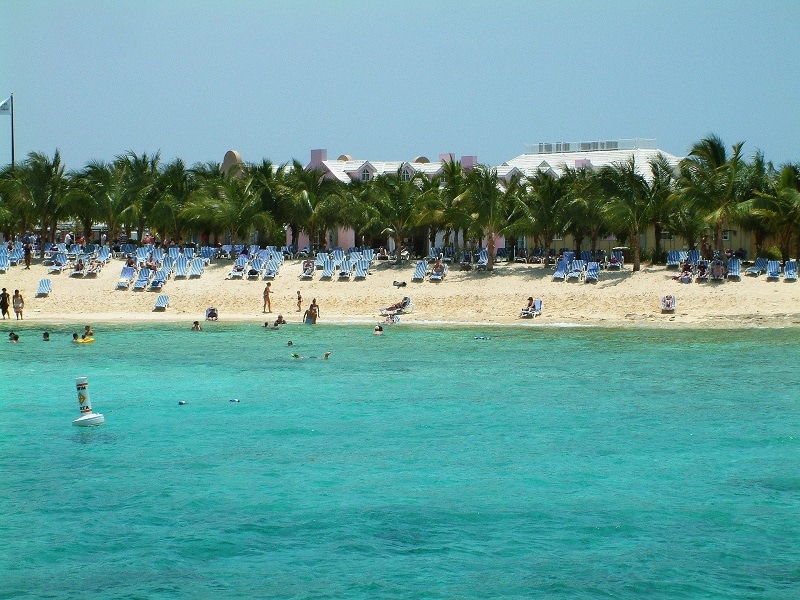
Despite being considered a developing nation, TCI has economic security that many expats search for. In addition to all of this, this country is known as one of the most tax-friendly countries in the world, which is always a bonus.
But just because it’s an island nation, don’t be shocked by the cost of living. Groceries, fuel, and even rent can cost twice as much as in the U.S.
To be considered a tax resident in Turks and Caicos, you have to apply for your permanent residency certificate. To get this, you have to reside in TCI for at least 10 years with an uninterrupted work permit.
Ten years is quite a long time, so it’s not always the most feasible option. Thankfully, there are a couple of other faster ways to get permanent residency:
- invest at least US$750,000 in real estate
- invest at least US$1,000,000 in a business on the island
Once you get a permanent residency certificate, you’re considered a tax resident and can enjoy the tax relief benefits. Further information about the application process can be found here.
Best Countries to Get Tax Residency for Digital Nomads
Nowadays, there are more and more people who lead nomadic lifestyles, making it desirable to acquire tax residency in a different country.
In fact, many countries now offer digital nomad visas. Digital Nomads are different than other expats because they likely only stay in one country for a short amount of time. They aren’t likely looking to invest large sums of money or stay in one country for 10 years to get tax residency.
Below we cover some of the countries that give you tax benefits as a digital nomad.
Georgia
From the Black Sea to the Caucasus Mountains, Georgia offers amazing scenery. Georgia is also an incredibly affordable country to live in, making it perfect for digital nomads looking to cut down on costs.
In fact, Georgia is approximately 50 percent cheaper to live in than the U.S. Our guide to the cost of living in Tbilisi breaks down what a month actually costs.
This ex-Soviet country has only recently started offering a one-year visa specifically for digital nomads. And, unlike in most other countries, the process is easy and quick. We cover it in detail in our guide to the Georgia digital nomad visa.
To be considered a tax resident, you need to stay in the country for 183 days, meaning you only pay tax from the 183rd day of your stay. On top of this, as a digital nomad, you have the opportunity to register for their individual entrepreneur program, where only 1 percent is taxed on a maximum amount of US$155,000 per year.
The visa can eventually lead to permanent residency as well.

To get your tax residency in Georgia, you have to apply for the nomad visa, which is free. Before applying, you need to meet the following criteria:
- have a valid passport
- have proof of employment
- medical insurance
- proof of funds
If you meet these criteria, you can apply for the visa free of charge on the official website and wait 10 days for approval.
Greece
Greece is a dream destination for many expats around the world. The exciting history, the beautiful beaches, and the delicious food are just some of the countless reasons moving to Greece is a great idea.

Thankfully, this bucket list destination now offers a remote worker visa, also known as a digital nomad visa, meaning those that work online can now call Greece their home. If you are weighing it up, start with our guide to moving to Greece.
Compared to other European countries, Greece also has a fairly low cost of living. So, your hard-earned money will go further. And, as a plus, you don’t need to sacrifice any of your home comforts because Greece has a high quality of life.
Greek income tax tops out at 44 percent. From 2026 that top rate kicks in above EUR60,000, and the lower bands shift depending on how many dependent children you have. But one of the benefits of moving your tax residency to Greece as a remote worker is a 50 percent reduction on Greek income tax under the country’s incentive scheme for new tax residents. To be considered a tax resident, you have to stay in the country for six months.
To apply for the visa, you need to meet the following criteria:
- you must be a non-EU resident
- you need to work for a company outside of Greece
- all work must be completed remotely
- you cannot work for a company registered in Greece
- you must prove you earn a net monthly income of EUR3,500
Applications for the remote worker visa must be done in person at your local Greece Embassy. It costs US$76.61 to apply.
You can read the full requirements on the Greek Ministry of Foreign Affairs digital nomad visa page.
Panama
In 2021, Panama introduced a new visa for digital nomads. And Panama’s proximity to the U.S. and other beautiful destinations makes it an exciting country to move to. Our guide to the Panama digital nomad visa walks through the process.
In Panama, you can enjoy a more luxurious lifestyle on a budget due to the much lower cost of living. Though lesser known than the neighboring country of Costa Rica, Panama is definitely on the rise as one of the most popular countries for digital nomads.
One of the biggest reasons for this is that digital nomads don’t pay tax on any income earned outside of Panama. To apply for the digital nomad visa, you have to gather all the required paperwork, including:
- proof of earnings
- completed application
- three passport photos
- medical insurance
- US$250 fee
After living in Panama for at least nine months, you can file for tax residency so that you can avoid paying taxes at home and pay income taxes in Panama instead. Since Panama has a territorial tax system, digital nomads that earn only foreign income are completely exempt from taxes in the country.
More information about applying for the digital nomad visa can be found on the Embassy of Panama’s website.
Estonia
For digital nomads looking to set up shop in the Schengen Zone, Estonia may be the place to go. Estonia has become a very popular destination for digital nomads since the inception of the digital nomad visa in 2020. It is one of many options covered in our roundup of every country in Europe with a digital nomad visa.
This is a one-year visa makes it easier for digital nomads to explore Europe, and Estonia makes for a great home base as it has a lower cost of living than other European nations.
The requirements for this visa are as follows:
- must be a digital nomad
- must be employed by a company registered outside of Estonia
- must be able to provide evidence that your income meets the minimum monthly threshold of EUR3,504 for six months prior to application
Digital nomads will become tax residents of Estonia after staying in the country for 183 days. After this, you are subject to income tax at a flat rate of 22 percent.
There is a basic exemption on top of that. In 2026 the first EUR700 a month, or EUR8,400 a year, is tax free, and it no longer shrinks as you earn more.
Honorable Mentions
Here are some countries where digital nomads can easily live in with a digital nomad visa or equivalent.
However, these countries do not offer tax residency, so you still have to pay taxes in your home country while living there.
This trips people up constantly. A recurring complaint in expat forums comes from people who assumed a digital nomad visa or residence permit automatically made them a tax resident, then found out it did not. A permit lets you stay. Tax residency is a separate test, and missing that distinction is how you end up filing in the wrong country.
Croatia
With its white beaches and crystal waters, Croatia is a top choice for digital nomads looking for tax residency. We have a full guide to being a digital nomad in Croatia.
Croatia now offers a digital nomad residence permit of up to 18 months, during which time there is no requirement to pay Croatian income tax on your foreign earnings.
To be eligible to apply, you need to be employed by a company outside of Croatia and come from a non-EU country. You also need to show a monthly income of at least EUR3,622.50, or savings of EUR43,470 for a 12-month stay.
To apply for the permit, you can visit your local Croatian Embassy or complete the application online. The Croatian Ministry of the Interior sets out the current requirements.
Malta
Malta offers a Nomad Residence Permit specifically for remote workers. Acquiring it is relatively easy to do if you meet the correct requirements.
Do not assume it is tax free, though. Malta has a dedicated set of income tax rules for permit holders, so check where you stand before you count on paying nothing.
Here are the requirements for the permit:
- non-EU resident
- gross yearly income of at least EUR42,000, which works out at roughly EUR3,500 a month
- work with a company registered outside of Malta
You can apply online through the Residency Malta Agency. If you applied before 1 April 2024, the older EUR32,400 income requirement still applies to you.
Alternatively, you can look at getting Maltese citizenship through investment to enjoy a lifetime of tax benefits.
Tax Residency For US Citizens
As per the Internal Revenue Service, all U.S. citizens and residents are treated as tax residents, regardless of where in the world they live.
U.S. citizens who work abroad have to report their worldwide income on their taxes every year with the IRS. And in some cases, U.S. citizens may need to pay taxes on that income as well; this is known as double taxation.
There are some ways U.S. citizens can avoid double taxation. Let’s look at them below.
Foreign Tax Credit
The Foreign Tax Credit is an IRS provision that provides tax credits for the amount of foreign taxes an American may have already paid. To get this, you have to submit a claim using Form 1116.
Foreign Earned Income Exclusion
The Foreign Earned Income Exclusion is a provision for Americans living abroad and lets them exclude up to a certain amount in taxable income.
In order to qualify, the individual must provide evidence that they have more ties to the foreign country than the U.S. For the 2026 tax year, the maximum exclusion is US$132,900 of income earned abroad, up from US$130,000 for 2025. Citizens will need to claim back from the IRS using Form 2555.
Tax Treaties
The U.S. has signed tax treaties with multiple countries so that Americans living abroad don’t have to pay social security taxes or other taxes. The IRS publishes the full list of treaty countries. To get started, you have to fill out Form 8833.
You can find out more on our guide to filing taxes as a U.S. citizen from abroad.
Now, on to You
Now you know everything there is about tax residency, how to get it, and how changing your tax residency can even save you more money in the long run.

If you put some of the advice above into practice, you can possibly enjoy lower tax rates as a tax resident of another country and avoid paying high taxes to your home country.
Expat financial communities consistently emphasize that a tax residency change is a legal process that requires genuine ties to the new country, not just a mailbox address. US citizens in particular must still file a US return regardless of where they live, so the goal is usually a tax treaty or exclusion to reduce double taxation rather than elimination. A cross-border CPA is strongly recommended before making any formal change.
Sources Cited
- Internal Revenue Service: the 2026 Foreign Earned Income Exclusion figure of US$132,900.
- IRS tax treaty list: the countries the U.S. holds income tax treaties with.
- UAE Government portal: UAE corporate tax of 9% above AED375,000, effective for financial years starting on or after 1 June 2023.
- UAE Federal Tax Authority: how to apply for a tax residency certificate.
- Estonian Tax and Customs Board: Estonia’s 22% income tax rate and the EUR700 monthly basic exemption for 2026.
- Greek Ministry of Economy and Finance: the Greek income tax scale and the 44% top rate from EUR60,000 in 2026.
- Hellenic Ministry of Foreign Affairs: the EUR3,500 monthly income requirement for the Greek digital nomad visa.
- Croatian Ministry of the Interior: the EUR3,622.50 monthly income threshold and the 18-month maximum stay.
- Residency Malta Agency: the EUR42,000 gross yearly income requirement for the Nomad Residence Permit.
- Thai Revenue Department: Thailand taxing foreign income remitted by tax residents from 1 January 2024.







 Deutsch:
 Français:
 Español: