
This article will take approximately 25 minutes to read. Don't have the time right now? No worries. Email the ad-free version of the article to yourself and read it later!
Japan’s digital nomad visa gives you six months, once. You need ¥10 million a year, private medical cover worth another ¥10 million, and a passport from one of 51 countries. What you don’t get is a residence card, and a lot follows from that.
Japan opened its digital nomad visa on 31 March 2024. It’s a six-month permission slip that says you can sit in Japan and work for people who aren’t in Japan, and it stops there. Nothing about it makes you a resident.
The income bar is high enough that most nomads don’t clear it, and the benefits are narrower than the headlines suggested. You get no residence card, no local health insurance, no bank account, and no route to staying longer.
For the right person it’s still the cleanest way to spend half a year in Japan legally, with a spouse and kids alongside you. This guide covers the eligibility rules, the country list, what the paperwork actually asks for, what the visa costs after Japan’s July 2026 fee rise, how the tax side works, and what living in Japan without a residence card is really like.
*Throughout this guide we use an exchange rate of ¥1 to US$0.0063, the rate in late August 2026.
Disclaimer: This article may include links to products or services offered by ExpatDen's partners, which give us commissions when you click on them. Although this may influence how they appear in the text, we only recommend solutions that we would use in your situation. Read more in our Advertising Disclosure.
Advertisement: Getting sick in a foreign country is never fun, and in Japan it can feel even more stressful if you don’t speak the language. From choosing the right clinic to explaining your symptoms, simple things suddenly become complicated. Air Doctor helps remove that stress by letting you quickly find and book verified English-speaking doctors nearby, whether you prefer an in-person visit or an online consultation.
Key Takeaways
- The visa is a “Designated Activities” status, Notification No. 53. It runs six months and can’t be extended.
- You need an annual income of at least ¥10,000,000 (about US$62,800) at the time you apply.
- You also need private medical insurance covering death, injury, and illness, with at least ¥10,000,000 of cover for medical treatment.
- Only nationals of 51 countries and regions qualify, the ones that have both a visa waiver arrangement and a tax treaty with Japan.
- No residence card is issued, so there’s no resident registration, no My Number, and no access to Japan’s public health insurance.
- You can’t take a job or a contract with any Japanese company or person while you’re on it.
- Once your six months are up, you have to be out of Japan for six months before you can hold the status again.
- Japan raised visa fees on 1 July 2026. A single-entry visa now costs roughly ¥15,000 (about US$94) instead of ¥3,000.
- Your spouse and children can come with you on a matching status, and their country list is longer than yours.
What the Digital Nomad Visa Is
There’s no new visa category here. The status of residence is “Designated Activities”, the catch-all bucket Japan uses for anything that doesn’t fit its regular work and family categories. The digital nomad version lives under Notification No. 53 of the ministerial notice that governs it.
The Immigration Services Agency recognizes two kinds of work here.
- A salaried remote employee: You’re an employee of a company set up under the laws of a foreign country, doing that company’s overseas work from Japan over the Internet.
- A freelancer, consultant, or company owner with foreign clients: You’re selling services or goods over the Internet to people located outside Japan.
Anything that can’t be provided or sold without entering Japan is out. If the work only exists because you’re physically in the country, it isn’t remote work and it isn’t covered.
You get six months, flat. The Immigration Services Agency says so twice, in two different documents, in case anyone was hoping otherwise: “Six months (No extension will be granted.)“, and your stay under this status “must not exceed 6 months within a year.“
Good to Know: Everything below is about the rules. Cost of living, coworking, which city to pick, and how good the food is all belong to a separate article.
Who Can Apply
In addition to the work requirements mentioned above, there are other requirements:
- Your nationality has to be on the list
- Your income has to hit ¥10 million
- You have to buy the right insurance policy before you apply rather than after you land.
You clear all three gates or you don’t apply.
Eligible Countries and Regions
Japan built this list out of two lists it already had:
- countries and regions covered by its visa exemption arrangements for Temporary Visitors
- those party to one of its tax conventions.
You have to be a national or citizen of somewhere that sits on both, which is why the result looks arbitrary.
That leaves 51 countries and regions:
| Region | Eligible nationalities |
|---|---|
| Asia and the Pacific | Australia, Brunei, Hong Kong, Indonesia, Malaysia, New Zealand, Republic of Korea, Singapore, Taiwan, Thailand |
| Europe | Austria, Belgium, Bulgaria, Croatia, Czech Republic, Denmark, Estonia, Finland, France, Germany, Greece, Hungary, Iceland, Ireland, Italy, Latvia, Lithuania, Luxembourg, Netherlands, Norway, Poland, Portugal, Romania, Serbia, Slovakia, Slovenia, Spain, Sweden, Switzerland, Turkey, United Kingdom |
| Americas | Brazil, Canada, Chile, Mexico, Peru, United States, Uruguay |
| Middle East | Israel, Qatar, United Arab Emirates |
The ¥10 Million Income Floor
Your annual income has to be at least ¥10,000,000, roughly US$62,800, at the time you apply. In practice the Immigration Services Agency reads that more flexibly than the bare number suggests.
Its published Q&A accepts expected income as well as banked income:
- Last year’s income. The default test is your most recent annual income, and it has to be ¥10 million or more.
- A raise this year. If a salary increase means your income is expected to reach ¥10 million from the time you apply, that counts.
- A new job. Someone hired in the current fiscal year at ¥10 million a year meets the bar without a full year of earnings behind them.
- Several income streams. Contracts with multiple startups, or a mix of clients, can be added together if each is a stable income.
Freelancers get the harder version of the test.
If your income comes from a business or sales contract as a sole proprietor, the agency looks at what’s left after you deduct your necessary business expenses, not the headline contract value. Bill ¥12 million a year and spend ¥3 million running the business and you’re under the floor, on paper, no matter what your invoices say.
You prove it with a tax certificate or income certificate issued in the country where you worked, plus documents showing your current work status: an employment contract, a certificate of employment, or a client contract that states both the contract period and the contract amount.

Tip: Ask your client for a contract that spells out the period and the amount even if your normal arrangement is looser. A rolling invoice history is harder for a consular officer to score against a fixed annual threshold.
The Insurance Requirement
You need private medical travel insurance covering death, injury, and illness for the whole time you’re in Japan.
- Medical treatment cover has to be at least ¥10,000,000, another US$62,800.
- There’s no minimum on the death benefit, but the policy has to include either repatriation of remains or a death payout.
The official Q&A explains why the requirement exists. Digital nomads “are not eligible to enroll in Japan’s public medical insurance.” If you get sick, that private policy is all there is, because Japan’s public system won’t catch you.
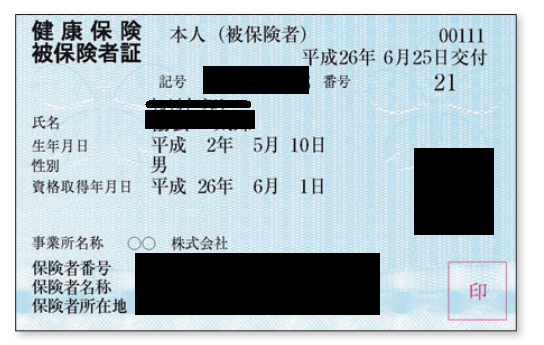
You submit a copy of the enrollment certificate and the policy terms and conditions, plus a standard form explaining the coverage. Credit card travel insurance is allowed, as long as you can document that it actually meets the coverage floor.
Tip: Buy the policy with the visa’s exact wording in front of you. Plenty of nomad policies advertise a headline limit and then cap individual claims well below it, and a certificate that says “comprehensive medical cover” without a number on it gives the consulate nothing to check. If you’re comparing options, our guide to digital nomad health insurance covers what to look for in the policy wording.
Read more: Health Insurance in Japan
What You Can Do on It
Within its limits the status is generous. You can work remotely from anywhere in Japan, for the full six months, without telling anyone where you are.
- Move around freely. Asked whether staying in several cities needs any special procedure, the Immigration Services Agency answers in four words: “No special procedures are required.” There’s no address to register and nothing to update when you move.
- Leave and come back. You can take a trip abroad mid-stay with a re-entry permit and keep your status, as long as you’re back before your period of stay expires.
- Bring your family. Your spouse and dependent children can hold a matching six-month status on the strength of your application, with their own insurance policies.
- Earn from anywhere outside Japan. Nothing caps how much you make or how many foreign clients you have.
Note the re-entry mechanics before you book anything. One applicant who wrote up his stay found the permit meant going in person to an immigration office with a stamped form rather than waving a card at the airport, which is a real constraint if you’d planned to hop to Seoul every few weeks.

What You Cannot Do on It
The restrictions that matter are structural, and none of them has a workaround.
No Japanese Work
You can’t work for a Japanese organization, public or private, or for a Japanese individual, under an employment contract or a contractor agreement. Not part-time, not as a side gig, not as a favor with money attached.
The Q&A closes the obvious loophole directly. Asked whether you can sign with someone you meet in Japan and start a new job, the answer is that while you hold this status, “it is not possible to work with a Japanese company or individual under an employment contract or a contractor agreement.” Meeting a great client in a Tokyo coworking space doesn’t change your status; it just puts you in breach of it.
No Residence Card
Residence cards go to “mid- to long-term residents”. Digital nomads don’t fall into that category, so you don’t get one, and the knock-on effects reach well past the card itself.
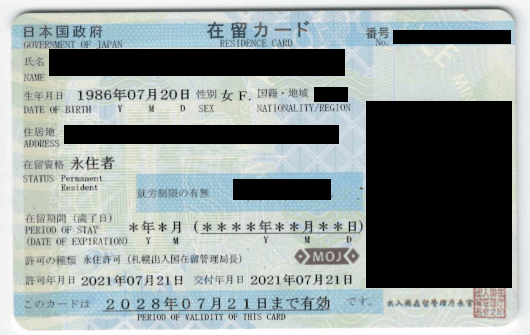
Japan’s Basic Resident Registration covers foreign nationals staying more than three months, but only those who hold a residence card or special permanent resident status. No card means no Resident Record, and no Resident Record means:
- No My Number. The individual number that Japanese administrative systems run on is issued to registered residents.
- No National Health Insurance. Enrollment runs through your municipality, and you’re not on its books.
- No municipal paperwork. Anything that starts with “bring a copy of your juminhyo” is closed to you.
- You carry your passport. With no residence card, your passport is your ID for the full six months, including the police checks foreigners occasionally get.
No Path to Anything Longer
Six months is the ceiling and there’s nothing above it. Once you’ve used the full period, you have to spend six months outside Japan before you can hold the status again. The clock runs from the departure date: “once six months have passed after leaving Japan, you can re-enter Japan with the status of residence of ‘Designated Activities’ for digital nomad.“
Nobody designed an in-country conversion into this status either. Switching to a work visa or a business manager visa means finding an employer or building a company structure, then filing a fresh application on the normal terms.
None of your six months as a nomad counts toward permanent residence. That clock starts when you hold a status that puts you on the resident register, which this one never does.
Required Documents
The list is shorter than most Japanese visa applications, mostly because there’s no employer in Japan filing half of it for you.
- Visa application form with a photo. The standard Ministry of Foreign Affairs form.
- Passport. Valid for the whole intended stay.
- An activity schedule. A document explaining what you’ll be doing in Japan and for how long, on the Immigration Services Agency’s reference form. You can skip the separate document if you’ve written enough detail into the application form itself.
- Proof of ¥10 million income. Tax payment certificate, income certificate, employment contract, or a business contract stating the period and the amount.
- Proof of insurance. A copy of the certificate of coverage and the policy summary, plus the coverage explanation form. For credit card cover, documents proving the supplementary compensation.
Family members file the same activity schedule and insurance documents, plus a marriage or birth certificate proving the relationship and a copy of the nomad’s passport.
Certificates issued in Japan have to reach the consulate within three months of their issue date, so don’t collect them too early. Any document in a foreign language needs a Japanese translation attached, which is a cost and a lead time most people forget to plan for.
How to Apply
The process is unusually simple by Japanese immigration standards, because you deal with one office and no sponsor. What it isn’t is quick.
Where to Apply
You apply at the Japanese embassy or consulate-general with jurisdiction over where you live. You also can’t do this from inside Japan on a tourist stay. The application is made abroad, before you travel.
Timeline
Japan doesn’t publish a service standard for this status, and the reported waits are much longer than the roughly five working days quoted for ordinary visas.
Case Study by a German Applicant
The one detailed public account of the process, from a German applicant who filed in Berlin, describes submitting at the end of August and collecting the visa “6 weeks after the application.“
Six to 12 weeks is the range that comes up repeatedly in remote-work forums, with the variation coming from the consulate rather than the applicant. Nomad files often get referred back to Japan for review instead of being decided locally, which is what stretches them.
Tip: Start at least three months before you want to fly, and buy the insurance policy first. The policy has to cover your planned dates, and you can’t submit the application without it.
Cost
Japan raised its visa fees fivefold on 1 July 2026, and the increase applies worldwide. For anything accepted at an overseas mission from that date, the Ministry of Foreign Affairs sets the fee at approximately ¥15,000 for a single-entry visa and approximately ¥30,000 for a multiple-entry one, payable in the local currency of wherever you apply.
| Item | Cost | Notes |
|---|---|---|
| Single-entry visa | About ¥15,000 (US$94) | Was ¥3,000 before 1 July 2026 |
| Multiple-entry visa | About ¥30,000 (US$189) | Was ¥6,000 before 1 July 2026 |
| Six months of private medical insurance | Varies | Must carry ¥10 million treatment cover |
| Re-entry permit, if you leave mid-stay | Paid in Japan | Applied for in person at an immigration bureau |
| Document translation into Japanese | Varies | Required for anything not already in Japanese |
You pay nothing if the visa isn’t issued. If you go through an agency approved by the embassy, its handling fee sits on top of the visa fee.
Tax
You do not need to worry much about tax in Japan. The Immigration Services Agency puts it this way: the money a digital nomad earns for activities carried out in Japan is eligible for exemption “if it meets the requirements of the tax convention, which in most cases include one while staying in Japan for 183 days or less during the taxable year or any consecutive 12-month period.”
To put it simply, the visa lets you stay in Japan for a maximum of six months, which leaves you a non-tax resident. That means income earned abroad isn’t taxed in Japan. The only exception is income from work done in Japan, which the digital nomad visa doesn’t let you do anyway.
Living in Japan Without a Residence Card
The visa is the easy part. The friction shows up in the ordinary business of living somewhere for half a year with no proof of address.
Housing
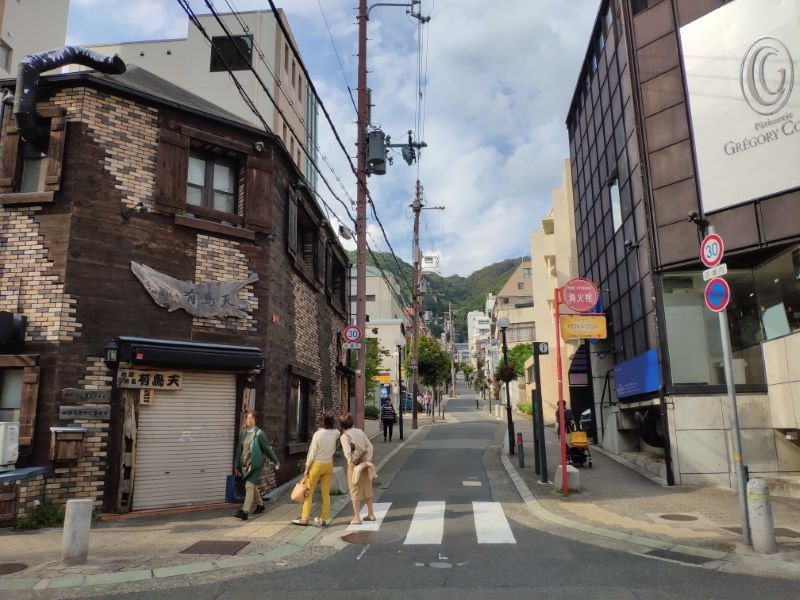
It’s hard for a foreigner in Japan to find housing, and harder still for a digital nomad, since standard Japanese rentals want a residence card, a guarantor, and often a Japanese phone number. You generally have none of that.
In addition, the six-month stay is short enough that most landlords wouldn’t bother anyway.
That pushes you into monthly furnished apartments, share houses, or serviced accommodation, all of which cost more per month than a normal lease and none of which need paperwork you don’t have. The German applicant above hit exactly this wall: no regular long-term apartment, but too long for a hotel, so a monthly furnished flat in west Tokyo it was.
Read more: Renting an Apartment in Japan
Healthcare
You pay up front and claim back.
Without National Health Insurance there’s no 30 percent co-pay counter at the clinic, so a consultation is full price in cash and your insurer pays you back afterward, on its own timetable. Find out before you travel whether your policy does direct billing anywhere in Japan, because “pay and claim” at a Japanese hospital can mean a large number on your card in a bad week.
Money and Phones
Japanese bank accounts are built around the residence card and a registered address, so plan on running the six months from your home-country accounts and cards. The same applies to a postpaid mobile contract. A travel eSIM or a prepaid data SIM covers the gap, and our review of using an eSIM in Japan goes through how that works day to day.
Tip: Check your laptop and phone for the Technical Conformity Mark before you go. You can only use Wi-Fi and Bluetooth devices without it for 90 days after you enter Japan, which is half your stay. An unmarked device still works past 90 days if it doesn’t emit radio waves directly, for example wired to a Japanese mobile Wi-Fi unit that does carry the mark.
Read more:
The Visa Waiver Alternative
Most people on the eligible list can already enter Japan visa-free as a Temporary Visitor for up to 90 days, which raises the fair question of why anyone would file paperwork for six.
| Digital nomad visa | Visa waiver (Temporary Visitor) | |
|---|---|---|
| Length of stay | 6 months | Up to 90 days |
| Remote work | Explicitly permitted, in writing | Not a listed permitted activity |
| Apply in advance | Yes, at an embassy abroad | No |
| Income proof | ¥10 million | None |
| Insurance proof | ¥10 million treatment cover | None |
| Cost | About ¥15,000 | Free |
| Residence card | No | No |
| Family status | Matching six-month status | Everyone enters separately |
What you’re buying is the extra three months and permission in writing. Temporary Visitor status is for sightseeing, visiting relatives, and short business trips, and it doesn’t list working remotely for a foreign employer among the things it covers. Plenty of people do it anyway, and Japan has never made an issue of a tourist answering emails. Nobody at immigration has published a clearance for it either.
If you want three months in Japan and nothing more, the waiver is faster, it’s free, and it settles the matter. If you want six, or you’d rather not rely on an unwritten tolerance, the visa is what buys that. Elsewhere in the region the trade-offs run differently, and our roundup of digital nomad visas in Asia compares them.

Common Mistakes and Pitfalls
The application itself trips up fewer people than the assumptions around it.
- Reading ¥10 million as revenue. Sole proprietors are assessed on what’s left after necessary expenses. Billing above the line while netting below it is the single most common reason a freelance application doesn’t hold up.
- Buying insurance that doesn’t state a number. Consular officers are checking a policy document against a ¥10 million medical treatment figure. Vague wording is a rejection risk, and so is a policy whose dates don’t cover your planned stay.
- Treating the six months as renewable. It isn’t, and the reset only starts once you’ve left. Six months in and six months out is a one-year cycle, not a way to live in Japan permanently.
- Planning to line up Japanese clients. The prohibition is on contracts with Japanese companies and individuals, not on Japanese-sounding work. A Japanese client you sign while in Japan puts you in breach.
- Assuming the family list matches yours. It doesn’t; it’s longer. A spouse from a visa-waiver country with no Japanese tax treaty can accompany you even though they could never hold the nomad status themselves.
- Booking a normal apartment. People apply assuming a six-month lease is there for the taking. It generally isn’t without a residence card.
- Forgetting the re-entry permit. Leaving Japan mid-stay without one costs you the status. Getting one means a trip to an immigration bureau.
In the remote-work forums the recurring verdict is that the income floor, not the paperwork, is what decides this. People who clear ¥10 million tend to be salaried employees of foreign tech companies, and the ones who file describe a slow, undramatic process. Everyone else uses the 90-day waiver and stops thinking about it.
Frequently Asked Questions
Most of what people ask about this visa comes down to the same three limits: six months, no residence card, no local work.
Can I extend the Japan digital nomad visa?
No. Six months is the maximum and the Immigration Services Agency states that no extension will be granted. Your stay under this status also can’t exceed six months within a year.
How soon can I come back on it?
Six months after you leave Japan. The clock runs from your departure, not from the day your status expired.
Do I get a residence card?
No. Digital nomads aren’t classed as mid- to long-term residents, so you don’t get one. Your passport is your ID for the whole six months.
Can I use Japan’s national health insurance?
No. Enrollment is limited to registered residents, and this status doesn’t put you on the resident register. That’s why the private policy with ¥10 million of treatment cover is compulsory rather than advisory.
Can my partner come if we’re not married?
The accompanying status covers a spouse or a child. An unmarried partner would need their own basis for being in Japan, which for most eligible nationalities means the 90-day visa waiver.
Can I apply from inside Japan?
No. You apply at a Japanese embassy or consulate abroad, in the country where you’re living. There’s no in-country conversion route and no Certificate of Eligibility sponsor to file on your behalf.
Will I owe Japanese tax on six months of remote work?
Usually not, because most of Japan’s tax conventions exempt short stays of 183 days or less where the employer isn’t a Japanese resident. The exemption is a treaty benefit rather than an automatic one, and it doesn’t apply if your employer is resident in Japan. Freelance income is treated under different treaty rules, so check yours.
Does the visa lead to permanent residency?
No. Time on this status doesn’t count toward permanent residence, and there’s no designed path from it to a longer status. Finding a job with a Japanese employer and applying for a work visa on the normal terms is the usual route to staying.
Sources Cited
- Immigration Services Agency of Japan, Status of Residence of “Designated Activities” (Digital Nomad): permitted activities, the six-month limit, the six-month wait before reapplying, both ¥10 million thresholds, and the document checklist.
- Immigration Services Agency of Japan, Digital Nomad Q&A (PDF, July 2024): the ban on Japanese employment and contracts, no residence card, re-entry permission, the 183-day treaty position, how income is assessed, and insurance coverage items.
- Immigration Services Agency of Japan, eligible countries and regions chart (PDF): the 51 eligible nationalities and the longer list for accompanying family.
- Immigration Services Agency of Japan, Status of Residence for Digital Nomad outline (PDF): the six-months-within-a-year rule and the visa exemption plus tax convention test.
- Ministry of Foreign Affairs of Japan, Specified visa: Designated activities (Digital Nomad): the 31 March 2024 start date and the visa application document list.
- Ministry of Foreign Affairs of Japan, Visa Fees: the 1 July 2026 rise to about ¥15,000 single entry and ¥30,000 multiple entry.
- National Tax Agency, Tax on the income of an individual as a non-resident in Japan: the one-year residence test, Japan-source salary income, the 20.42 percent rate, and the quasi-final return.
- Ministry of Internal Affairs and Communications, Basic Resident Registration System for Foreign Residents: who gets a Resident Record, and who doesn’t.
- Expat.com, Become a digital nomad in Japan: community summary of the documents and the optional Certificate of Eligibility.
- Japan Dev, My Experience with the Japanese Digital Nomad Visa: a first-hand account of six-week embassy processing, the in-person re-entry permit, paying clinic costs in cash, and being unable to rent a standard apartment.