
This article will take approximately 28 minutes to read. Don't have the time right now? No worries. Email the ad-free version of the article to yourself and read it later!
Foreigners can own property outright in Dubai and Abu Dhabi, but only in designated areas. Budget roughly 7% on top of the price for fees, and more if you borrow.
Buying a home in the UAE is easier for foreigners than in most countries. You can own it in your own name, you don’t need a local partner, and you don’t even need to live there. But the rules, fees and paperwork are different from what most people know at home.
Most problems come down to three things:
- Budgeting for the price but not the fees
- Buying off-plan without understanding the risks
- Assuming the property automatically comes with a visa
This guide walks you through where you can buy, what it really costs, how the buying process works, getting a mortgage, and whether buying gets you a visa.
*All conversions use the dirham’s fixed peg of AED3.6725 to US$1.
Disclaimer: This article may include links to products or services offered by ExpatDen's partners, which give us commissions when you click on them. Although this may influence how they appear in the text, we only recommend solutions that we would use in your situation. Read more in our Advertising Disclosure.
Key Takeaways
- Foreigners can buy in Dubai’s freehold areas and Abu Dhabi’s investment zones.
- In Dubai, the Dubai Land Department charges a 4% fee on every sale. The buyer usually pays all of it, even though the official rule splits it 2% each.
- In Abu Dhabi, the fee is 2% of the price or the official valuation, whichever is higher.
- Expats can borrow up to 80% of the price for a first home up to AED5 million, but only 50% for off-plan.
- Owning property in Dubai can get you a two-year visa (no minimum value if you’re the only owner) or a 10-year Golden Visa from AED2 million.
- Off-plan payments must go into the project’s escrow account.
- Register a UAE will if you’re not Muslim.
Can Foreigners Buy Property in the UAE?
Yes, foreigners can buy property in the UAE, but only in areas open to foreign ownership, which means Dubai’s freehold areas and Abu Dhabi’s investment zones. Outside those areas, only UAE and other Gulf (GCC) nationals can own property. (Verified September 2026.)
You also don’t need to live in the UAE. A tourist can buy with just a passport. The Dubai Land Department (DLD), the government office that registers every property sale in Dubai, accepts “a valid passport for non-resident foreigners”.
Each emirate has its own property office:
- Dubai: The Dubai Land Department (DLD) registers sales. Its regulator, RERA, licenses agents and developers.
- Abu Dhabi: The Abu Dhabi Real Estate Centre (ADREC) registers sales through its online platform, DARI.
Good to Know: Buying a property doesn’t give you a visa on its own. You have to apply for a property visa separately, and only some properties qualify. We cover this near the end of the guide.
Freehold vs Leasehold
Freehold means you own the property forever, while leasehold means you can use it for a fixed period of up to 99 years. In Dubai, foreigners can get either one, but almost everything sold to foreigners is freehold.
- Freehold: You own the property with no time limit. You can sell it, rent it out, mortgage it or leave it to your family.
- Leasehold: You can live in or rent out the property for a set number of years, up to 99. When the time runs out, it goes back to the landowner.
- Musataha: A long-term right to build on and use land owned by someone else. You’ll mainly see it in Abu Dhabi, where the registration fee is lower (1% instead of 2%).
Freehold is easier to sell, easier to get a mortgage on, and it’s what the property visas are designed for. If a listing says leasehold or Musataha, ask how many years are left before you talk about price.
Where Foreigners Can Buy
Foreigners can buy in Dubai’s freehold areas and Abu Dhabi’s investment zones. Both lists have grown over the years, so always confirm the status of the exact building you’re looking at.
Dubai
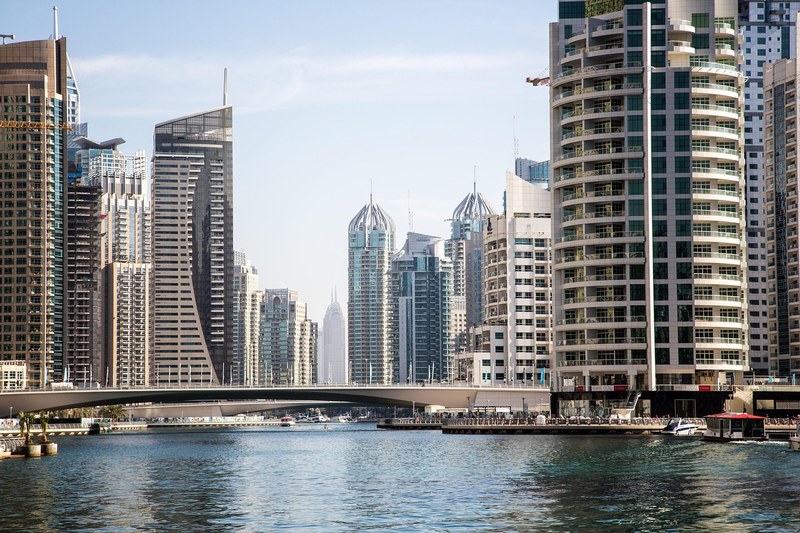
Dubai first opened 23 freehold areas to foreigners in 2006. Well-known ones include:
- Dubai Marina
- Palm Jumeirah
- The Emirates Hills communities
- Jebel Ali and Palm Jebel Ali
- Al Barsha South
- The World Islands
More areas have been added since. In practice, most of the new communities you see advertised to foreigners are freehold.
Most freehold homes in Dubai are apartments, from small studios to penthouses. There are also townhouses and villas in gated communities.
Tip: Ask the seller or agent for the title deed and check it in the DLD’s Dubai REST app. It’s the DLD’s official app for title deeds, sales and checking agents.
Abu Dhabi
Abu Dhabi has allowed foreigners to own freehold property in its investment zones since April 2019. Before that, foreigners could only get long leases. Popular zones include:
- Al Reem Island
- Yas Island
- Saadiyat Island
- Al Raha Beach
- Al Reef
- Masdar City
- Al Maryah Island
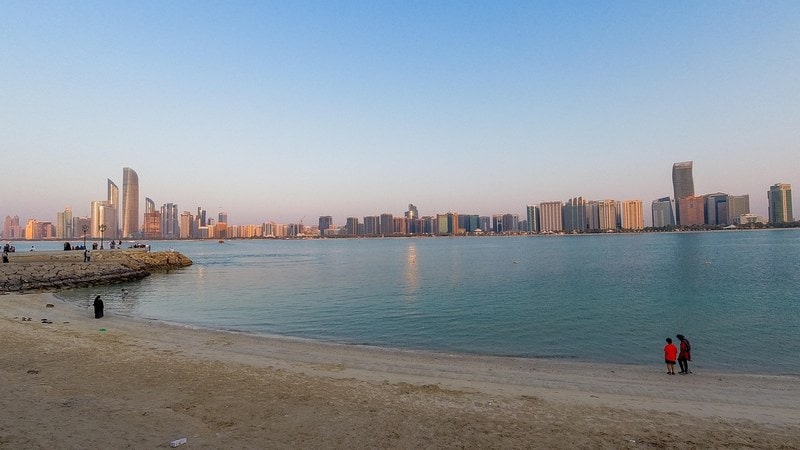
Abu Dhabi’s market is smaller and calmer than Dubai’s. Musataha titles are also more common there, so check on DARI whether a unit is freehold or Musataha before you negotiate.
Off-Plan vs Ready Property
Off-plan means buying a property from the developer before it’s built, while a ready property is finished and you can move in on the day you buy it. Developers push off-plan hard, with small deposits, long payment plans and fee discounts.
Off-Plan
When you buy off-plan in Dubai, your money doesn’t go straight to the developer. It goes into an escrow account, which is a bank account for that one project. The bank only pays the developer as construction reaches set stages, and it keeps 5% for one year after completion to pay for any defects.


Before buying off-plan, understand what’s different:
- Registration: The sale is registered with the DLD within 90 days of signing, in a system called Oqood. The 4% DLD fee still applies.
- Mortgage limit: Banks can lend at most 50% of the price on an off-plan property.
- Delays: Handover dates often slip. Contracts usually give the developer extra time, and getting compensation is hard.
- Payment plans: You usually pay a deposit when you sign, then instalments during construction, then the rest at handover. That’s when a mortgage would start.
Tip: Only pay into the escrow account number written in your contract. Never pay into an agent’s account or a developer’s general account.
Ready
With a ready property, you see exactly what you’re buying, you get the keys on the day of transfer, and you can rent it out straight away. For a resale unit, you can also check the building’s service charges (annual building fees) before you commit.
The downside is money. There’s no payment plan, so you pay the full price on transfer day, from savings or with a mortgage.
Community Input: In the expat forums, the advice is consistent. Treat off-plan as a longer and riskier bet, plan for a late handover, and look at how the developer’s past projects turned out, not how nice the show apartment is.
How to Find a Property
Most buyers in the UAE find a property through a licensed agent or a property website. In Dubai, every advertised listing needs a DLD permit you can check.
Agents
In Dubai, property agents must be registered with RERA and carry a broker card. You can look up an agent and their office’s rating in the Dubai REST app.
The buyer usually pays the agent 2% of the price plus VAT, but you can negotiate it. When you buy off-plan directly from a developer, the developer normally pays the agent.
You can find a broker in three places:
- Dubai REST app: Search licensed brokers and brokerage offices, with their DLD rating. This is also where you check an agent someone recommended to you.
- Property portals: Every listing shows the agent and agency, and the big portals have an agent directory (Property Finder’s is called Find Agents).
- Recommendations: Colleagues and friends who’ve bought recently. Check their agent’s broker card on Dubai REST anyway.
Pick an agent who works in the area you’re looking at. Someone who sells in Dubai Marina every week knows which buildings have high service charges and what units there really sell for.
Online
Most resale homes in Dubai and Abu Dhabi are listed on a few big property websites:
- Property Finder: One of the two biggest UAE portals, with an agent directory, transaction data and a mortgage calculator.
- Bayut: The other big portal, owned by Dubizzle Group, with similar coverage.
- dubizzle: The UAE’s main classifieds site, which also has a property section.
Use them to learn prices before you talk to anyone. Every Dubai listing should show a QR code, called Madmoun, that you can scan to check the ad is approved. No code, or a code that doesn’t match the unit, is a warning sign.
Checks Before You Buy
These free checks catch most problems:
- Owner: Make sure the seller is the registered owner, and check whether there’s a mortgage on the property (Dubai REST or DARI).
- Service charges: Look up the approved yearly fee for the building on the DLD’s Service Charge Index.
- Developer: For off-plan, check the project is registered, has an escrow account, and how the developer’s past projects were delivered.
- Unpaid fees: Ask the seller to prove service charges are paid. The developer won’t approve the sale if they aren’t.
The Buying Process
Buying a resale property in Dubai usually takes a few weeks if you pay cash, and longer with a mortgage. Here’s how it works step by step. If you buy off-plan, you sign directly with the developer and skip most of this.
Step 1: Agree on the Price
Negotiate through your agent. Get the price, deposit, transfer date and anything included (furniture, appliances, parking) in writing.
How much you can knock off depends on the market. In mid-2026, brokers told AGBI that properties in some parts of Dubai were selling for up to 20% below the asking price, after prices had risen nearly 60% between 2022 and 2025.
When the market is hot, there’s much less room. Developers selling off-plan rarely cut the price, but often offer payment plans or cover some fees instead.
Tip: Before you make an offer, check what similar units have actually sold for. The DLD’s Dubai REST app has a sale index based on registered sales, which is a better guide than asking prices on the portals.
If you need a mortgage, get pre-approval from a bank before you make an offer. That way you know how much you can borrow.
Step 2: Sign Form F and Pay a Deposit
Form F is Dubai’s standard sale contract, sometimes called the MOU. The buyer, the seller and the agents sign it. It sets out the price, the timeline and what happens if someone pulls out.
The buyer usually gives a deposit cheque for 10% of the price. The agency or a trustee holds it until the transfer.
Step 3: Get the NOC and Your Mortgage
The seller needs a no-objection certificate (NOC) from the developer. It confirms there are no unpaid service charges, and it’s issued online through Dubai REST.
If you’re taking a mortgage, the bank values the property at this stage and gives you its final loan offer.
Step 4: Transfer Day
The buyer, the seller and any banks meet at a Real Estate Registration Trustee office, a DLD-approved office that handles transfers. If you can’t be there, someone can go for you with a power of attorney.
On the day:
- Payment: You hand over manager’s cheques (bank cheques) for the price and the fees.
- Registration: The trustee registers the sale. The DLD lists this as a 25-minute service.
- Title deed: Your new title deed is issued electronically.
- Seller’s mortgage: If the seller still owes a bank, it gets paid off at the same appointment.
Buying in Abu Dhabi
In Abu Dhabi, the process runs online through DARI. The seller starts the sale on the platform and enters the price and who pays the fee.
The buyer then confirms and pays in the app, and the title deed is issued. You can also book an appointment at a government service centre.
Fees at Transfer
Buying a resale property in Dubai costs about 6% to 7% of the price in fees, mostly the 4% DLD fee. A mortgage adds more.
The DLD’s official fee list splits the 4% between both sides, “Seller: 2% of the sale value” and “Buyer: 2% of the sale value”. In practice, the buyer usually pays all 4%. Check your Form F to see what you’ve agreed.
| Fee | Amount | Paid to |
|---|---|---|
| DLD transfer fee | 4% of the price (officially 2% buyer, 2% seller) | Dubai Land Department |
| Trustee office fee | AED4,000 plus VAT (AED2,000 plus VAT under AED500,000) | Registration trustee |
| Title deed and map | AED250 title deed plus up to about AED500 in map and admin fees | Dubai Land Department |
| Agent commission | Usually 2% of the price plus 5% VAT (negotiable) | Buyer’s agent |
| Mortgage registration | 0.25% of the loan amount plus AED270 in title deed and admin fees | Dubai Land Department |
| Mortgage trustee fee | AED4,000 plus VAT | Registration trustee |
| Bank fees | Arrangement and valuation fees set by each bank | Your bank |
Abu Dhabi is cheaper. According to DARI, the fee is “2% of the valuation or selling price, whichever is higher”, or 1% for a Musataha property. Buyer and seller agree on who pays it.
| Fee | Amount |
|---|---|
| Registration fee (freehold) | 2% of the price or official valuation, whichever is higher |
| Registration fee (Musataha) | 1% of the price or official valuation, whichever is higher |
| Agent commission | Usually 2% of the price plus VAT (negotiable) |
Example
Say you buy a ready AED1.5 million (about US$408,000) apartment in Dubai with cash, using an agent. You’ll pay about AED96,000 in fees:
- DLD fee: AED60,000 (4%)
- Trustee office: AED4,200 including VAT
- Agent: AED31,500 including VAT
- Title deed and map: a few hundred dirhams
If you buy the same flat with an 80% mortgage (AED1.2 million), you also need:
- Down payment: AED300,000
- Mortgage registration: about AED3,300
- Mortgage trustee: AED4,200 including VAT
- Bank fees: arrangement and valuation fees, set by your bank
That’s a little over AED400,000 (about US$109,000) in cash on day one. None of the fees can be added to the loan.
After Buying
Once you own a property in the UAE, you pay yearly service charges and utilities, but there’s no annual property tax in Dubai or Abu Dhabi. If you rent it out, you need to register the rental.
Service Charges
Service charges are yearly fees you pay to the building or community for security, cleaning, the pool, the gym and repairs. In Dubai, RERA approves each building’s rate and publishes it on the Service Charge Index.
Service charges are set per square foot of your unit, and they vary a lot. Typical yearly rates in Dubai, according to Luxhabitat’s 2026 guide:
- Apartments: AED10 to AED30 per sq ft
- Villas: AED2 to AED6 per sq ft
- Branded and ultra-luxury residences: AED40 to AED60 or more per sq ft
By area, Dubai Marina averages around AED16 per sq ft and Downtown Dubai around AED21, with some Downtown towers far higher.
As a rough guide, a 1,000 sq ft apartment at AED15 per sq ft costs AED15,000 a year. On an AED1.5 million flat, that’s about 1% of the price every year. If you rent it out for AED90,000 a year, service charges take about 17% of the rent.
Community Input: Owners in the expat forums often say service charges were the cost they most underestimated. Check the exact figure for the building before you agree on a price.
Insurance and Utilities
Service charges usually cover insurance for the building itself, but not your furniture or anything you’ve added. If you have a mortgage, banks usually require life insurance, and often property insurance too.

Electricity and water (DEWA in Dubai) come on top. Some buildings also charge separately for air conditioning, called chiller or district cooling fees.
Renting It Out
You can rent your property out long-term or as a holiday home:
- Long-term: Register the tenancy contract through Ejari, Dubai’s official rental registration system run by the DLD.
- Holiday home: Short-term lets are licensed separately by Dubai’s Department of Economy and Tourism.
Many owners who live abroad hand both jobs to a property management company.
Read more: Recommended Real Estate Management Companies
Wills and Inheritance
Since 2023, when a non-Muslim foreigner living in the UAE dies without a will, their estate follows a new civil law for non-Muslims instead of Islamic (Sharia) inheritance rules. According to law firm Withers, the law is still new and untested, and it’s less clear how it applies to owners who don’t live in the UAE.
The safer option is to register a will in the UAE. Non-Muslims can do this with the DIFC Wills Service in Dubai, the Abu Dhabi Judicial Department, or the ADGM courts. If you own the property together with a Muslim, Sharia rules still apply.
Tip: A will from your home country may not be enough for UAE property. Register a UAE will for your property here, and make sure it doesn’t clash with your will at home.
Selling Your Property Later
If you own a UAE home personally and sell it, you pay no capital gains tax in the UAE. The Federal Tax Authority says an individual’s property income “is not subject to Corporate Tax, regardless of the amount”, as long as you don’t need a business licence for it. (Verified September 2026.)
Your home country may still tax the profit, so check before you sell. The UAE has no limits on moving money abroad, so you can send the sale money home freely.
Selling works like buying in reverse:
- List the property with an agent.
- Sign Form F with the buyer.
- Get the developer’s NOC (pay any unpaid service charges first).
- Pay off your mortgage on transfer day.
The buyer normally pays the 4% DLD fee. Still, with fees on the way in and out, selling quickly rarely makes money unless prices have gone up a lot.
Community Input: Forum users generally advise holding for the long term rather than flipping.
Mortgages for Expats
An expat can borrow up to 80% of the price for a first home worth AED5 million or less, so you need at least a 20% down payment. These are the maximums set by the Central Bank of the UAE, and banks can lend less. (Verified September 2026.)
| Rule | Limit for expats |
|---|---|
| First home, AED5 million or less | Borrow up to 80% (at least 20% down) |
| First home, over AED5 million | Borrow up to 70% (at least 30% down) |
| Second home or investment property | Borrow up to 60% (at least 40% down) |
| Off-plan property | Borrow up to 50% |
| Loan length | Up to 25 years |
| Monthly debt payments | Up to 50% of your income, all loans combined |
| Loan size | Up to 7 times your yearly income |
A few more rules affect how much you can borrow:
- Rate test: Banks check you could still pay if the interest rate went up by 2 to 4 percentage points.
- Your own money: The down payment has to come from your savings, not from a personal loan or credit card.
- Fees in cash: The purchase fees (about 6% to 7%) can’t be added to the loan.
- Age: Each bank sets a maximum age for when the loan ends. If the loan runs past retirement, the bank has to check you can keep paying.
Banks also look at how long you’ve been in your job and your record with the Al Etihad Credit Bureau, the UAE’s credit reporting agency.
Tip: Most big UAE banks lend to expats who live in the UAE. Emirates NBD, for example, finances up to 80% of the value for expats earning at least AED15,000 a month. First Abu Dhabi Bank (FAB), Mashreq and HSBC also offer expat mortgages, so compare several before you choose.
Non-Residents
Several UAE banks lend to people who don’t live in the UAE, but you’ll borrow less than a resident and need more paperwork about your foreign income. Banks offering non-resident mortgages include:
- Emirates NBD: Home loans for non-residents, with a minimum salary of AED15,000 a month.
- First Abu Dhabi Bank (FAB): Non-resident mortgages of up to AED10 million.
- Mashreq: Up to AED10 million over up to 25 years. Its FAQ says it lends up to 50% of the property’s value to non-residents.
- HSBC: Up to 60% of the property’s value, aimed at its Premier and Private Bank customers.
Each bank only lends to citizens or residents of certain countries, so check yours is on the list. Some buyers borrow in their home country instead, against a property they already own.
Read more:
Using a Mortgage Broker
Interest rates, fees and rules vary a lot between UAE banks. A mortgage broker compares them for you and handles the paperwork. Brokers are usually paid by the bank, but ask how they’re paid and which banks they work with.
Community Input: In the expat forums, getting pre-approved through a broker before you start viewing properties is standard advice, especially if you’re new to the UAE.
Tip: Compare the total cost of the loan over its full length, not just the starting interest rate.
Does Buying Property Get You Residency?
Yes, owning property in Dubai can get you a two-year investor visa at any property value if you’re the only owner, or a 10-year Golden Visa if the property is worth at least AED2 million (about US$545,000). The two-year visa rules changed in April 2026, when Dubai dropped the old AED750,000 minimum. (Verified September 2026.)
| Visa | Property needed | Length | Government fee (main applicant) |
|---|---|---|---|
| Investor visa | Any value if you’re the only owner. If you own it with others, your share must be worth at least AED400,000 | 2 years, renewable | AED10,212.50 |
| Golden Visa | Property worth at least AED2 million when bought (one or several properties) | 10 years, renewable | AED9,884.75 |
Two-Year Investor Visa
The DLD’s investor visa page now says an owner can apply “regardless of the property value”. If you own the property with other people, each person’s share must be worth at least AED400,000.
You apply in person at a DLD Cube centre with your title deed and a Dubai police good conduct certificate. You can sponsor your spouse and children.
Golden Visa
The Golden Visa for property investors needs property worth at least AED2 million when you bought it. It can be several properties added together.
Here’s what else to know:
- Mortgages: A mortgaged property is accepted with a no-objection letter from your bank. The DLD’s page is unclear on how much of the loan must be paid off, so confirm with the Cube centre first.
- Time abroad: You can spend long periods outside the UAE without losing the visa.
- Family: You can sponsor your family, who need health insurance.
- Selling: You can’t sell the property while you hold the visa, because a lien (a legal hold) is placed on it.
Read more:
Retirees have another option. Gulf News reports a five-year retirement visa for people aged 55 and over who own property worth at least AED1 million. Abu Dhabi also offers property-linked Golden Visas, so check with the Abu Dhabi authorities if you buy there.
Common Mistakes and Pitfalls
The most common mistake is budgeting for the price and the 4% DLD fee, and forgetting everything else. In the expat forums, the usual advice is to set aside about 7% of the price for fees, and to include service charges in your budget from the start.
Other mistakes to avoid:
- Paying outside escrow: Off-plan payments should only go into the project’s escrow account.
- Trusting the handover date: Plan your money and your current lease around a later date.
- Skipping the snagging check: Before accepting a new home, hire an independent snagging company to find faults like plumbing, electrical and finishing problems. The developer has to fix what’s on record.
- Buying just under a visa limit: A AED1.95 million flat won’t get you a Golden Visa. What counts is the value on your title deed, not the asking price.
- Borrowing too much: Make sure you could still afford the payment if rates went up.
- Buying to flip: With about 7% in fees to buy, prices have to rise a lot before a quick sale makes money.
- No UAE will: Register one so your property goes to the people you choose.
Tip: Before you sign Form F, ask your agent to show you the property’s title, the building’s service charges and, for off-plan, the escrow account, all in the DLD’s official app, not in a brochure.
FAQ
Can I buy property in the UAE without a residence visa?
Yes. Foreigners can buy in Dubai’s freehold areas and Abu Dhabi’s investment zones with just a passport. You only need to think about residency if you want a property visa afterwards.
Is it better to buy or rent in Dubai?
It mostly depends on how long you’ll stay. Buying costs about 7% in fees, so forum users generally say renting makes more sense if you’re staying less than about five years. Buying starts to make sense for longer stays.
Is there property tax in Dubai?
No, there’s no yearly property tax on owning a home in Dubai or Abu Dhabi. Individuals also pay no UAE tax on rent or profit from a property they own personally. You pay the one-off transfer fee and the yearly service charges.
Can I buy property through a company?
Yes, but it costs more and is more complicated. If the company’s owners change later, Dubai can treat that as a new sale and charge the 4% fee again. Rent earned through a company can also fall under UAE corporate tax.
How long does a property transfer take in Dubai?
The registration at the trustee office takes about 25 minutes, according to the DLD. The whole process, from signing Form F to getting the title deed, usually takes a few weeks with cash and longer with a mortgage.
Can I get a mortgage for an off-plan property?
Yes, but banks can lend at most 50% of the price. Most buyers pay the construction instalments themselves and take a mortgage at handover.
Sources Cited
- Central Bank of the UAE, Regulations Regarding Mortgage Loans (Circular 31/2013): loan-to-value limits, 25-year term, 50% debt ratio, 7x income cap, stress test.
- Central Bank of the UAE, Resolution No. 31/2/2020: 80% and 70% first-home limits for expats.
- Central Bank of the UAE, exchange rates June 2026: AED3.6725 to US$1.
- Dubai Land Department, Property Sale Registration: 2% plus 2% transfer fee, title deed and trustee fees, developer e-NOC, service time.
- Dubai Land Department, Initial Sale Registration (Oqood): off-plan registration fee and 90-day deadline.
- Dubai Land Department, Mortgage Registration: 0.25% of the loan and trustee fee.
- Dubai Land Department, Investor Residence Application: two-year visa rules and fees.
- Dubai Land Department, Golden Visa Application for Investors: AED2 million threshold, 10-year length, fees.
- GDRFA Dubai, Golden Residence Permit for Investors: mortgaged property, joint ownership, lien on the property.
- Dubai Land Department, FAQ: escrow law (Law No. 8 of 2007), 5% retention, freehold ownership under Law No. 7 of 2006.
- Dubai Regulation No. 3 of 2006: original freehold areas for foreigners.
- DARI (ADREC), Sell Property guide: Abu Dhabi 2% and 1% fees.
- Federal Tax Authority, Real Estate Investment for Natural Persons guide: no corporate tax on individuals’ property income.
- Withers, Estate Planning for Non-Muslims in the UAE: inheritance under Federal Decree-Law No. 41 of 2022.
- Afridi and Angell, Real Estate Ownership Rules for Foreigners: Abu Dhabi Law No. 13 of 2019 and investment zones.
- Gulf News, Dubai property visa guide 2026: retirement visa property route.
- AGBI, Dubai property rally fades as buyers secure discounts (June 2026): up to 20% below asking, nearly 60% price rise 2022-2025.
- Luxhabitat, Dubai Service Charges Guide 2026: service charge ranges per sq ft.
- Emirates NBD, Home Loans for Expatriates: up to 80% financing, AED15,000 minimum salary, non-resident loans.
- FAB, Mortgages for Non-UAE Residents: loans up to AED10 million.
- Mashreq, Home Loans for Non-Residents: up to AED10 million, 25 years, 50% LTV (FAQ).
- HSBC UAE, Non-Resident Mortgages: up to 60% of value.