This article will take approximately 22 minutes to read. Don't have the time right now? No worries. Email the ad-free version of the article to yourself and read it later!
Home insurance in Panama comes in two pieces. A fire policy covers the walls and roof, and a contents policy covers your things.
Here’s what each pays for, what a condo’s building policy leaves to you, and how quake and flood cover work.
Most expats first meet home insurance here when a bank makes them buy it. The mortgage lender wants a fire policy on the structure. That’s it. Your sofa, your laptop and the leak from the apartment upstairs aren’t on it.
Then the magnitude 7.7 earthquake on 9 October 2026 raised a more pressing question. Would your policy pay for quake damage? It depends on which policy you hold and what was ticked on it. We went through the policy wording from MAPFRE and ASSA, two of the biggest home insurers in Panama, plus the 2022 condo law, so you know what to look for in yours.
Disclaimer: This article may include links to products or services offered by ExpatDen's partners, which give us commissions when you click on them. Although this may influence how they appear in the text, we only recommend solutions that we would use in your situation. Read more in our Advertising Disclosure.
Contents
- Key Takeaways
- How Home Insurance Works in Panama
- Do Renters Need Insurance?
- What Condo Owners Need
- What House Owners Need
- What a Contents Policy Covers
- Earthquake Cover
- Flood and Rain Damage
- How Much Home Insurance Costs in Panama
- How to Buy a Policy
- How to Make a Claim
- Common Mistakes
- Frequently Asked Questions
- Is home insurance compulsory in Panama?
- Does renters insurance exist in Panama?
- Does my condo's insurance cover earthquake damage inside my apartment?
- How much is the earthquake deductible?
- Can a foreigner buy home insurance in Panama?
- Does the personal accident cover in a home policy replace health insurance?
- Where can I complain about a home insurance claim?
- Sources Cited
Key Takeaways
- Panama sells two separate policies, a fire policy for the structure and a contents policy for your belongings.
- Renting? You only need contents cover.
- Condo owners already pay for building insurance (fire, earthquake and claims from outsiders) through the monthly fee. Everything inside your own apartment is yours to insure.
- A basic fire policy on a structure leaves out earthquake unless you add it. MAPFRE’s and ASSA’s contents policies include it as standard.
- The earthquake deductible is 2% of the amount insured, minimum US$250. On a US$150,000 house policy, you pay the first US$3,000.
- Rain blowing in through a window isn’t “flood”.
- Insurers don’t publish home premiums, so get a quote from a broker or the insurer.
How Home Insurance Works in Panama
Home insurance in Panama is sold as two separate products, a fire policy for the structure and a contents policy for what’s inside. You can hold one or both. They’re often bought at different times from different companies.
- Fire policy (seguro de incendio): covers the building against fire, lightning, explosion and a vehicle crashing into it. At MAPFRE, earthquake, windstorm, flood and riot are extras. ASSA’s version covers walls, roofs and fixed parts, with earthquake as an add-on.
- Contents policy (seguro de hogar, sometimes called multipóliza residencial): MAPFRE Hogar and ASSA Hogar both cover your furniture, appliances and personal things in a house or an apartment. Theft, family liability, broken glass and emergency call-outs like a plumber or locksmith come bundled in.
Every amount in these policies is in balboas (B/.), which trade one to one with the US dollar. We’ve written them as US$ here.
Pan-American Life, a big name in Panama, doesn’t sell home insurance there. Its Panama site offers health, life and personal accident cover to individuals and nothing for your house. So if your health insurance in Panama is with them, you’ll need a different company for the home.
Do Renters Need Insurance?
Renters in Panama need a contents policy, because the landlord’s insurance covers the building and none of your things. Say you rent a two-bedroom in a Panama City condo and it gets burgled. Neither the landlord’s fire policy nor the building’s policy will replace your laptop.
You don’t have to own the place to buy one. ASSA’s Hogar policy covers the insured person’s belongings in a house or apartment, owned or rented.
Liability cover matters more when you rent. MAPFRE’s family liability pays for injuries to other people and damage to their property, like the apartment below when your washing machine floods it. It doesn’t cover damage to the place you’re renting.
Fire is the exception. MAPFRE adds liability for fire damage to a rented home, so a kitchen fire in your rental is covered. A burst hose that ruins the landlord’s floors may not be.
Tip: Before you sign a lease, ask the landlord whether the building is insured and who pays the deductible after a building claim. It takes one email, and it saves an argument after a storm.
Read more: Renting an Apartment in Panama City
What Condo Owners Need
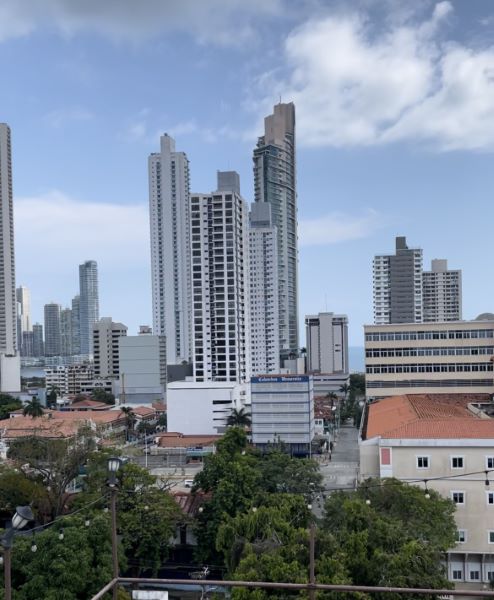
Condo owners in Panama already pay for building insurance through their monthly fee. The 2022 condo law makes every owner chip in to insure the building against fire, earthquake and claims from outsiders. That policy protects the building. It doesn’t protect your belongings, and it won’t pay when you flood your neighbour.
What the Building Policy Covers
A Panama condo’s building policy should cover the whole building against fire, earthquake, fire caused by an earthquake, and claims from outsiders. Your share of the premium follows the same percentage as your condo fees. (Verified October 2026.)
After a disaster, the payout goes to rebuilding if the owners vote for it. They can vote to demolish or sell instead, but that takes owners holding 75% of the units and 75% of the building’s value. Then the money is split by how much premium each owner paid, and a mortgage lender gets paid first from that owner’s share.
What’s Left to You
Your own belongings and any damage you cause are your responsibility. Each owner answers for damage to shared areas, other apartments or other people. The law lets you keep your own policy on the unit with liability cover, and asks you to give the administrator a copy at each renewal, but it doesn’t force you to buy one.
- Your contents: furniture, electronics, clothes, jewellery. None of it is on the building policy.
- Damage you cause: a leak from your bathroom into the unit below is your bill. A contents policy with family liability pays it.
- The building deductible: the building policy has one too, and owners cover it through the fee or a special assessment.
How to Check the Building’s Policy
Ask the building administrator for the current policy and its schedule. In Spanish the schedule is the condiciones particulares, the pages that list the amounts insured and the deductibles. Look for:
- Earthquake actually listed on it.
- An insured amount that looks like a realistic rebuild cost.
- The renewal date.
The developer has to hand the building’s insurance policies to the owners’ board, so a well-run building should have them on file.
Read more: Buying Property in Panama as a Foreigner

What House Owners Need
House owners in Panama need both policies, a fire policy on the structure and a contents policy on what’s inside. Nobody else is insuring your walls. If you have a mortgage, the bank will make you buy the fire policy anyway.
Panamanian banks treat fire and life insurance as compulsory on a mortgage. You can pay for the bank’s own cover in your monthly payment, or buy a policy from another insurer and endorse it to the bank. MAPFRE’s fire insurance page says its policy can serve as a mortgage guarantee.
Bank-arranged fire cover can be thin. MAPFRE’s standard fire conditions exclude earthquake, so quake damage is only covered if someone added it as extended cover. If the bank set up your policy, ask for the schedule and look for the word terremoto.
Own a house on a hillside outside Boquete? ASSA excludes landslides from its water damage cover and sells landslide cover only as an optional extra, after an inspection. If you’re retiring in Panama to a house on a slope, ask for it by name.
If You Rent the House Out
Landlords can add two covers to an ASSA multi-risk policy:
- Loss of rent: pays the rent you lose while the house can’t be lived in after a covered claim, up to 10% of the amount insured.
- Landlord liability: covers damage the property causes your tenant. It’s optional, with a deductible of 10% of the loss and a US$250 minimum.
What a Contents Policy Covers
A contents policy from MAPFRE or ASSA covers fire, explosion, earthquake, windstorm, flood, burglary and family liability, among other perils. The two read alike on paper. The limits are where they differ.
| Cover | MAPFRE Hogar | ASSA Hogar |
|---|---|---|
| Fire, lightning, explosion | Included, up to the contents limit | Included, 100% of the amount insured |
| Earthquake | Included (damage caused directly by earthquake, tremor or volcanic eruption) | Included, 100% of the amount insured |
| Hurricane and windstorm | Included | Included, 100% of the amount insured |
| Flood | Included (overflowing rivers, sea, sewers, dams) | Included, 100% of the amount insured |
| Rain leaking in through windows or roofs | Sub-limit of 10% of the amount insured, max US$5,000, US$500 deductible | Optional extra, up to 20% of the contents amount |
| Burglary | Forced entry or armed robbery only; cash max US$500; jewellery US$1,000 per item and US$5,000 a year | Forced entry and robbery; jewellery 15% of the amount insured, max US$5,000 |
| Hotel and meals after a claim | Hotel up to US$150 a night and meals up to US$100 a day, 5 days each; US$5,000 a year in total | 10% of the amount insured, max US$5,000 a year |
| Glass breakage | 10% of the limit, max US$5,000 | 10% of the amount insured |
MAPFRE’s burglary cover only pays for theft with visible signs of forced entry, or for an armed robbery. Your home also needs at least two security measures from its list, such as window bars, a security door, an alarm, a fenced perimeter or a guard. If they turn out to be missing, the forced-entry cover is void.
So check the security before you sign a lease or buy. Our guide on whether Panama is safe covers which areas and habits matter.
Earthquake Cover
Earthquake cover in Panama is standard in MAPFRE’s and ASSA’s contents policies but an add-on for a fire policy on the structure. Every quake claim also carries a percentage deductible, and on a house that can run into thousands of dollars.
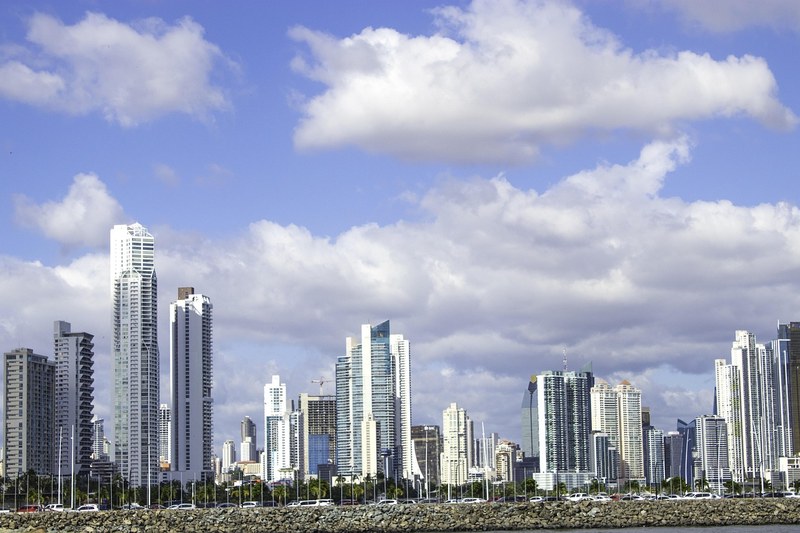
On 9 October 2026, the US Geological Survey recorded a magnitude 7.7 earthquake near Pitaloza Arriba at 12:56 pm local time. It estimated that about 4.6 million people felt moderate to severe shaking, and warned of aftershocks. Panama sits where several tectonic plates meet. The region also had a 7.5 in 1934 and a 7.2 in 1962.
Which Policies Include It
Contents policies include earthquake as standard, and structure policies usually need it added.
- Contents policies: MAPFRE Hogar and ASSA Hogar both include earthquake. ASSA’s also covers fire caused by a quake.
- Fire policies on the structure: MAPFRE excludes earthquakes, tremors and volcanic eruptions unless quake is added as extended cover. At ASSA, earthquake is an additional cover you choose.
- Condo buildings: the condo law expects the building policy to include it.
How the Earthquake Deductible Works
The earthquake deductible on MAPFRE and ASSA home policies is 2% of the amount insured, with a minimum of US$250 and a maximum of US$150,000. It applies separately to the building and to the contents, and again for each 48-hour period. (Verified October 2026.)
| Amount insured | Deductible per quake event |
|---|---|
| US$10,000 of contents | US$250 (the minimum applies) |
| US$30,000 of contents | US$600 |
| US$150,000 house structure | US$3,000 |
| US$300,000 house structure | US$6,000 |
The 2% comes off the amount insured, not the damage. A US$2,500 crack repair on a US$150,000 house policy gets you nothing. Insure the house and its contents, and one quake can cost you two deductibles.
Aftershocks are where the 48 hours count. All shaking damage within one 48-hour window is one event with one deductible. A strong aftershock on day four starts a new one.
What Quake Cover Leaves Out
Some damage after an earthquake isn’t paid even when you have quake cover.
- Flooding or a tsunami set off by the quake: ASSA’s quake cover excludes storm surge and flooding, whatever caused them.
- Electronics on a separate schedule: MAPFRE Hogar’s electronic equipment section leaves out earthquake, even though the main contents cover includes it.
- A cracked building: MAPFRE’s fire policy suspends all cover once the building sinks, cracks or collapses in a way that makes it riskier than before. Report structural damage straight away and get it inspected.
Tip: After a quake, photograph every crack and damaged item before you clean up, and tell your insurer the same day. MAPFRE wants a detailed written report and an inventory of the damage within 15 days.
Flood and Rain Damage
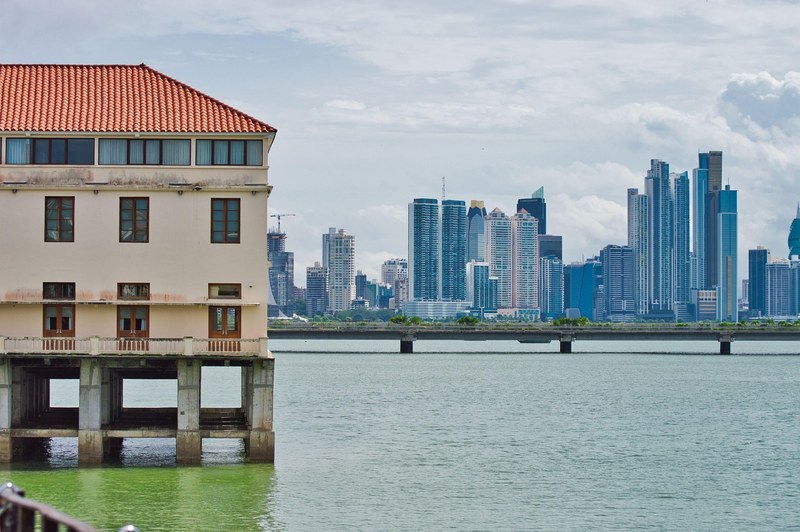
Flood cover in a Panamanian home policy means water from overflowing rivers, lakes, the sea, aqueducts or sewers, or a burst dam. Rain coming in through a window, a balcony door or a leaky roof doesn’t count. It’s excluded unless you buy an extra.
In a country with a long rainy season, that’s the gap you’re most likely to hit. ASSA’s water damage cover excludes water coming through openings in bad weather. Humidity, condensation and poor maintenance are out too.
ASSA sells rain-leak cover (goteo y/o filtración) as an extra. It pays up to 20% of the contents amount, with a deductible of 10% of the loss and a US$1,000 minimum. MAPFRE Hogar includes a smaller version: up to 10% of the amount insured, capped at US$5,000, with a US$500 deductible.
Burst pipes are different. Both insurers cover sudden water damage from a broken pipe or tank. ASSA even pays to open up the wall to find the leak, though not for the new pipe.
| Type of loss | Deductible |
|---|---|
| Flood or sea surge | 1% of the amount insured, minimum US$250, maximum US$100,000 |
| Water damage from burst pipes or tanks | 1% of the amount insured, minimum US$250, maximum US$25,000 |
| Rain leaks (ASSA optional cover) | 10% of the loss, minimum US$1,000 |
| Rain leaks (MAPFRE Hogar sub-limit) | US$500 |
Ask about flooding when you pick the place, before insurance even comes up. Our guide to the best places to live in Panama is a good start.
How Much Home Insurance Costs in Panama
Home insurance premiums in Panama aren’t published. MAPFRE and ASSA both send you to a quote form or a broker, and the insurance regulator doesn’t publish typical prices either. We didn’t put anyone’s personal details into a quote form, so we can’t give you a verified price.
Some realtor blogs float rough figures, but none say where they come from, so we’ve left them out. Get a quote. A broker can usually pull prices from several insurers at once.
Your price moves with things you control:
- The amount you insure: the premium and the quake deductible both scale with it.
- Add-ons: ASSA charges extra for rain leaks, landslides, landlord liability and higher limits on valuables. Earthquake on a structure policy is extra too.
- Security: bars, an alarm or a guard decide whether MAPFRE’s burglary cover applies at all.
- Your deductible: ask whether a higher one brings the premium down.
The deductibles are the cost you can pin down today. A renter with US$30,000 of contents pays the first US$600 of a quake claim and the first US$300 of a flood claim. Budget for those next to the premium, and use our cost of living in Panama guide for the rest.
How to Buy a Policy
You can buy home insurance in Panama from an insurer, through your bank or through a broker:
- Straight from the insurer: MAPFRE takes calls and WhatsApp messages.
- Through your bank: an option if you have a mortgage.
- Through a licensed broker: ASSA sends questions to your broker first.
Work out how much to insure before you ask for a quote. ASSA’s brochure keeps it simple. List everything in the home, put a value on each item and add it up.
Get the structure amount right, because underinsuring cuts the payout. MAPFRE and ASSA both apply a proportional rule. Insure a US$200,000 house for US$100,000 and you’re treated as your own insurer for the other half, so a US$40,000 loss pays about US$20,000 before the deductible.
Contents are different at ASSA. It insures them on a “first loss” basis, so the proportional rule doesn’t apply to them.
Payouts use real value, which ASSA defines as the cost of new minus depreciation for age, wear and condition. A five-year-old TV gets paid out as a five-year-old TV unless your policy says otherwise.
How to Make a Claim
To claim on home insurance in Panama, tell your insurer straight away, stop the damage getting worse, and send a written report with an inventory of what was lost. MAPFRE gives you 15 days from the loss for the report, the inventory and a list of any other policies on the same property.
If the insurer says no or offers too little, the insurance regulator, the Superintendencia de Seguros y Reaseguros, runs a complaints process:
- Complain to the insurer first: write to its dispute officer (Ejecutivo de Controversias) with your claim number, the date of the loss and your documents. The insurer has 30 calendar days to answer in writing.
- Go to the regulator: unhappy with the answer, or got none? You have up to 90 business days to file a complaint with the Superintendencia de Seguros y Reaseguros.
- Conciliation, then a decision: the regulator sets a hearing to settle it. If that fails, it issues a binding decision.
Keep a stamped copy of your letter to the insurer. The regulator wants proof you took the first step. (Verified October 2026.)
Common Mistakes
The most common gap in Panama is no home cover at all beyond what a bank demands. After an explosion at the Costamare tower in Costa Sur in 2019, the insurance superintendent at the time told Panamá América that fire, contents and liability policies were among the least sold in the country. People mostly bought them, the paper reported, when someone required it.
- Assuming the condo policy covers your apartment: it covers the building. Your belongings and damage to neighbours are on you.
- Taking the bank’s fire policy on trust: it can leave out earthquake. Look for “terremoto” on the schedule.
- Underinsuring the structure: the proportional rule shrinks the payout.
- Counting rain as flood: it isn’t.
- Skipping the security conditions: no bars, alarm or guard can mean no burglary payout.
- Leaving valuables on the standard limits: US$5,000 a year for jewellery won’t go far.
- Waiting to report quake cracks: a cracked building can suspend a fire policy until it’s assessed.
Tip: Keep photos of every room, and receipts for anything expensive, in cloud storage. If the apartment is damaged, your phone might be the only inventory you have left.
Thinking about the bigger move? Start with our guide to moving to Panama.
Frequently Asked Questions
Is home insurance compulsory in Panama?
No, unless you have a mortgage. Banks require fire insurance on the property, and condo owners pay for the building’s policy through their fees. Contents insurance is always optional.
Does renters insurance exist in Panama?
Yes, as a contents policy. MAPFRE Hogar and ASSA Hogar cover your belongings in a house or apartment, whether you own it or rent it.
Does my condo’s insurance cover earthquake damage inside my apartment?
Not your belongings. The building policy covers the structure and shared parts against fire, earthquake and claims from outsiders. Your furniture and electronics need your own contents policy.
How much is the earthquake deductible?
MAPFRE and ASSA charge 2% of the amount insured, with a minimum of US$250 and a maximum of US$150,000, for each category of property and each 48-hour period. On a US$150,000 house policy, that’s US$3,000. (Verified October 2026.)

Can a foreigner buy home insurance in Panama?
Yes. The policies insure a property and its contents, and nothing in the MAPFRE or ASSA conditions we read limits them to citizens. Expect the paperwork in Spanish.
Does the personal accident cover in a home policy replace health insurance?
No. MAPFRE Hogar has a personal accident section, but it pays a set sum after an accident. It won’t pay hospital bills the way health insurance does.
Where can I complain about a home insurance claim?
Start with your insurer’s dispute officer, who has 30 calendar days to reply. If that fails, file a complaint with the Superintendencia de Seguros y Reaseguros within 90 business days.
Sources Cited
- US Geological Survey, event us6000u18k: magnitude, location, local time, the 4.6 million shaking estimate and the historical quakes of 1934 and 1962.
- Ley 284 de 14 de febrero de 2022, Gaceta Oficial 29476-C: building insurance funded by owners (Article 25), owners’ liability and optional unit policy (Article 56), use of insurance payouts (Article 106), and insurance policies handed over by the developer (Article 54).
- MAPFRE Panamá, MAPFRE Hogar general conditions: contents cover, earthquake and flood cover, deductibles, theft conditions and security measures, extra expenses, liability and the 15-day claim report.
- MAPFRE Panamá, fire insurance general conditions: earthquake exclusion, suspension of cover for cracked buildings, proportional rule and residential deductibles.
- MAPFRE Panamá, Seguro de Incendio: extended covers and use as a mortgage guarantee.
- ASSA Compañía de Seguros, ASSA Hogar multi-risk general conditions: flood and water definitions and exclusions, rain-leak cover, earthquake cover and exclusions, deductibles, first-loss and proportional rules, loss of rent and landlord liability.
- ASSA Hogar coverage page and ASSA Hogar brochure: contents limits, optional covers including landslide subject to inspection, and the valuation method.
- ASSA Incendio para Estructuras: structure cover and earthquake as an additional cover.
- Pan-American Life de Panamá, individual products: health, life and personal accident lines, with no home insurance listed.
- Superintendencia de Seguros y Reaseguros de Panamá, consumer protection: the complaints process and deadlines.
- Panamá América, mortgage checklist (2024): fire and life insurance as compulsory on a mortgage, through the bank or an endorsed outside policy.
- Panamá América, “Panameños se cubren poco contra las tragedias” (2019): then-Superintendent José Joaquín Riesen’s comments on low uptake of fire, contents and liability policies.