This article will take approximately 25 minutes to read. Don't have the time right now? No worries. Email the ad-free version of the article to yourself and read it later!
Panama gives foreigners the same constitutional property rights as citizens, no residency required. But buying here has specific traps: ROP land, a constitutional border zone, and an agency system built against buyers.
This guide covers all of it.
I’ve watched a lot of expats buy property in Panama. Some navigated it cleanly, got good title, and are sitting on something that has held its value. Others paid for land that turned out to carry no legal title at all, or found their dream beach house sits inside a constitutional restricted zone they had never heard of.
The mistakes cluster around three things: not understanding the difference between titled and rights-of-possession land, skipping independent legal checks, and not knowing where Panama’s border restrictions apply. Get those three right and the rest of the process is manageable.
Key Takeaways
- Foreigners have equal property rights under Panama’s constitution and can buy in their own name with no residency requirement.
- Only buy titled property registered in Panama’s Public Registry with a finca number; Rights of Possession land offers no real legal protection and cannot be mortgaged.
- Foreign ownership of titled land is prohibited within 10 kilometers of the Costa Rica and Colombia borders; corporate workarounds are not constitutionally valid.
- Buyer-side closing costs run 2.5 to 4.5 percent for cash purchases; budget up to 7 percent if using a mortgage.
- Always hire an independent lawyer before making any offer; your real estate agent has no legal duty to protect your interests.
- A US$300,000 property investment qualifies for the Qualified Investor Visa and lifetime residency, but the threshold rises permanently to US$500,000 after October 15, 2026.
- Rent in your chosen area for at least 12 months before buying; a neighborhood can look very different once rainy season arrives.
Can Foreigners Buy Property in Panama?
Yes, and with unusually broad rights. Article 47 of Panama’s constitution grants foreign nationals the same real property rights as Panamanian citizens. You can buy, sell, mortgage, lease, and inherit property in your own name. No residency is required. No local partner is required. No nationality quotas apply.
You have three options for how you hold the property:
- Personal name: The simplest option for a single residence. Most foreigners buying their first property in Panama go this route.
- Panamanian corporation (S.A. or SRL): More common for investment properties, or where privacy, liability protection, or estate planning is a consideration.
- Private interest foundation: Used primarily for estate planning rather than active property management.
One constitutional carve-out does apply: foreigners cannot own titled land within 10 kilometers of an international border. That exception matters in specific areas of the country, which is why the next section comes immediately after this one.
The 10km Border Restriction: What It Means in Practice
Panama’s constitution prohibits foreign ownership of titled land within 10 kilometers of its borders with Costa Rica and Colombia. This isn’t a regulatory detail that can be waived or worked around through a planning application. It’s baked into the constitution on national security grounds.
The restricted zones run along the full Costa Rica border, affecting parts of Chiriquí province (including areas near Puerto Armuelles) and parts of Bocas del Toro province. They also run along the Colombia border in Darién province. If you’re looking at land near any of these areas, the 10km check is the first thing your lawyer should run before you consider anything else.
The good news: every major expat destination sits well outside the zone. Panama City, central Boquete, Pedasí, Coronado, and Bocas del Toro island itself are all unaffected by the restriction.
Caution: You may encounter advice suggesting that a Panamanian corporation can get around the border restriction. It cannot. The constitutional prohibition applies to companies with any foreign capital as well as to individual foreign buyers. Structures designed to obscure foreign ownership carry real legal risk and are not a safe foundation for a property purchase.
Cost of Property in Panama
Panama is affordable by regional standards, and prices vary considerably depending on where and what you buy.
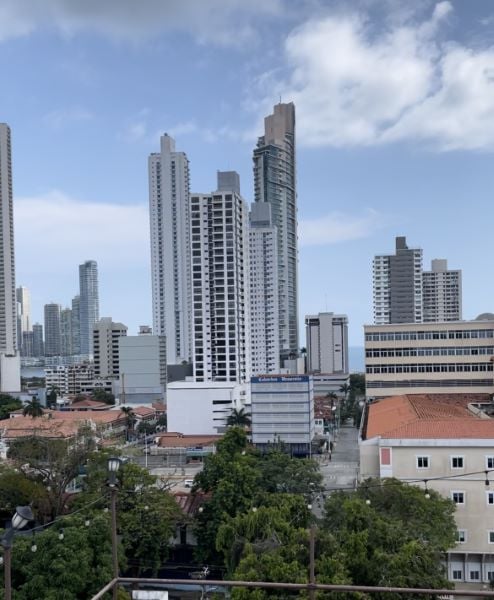
In Panama City, condos in established expat neighborhoods (Marbella, El Cangrejo, Clayton, Costa del Este) start around US$120,000 for a one-bedroom and reach US$500,000 or more in premium towers. The city average sits around US$1,850 per square meter, compared to a national average closer to US$1,250 per square meter.
- Boquete: single-family homes typically range from US$100,000 to US$400,000.
- Coronado (Pacific coast): beach and beach-adjacent houses start around US$200,000 and reach US$600,000 for oceanfront.
- Pedasí (Azuero Peninsula): land and smaller properties remain relatively affordable, with lots sometimes available under US$100,000.
- Bocas del Toro: surface prices can look low, but the legal complexity of the rights-of-possession market there means the apparent discount often comes with real legal risk attached.
For broader context on what those numbers mean for daily expenses, Panama’s cost of living remains low by developed-country standards, which is a large part of why the country draws retirees from North America and Europe.
Additional Costs
Budget for the following on top of the purchase price:
- Transfer tax: 2 percent of the sale price or registered cadastral value, whichever is higher. Technically paid by the seller, but it affects how sellers price and negotiate, so understand it.
- Capital gains advance: 3 percent of the sale price, also paid by the seller.
- Buyer’s legal fees: 1 to 1.5 percent of the purchase price for an independent attorney.
- Public Registry registration: 0.5 to 1.5 percent of the purchase price.
- Title and encumbrance search: US$300 to US$1,000, typically included within legal fees.
- Property appraisal: US$300 to US$700.
Cash buyers end up paying roughly 2.5 to 4.5 percent in total buyer-side costs on top of the purchase price. With a mortgage, budget closer to five to seven percent once bank fees and insurance requirements are added.
Transfer tax break on new builds: under Law 546, the first B/.120,000 of a new home’s price is exempt from the 2 percent transfer tax on a developer’s first sale, as long as the deal closes within two years of the occupancy permit. Above that, a reduced scale applies to the excess, running from 0.5 percent to 1.8 percent up to B/.200,000. The break stops there, so pricier new builds are taxed at the usual 2 percent.
Types of Property
Panama’s market has three main categories: condos and apartments, houses and villas, and land.
- Condos and apartments: most developed in Panama City.
- Houses and villas: the main product in Boquete, Coronado, and the smaller beach towns.
- Land: the most common transaction type in Pedasí and rural areas.
All three exist in two legal forms: titled and rights-of-possession. That distinction matters more than almost anything else when you’re buying as a foreigner.
Titled Land vs. Rights of Possession (ROP)
Titled property (tierra titulada) is registered in Panama’s Public Registry with a unique finca number. You hold full freehold ownership. It can be mortgaged, insured, and sold to any buyer. Your ownership is legally protected and independently verifiable.
Rights of Possession (Derecho Posesorio, or ROP) is not ownership. It is a recognized occupancy right, but the government technically holds the title. You cannot get a bank mortgage against ROP land. It is harder to sell because the buyer pool is narrower. Boundary disputes are common because there’s no registered cadastral plan. And if someone else asserts possession rights over the same land, your legal recourse is limited.
ROP is prevalent in rural areas, on islands, and along stretches of beachfront. Bocas del Toro is heavily ROP. Property marketed as “beachfront” in Panama is often ROP, and the price is lower precisely because the legal protection is weaker. Expat forums in Panama are full of accounts from buyers who purchased ROP land thinking it carried the same protections as a title, and found out otherwise when they tried to sell or develop the property.
Foreigners can legally purchase ROP land. Going into it without fully understanding the risks is where people get hurt. If you’re ever considering converting ROP to full title through the ANATI process, plan for one to three years and no guarantee of success.
Tip: If a seller cannot give you a finca number to verify at the Registro Público, what you’re looking at is not titled land. That single check tells you everything you need to know about the property’s legal status before you spend any more time on it.

Where to Buy in Panama
Panama’s expat property market concentrates in five main areas, each with its own character, price range, and legal considerations for foreign buyers.
Panama City
Panama City is the most liquid property market in the country. The rental market functions well, infrastructure is reliable, and the city has Panama’s best hospitals and international schools.
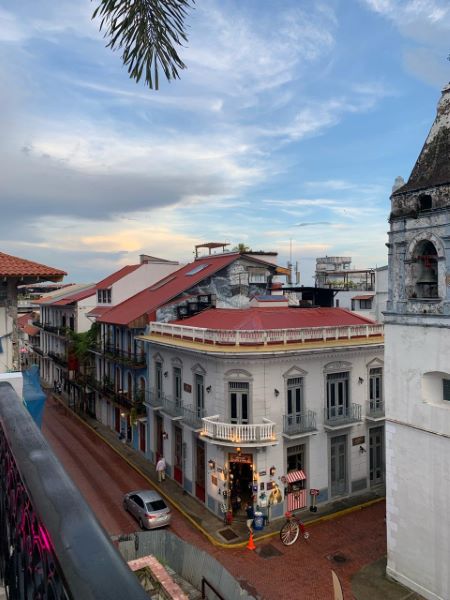
The Casco Viejo neighborhood attracts buyers who want a historic colonial renovation project. Costa del Este is the newer, more planned neighborhood popular with professional expats and retirees who want modern construction and reliable building management. A solid one-bedroom condo in a well-managed building starts around US$120,000 to US$150,000; larger units in premium towers are US$350,000 and up.
One thing to factor in if you’re buying as an investment: oversupply in some buildings keeps appreciation modest, and short-term rental income isn’t guaranteed. Confirm that the building and zone qualify for tourism permits under 2026 regulations before factoring rental returns into your decision.
Boquete
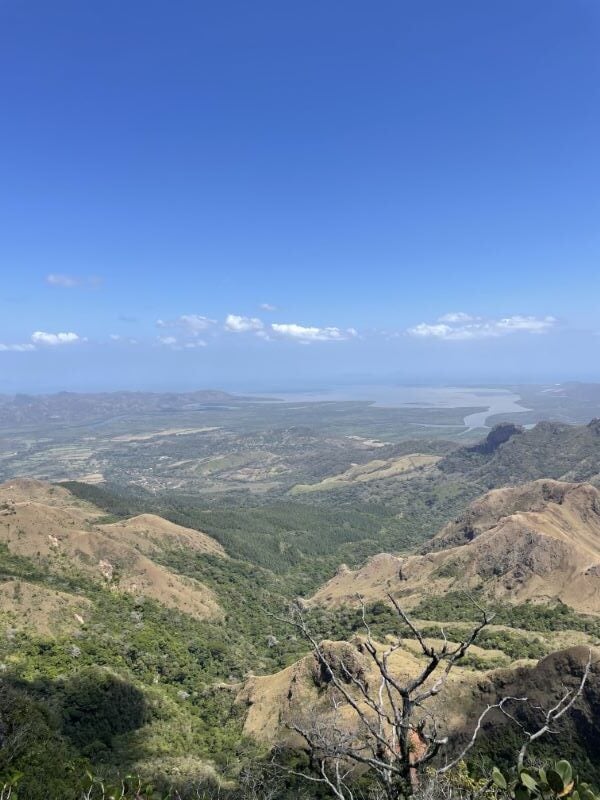
Boquete sits at 1,100 meters in the Chiriquí highlands and has a climate found almost nowhere else in Panama: cool mornings, no air conditioning needed, coffee farms and cloud forest on the surrounding hillsides.
Boquete has a large, established North American expat community, which means English-speaking doctors, a range of restaurants, and a good secondary property market. Most of the Boquete market is titled land, though individual parcels still need to be checked.
Bocas del Toro
Bocas is Panama’s Caribbean archipelago and one of the most photographed parts of the country. It is also one of the most legally complicated markets for foreign buyers.
Much of the land across the islands is ROP rather than titled, and parts of the Bocas province mainland fall within the 10km Costa Rica border restriction zone. If you want to buy here, you need a thorough legal check, a lawyer who knows the local market well, and a realistic understanding of what “owning” an ROP parcel actually means.
Pedasí and the Azuero Peninsula
Pedasí is a small town on the Pacific coast of the Azuero Peninsula, roughly four hours from Panama City. It has attracted a quieter wave of retirees who want lower prices and a slower pace than the city offers. Land here can still be found for under US$100,000, and the beachfront properties in this area are mostly titled, since the Azuero Peninsula was systematically titled over the past two decades.
The trade-offs: infrastructure is limited, you need a car, and healthcare beyond basic primary care requires the drive back to the city.
Coronado and the Pacific Beaches
Coronado is two hours west of Panama City on the Pan-American Highway, popular as a weekend and vacation destination for Panama City residents as well as foreign expats. Because demand comes partly from Panamanian buyers rather than exclusively from foreigners, the market dynamics are different from a purely expat destination. Gated community developments dominate. Houses and beach-adjacent properties run US$200,000 to US$600,000 depending on proximity to the water and development quality.
New vs. Resale Property
Panama’s property market offers both new construction and resale. The right choice depends on your timeline, risk tolerance, and how much certainty you need before committing funds.
New Construction and Pre-Construction
New construction in Panama City has certain advantages:
- modern specs and finishes
- payment plans spread over the build period
- a 20-year property tax exemption on the construction value for qualifying developments under Panama’s Property Exoneration Law (the exemption applies to the construction value, not the land portion, so you’ll still pay tax on the land)
Pre-construction is riskier than it might appear: developers commonly use buyer deposits to fund the construction itself. If the developer runs short of money, your deposit is at risk.
Pre-construction safeguards: Use escrow, never wire funds directly to the developer, and have your lawyer verify the developer’s permits and financial position before you sign anything. Ask specifically how many units have already been sold and what the project’s break-even threshold is.
Resale
Resale property gives you certainty: the building exists, you can inspect it, and the actual condition is visible. You have more room to negotiate on resale, particularly when the registered cadastral value differs significantly from the asking price.
The critical check on any resale: confirm that all property taxes are paid and current before you close. Unpaid property taxes in Panama attach to the property, not to the seller personally. If the previous owner owes three years of back taxes, you inherit that balance at closing unless your lawyer identifies it during due diligence.
How to Find a Property
There are many ways to find a property in Panama.
Real Estate Agents
Panama has a real estate licensing system. All legitimate agents should hold an Idoneidad certificate issued by the Technical Board of Real Estate of Panama under the Ministry of Commerce and Industry (MICI). Ask for the certificate number before engaging anyone. Some agents operate without it, particularly in high-expat areas where enforcement is uneven.
Two common industry practices are worth understanding before you start.
- First, dual agency: agents in Panama routinely represent both the buyer and the seller in the same transaction, with no fiduciary duty running specifically to either party. If you want someone whose legal obligation is to your interests alone, that’s your independent lawyer, not the agent.
- Second, net listings: agents can agree with sellers to keep any amount above the seller’s minimum asking price. This creates an incentive to present inflated asking prices to foreign buyers who don’t know the local market. Compare prices across multiple listings before making any offer.
Online
The main listing platforms used in Panama are encuentra24.com and compreoalquile.com. International portals carry some listings, and developer websites list new projects directly. Treat prices on these platforms as a starting point for negotiation, not as market prices.
On the Ground
Some of the better resale and land deals never get formally listed. Spending time in the specific area you’re considering, and talking to residents, local lawyers, and multiple agents, is still the most reliable way to find off-market properties. This is one more reason the standard advice holds up: rent in an area before you buy in it.
Read more: Renting an Apartment in Panama City
The Buying Process
Here’s how to buy a property in Panama step by step.
Making an Offer and the Promise-to-Purchase Agreement
Once price is agreed, the transaction begins with a promise-to-purchase agreement (promesa de compraventa). This is a binding contract that sets out the purchase price, payment schedule, due diligence period, and conditions for the sale. It is typically accompanied by a deposit of five to 10 percent of the purchase price, held in escrow.
Before signing: Have your independent lawyer prepare or review this document. Do not pay any deposit before you have a reviewed promesa in hand.
Due Diligence
The due diligence period is your window to verify everything about the property. Your lawyer should complete all of the following before you release the final payment:
- Confirm the property is titled and locate its finca number at the Registro Público de Panamá
- Run a full encumbrance search (búsqueda de gravámenes) for mortgages, liens, easements, or court orders attached to the property
- Verify that the cadastral boundaries held by ANATI match the registered survey
- Confirm the seller’s identity matches the Public Registry record
- Check that all property taxes are paid and current
- Confirm HOA or strata fees are paid and obtain the ongoing monthly fee schedule
- For beachfront property: confirm the exact location of the 22-meter public easement from the Pacific high-tide line (this zone is public domain and cannot be privately owned)
Don’t rush this step. A missed encumbrance or a cadastral mismatch becomes your problem the moment you close. Your real estate agent has no legal responsibility for these checks. Your independent lawyer does.
Escrow
Panama has an established escrow system and you should use it for both the initial deposit and the final payment. Escrow holds your funds with an independent third party and releases them only when title conditions are satisfied. Never wire funds directly to a seller or developer account.
The Public Deed and Notarization
Once due diligence is complete, the sale is formalized through a public deed (escritura pública) prepared by a Panamanian notary. Both parties sign before the notary. This document is a legal prerequisite for the title transfer. Your lawyer prepares and manages this step.
Public Registry Registration
After notarization, the deed is filed with Panama’s Public Registry. This is the step that makes you the legal owner of record. Until registration is complete, the transaction is not finalized. Registration typically takes one to two weeks after notarization.
Timeline
Transaction timelines vary significantly by purchase type:
- Cash purchase: 30 to 60 days from accepted offer to completed registration.
- Mortgage purchase: 60 to 90 days, because of the bank’s appraisal and approval requirements.
- Pre-construction: 12 to 36 months for building delivery; the formal legal closing happens when the building receives its occupancy permit.
Taxes and Fees
Here’s a consolidated view of who pays what in a standard transaction:
| Item | Who Pays | Amount |
|---|---|---|
| Transfer tax | Seller | 2% of sale price or cadastral value (whichever is higher) |
| Capital gains advance | Seller | 3% of sale price |
| Real estate agent commission | Seller | ~5% of sale price |
| Legal fees | Buyer | 1–1.5% of purchase price |
| Public Registry registration | Buyer | 0.5–1.5% of purchase price |
| Title and encumbrance search | Buyer | ~US$300–US$1,000 |
| Property appraisal | Buyer | ~US$300–US$700 |
Annual property tax is calculated on the registered cadastral value, not the market value. For a primary residence:
- Up to US$120,000: exempt
- US$120,001 to US$700,000: 0.5 percent on the amount within this band
- Above US$700,000: 0.7 percent on the excess
Investment and secondary properties face higher rates starting at a lower threshold (0.6 percent from US$30,001). Many new Panama City condos qualify for a 20-year exemption on the construction value under Panama’s Property Exoneration Law. Confirm whether a specific development qualifies before factoring that into your projections.
Do You Need a Lawyer?
Yes. And the lawyer must be independent from both the seller and your real estate agent.
An independent attorney searches the Registro Público, identifies any encumbrances, verifies cadastral boundaries with ANATI, prepares or reviews the promise-to-purchase agreement, and handles the public deed and registry filing. None of these steps are protected by agent licensing. The agent is not responsible if you close on a property with an undisclosed lien. Your lawyer is.
The scenarios that make the cost obvious: a buyer closes on a property that turns out to have an existing mortgage the seller never disclosed; a registered owner name doesn’t match the seller; a “buildable” beachfront lot sits entirely within the 22-meter public easement. These are not rare edge cases in Panama’s market. Expat attorneys who handle property transactions see them regularly.
Legal fees run 1 to 1.5 percent of the purchase price. On a US$200,000 property, that’s US$2,000 to US$3,000. It is the most important cost in the transaction.
Tip: Ask your lawyer for their bar registration number and verify it through the Colegio Nacional de Abogados de Panamá. Don’t rely on a referral from your real estate agent; the agent may have existing business relationships that create a conflict.
Finance Options
Most expats and retirees buy in Panama with cash. That’s partly preference and partly because financing for foreigners is more restrictive than in most developed markets.
Local bank mortgages for non-residents are available but come with significant conditions: interest rates of seven to nine percent (typically adjustable), down payment requirements of 30 to 50 percent, and an age restriction that usually means no mortgage terms extending past age 65. A 55-year-old applying for a 20-year mortgage will likely be declined on the basis of age alone.
Developer financing on pre-construction is sometimes available, with payment plans spread over the build period. This is an installment purchase arrangement, not a mortgage, and it typically requires a meaningful deposit upfront.
There are no foreign bank mortgages against Panamanian property as a practical matter. A bank in the US or Europe will not accept Panamanian real estate as collateral for a loan.
Cash purchases are simpler, faster, and give you more negotiating leverage. If you need local financing, Banco General and Banistmo are the two institutions most commonly mentioned by expat buyers for their mortgage products for foreigners.

Read more: How to Open a Bank Account in Panama
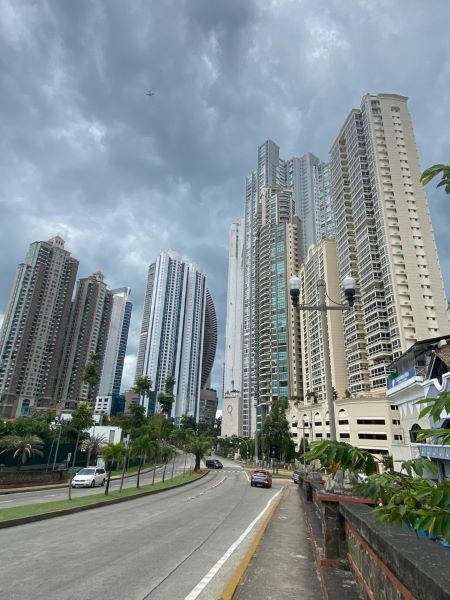
Can You Buy from Abroad?
Yes, with a few caveats. The transaction can be completed entirely remotely if you grant a power of attorney to your Panamanian lawyer, authorizing them to sign documents on your behalf. Your lawyer can conduct the title search, review the promesa, and sign the public deed without you being present in Panama.
The fund transfer side works smoothly because Panama uses the US dollar. A wire transfer from a US bank to a Panamanian escrow account is straightforward. For other currencies, your bank handles the conversion; the Panamanian side receives and works in dollars.
The practical risk in buying remotely: you have never walked the property. Photographs and video are not an adequate substitute for a site inspection on a six-figure purchase. At minimum, hire an independent inspector or surveyor who can visit on your behalf and report in detail. For pre-construction in particular, remote deposits carry elevated risk because you’re relying entirely on your lawyer’s assessment of the developer’s position and the permits’ validity.
The Qualified Investor Visa: Turning Your Purchase Into Residency
Panama’s Qualified Investor Visa is one of the more straightforward property-to-residency pathways in Latin America. If your purchase meets the investment threshold, you can apply for lifetime residency in Panama as part of the same transaction.
The current minimum for the real estate route is US$300,000. On October 15, 2026, the threshold increases permanently to US$500,000. If you’re planning a purchase that qualifies and you want residency, completing the application before that date saves US$200,000 in required investment.
The visa gives you lifetime residency in Panama, with no minimum stay requirement. You can include your spouse and dependent children (under 18, or 18 to 25 and enrolled full-time in education) in the same application. After five years of maintaining the investment, you’re eligible to apply for Panamanian citizenship, which currently provides visa-free access to 148 countries globally.
The investment must be maintained for at least five years to preserve residency status. The application process typically takes one to three months and is submitted by a licensed Panamanian attorney to the National Immigration Service.
If you’re considering retiring in Panama, the Qualified Investor Visa is one of two main residency routes alongside the Pensionado Visa, which is based on a minimum pension income rather than an investment threshold.
Good to Know: The October 2026 threshold increase applies to the real estate route only. The alternative investment options (US$500,000 in Panamanian-listed securities through a licensed broker, or a US$750,000 fixed-term bank deposit for five years) are not affected by the change.
Additional Tips
- Live there before you buy. Every expat I’ve spoken to who has been in Panama more than five years says the same thing: rent for at least 12 months before committing to a purchase. You need to live through both the rainy season (May to November) and the dry season. A neighborhood that works well in the dry season may have flooding, humidity, or access problems that only become obvious when it rains for four months straight.
- Don’t pay any deposit until the finca is confirmed clean. Before any money changes hands, have your lawyer run the Registro Público check and confirm the finca number is clear of encumbrances. No finca number means no title. An encumbrance means the deal needs to be renegotiated or walked away from. Neither finding should cost you anything if you do the check before paying.
- Beachfront often means ROP. The lifestyle appeal of a beach property in Panama is real. The legal reality is that a large proportion of beachfront land, particularly on islands and in rural coastal areas, is ROP rather than titled. Verify the legal status before you negotiate the price, let alone pay anything.
- Verify the agent’s Idoneidad number. Ask for it before you start working with any real estate agent. If they become evasive about it, that’s the information you need.
- Dual agency is the default, not the exception. Most Panama agents represent both sides of the transaction. That doesn’t mean they’re dishonest, but it does mean your interests are not their legal priority. Treat agent advice as useful market information, not as advice with a legal duty behind it. That role belongs to your independent lawyer.
Next Steps
If you’re seriously considering a purchase, the practical sequence is: pick an area and a budget, spend time there before committing, hire an independent attorney before you start making offers, and confirm the legal status of any property you’re interested in before you fall in love with it.
If you’re still in the research phase, the articles below cover the broader picture of life in Panama before property ownership comes into it.
Read more:






'/%3E%3Cpath%20fill='%23b2b2b2'%20d='M241%20382q0%2016%2017%2026%2017%2011%2042%2011t42-11q16-11%2017-26V269H241'/%3E%3Cpath%20fill='%239f7e00'%20d='M241%20379q0%2014%208%2023%209%209%2021%209%2014%200%2021-9%209-9%209-23V269h-59'/%3E%3Cpath%20d='M241%20339v-70h59v110q0%2014-9%2023l-6%205v-68h-15v72q-8%200-14-4v-68zm59%2040c0%2022%2015%2032%2029%2032%2021%200%2030-18%2030-32v-40h-59'/%3E%3Cpath%20fill='%239f7e00'%20d='M266%20277v5h2v12h-3v-5h2v-5h-9v5h2v5h-4v9h3v18h-5v10h34v-10h-5v-18h3v-9h-4v-5h2v-5h-9v5h2v5h-3v-12h2v-5zm42%20101q0%2010%206%2017%206%206%2015%207%2010-1%2016-7%206-7%206-17v-29h-43'/%3E%3Ccircle%20fill='%230044ad'%20cx='329.5'%20cy='372'%20r='6'/%3E%3Cellipse%20fill='%230044ad'%20cx='300'%20cy='340'%20rx='16'%20ry='21'/%3E%3C/svg%3E) Español:
Español: Français:
 Deutsch: