
This article will take approximately 24 minutes to read. Don't have the time right now? No worries. Email the ad-free version of the article to yourself and read it later!
Renting an apartment in Japan as a foreigner is possible but comes with a steep learning curve: expect key money, strict guarantor requirements, and upfront costs of several months’ rent. This guide covers accommodation types, search strategies, contract details, and rules for apartment living so you know what to expect before signing anything.
If you plan to live in Japan long term, it pays to know how renting an apartment works here. This guide covers the process and the must-know details.
Foreigners who come to work for a Japanese company from overseas are typically given housing when they arrive, but many later move apartments without that help.
This guide walks through the steps to rent successfully, the costs and paperwork, and the challenges you may meet from signing the contract to moving out.
Key Takeaways
- Almost all rental applications in Japan must go through a licensed real estate agency; you cannot apply directly to landlords.
- Expect upfront move-in costs of around 4-6 months’ rent, covering security deposit, key money, agency fee, and guarantor fees.
- Foreign renters face discrimination; using agencies that specialize in foreigners (like UR Housing, Able, or Borderless House) significantly reduces rejections.
- UR Housing waives key money and personal guarantor requirements entirely, making it the lowest-cost entry point for newcomers.
- You need a residence card to apply for a rental, so you cannot lock in accommodation before arriving on your visa.
- Japan-specific garbage rules (mandatory city bags, strict sorting, timed collection) apply from day one and violations can cause friction with neighbors.
- When leaving, take photos of every wall and floor before moving out; landlords sometimes charge for normal wear-and-tear that legally is their responsibility.

Good to Know Before Renting
This article is for people who are already in Japan.
If you are hired from overseas, you were most likely provided an initial apartment when you moved to Japan on a work visa.
The company that hired you understands that you have no idea how the rental process works.
They will often help as much as possible to set you up with an apartment complex or dormitory with which they have had a business relationship over the years. They will even act as your guarantor, which is required when renting in Japan.
I will talk about this in more detail later on.
Heads Up: You can look at places while you’re visiting, but you can’t apply for a rental as a tourist, because you need a residence card to rent.
You also can’t change a tourist visa to a work visa while you’re in Japan.
Rent Assistance
Many companies in Japan offer “Yachin Hojo”, or rent assistance. It’s an extra amount in your monthly paycheck that covers a portion of your rent.
Tip: Ask your new employer whether they offer it, since it affects how much rent you can budget for. It typically covers up to 10-20% of your total rent. If your rent is JPY80,000, you may have up to JPY16,000 extra in your paycheck to offset the cost.
Rental Agency
You can’t call or walk into an apartment complex to ask about rentals. Almost all places require an application through a rental agency. The agency decides whether to rent to you, after speaking to the property manager.
Discrimination
Japan is the most racially homogenous developed nation. Unfortunately, because of this, foreigners can face discrimination when renting apartments in Japan.
Rejected applications are common for foreigners. Some Japanese real estate agents hesitate to deal with non-Japanese renters, whether because of language or xenophobia.
I knew a person who lived in Hokkaido. He spoke Japanese like a native, had lived in Japan for more than a decade and had permanent residency in Japan, yet he still faced discrimination when trying to find a place to rent. It was just hard to find a good room as a foreigner.
It’s often better to ask up front whether the agency serves foreigners, though you may not get a clear answer. Clues like no English-speaking staff or no English-friendly website tell you something too.
Being rejected several times without a reason is disheartening. Remember that it comes from fear of the unknown and reluctance to take on the extra unknowns of renting to a foreigner. It is not personal.

Tip: Having a Japanese partner, or active support from the Japanese manager at the company you are working for, helps the process move along much more easily.
Accommodation Options
The rental market offers several types of accommodation, each with its own features.
Apartment
Apartments in Japan are usually smaller buildings, about two to three stories tall, made from lumber or light-gauge steel. The walls aren’t thick, so you can sometimes hear your neighbor’s daily activities.
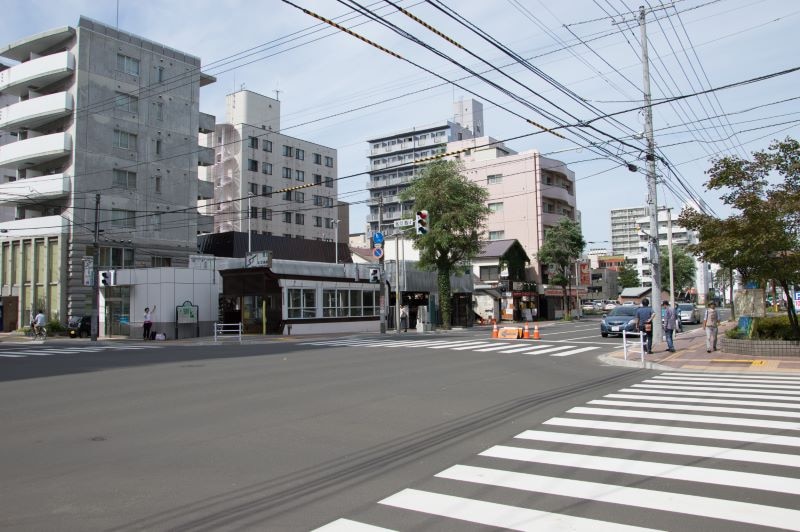
The newer the apartment, the pricier it is, so on a budget you’ll likely end up in a complex built in the 1980s or the 1990’s.
Mansion
“Mansions”, on the other hand, are large-scale, interconnected apartment complexes that can stand over five stories tall. These are mainly constructed from concrete, and the walls are referred to as “RC” walls.
This is a good choice if you want peace and quiet and value your privacy. Many of these mansions offer comfortable living conditions, have a drink machine nearby, are protected by security cameras, and sometimes have a live-in manager who helps tenants on site.
House
You can also rent an entire house, which may be your best route if you have a family. Small rental houses (an “ikkodate”) are typically older (built in the 1970s to 1990s), have two floors, and aren’t furnished.
Some have been renovated. The rent can sometimes be the same as an apartment’s, but you’ll pay more for utilities like gas, water, and electricity, and with living costs up sharply in recent years, that can put a dent in your pocket.
Shared House and Guest House
I didn’t want to leave shared houses or guesthouses off this list of options.
These are much easier to rent. The rental process is straightforward with English support, the rooms are fully furnished, and the rental agreements are flexible.
Share houses are for longer terms of contract, and as the name suggests, are a social living setting with roommates.
Some more popular companies include Share House 180, Borderless House, First House Interwhao, and others.
Guesthouses are for shorter-term stays and may have private room options with either Western or more traditional Japanese settings. You can find guesthouses in most prefectures of Japan by simply searching online.
Both are cheaper than renting an apartment through an agency, but they have downsides.
Both come with trade-offs:
- Rules to follow: timed baths, shared washing machines, quiet hours, etc.
- Less privacy: you have less than in your own place.
- Some risk: there’s an element of risk if you don’t trust your new roommates.
Heads Up: You may also have trouble inviting friends or a partner over to your shared house if the rules ban it.
Rental Terminology
Here’s the terminology used to describe rental layouts, and what to expect from the facilities.
LDK
The L, D, and K abbreviations for rentals stand for living, dining, and kitchen, while the number represents the number of rooms.
A ‘1DK’ refers to an apartment with one separate bedroom and a dining and kitchen area; it is pretty small, but can suffice for a couple with few possessions.
A ‘1LDK’ is an apartment with one bedroom, and a combined living, dining, and kitchen area; these are often separate spaces.
Next up is a ‘2DK’, which offers two separate bedrooms and a dining and kitchen area, so an extra bedroom. The size increases with a 2LDK, 3LDK, 4LDK, etc.
Room Sizes (Jou)
Room sizes are often described in ‘jou’, based on the size of a traditional tatami mat, a flooring material made from multilayered rice straw that is tightly fastened and compressed.
Heads Up: Many older apartments have a tatami room, so be careful not to stain the mats. Replacing them is expensive!
Many people buy special flooring to lay over tatami mats and protect them. You can rip it up before you leave and avoid paying tatami replacement fees.
Where to Search for an Apartment in Japan
There are two primary methods to find a place to rent in Japan: visiting a real estate agency in person or searching for a property online on your own.
Real Estate Agency
You’d think walking into a local real estate office, having a consultation and seeing what’s available in your preferred location and price range is the easiest method. In Japan it isn’t. If you don’t have a Japanese translator and don’t speak Japanese, it will be almost impossible, even with translation technology.
Heads Up: Outside Tokyo, an English-speaking representative is rare, and many landlords want tenants to read the contract in Japanese before they sign it.
Online Company
Your best bet with minimal Japanese language ability is an online company that provides services specifically for foreigners.
They may offer English assistance, pamphlets and contracts in English, and a website where you can search by your rental requirements. Some companies with a good reputation:
Most of these sites offer English services. I personally used UR rental housing, and found it to be a painless process.
UR Rental Housing is one of the most cost-effective options for newcomers because it rents its own apartments directly and skips the usual extras. With UR, you pay:
- No key money.
- No agency fee.
- No renewal fee.
- No guarantor fee, because you do not need a guarantor at all.
At move-in, UR only asks for a security deposit of two months’ rent, plus prorated rent and common-area fees for your first month. (Verified September 2026.)
UR does check your income instead. A single person applying for a UR apartment that rents for JPY62,500 or more a month needs an average monthly income of at least JPY250,000 (about US$1,600, at roughly JPY157 to the US dollar).
If your income falls short, savings of 100 times the monthly rent can qualify you instead. (Verified September 2026.)
Good to Know: Foreign applicants also need mid- to long-term resident status, which is what your residence card shows.
They assigned an English-speaking realtor to me, explained exactly what money I would need for the move, and provided excellent service.
It was my first move in Japan to a new city without the help of my company, and they made it easy to find a reasonably priced apartment.
Another option is SUUMO, Japan’s largest rental listing website, though it may be in Japanese only. You may have to use Google Translate to translate the site automatically.
Oakhouse is also a popular platform for short-medium term rentals, although it often includes living with roommates.
Only a few online resources serve foreigners, so you may want to look for other services in the region where you want to live.

Japan’s housing ministry (MLIT) also has a page for foreign renters with a free apartment search guidebook and a list of real estate agencies that work in foreign languages.
Cost
Where you live is a personal decision, and you may have to weigh things like your work commute or whether you need exciting nightlife.
Rents and living costs differ dramatically between places. In rural areas, you can expect about JPY40,000 to JPY60,000 a month for a fairly large apartment (I’ll get into apartment sizes later).
In rural areas, you’ll have easier access to vegetable markets and a simpler lifestyle, and while public transportation is more limited, the slower pace of life might suit you.
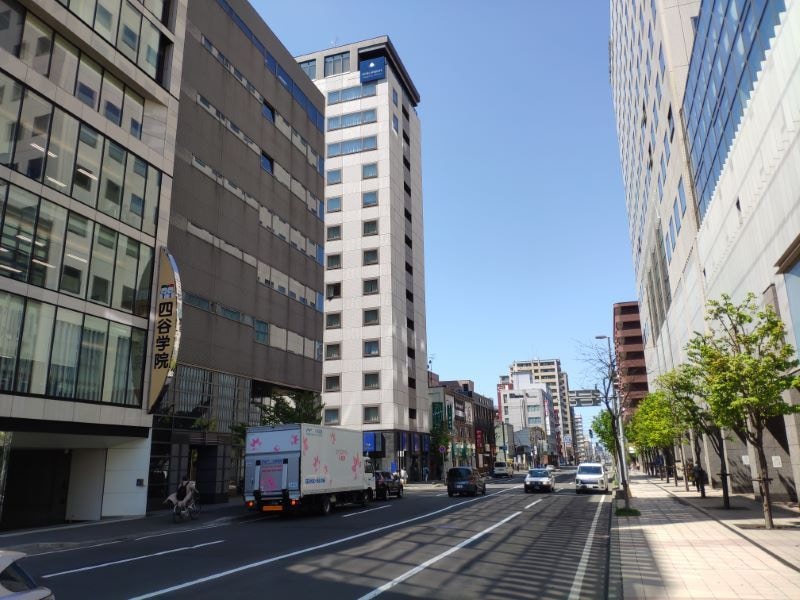
In contrast, your average city apartment in say Osaka or Tokyo can run almost double the cost.
For example, it can cost you JPY120,000 a month to rent a big apartment with 4 bedrooms, 1 living room, and 1 kitchen in Sapporo. However, for the same amount of money, you would only get a small room in Tokyo.
It depends on the area within the city, but you do pay for convenience in your rent.
Signing Your Rental Contract
Renting an apartment in Japan is expensive. There is no gentle way to phrase it. It will cost more than you expect, so it’s best to prepare the funds you need for your move ahead of time.
Contract Duration
Leases usually run two years, and the length is sometimes negotiable.
Heads Up: There might be a surprise renewal fee after your lease is up if you want to stay.
Guarantor
You typically need a Japanese citizen (hoshonin) connected to you in some way (friendship, employer, spouse, etc.) to “vouch” for you if trouble arises during your rental.
The hoshonin must also have a salary.
If you don’t pay your rent, it falls to this person.
These days you can instead pay a guarantor company a yearly fee to act as your guarantor.
In Practice: The annual fee depends on the region, your salary, and other factors. You may need to pay around half a month’s rent for their service each year.
Security Deposit and Other Move-In Costs
Move-in costs for a Japanese rental usually add up to several months’ rent and include:
- Security deposit (shikikin): 1-3 months’ rent. Whether you get a portion of it back depends on the agency and the condition of the apartment when you leave.
- Key money (reikin): about 1-2 months’ rent. It’s a “bowing fee” or “thank you fee” to the landlord, and it’s non-refundable.
- Real estate brokerage fee: 1 month’s rent plus 10% consumption tax.
- Guarantor fee: this varies by area and lease agreement.
Documents
Have these documents on hand to rent:
- Passport and residence card: you need both.
- Proof of work or study: if you’re working or studying, a contract or certificate of enrolment (student ID/admission letter will suffice).
- Proof of income: a monthly pay slip from your job, or your employment contract with your salary, to show you can afford the rent.
- A Japanese bank account: your monthly rent is taken out of it on a set day of each month.
Hanko (Personal Seal)
If a person acts as your guarantor (see above), Japan’s government renting guide for foreigners lists that guarantor’s seal registration certificate among the papers for your application. The same guide talks about you signing the rental agreement yourself.
Tip: Agents and landlords still vary, so ask early whether a signature works or whether they want your seal stamped on the contract. The guide lists the certificate only for a personal guarantor. If you use a guarantor company, ask the agent what that company needs.
A registered seal and the everyday seal you’d use at the bank are different things:
- Registered seal (jitsuin): a seal registered at City Hall, which can then issue a certificate showing the seal is yours. That certificate is what a guarantor’s paperwork asks for, and you may also need a registered seal to buy a car. It costs considerably more than an ordinary seal.
- Ordinary seal (mitome-in), often used as a bank seal: a plain seal you can buy and start using straight away. It works at banks, at work and on city paperwork, but it isn’t registered at City Hall.
To register a seal, go to the city or ward office where you’re registered as a resident, in person, with the seal and your residence card. Toshima City in Tokyo, for example, charges JPY500 to register and hands you a seal registration card the same day.
Each certificate after that costs JPY400 there. Other cities set their own fees, so check yours.
Not every seal can be registered. Toshima’s rules include these, and your own office may differ, so check before you order:
- Your name as on your resident record: full name, surname or first name, written the way it appears there, including the katakana version if your country doesn’t use kanji. No initials, and no mix of alphabet and Japanese.
- Size and border: an outer border, at least 8mm on the shortest side, and small enough to fit in a 25mm square.
- Hard material: no rubber or self-inking stamps. Ready-made seals off the shelf aren’t suitable either, so order one engraved with your name.
Moving Cost
Moving into a rental apartment in Japan costs around JPY800,000 on average (about US$5,100), though it depends on the location, size, and type of apartment.
That covers 1 month of rent, 2 months’ rent for the security deposit, 1 month for the “key money”, 1 month for the real estate broker plus 10% consumption tax, and any guarantor fees. I’d budget for all of it.
If you need to move furniture, appliances and boxes to your new apartment, add another JPY150,000 (about US$950) for a moving company, though that varies too.
If you are also shipping belongings from abroad, see our guide on shipping to Japan for costs and customs rules.
Setting up Your Utilities
Your gas company is pre-decided by the building manager, who provides you with electricity and water. When you move in, the building manager will have them turned on.
Your internet, however, is your choice, and it takes a long time to set up your internet in a new apartment, because the companies are limited and extremely busy around the moving season (March, April, May).
Tip: Call beforehand and arrange for someone to hook up your internet before you move (at least 2 weeks before your contract is decided).
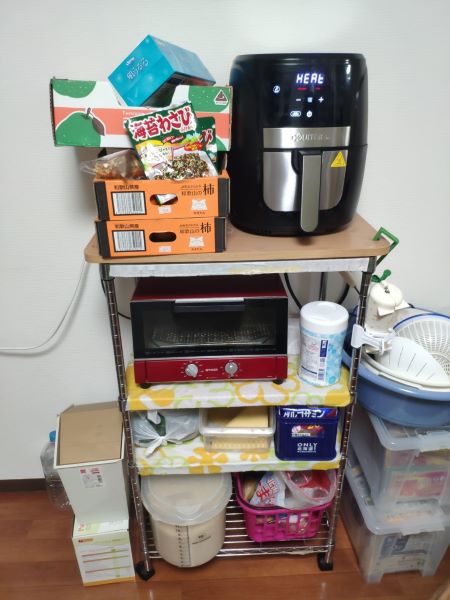
In recent years, utilities like gas and electricity have risen substantially in cost. I pay roughly JPY14,000 monthly for electricity, JPY8,000 for gas, and JPY7,000 for water services for a family of two.
These can differ depending on the size of the apartment and your personal usage.
Rules of Living in an Apartment in Japan
Some Japan-specific rules are better to know before you move into an apartment.
Quiet Hours
Of course noise should be minimized, especially during the night and early morning hours. But you might be held to an even higher standard than usual.
Heads Up: Tenants in apartments will not hesitate to complain about a foreigner’s behavior while excusing (and not reporting) a Japanese neighbor for the same thing.
This is not always the case, but foreigners are still rare in most apartment buildings, so everyone in the building will know that you live there.
Garbage Disposal
Each city has its own rules about separating and removing your garbage. Ask your real estate agent for a garbage collection calendar and place it somewhere visible in your room.
You’ll need to buy city-regulated garbage bags, which are expensive at around JPY80 to JPY120 per bag.
Heads Up: You can buy them at any supermarket. If you don’t use these bags, they won’t collect your garbage.
Garbage is typically separated into these groups:

- Burnable garbage: this is what you use the bags for.
- Plastic
- Glass bottles
- Tin/metal
- “Sodai gomi”: more oversized items like appliances that cannot be easily thrown away.
You’ll have to take these to a recycling center or request them to be picked up by appointment. You also have to follow your area’s specific days for putting out garbage.
Burnable garbage is usually taken out twice a week, and recyclables are typically once every two weeks on a specific day. There will be a caged area in your apartment complex or a designated area where you leave it.
Repair Fees and Leaving an Apartment
When you leave your apartment in Japan, the landlord or property management company inspects it and checks for damage with an eye for detail.
Damages can range from minor issues such as wall scratches or carpet stains to serious problems and sizeable structural damage.
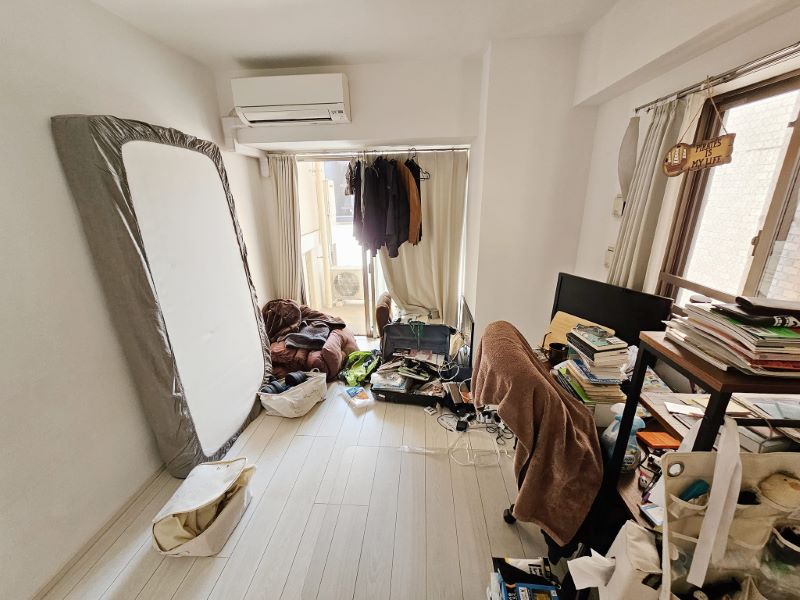
The cost of repairing these damages is generally deducted from your security deposit.
Normal wear and tear is the landlord’s cost. Japan’s national guidelines on move-out repairs, published by the housing ministry (MLIT), say the rent you paid already covers aging and everyday use. (Verified September 2026.)
That means furniture dents in the floor or tatami faded by the sun shouldn’t come out of your deposit. You only pay for damage beyond normal use, and the older the fixture, the smaller your share of the repair.
Tip: Thumbtack holes count as normal use. Screw holes from mounting something heavy usually don’t, so ask your landlord before drilling, even for earthquake straps.
UR gets good reviews here. In a recent Japan-living forum thread, long-term UR tenants described the move-out inspection as thorough but fair, with little or nothing charged for wallpaper after several years of normal use.
MLIT also publishes a move-out guide and a move-in and move-out condition checklist in 14 languages on its page for foreign renters. Fill in the checklist and take photos on the day you move in, and you have proof of what was already there when you leave.
It’s also common for the landlord to charge a cleaning fee, which has nothing to do with how clean the apartment is. Whether you clean it or not, they will charge this fee.
They may even skip the cleaning and pocket your money. It’s just a way for landlords to make more money on your way out, and an unpleasant reality of moving.
Common Scams When Leaving the Property
Most landlords are ethical, but a few scams are worth knowing about when you leave a rental.
Some landlords may exaggerate damages and overcharge for repair costs. One common example is wallpaper.
If a wallpaper section has a small scratch, the landlord may charge for the entire room. The national guidelines say repairs should be limited to the damaged area as far as possible, so push back on a charge like that.
Another common scam is the unjust withholding of a security deposit. The landlord refuses to give your deposit back and makes false claims about why.
Good to Know: If this happens, you can get free advice from your local consumer affairs center by calling Japan’s national consumer hotline on 188.
How far you get may depend on your Japanese ability to explain your rights as a tenant.
It is sometimes less stressful to take the loss and move on to save time and energy.
Read the fine print in your contract, because some leases have early termination fees, for example if you leave before your two-year lease has ended.
Now, on to You
I hope that this guide has in some way been helpful to you.
Renting is complicated in any foreign country, and Japan adds language barriers and cultural differences. It’s more expensive and more difficult for many expats to find a place to rent than it is for Japanese citizens.
If it’s your first time in Japan, it’s best to ask your company to help you find a rental. Once you are used to the country, you can find and rent on your own.
Sources Cited
- UR Rental Housing, merits and features (Japanese): no key money, agency fee, renewal fee or guarantor; move-in cost of a two-month deposit plus prorated rent.
- UR Rental Housing, application requirements (Japanese): income and savings thresholds, and resident status for foreign applicants.
- MLIT, guidelines on move-out restoration (Japanese): normal wear and tear is covered by rent; tenant share falls with age; repairs limited to the damaged area.
- MLIT, support for foreign nationals looking for rental housing: apartment search guidebook, foreign-language agencies, multilingual move-out checklist.
- Consumer Affairs Agency, consumer hotline 188 (Japanese): free referral to your local consumer affairs center.
- Ministry of Land, Infrastructure, Transport and Tourism, Apartment Search Guidebook (English): documents for a rental application, including a guarantor’s seal registration certificate; signing the rental agreement.
- Toshima City, Registration of Personal Seal: who can register, JPY500 registration fee, JPY400 certificate, name, size and material rules.
- Urasoe City, Personal seal registration: ordinary seals (mitome-in) for banks, work and city documents; formal registered seals (jitsu-in) for buying a car and other procedures.






 Deutsch:
 Français:
 Español:

