Slovenia’s digital nomad visa lets remote workers live in Slovenia for up to a year, with easy Schengen travel, no visa runs, and access to Alpine landscapes and walkable cities.
Slovenia just launched its digital nomad visa on November 21st, making it one of the newest European countries to welcome remote workers. The visa allows you to stay for up to 12 months. While it might not be the longest option in Europe, it’s long enough to properly experience life in Slovenia.
If you’ve never considered this Alpine country of 2 million people, now might be the time to look closer.
In this guide, I’ll walk you through how the Slovenian digital nomad visa works, who can apply, the income and document requirements, and the real pros and cons so you can decide if Slovenia is the right base for your remote work in Europe.
Disclaimer: This article may include links to products or services offered by ExpatDen's partners, which give us commissions when you click on them. Although this may influence how they appear in the text, we only recommend solutions that we would use in your situation. Read more in our Advertising Disclosure.
Contents
- Key Takeaways
- Slovenia Digital Nomad Visa Duration and Renewal Rules
- Who Can Apply for Slovenia’s Digital Nomad Visa
- Income Requirements and Documents for Slovenia’s Digital Nomad Visa
- How to Apply for the Slovenia Digital Nomad Visa, Step by Step
- Processing Time
- Bringing Family Members
- Benefits of Living in Slovenia as a Digital Nomad
- Drawbacks and Limitations
- Slovenia vs Other European Digital Nomad Visas: Is It Worth It?
- FAQ: Slovenia Digital Nomad Visa
- Can I work for Slovenian clients while on this visa?
- How long does it take to get approved?
- Can I renew the Slovenia digital nomad visa?
- Do I have to pay taxes in Slovenia on this visa?
- Can my spouse work in Slovenia if they come with me?
- What happens if my application is rejected?
- Can I travel to other Schengen countries while my visa is being processed?
- Is Slovenia safe for solo female travelers or digital nomads?
Key Takeaways
- Slovenia’s digital nomad visa lets you stay in the country for up to 12 months, but you must leave for 6 months before applying again.
- You must be a non-EU/EEA citizen, work remotely for a foreign employer, or freelance for non-Slovenian clients. Working for Slovenian companies or clients is not allowed.
- You need to show at least €3,200 in monthly income, valid health insurance with a minimum of €30,000 coverage, a clean criminal record with an apostille, and proof of accommodation.
- You can apply either at a Slovenian consulate in your country of residence or at a local administrative office in Slovenia during your tourist stay, as long as you apply before your 90/180 Schengen days are up.
- Official processing time is 30–60 days, but delays usually happen when paperwork is missing, incomplete, or incorrect.
- Family members can join you through family reunification, but they are not allowed to work, and you must show additional funds for each person.
- Slovenia works best for mid-income nomads who want a calm, nature-focused base in Europe rather than nightlife or a clear path to long-term residence or citizenship.
Slovenia Digital Nomad Visa Duration and Renewal Rules
The Slovenian digital nomad visa is valid for 12 months. Unfortunately, it isn’t renewable without a break. To reapply, you have to leave and sit out for 6 months.
If you want a more permanent way to call Slovenia home, you can apply for another type of visa or residence permit if you want to set down more roots in Slovenia later.
Who Can Apply for Slovenia’s Digital Nomad Visa
Anyone who is not an EU/EEA citizen can apply for this visa.
The biggest stipulation is that you must be a remote worker employed by a foreign company or a freelancer serving clients who are not Slovenian. Working for a Slovenian company is forbidden.
Income Requirements and Documents for Slovenia’s Digital Nomad Visa
- Application form – Complete the official digital nomad visa application
- Valid passport – Must be valid for at least 3 months beyond your intended stay
- Passport photos – Biometric standard required (you can get these at administrative offices in Slovenia for a few euros)
- Proof of income – Bank statements, pay stubs, or employment contracts covering the last 6 months showing monthly income of at least €3,200 (roughly twice Slovenia’s average net salary)
- Health insurance – Must provide minimum coverage of €30,000
- Criminal background check – Clean criminal record required. This is often the trickiest part of the application. You need both the background check and an apostille, which can be time-consuming depending on your home country. In the US, getting an apostille can take up to 2 months unless you pay extra for expedited service.*
- Proof of accommodation – Lease agreement, rental contract, or hotel booking
- Application fees:
- €50 if applying within Slovenia
- €102 if applying from abroad
- €12 for the physical residence card
*Pro tip: Handle this in your home country before you leave. It’s much faster than trying to arrange it from abroad, especially since you can’t send fingerprints digitally in most cases.
How to Apply for the Slovenia Digital Nomad Visa, Step by Step
There are a couple of ways to apply for it. You can apply at a consulate of your legal residence. You can also apply at the local administrative office where you want to live. You can go to Slovenia on your tourist time and apply there.
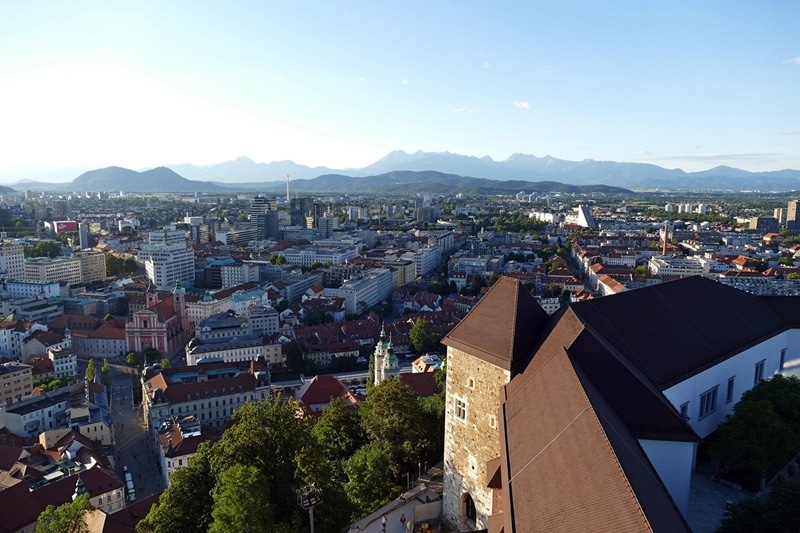
You have to apply before your 90/180 days are over. You are allowed to stay while your visa is processed, but it is unclear whether you can leave Slovenia while it is being processed. It’s best to have everything ready when you arrive and apply once you get there.
If you are from one of these countries that need a Schengen visa, you have to apply for it at the closest consulate.
Processing Time
The visa is still in its infancy, so the processing time is not yet known. The official answer is 30–60 days. Expats living in Slovenia have different stories about their residence permits. Some have gotten it quicker, and some have taken months.
However, because this is a simpler visa, it should be closer to the official answer. A big factor is also whether your application is complete and correct. The biggest delays (like any other country) come from having the incorrect paperwork.
Once your application is approved and you arrive in Slovenia, you must register your temporary residence with the local administrative unit within 8 days. You’ll need proof of your address, such as a lease or rental agreement, to complete this step.
Bringing Family Members
It is possible to add other family members like your spouse, long-term partner, and even children, but the main applicant for the visa must apply first. The good news is that family reunification in Slovenia comes with fewer restrictions than with other visas and residency permits.
Once you are approved, other family members get approved almost right away. The only requirements are that you must show you have accommodation big enough to properly house a family, and each member needs to have the same type of health insurance.
Your family cannot work in Slovenia either, so you must be able to provide for them. The exact amount you have to show depends on the minimum social support amount, so it is raised regularly. Currently, the amount per family member is around 300 euros on top of the requirement for the digital nomad themself.
If you want to bring your family, the more funds you can show, the happier the people at the office will be. The way some of the offices calculate these numbers can be a major headache, even for me, and I’ve helped immigrants with their residence permits.
Benefits of Living in Slovenia as a Digital Nomad
Getting the visa is one thing. Living in Slovenia day to day is another. Here’s what actually matters once you’re settled, and what makes Slovenia work well for remote workers.
You can actually stay put (no more visa runs)
The most important part is the legal certainty. If you have a digital nomad visa from a European country, you can stay with ease. You don’t have to play musical chairs every three months. You can travel in and out of EU borders as much as you want.
Location: Alps, beaches, and three countries next door
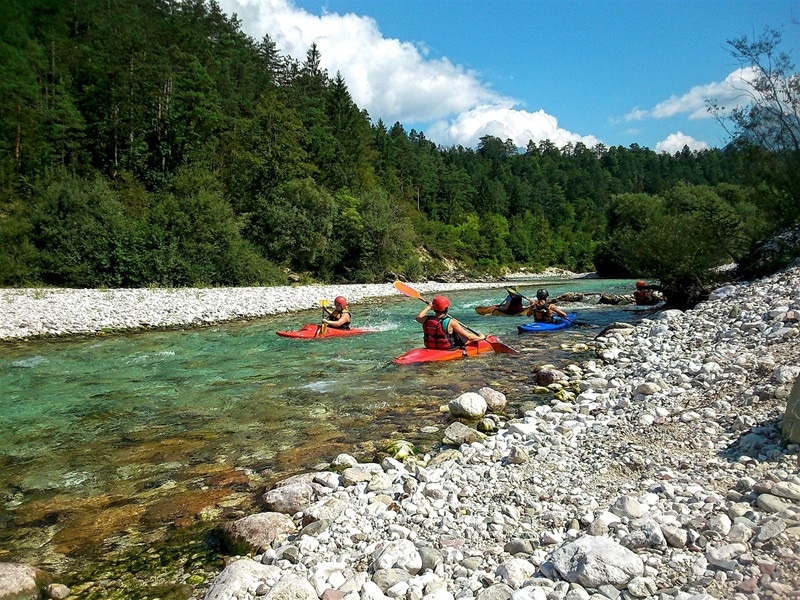
When it comes to location and nature, Slovenia is hard to beat. The Alps are less than an hour away from the capital, and the Mediterranean Sea is as well. It’s also next to Italy, Croatia, and Hungary, so when it comes to weekend adventures, you are set.
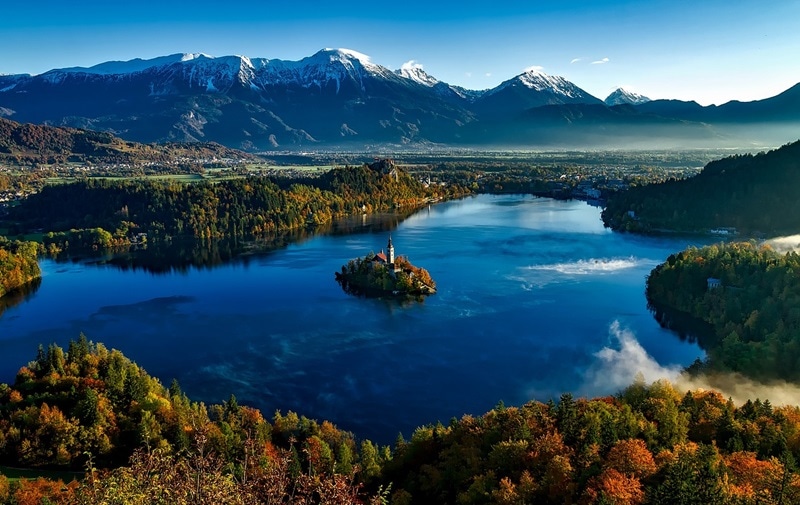
Slovenia is also one of the greenest countries in Europe with a lot of biodiversity. Almost every Slovene loves hiking and outdoor sports.
Safe, walkable cities with solid infrastructure
Slovenia is a very safe and stable country. It is consistently ranked in the top 10 most peaceful countries in the world. The cities are very walkable and bike-friendly. The entire country has good mobile signal coverage and strong internet connectivity.
Cost of living: middle of the pack for Europe
The cost of living is decent if you have a US, Australian, or British salary. It falls about in the middle of Europe when it comes to costs. It’s more expensive than Eastern and Southern Europe, but cheaper than most of Western Europe.
Getting by in English is surprisingly easy
Because of its strong education system and small population, it’s very English-speaking-friendly. You can access services without worrying too much.
Drawbacks and Limitations
Slovenia isn’t for everyone. Before you commit to a year here, it’s worth knowing what doesn’t work so well. Some limitations are structural, others are about lifestyle, and a few only become clear once you’ve been here a while.
You can’t renew it without leaving
The permit is non-renewable. If you want it again, you have to leave for 6 months before reapplying. It is not ideal for someone looking for something more permanent.
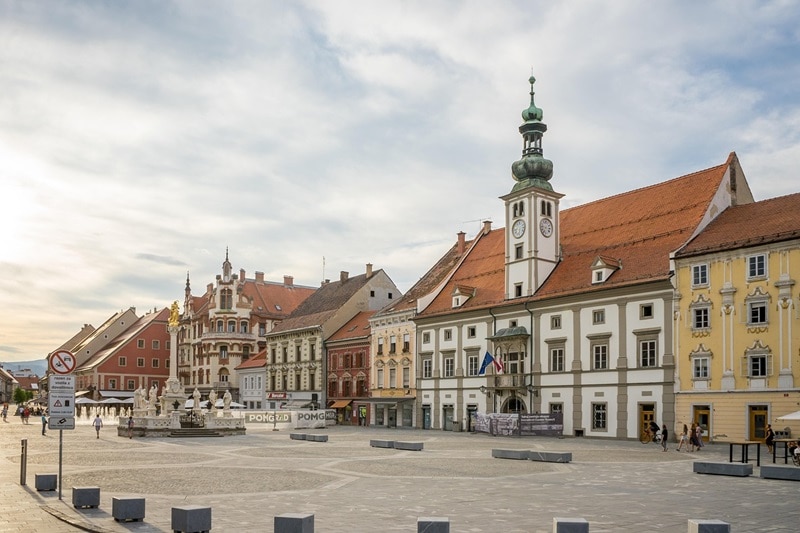
However, there are ways to obtain a more stable residence permit based on something else, such as opening a freelance license or buying property in Slovenia. Depending on how set you are on Slovenia, it might not be the best choice.
If you want a way to permanent residence or citizenship, this visa is not it.
It’s still a brand-new visa
The visa is still very new, so there have not been many personal reports on the overall experience of the application. It is still in its infancy when it comes to knowing exactly how long approval takes and how strict the administration is on certain things.
The income requirement isn’t low
The income requirement is a challenge for lower-income nomads. It’s not the most expensive digital nomad visa, but other ones are cheaper, like Italy or Hungary. But it is still not one of the most expensive ones.
Tough for families with younger kids
Slovenia might not be the best choice for a short- or mid-term stay for nomads with kids. Local schools are hard for foreign children to integrate into, especially if they have been there for a long time.
State schools are excellent but remain a major challenge for children who don’t speak Slovene. The Slovenian education system does make strides to help foreign students learn the language. Still, it’s likely going to feel like a waste of time for a kid to start learning it for just a year.
Private schools are also very expensive here; they run between 6,000–16,000 euros.
Quiet country, limited nightlife
While Slovenia has a lot to offer some nomads, it might not have everything others need. It is a quiet country in the grand scheme of things. If you want nightlife and excitement, pick somewhere else. Slovenes can be social, and there are nice places to socialize, but it is not Prague or Budapest. I enjoy living here at age 35, but if I were 10 years younger, this wouldn’t have been a place I would choose.
Social integration takes effort
Another touchy issue might be social integration. The language is very hard. Even people from other Slavic countries have a hard time with it. There are three ways to talk about a group of two people, for example. Many people struggle with it. While most people in major cities speak English well, they often prefer to stick to themselves and their groups. There is a joke in Slovenia that Slovenes tend to stick with friends they went to high school with.
There are some expat circles in cities like Ljubljana, but they tend to be older and long-term. Offices and embassies also have a mixed bag on friendliness. Some people find them to be pretty rude. They can also be inconsistent with information.
Slovenia vs Other European Digital Nomad Visas: Is It Worth It?
In practical terms, this visa makes the most sense if you’re:
- A mid-income remote worker
- Looking for a calm, nature-focused base in Europe
- Comfortable with a one-year stay rather than a long-term setup
The Slovenian digital nomad visa is reasonably priced for middle-income nomads, with an income threshold similar to neighboring Croatia. Compared to Croatia, Slovenia is quieter and feels more unspoiled in many ways. If you value a slower pace of life and easy access to nature, it can be a very good fit, especially for couples in their mid-30s and up, without children or with children already grown.
The visa gives you a legal base in the EU for a year, but it’s not designed for people looking to settle permanently. If long-term integration or a clear path to residence or citizenship is your goal, this visa won’t get you there on its own.
Because the program is still new, there will likely be some rough edges. If you don’t mind a bit of uncertainty and are open to being an early adopter, it can be a rewarding option for those who want something different from the usual digital nomad hotspots.
If you’re interested in applying or want to see the official requirements, the Slovenian Tourist Board is a good place to start.
FAQ: Slovenia Digital Nomad Visa
Can I work for Slovenian clients while on this visa?
No. You must work remotely for foreign companies or foreign clients only. Working for Slovenian companies or Slovenian clients is not allowed.
How long does it take to get approved?
Officially, processing takes 30 to 60 days. Because the visa is still new, real-world timelines vary. Complete and accurate paperwork makes the biggest difference, as most delays come from missing or incorrect documents.
Can I renew the Slovenia digital nomad visa?
No. The visa is not renewable. You must leave Slovenia for six months before reapplying. If you want to stay longer, you’ll need to explore other residence permit options.
Do I have to pay taxes in Slovenia on this visa?
It depends on your tax residency status and personal situation. If you stay in Slovenia for more than 183 days, you may be considered a tax resident. It’s best to consult a tax advisor familiar with Slovenian tax law in your specific case.
Can my spouse work in Slovenia if they come with me?
No. Family members who join you as dependents are not allowed to work in Slovenia. You’ll need to prove that you can financially support them.
What happens if my application is rejected?
You’ll need to leave Slovenia and can reapply later. Incomplete or incorrect paperwork is the most common reason for rejections or delays, so double-check everything before submitting.
Can I travel to other Schengen countries while my visa is being processed?
This is unclear. To avoid complications, it’s safest to remain in Slovenia until a decision has been made.
Is Slovenia safe for solo female travelers or digital nomads?
Yes. Slovenia consistently ranks among the safest countries in the world, with low crime rates and well-lit, walkable cities.






 ไทย:
ไทย: