This article will take approximately 15 minutes to read. Don't have the time right now? No worries. Email the ad-free version of the article to yourself and read it later!
A full 40-foot container from the US to Panama costs US$15,000 to US$20,000. Most residents can import used household goods duty-free with a valid visa. Whether shipping makes financial sense depends almost entirely on what you own, what Panamanian apartments already have, and how attached you are to specific pieces.
Most people overestimate how much they need to ship and underestimate how manageable buying locally in Panama is. The country imports heavily from the US, prices on furniture and appliances are reasonable, and most expat rentals in Panama City come fully furnished. The honest first question before you start getting container quotes is: does what I own justify the cost and effort?
There are legitimate reasons to ship: quality furniture you cannot replace easily, specialty appliances, irreplaceable personal items, or a significant volume of belongings that makes shipping cost-competitive with buying new. For those situations, the process is well-established and manageable with the right customs agent.
Disclaimer: This article may include links to products or services offered by ExpatDen's partners, which give us commissions when you click on them. Although this may influence how they appear in the text, we only recommend solutions that we would use in your situation. Read more in our Advertising Disclosure.
Contents
Key Takeaways
- A 40-foot full container from the US runs US$15,000 to US$20,000 door-to-door; a 20-foot container approximately US$12,000 to US$16,000.
- Residents can import used household goods duty-free with a valid residency visa, one time only. Goods must have been used for at least six months before shipping and must arrive within six months of your own arrival in Panama.
- Used goods above the duty-free threshold are taxed at 22%; new goods are taxed at approximately 25% of CIF value plus 7% ITBMS (VAT).
- All containers are fumigated at the port of entry. If you are shipping wood furniture, you need a Quarantine Import Permit arranged before the shipment arrives.
- A reliable customs agent is not optional. They handle the duty-free paperwork and prevent storage fees from accumulating while goods sit in port.
- Most furnished expat apartments in Panama City make container shipping hard to justify. The calculation changes for houses, highland properties, or large volumes of quality furniture.
- You must be physically present in Panama when your goods arrive for customs clearance.
Should You Ship at All?
Before shipping to Panama, this is an important answer that you need to answer. There are many expats that unfortunately ship items that they found out later that it doesn’t worth shipping here.
What Is Worth Bringing
Here’s a list of item that’s worth bringing here:
- High-quality hardwood furniture that can holds up Panama’s humidity
- Premium kitchen appliances, particularly specialty cooking equipment that is expensive to source locally
- Personal items of sentimental or irreplaceable value
- Medical equipment
- Specialized tools
- Hobby gear that would be difficult or expensive to replace locally all justify a spot in the container.
If you are moving a full 3-bedroom household including solid furniture, quality appliances, and a substantial volume of personal effects, the economics of a container can work in your favour despite the headline cost. Replacing the same quality of furniture and appliances locally may well cost more than US$15,000.
What Is Better Replaced Locally
On the other hand, these are items that you should buy in Panama instead.
- Cheap furniture (particleboard, IKEA-style pieces, anything already years old)
- Books and documents are vulnerable to humidity and mould; digitize what you can.
- Leather goods (can be destroyed by Panama’s climate within a year or two).
- Softwood furniture, particularly pine, is at risk from termites; hardwoods like teak and cedar resist them.
- Electronics available in Panama at import prices comparable to US retail are also better sourced locally.
The Sell-and-Rebuy Option
Many experienced movers to Panama sell or donate most of their household before leaving and use a portion of the proceeds to furnish locally on arrival. Panama City has a robust used-goods market among the expat community. Facebook groups, Encuentra24, and similar platforms have a constant supply of good-condition furniture from departing expats at reasonable prices. A furnished rental for the first 3 to 6 months while you learn the market is often the most cost-effective approach.
If you do decide to ship, get the quotes first. For US$15,000 to US$20,000, you can buy a great deal of furniture and appliances in Panama and still have money left over.
Shipping Options
Here’s your shipping options in Panama.
- FCL if you need to ship a lot of items in a private container
- LCL if you item isn’t a lot and can be shared with others in a container
- Air Freight is a small, high-value items
Anyway, for FCL and LCL options, you can get find shippers using our form to get free quotes directly from a shipping company.
Full Container Load (FCL)
A full container is the right choice when you have enough volume to fill it, generally 15 cubic meters or more. You book an entire container (20-foot or 40-foot), and you are the sole user. Your goods move directly from origin to destination without being handled by other shippers.
- 40-foot container: US$15,000 to US$20,000 door-to-door from the US East Coast; slightly more from the West Coast
- 20-foot container: Approximately 20% less than the 40-foot equivalent; suitable for a 1- to 2-bedroom household
- Transit time: 3 to 4 weeks from US to Panama’s Balboa or Colón ports
Less Than Container Load (LCL)
LCL consolidates your shipment with other shippers’ goods in a shared container. The right choice for volumes below 15 cubic meters. Your goods are loaded and unloaded at each end, which increases the risk of minor damage compared to FCL.
Pricing for LCL runs approximately US$12 per cubic foot (or US$400 to US$450 per cubic meter) for US-to-Panama routes. A typical 5- to 10-box pallet shipment can move LCL for US$500 to US$2,000, making it practical for smaller moves or for sending specific items that do not justify a full container.
Air Freight
Air freight is cost-effective only for small, high-value items that cannot wait 3 to 4 weeks: business-critical equipment, medications, irreplaceable documents. Budget US$5 to US$15 per kilogram plus handling fees. A 30 kg shipment might cost US$300 to US$500 in freight alone. For large volumes, it is prohibitively expensive.
What It Costs
Here’s the estimated cost to ship from the USA to Panama.
| Option | Approximate Cost | Transit Time |
|---|---|---|
| FCL 40-foot container (US) | US$15,000 – US$20,000 | 3 – 4 weeks |
| FCL 20-foot container (US) | US$12,000 – US$16,000 | 3 – 4 weeks |
| LCL per cubic meter | US$400 – US$450/CBM | 4 – 6 weeks |
| Air freight per kilogram | US$5 – US$15/kg | 3 – 7 days |
Required Documents
Here’s a list of document you need when you want to ship to Panama. In general, your shipper should tell you the exact documents you need to fill out as well.
- Valid passport: copy for customs file
- Panama residency card or visa: your residency documentation (card or “en tramite” documentation showing application is in process)
- Itemized inventory list: every item, described specifically, with declared values; prepare this in Spanish (English is accepted in practice, but Spanish is the official requirement per the Embassy of Panama)
- Declaration letter: a signed letter stating the goods are personal, non-commercial, and for your own use in Panama
- Bill of lading or airway bill: provided by the shipping company
- Packing list: the shipper’s own detailed list of contents and box numbers
- Quarantine Import Permit: required if you are shipping wood furniture or wooden articles; must be arranged before the shipment arrives in Panama (contact Panama’s MIDA)
For the duty-free exemption, your customs agent or immigration attorney will prepare additional paperwork specific to that process. They know what the current customs authority requires and can ensure the documentation is formatted correctly.
The Residency Duty-Free Exemption
Good news to those who want to ship to Panama, there’s a residency duty-free exemption under the below conditions. This applies to any valid residency visa: Pensionado, Friendly Nations, Qualified Investor, or others.
Key conditions:

- Used goods only. Items must show clear, verifiable signs of use and must have been owned and used for at least six months before shipping. Customs inspectors have discretion to question or reject items that appear new. Furniture with wear marks passes; shrink-wrapped appliances in original packaging will be questioned.
- One-time benefit. The duty-free exemption applies once. You may use up to two shipments within the six-month arrival window to move your goods, but the total exempt value still applies to the single benefit.
- Six-month arrival window. Your goods must arrive within six months of your own arrival in Panama. Plan your shipping timeline accordingly.
Pensionado additional benefit: Pensionado visa holders receive an additional one-time duty-free vehicle import under Law 6, plus the standard tax-free household goods import.
Good to Know
One expat’s experience from the Living in Panama forum is worth knowing: the cost of going through the formal duty-free exemption process (customs agent fees, documentation, legal review) was about US$150 more than simply paying the duty on their goods. For a small shipment close to the threshold, compare the all-in cost of the duty-free process against just paying duty; the exemption process is not always worth pursuing for small volumes.
Customs Clearance
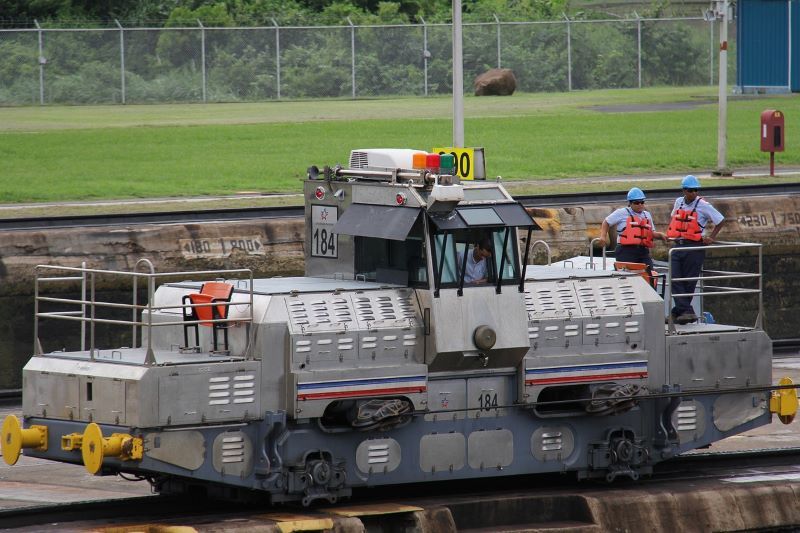
Panama’s customs authority (ANA, Autoridad Nacional de Aduanas) processes all incoming shipments at Panama’s ports: Balboa on the Pacific side; Colón, Manzanillo, and Cristóbal on the Atlantic side. Most expat shipments arrive at Balboa if coming from the US West Coast or through the Panama Canal.
All containers are fumigated at the port of entry on arrival. This is routine and applies to every shipment regardless of origin. If your shipment contains wood furniture or wooden articles, you must obtain a Quarantine Import Permit from MIDA before the container arrives. If not, it may be delayed.
The customs clearance process involves submitting your documentation, paying any duties assessed, and releasing your goods for delivery to your Panama address.
Daily storage fees accumulate while goods sit in the port warehouse waiting for clearance. Every day of delay after your container’s arrival is a fee you are paying. The way to prevent this is to have your customs agent in place and your documentation complete before the ship docks.
Good to know: Inspection is common when shipping to Panama. A customs officer may open and review a portion of your shipment against the inventory list. This is routine, not a problem signal.
How to Ship: Step by Step
Here’s how to ship to Panama step-by-step.
- Get quotes from multiple international movers. Prices vary considerably. Get at least three door-to-door quotes, ensuring each includes origin charges, ocean freight, destination charges, customs brokerage, and last-mile delivery to your Panama address. Not finding a good shipper easily? Use this free quote form to get up to five quotes from vetted moving companies.
- Engage a Panama customs agent. This is the single most important decision in the shipping process. Your customs agent handles documentation, communicates with ANA, manages the duty-free exemption paperwork if applicable, and coordinates delivery. Get a recommendation from the expat community; a bad customs agent will cost you far more in storage fees and delays than their fee saves.
- Inventory and pack. Create a detailed itemized list with descriptions and declared values for every item. Photographs of your goods before packing are useful if an insurance claim becomes necessary. Label boxes clearly with box numbers matching the packing list.
- Book your shipment and confirm the sailing schedule. Allow a week or two of buffer between your container being ready and your departure to Panama. You need to be physically present in Panama for customs clearance, and your goods must arrive within six months of your own arrival.
- Goods ship. Transit from US East Coast: 3 to 4 weeks. During this time, confirm your Panama address is confirmed and ready to receive delivery.
- Customs clearance on arrival. Your customs agent handles the documentation submission and duty payment. Expect 3 to 10 business days for clearance after arrival. Stay available by phone and email during this period.
- Delivery to your Panama address. Confirm the access for the delivery truck. Panama City has narrow streets and some gated communities have restrictions. If a full truck cannot reach your building, smaller-vehicle transfers may be needed (additional cost of US$500 to US$1,000).
Common Mistakes and Pitfalls
Here’s a list of common mistakes expats tend to have when shipping to Panama.
Shipping without a reliable customs agent. The most common expensive mistake. Customs documentation in Panama is specific, and errors result in goods sitting in the port warehouse accumulating daily storage fees. Two to three weeks of storage fees can easily add US$500 to US$2,000 to your shipping bill. A good customs agent, recommended by someone who has used them recently, is worth every dollar of their fee.
Shipping cars without accounting for import duty. Several expats have been surprised by the full import duty applicable to vehicles. Vehicles are not covered under the standard duty-free household goods exemption. Pensionado holders have a separate Law 6 vehicle import benefit, but even that has conditions. Confirm the exact duty assessment on your vehicle before it leaves your home country; once it is in port, you cannot simply ship it back.
Not being in Panama when goods arrive. Customs clearance requires your physical presence or a fully authorized power of attorney held by your customs agent. Being out of the country when your container docks means delays and storage fees until you return or the POA paperwork is resolved.
Assuming the duty-free exemption is always worth pursuing. The duty-free process itself involves customs agent fees, legal review, additional documentation, and processing time. For smaller shipments, the all-in cost of the exemption process can approach or exceed the duty you would have paid outright. Compare both options before committing to the exemption route.
Forgetting the Quarantine Import Permit for wood furniture. All containers are fumigated at port, and wood furniture requires an additional Quarantine Import Permit from MIDA, arranged before the shipment arrives. Missing this permit is a straightforward, avoidable cause of clearance delays.
Shipping humidity-sensitive items. Panama’s climate destroys books, paper documents, leather goods, and certain softwood furniture quickly. Items that survived fine in Denver or Toronto will not survive a humid tropical apartment in Panama City. Digitize documents, leave leather behind, and check your wood furniture species against Panama’s termite risk profile before packing.






'/%3E%3Cpath%20fill='%23b2b2b2'%20d='M241%20382q0%2016%2017%2026%2017%2011%2042%2011t42-11q16-11%2017-26V269H241'/%3E%3Cpath%20fill='%239f7e00'%20d='M241%20379q0%2014%208%2023%209%209%2021%209%2014%200%2021-9%209-9%209-23V269h-59'/%3E%3Cpath%20d='M241%20339v-70h59v110q0%2014-9%2023l-6%205v-68h-15v72q-8%200-14-4v-68zm59%2040c0%2022%2015%2032%2029%2032%2021%200%2030-18%2030-32v-40h-59'/%3E%3Cpath%20fill='%239f7e00'%20d='M266%20277v5h2v12h-3v-5h2v-5h-9v5h2v5h-4v9h3v18h-5v10h34v-10h-5v-18h3v-9h-4v-5h2v-5h-9v5h2v5h-3v-12h2v-5zm42%20101q0%2010%206%2017%206%206%2015%207%2010-1%2016-7%206-7%206-17v-29h-43'/%3E%3Ccircle%20fill='%230044ad'%20cx='329.5'%20cy='372'%20r='6'/%3E%3Cellipse%20fill='%230044ad'%20cx='300'%20cy='340'%20rx='16'%20ry='21'/%3E%3C/svg%3E) Español:
Español: Français:
 Deutsch: