This article will take approximately 17 minutes to read. Don't have the time right now? No worries. Email the ad-free version of the article to yourself and read it later!
Panama runs two parallel healthcare systems: a public one (CSS and MINSA) that is nearly free but slow, and a private one that rivals North American quality at 40 to 60% lower cost. Most expats use private care for everything routine and treat public coverage as a backup safety net. Here’s how both systems work and what expats actually do once they are living here.
Healthcare is the question I get asked most by people seriously considering Panama as a long-term home. They’ve heard the prices are dramatically lower than in North America. They want to know whether the quality is real or whether the savings come with trade-offs that only become visible when you actually need a doctor.
Panama’s top private hospitals in Panama City are excellent. The equipment, the training of the physicians, and the facilities are genuinely comparable to what you would find in a well-resourced US medical center. Outside the capital, quality drops but remains adequate for most situations. The public system is functional but not practical for most expats unless they have contributed to Panama’s social security system.
Disclaimer: This article may include links to products or services offered by ExpatDen's partners, which give us commissions when you click on them. Although this may influence how they appear in the text, we only recommend solutions that we would use in your situation. Read more in our Advertising Disclosure.
Contents
Key Takeaways
- Panama has two parallel systems: public (CSS and MINSA) and private. Most expats use private care exclusively.
- Private consultations run US$30 to US$80; emergency room visits US$30 to US$100. Hospitalizations can be expensive, so private health insurance is strongly recommended.
- Panama City’s flagship hospitals (Hospital Punta Pacifica, Hospital Nacional, The Panama Clinic) offer care comparable to North American standards at 40 to 60% lower cost.
- Private hospitals typically require payment upfront before treating non-emergency cases. Bring a card or insurance documentation.
- English-speaking doctors are widely available in Panama City’s private hospitals; less so in public facilities and outside the capital.
- Outside Panama City, David has solid hospital care; Boquete is 45 minutes from David. Remote areas should plan for medical transport to the city for anything serious.
How Healthcare Works in Panama
Panama’s healthcare divides cleanly into three systems that operate largely independently of each other. There are 2 public system and 1 private system.
- The Caja de Seguro Social (CSS) is Panama’s social security health system, funded by payroll contributions. Panamanian workers and their employers contribute to CSS throughout their careers; in return, CSS members have access to CSS hospitals and clinics. The coverage is comprehensive and the cost to members is minimal
- The Ministerio de Salud (MINSA) operates public clinics and hospitals funded by government revenue. MINSA facilities are theoretically open to legal residents, including expats with residency. In practice, they are overcrowded, under-resourced outside Panama City, and conduct most interactions in Spanish. For routine matters, the wait times alone make them impractical for most expats.
- The private system is what Panama is internationally known for. Private hospitals and clinics, concentrated in Panama City and to a lesser extent in David, operate to high international standards, employ physicians trained domestically and internationally (including at US, European, and Latin American institutions), and price their services at 40 to 60% below equivalent US costs. No prior registration, no contribution history: you pay and receive care.
The Public System (CSS and MINSA)
Panama’s public healthcare runs through two separate government bodies that are easy to confuse but work very differently. CSS is the contributory social security system; MINSA is the safety-net system funded from general taxes. The main appeal of both is cost, but who can actually use each one is the part that matters for expats.
CSS (Caja de Seguro Social)
Who they are: The Caja de Seguro Social is Panama’s social security institution, funded by payroll contributions from workers and their employers. It runs its own network of hospitals and polyclinics, entirely separate from MINSA, and members pay no co-pays or deductibles because they have already paid in through their salaries.
Who can get it: CSS is for contributors and their registered dependents (spouse and children). Expats formally employed by a Panamanian company are enrolled automatically by their employer.
Under Law No. 462 of March 2025, independent workers (including self-employed expats with formal Panamanian income) are now required to register with CSS and contribute 9.36% of taxable income for disability, old age, and death benefits; an additional 8.5% contribution for health and maternity coverage is optional. Expats without Panamanian income, such as retirees and remote workers earning abroad, remain outside the CSS system.
Pros:
- Comprehensive coverage, including catastrophic treatments (dialysis, cancer care, organ transplants) at little or no cost to members.
- No co-pays or deductibles once you are contributing.
- Covers registered dependents, not just the contributing worker.
- Operates its own dedicated hospital and clinic network.
Cons:
- Contributors only. No qualifying Panamanian income means no access, which rules out most retirees and remote workers.
- Long waits for specialist referrals and elective procedures.
- Care is delivered almost entirely in Spanish.
- Facility quality and equipment vary; the top private hospitals are a clear step up.
MINSA (Ministerio de Salud)
Who they are: The Ministerio de Salud is Panama’s Ministry of Health. It operates the public clinics (centros de salud) and hospitals funded from general government revenue, and it is the safety-net provider for everyone not covered by CSS. MINSA has the widest geographic footprint of any system in the country, reaching rural areas where private care does not exist.
Who can get it: MINSA is open to anyone physically in Panama, including legal residents with no CSS contributions. There is no enrollment or contribution history required; you simply pay a small fee per visit.
Pros:
- Open to all residents regardless of employment or contribution status.
- Very low cost: consultations run US$2 to US$5, and serious treatments are heavily subsidized.
- The widest geographic reach, including health centers in rural areas.
- Will not turn away a genuine emergency or a catastrophic diagnosis.
Cons:
- Chronically underfunded and understaffed; facilities are overcrowded, especially outside Panama City.
- Long wait times for anything that is not urgent; specialist referrals can take weeks to months.
- Spanish only in practice, with little to no English support.
- Older facilities and aging equipment compared with private hospitals.
Where public care genuinely matters for expats: if you gain formal employment in Panama, your employer will register you for CSS and those benefits become available. The public system also steps in as a last resort. For a catastrophic diagnosis with no insurance, MINSA hospitals will not turn you away, though the experience and timeline will be difficult.
The Private System
Panama City’s private hospitals are the genuine draw for health-conscious expats. The flagship institutions:
Hospital Punta Pacifica: the only JCI (Joint Commission International) accredited hospital in Panama; affiliated with Johns Hopkins Medicine International. English is spoken throughout. Specialists in every major discipline. The reference hospital for complex cases and medical tourism.
Hospital Nacional: one of Panama’s largest and most comprehensive private hospitals. Strong across most specialties; well-regarded by the local expat community for quality and responsiveness.
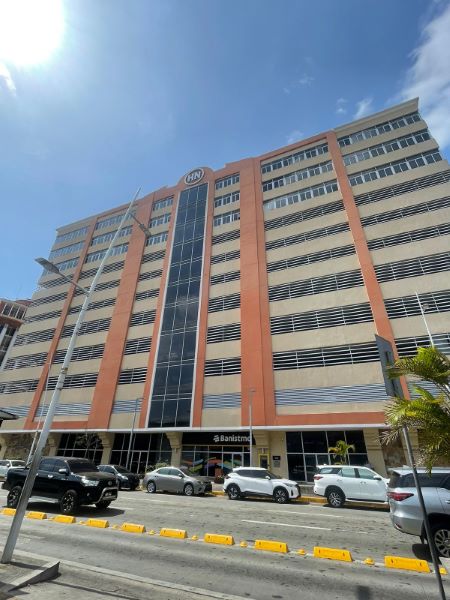
The Panama Clinic (Clínica Hospital San Fernando): established private hospital with a strong reputation among both Panamanian and expat patients. Full diagnostic and surgical capabilities.
Hospital Paitilla (formerly Centro Médico Paitilla): private hospital in the Paitilla district, now part of the Vithas international group. Good for consultations and outpatient procedures; recognised particularly for gynecology and pediatrics.
Physicians at the top Panama City private hospitals frequently hold credentials from US, Spanish, or Latin American medical schools and residency programs. The medical training standard is high. Diagnostic equipment (CT, MRI, PET) is current-generation at the leading hospitals.
Read more: Hospitals in Panama: What Expats Need to Know
What Healthcare Costs
| Service | Private (US$) | US Comparison (US$) |
|---|---|---|
| GP / general consultation | US$30 – US$80 | US$150 – US$300 |
| Specialist consultation | US$50 – US$150 | US$200 – US$500+ |
| Emergency room visit | US$30 – US$100 | US$500 – US$3,000+ |
| Hospital admission (per day) | US$400 – US$1,500 | US$2,500 – US$5,000+ |
| MRI scan | US$300 – US$600 | US$1,000 – US$3,000 |
| Routine blood panel | US$30 – US$80 | US$100 – US$400 |
Outpatient costs are highly manageable out-of-pocket. Where the numbers can escalate quickly is inpatient care: a serious illness or surgery requiring a multi-day hospital stay at a premium Panama City hospital can run US$20,000 to US$80,000 or more. That is dramatically below US pricing, but it is still a large sum for anyone without insurance covering it.
Good to Know: Panama’s private hospitals typically require payment (or confirmed insurance authorization) before beginning non-emergency treatment. If you arrive with only a foreign insurance card and the hospital has not pre-authorized your coverage, you may be asked to pay a deposit of US$3,000 to US$10,000 or more before the procedure begins. This surprises many expats who assume a foreign insurance card is equivalent to billing authorization. Confirm how your insurer works with Panama hospitals before you need a procedure.
Health Insurance Options
For most expats, private health insurance is not optional: it is a financial necessity given the potential cost of inpatient care.
Local Panamanian health insurance is available from insurers including ASSA, MAPFRE, and Global. Plans typically cost US$100 to US$300 per month for a healthy adult under 60. Premiums rise with age and pre-existing conditions. Local plans have the advantage of direct billing relationships with Panama City hospitals: the insurer pays the hospital directly rather than you paying and seeking reimbursement. The limitation is that local plans typically cover Panama only, which matters if you travel frequently.
International health insurance covers Panama plus multiple other countries. Premiums run US$150 to US$500 per month depending on age, coverage level, and deductible. Useful for expats who divide time between Panama and other countries or who want continuity of coverage during home country visits. The main caution: confirm the insurer has a direct billing arrangement with your specific Panama hospital before you need it. Without pre-authorization, you pay upfront and recover costs later through reimbursement, which can take weeks.
Budget option: MiniMed’s Expat Health Membership starts from approximately US$22 per month and covers outpatient care, lab tests, and specialist visits at participating providers. It is not a replacement for comprehensive hospitalization coverage but meaningfully reduces out-of-pocket costs for routine care. Verify current pricing at minimedly.com before purchasing.
Read more: Health Insurance in Panama: A Complete Guide for Expats
Healthcare Outside Panama City
Panama City is where the concentration of specialist medical infrastructure sits. Outside the capital, the picture is thinner but not as dire as many first-time researchers assume.
David (Chiriquí Province): Panama’s second city has a functioning private hospital infrastructure. Hospital Chiriquí and Hospital Mae Lewis are the main private facilities. Both offer general medicine, surgery, and emergency care; Hospital Chiriquí has recently expanded with new operating theaters and an intensive care ward, and now has more than 140 doctors and specialists. Specialist availability is narrower than Panama City but covers most common scenarios. Boquete is about 45 minutes from David, making David the practical medical hub for the western highland expat community.
Santiago (Veraguas): Adequate for emergencies. Complex cases are transferred to Panama City.
Bocas del Toro: Basic clinic-level care on the islands. For anything beyond minor ailments, you are looking at a flight or long journey to David or Panama City. Expats who live full-time in Bocas understand and plan around this.
Rural areas: The honest calculation is to treat rural Panama as “plan for medical transport to the nearest city.” Emergency response and diagnostic capability in remote areas are limited. Expats living off the beaten path should know where their nearest private hospital is and have a transport plan.
How Expats Actually Use the Healthcare System
Based on consistent patterns from the long-term expat community in Panama, here is how most people set up their healthcare lives:
They establish a relationship with a private GP first. A regular doctor who knows your history is the foundation. Most expats find their GP through community recommendations (Facebook groups, expat forums, or referrals from their neighborhood clinic). A good GP charges US$40 to US$80 per visit and can refer you to the right specialist when needed.
They carry insurance with direct billing at their hospital. Rather than the cheapest policy available, long-term expats gravitate toward plans that have confirmed direct-billing arrangements with their preferred Panama City hospital. Paying out of pocket and chasing reimbursement on a US$30,000 hospital admission is a cash-flow problem even if the insurer eventually pays.
They use Pensionado discounts on routine care. Pensionado visa holders receive 20% off private doctor visits and 15% off hospital bills under Law 6. For retirees using the private system for ongoing conditions, these discounts add up materially over a year.
They keep the public system as a backstop, not a primary. Long-term residents with formal employment who contribute to CSS have access to both systems and often use CSS for certain specialist referrals where wait times are acceptable. Non-CSS expats occasionally use MINSA for one-off minor things but do not rely on it.
They do not dismiss public care entirely. As one long-term expat put it: “The public system is your ultimate safety net. Don’t pretend it doesn’t exist just because you prefer private care. For a catastrophic diagnosis, you will want every option open.” CSS and MINSA cover catastrophic treatments (dialysis, cancer treatment, organ transplants) at a scale private insurance often does not fully cover.
Healthcare Traps Expats Fall Into
Assuming a foreign insurance card works like a credit card at the hospital. Private hospitals in Panama require either cash, a debit/credit card payment, or a confirmed pre-authorization from your insurer before non-emergency treatment begins. Several expats have reported being asked to put US$5,000 to US$15,000 on a card before a scheduled surgery because their international insurer had not set up a direct billing arrangement with that specific hospital. Confirm your insurer’s Panama billing process before you need it.
Buying a local insurance policy without reading the pre-existing condition exclusion. Local Panamanian insurers typically apply a 2-year waiting period for pre-existing conditions. A policy purchased in good health that later reveals a pre-existing condition in the exclusion list can result in the insurer declining the claim that matters most. Read the exclusion list before signing. Ask explicitly whether your specific conditions are excluded.
Overpaying insurance brokers who mark up premiums. Independent insurance brokers in Panama can add 30 to 40% to premium costs on top of the insurer’s base rate. Use direct comparisons from multiple sources before settling on a policy. The Panama expat community has active discussions about specific policies and brokers; use those forums to sanity-check quotes before you commit.
Waiting until after a diagnosis to buy insurance. Once you have a significant diagnosis, underwriting tightens dramatically. Some conditions become explicitly excluded; others raise premiums to a level that makes the policy financially impractical. Get coverage in place before you need it, not after a health event makes you think of it.
Frequently Asked Questions
Can expats use the CSS public hospitals?
Only if you are a CSS contributor. Expats formally employed by a Panamanian employer are enrolled automatically. Under Law No. 462 of March 2025, self-employed expats with Panamanian income are now required to contribute to CSS. Retirees and remote workers earning abroad remain outside the CSS system. MINSA public clinics are technically open to legal residents but are rarely practical for expat use due to language barriers and wait times.
Are there English-speaking doctors in Panama?
Yes, widely at Panama City’s private hospitals. Hospital Punta Pacifica operates with English throughout. Most specialist physicians at the private hospitals in Panama City have English-language capability from international training or working with international patients. Outside Panama City, English proficiency among medical staff drops considerably.
Is it true that private hospitals require payment upfront?
Yes, for scheduled procedures. Emergency care is provided regardless of payment ability: hospitals are required by law not to turn away emergencies. For non-emergency procedures and admissions, expect either upfront payment or confirmed insurance pre-authorization.
What happens if I have a medical emergency outside Panama City?
Emergency services (911) respond nationally. For serious trauma or complex cases outside the capital, medical helicopter transfer to Panama City is available through specialized services. Expats in remote areas should know the location of the nearest hospital and have the number for air ambulance services. International health insurance policies often include medical evacuation coverage: confirm whether yours does.
How much should I budget for health insurance?
A healthy adult under 50: US$100 to US$200/month for a solid local plan or basic international plan. Ages 50 to 65: US$200 to US$400/month. Above 65: US$400+ depending on coverage level. These are indicative ranges; get quotes for your specific age and health history from at least three providers.


'/%3E%3Cpath%20fill='%23b2b2b2'%20d='M241%20382q0%2016%2017%2026%2017%2011%2042%2011t42-11q16-11%2017-26V269H241'/%3E%3Cpath%20fill='%239f7e00'%20d='M241%20379q0%2014%208%2023%209%209%2021%209%2014%200%2021-9%209-9%209-23V269h-59'/%3E%3Cpath%20d='M241%20339v-70h59v110q0%2014-9%2023l-6%205v-68h-15v72q-8%200-14-4v-68zm59%2040c0%2022%2015%2032%2029%2032%2021%200%2030-18%2030-32v-40h-59'/%3E%3Cpath%20fill='%239f7e00'%20d='M266%20277v5h2v12h-3v-5h2v-5h-9v5h2v5h-4v9h3v18h-5v10h34v-10h-5v-18h3v-9h-4v-5h2v-5h-9v5h2v5h-3v-12h2v-5zm42%20101q0%2010%206%2017%206%206%2015%207%2010-1%2016-7%206-7%206-17v-29h-43'/%3E%3Ccircle%20fill='%230044ad'%20cx='329.5'%20cy='372'%20r='6'/%3E%3Cellipse%20fill='%230044ad'%20cx='300'%20cy='340'%20rx='16'%20ry='21'/%3E%3C/svg%3E) Español:
Español: Français:
 Deutsch: