This article will take approximately 22 minutes to read. Don't have the time right now? No worries. Email the ad-free version of the article to yourself and read it later!
Dental procedures in Panama cost 50 to 75% less than in the US, with no exchange-rate risk since everything is priced in US dollars. Here’s what it costs, which clinics expats recommend, and how to plan around the two-visit requirement for implants.
I know expats who flew to Panama from the US specifically for dental work, got implants placed, spent two weeks enjoying Panama City, and went home having paid less than a single implant would have cost them back home.
Panama’s proximity to North America, combined with its USD economy and a dentist community that includes many US-trained practitioners, has made it one of the most practical dental tourism destinations in the Americas. If you’re planning to get dental care in Panama, here’s everything you need to know.
Disclaimer: This article may include links to products or services offered by ExpatDen's partners, which give us commissions when you click on them. Although this may influence how they appear in the text, we only recommend solutions that we would use in your situation. Read more in our Advertising Disclosure.
Contents
- Key Takeaways
- Why Panama for Dental Care
- What Dental Procedures Cost
- Quality and Standards
- Problems With Dental Care in Panama
- Recommended Clinics for Expats
- Visiting a Dental Clinic in Panama
- Paying for Dental Care
- Health Insurance
- Continuity of Care
- Going to Panama for Dental Tourism
- Costs That Don't Show Up in the Headline Price
- Frequently Asked Questions
- Is dental care in Panama safe and high quality?
- How much will I save compared to the US?
- Do I need to speak Spanish?
- Can I use my US or international health insurance in Panama?
- What about dental care in the Panama Pensionado program?
- How do I verify a dentist's license in Panama?
- What does a simple filling cost in Panama?
- Is dental treatment exempt from sales tax in Panama?
- Do I need a visa for a short dental tourism trip to Panama?
- Is sedation available if I am anxious or need a longer implant procedure?
- Will travel or international health insurance cover a Panama dental trip if something goes wrong?
- Can I go sightseeing right after treatment, or do I need recovery time first?
- Sources Cited
Key Takeaways
- Dental work in Panama typically costs 50 to 75% less than the same procedures in the US or Canada.
- Prices are in US dollars: no currency conversion risk, no guessing the exchange rate.
- A single dental implant runs US$1,500 to US$2,100; all-on-4 implants average US$8,000 (vs US$24,000+ in the US).
- Top Panama City clinics meet international standards; several dentists are US-trained or hold international certifications.
- Implant work requires two visits separated by three to six months, so plan this into your trip timeline.
- For residents: private dental care is the norm; Panama has no comprehensive public dental program for adults.
Why Panama for Dental Care
There are several reasons people choose Panama for dental care.
- Cost: A single dental implant in the US runs US$3,000 to US$6,000. The same procedure at a comparable-quality clinic in Panama costs US$1,500 to US$2,100, mainly because labor costs less.
- Quality: The quality is good, too. Equipment and materials often come from the same manufacturers US clinics use, including Straumann and Nobel Biocare implants.
- USD usage: Panama uses the US dollar. Plan a dental trip to Mexico or Costa Rica and you’re budgeting in pesos or colones, with the final bill depending on exchange rates that can move during the months between your consultation and your follow-up appointment. In Panama, the price quoted is the price you pay, in dollars, with no conversion involved.
- Location: Plenty of countries offer great dental care at a good price, Thailand and Turkey among them, but they’re a long haul from North America. Panama is around three hours by air from Miami, so there’s no overnight flight to reach your treatment.
Panama’s dentists are licensed through MINSA (Panama’s Ministry of Health), and the country has a strong tradition of dentists completing graduate training in the US, Spain, and Latin American specialty programs before returning to practice. At the top clinics in Panama City, you get clinical quality comparable to the US at a very different price point.
Read more: Health Insurance in Panama: A Complete Guide for Expats
What Dental Procedures Cost
These are current Panama City market prices at established, reputable clinics. Budget clinics charge less; luxury concierge clinics serving medical tourism clients charge somewhat more.
| Procedure | Panama (US$) | US Comparison (US$) |
|---|---|---|
| Single dental implant (post + crown) | US$1,500 – US$2,100 | US$3,000 – US$6,000 |
| All-on-4 implants (full arch) | US$8,000 avg | US$24,000+ |
| Porcelain veneer (per tooth) | US$400 – US$700 | US$1,200 – US$2,500 |
| Dental crown (porcelain) | US$500 – US$800 | US$1,500 – US$2,500 |
| Root canal (molar) | US$300 – US$500 | US$700 – US$1,500 |
| Dental cleaning (prophylaxis) | US$50 – US$100 | US$150 – US$350 |
| Tooth extraction (simple) | US$50 – US$150 | US$200 – US$400 |
| Teeth whitening (in-office) | US$200 – US$400 | US$500 – US$1,000 |
Good to know: Panama runs about half the cost of stateside dentistry, but Colombia and Costa Rica come up constantly as cheaper still, with implants quoted around US$700 to US$1,000 in Medellín against US$1,600 to US$1,800 in Panama. If price is your only criterion, Panama isn’t the cheapest stop in the region.
Quality and Standards
Panama’s dental sector is regulated by MINSA, and all practicing dentists must hold a valid license registered with the Ministry. The Colegio de Odontólogos de Panamá (Panama Dental Association) maintains professional standards and handles grievances.
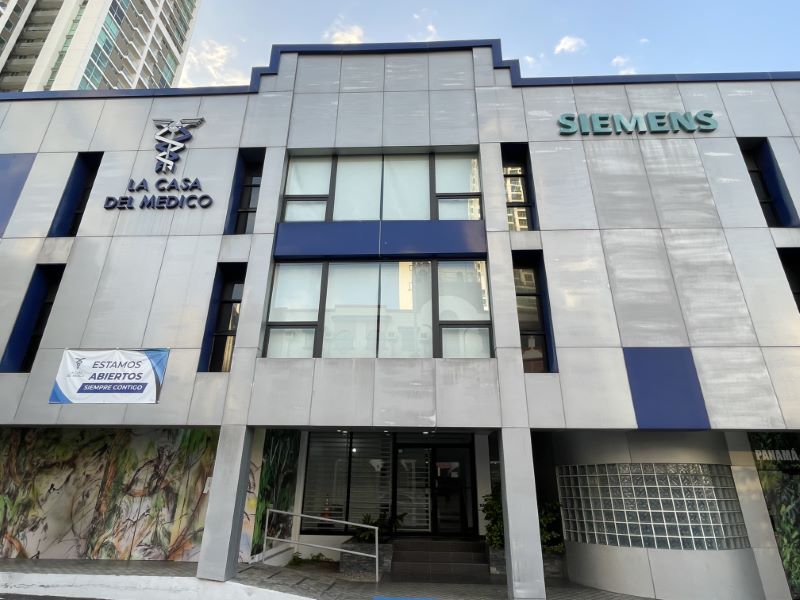
At the upper tier of Panama City dentistry, standards are high by any international measure. Several of the recommended clinics below operate in or adjacent to accredited hospitals. Hospital Punta Pacifica, affiliated with Johns Hopkins, is the only JCI-accredited hospital in Panama, and several of the country’s reputable dental specialists maintain clinics in or around it.
Modern equipment is standard at reputable practices:
- digital X-rays
- CEREC same-day crowns
- 3D cone beam
- CT imaging for implant planning
- digital impressions
The technology gap between a well-equipped Panama City clinic and a well-equipped US clinic is minimal.
Community Input: Patient satisfaction at Panama’s top dental clinics is broadly strong. Expat and medical tourism forums consistently report high satisfaction rates for straightforward procedures (cleanings, crowns, veneers) and generally good outcomes for implant work at established practices.
Problems With Dental Care in Panama
Dental care in Panama looks good on paper, but the expat community reports a couple of recurring problems.
- Upselling: Forum posters describe dentists who “refused to do a cleaning if I did not agree to have an onlay done,” and others who were pushed toward an extraction that would then require a US$2,000-plus implant.
- Lack of a backstop: As one long-term resident put it, medical trades in Panama don’t require malpractice insurance, “and therefore you are not likely to have any recourse if you feel that the procedures you have done are less than satisfactory.”
So get a second opinion before agreeing to anything structural, stick to clinics attached to or recommended through the major hospitals, and walk away from any dentist who won’t clean your teeth without also selling you extra work.
Recommended Clinics for Expats
These are the clinics that appear most consistently in expat recommendations, medical tourism guides, and community forums. All are in Panama City unless otherwise noted.
Pacific Dental Clinic
Located inside the JCI-accredited Hospital Punta Pacifica complex, Pacific Dental Clinic is a natural referral point for expats already treated at Punta Pacifica. The clinic works to the hospital’s standards, and it’s an easy choice if you need your dental and medical care coordinated. English-speaking staff.
Services include general dentistry, implants, cosmetic procedures, and orthodontics. The Punta Pacifica location is convenient for expats living in Costa del Este, San Francisco, or El Cangrejo.
Clinica Ford Dental Spa
Located in Marbella, Clinica Ford Dental Spa is one of the clinics named most often in expat communities and dental tourism sources. It has operated for over 18 years and specializes in periodontics and implants. The clinic offers a five-year guarantee on implant work, which is worth confirming in writing at the consultation stage.
Bilingual staff (English and Spanish), and a strong reputation specifically for complex implant cases. Confirmed still operating as of 2026.


DENTAL WORKS
Located on Via Israel, DENTAL WORKS is a well-regarded full-service dental clinic frequently mentioned in Panama City expat circles. Known for clear pricing and English communication throughout the treatment process. General dentistry, cosmetics, implants, and orthodontics.

Centro Odontologico Paitilla
Located in Marbella, one of Panama City’s established medical districts, Centro Odontologico Paitilla has been operating since 1990 and has 12 fully equipped dental chairs. General and specialist dental services, with English-speaking dentists on staff. Long-term expats recommend it as a reliable option for both routine work and complex procedures.
Outside Panama City: Clinica de Especialidades Odontologicas (David)
For expats living in or around Boquete and the western highlands, David is the nearest city with specialist-level dental care. Dr. Serrano and Dr. Arias at the Clinica de Especialidades Odontologicas in David provide specialist dental care in English, Spanish, and German; the German-language service is a particular draw for the large German-speaking expat population around Boquete.
Low-Cost Option: Universidad de Panamá Dental Clinic
The Faculty of Dentistry at Universidad de Panamá operates a public dental clinic offering treatment at very low cost. Outside patients pay around US$3 for a consultation and US$10 for a simple extraction. X-rays are free.
It’s affordable, but it isn’t for everyone. The clinic is staffed by dental students under faculty supervision, which means:
- Waiting times can be long.
- You’re treated in a teaching-clinic environment.
- The overall experience may be less comfortable than a private clinic.
Good to know: Don’t choose a dentist on price alone. Panama has excellent dental care and mediocre dental care at a range of price points. A clinic charging 30% below every competitor in Panama City is worth investigating carefully. Ask for credentials, MINSA registration, and a portfolio of relevant work before committing to a significant procedure.
Visiting a Dental Clinic in Panama
Visiting a dental clinic in Panama is straightforward, especially at the expat-oriented clinics where English is spoken. Here’s how the process usually works.
- Shortlist a clinic and make contact. Email or WhatsApp two or three clinics with a short description of what you need. Most reply quickly, and many will give a rough quote before you ever set foot in Panama.
- Send your records ahead. If you have recent X-rays or a panoramic scan, send them over so the dentist can review your case in advance. This is especially useful for implant work, where bone density matters.
- Book the consultation first. Schedule the consultation and X-rays as your first appointment. The exam establishes your treatment plan and a firm price before any work begins.
- Get the plan and price in writing. Before treatment starts, confirm the full treatment plan, the total cost, and any guarantee in writing. Reputable clinics do this as a matter of course.
- Have the treatment done. Simple work like a cleaning, filling, crown, or extraction is often finished within the same week. Implants run across two trips a few months apart.
- Keep your paperwork. Ask for an itemized receipt and a copy of your X-rays and treatment notes. You’ll want these for insurance claims and for any dentist who continues the work back home.
Paying for Dental Care
Paying is simple because Panama uses the US dollar (the local balboa is pegged to it 1:1). The price you’re quoted is the price you pay, with no currency conversion and no exchange-rate guessing.
- Cash (USD) is accepted everywhere and is the simplest option. For larger procedures, paying cash sometimes earns a small discount, so it’s worth asking.
- Credit and debit cards (Visa and Mastercard) are accepted at most established Panama City clinics. Some add a card-processing surcharge, so ask whether the quoted price changes when you pay by card. American Express is less widely accepted.
- Bank or wire transfer is common for larger treatments like implants or full-arch work, often as a deposit to reserve materials and lab time, with the balance due on completion.
For multi-stage work, expect to pay a deposit up front and the balance as treatment progresses. Insurance rarely bills the clinic directly, so in most cases you pay first and claim reimbursement afterward. Keep every itemized receipt.
Health Insurance
Dental care in Panama is mostly paid out of pocket, and the prices are low enough that many expats simply budget for it rather than insure it. Insurance plays a smaller role here than you might expect.
The Caja de Seguro Social (CSS, Panama’s social security system) includes some dental benefits for members, but coverage is limited and wait times for specialist work are long. Most expats and most middle-class Panamanians use private dental practices for everything beyond basic extractions.
Most expat health insurance plans (local or international) exclude dental unless you purchase a specific dental rider. Get dental coverage confirmed in writing before you need it, and read the exclusions carefully. Cosmetic procedures (veneers, whitening) are almost universally excluded.
Continuity of Care
Dental work doesn’t end when you walk out of the clinic. If you split your time between countries or fly home soon after a procedure, plan for follow-up before you need it.
- Keep copies of everything: X-rays, treatment notes, the implant brand and model, and any guarantee. A dentist back home will want these to continue or repair the work.
- Ask about the guarantee: find out what happens if something fails after you’ve left. Reputable implant clinics offer multi-year guarantees, but confirm how a remake or remote follow-up would actually be handled.
If you divide your time between Panama and another country, find a home-country dentist who is willing to maintain work started abroad and communicate with your Panama clinic. Some US dentists are reluctant to work with foreign dental records; establish this relationship before you need emergency care at home.
Read more: Hospitals in Panama: What Expats Need to Know
Going to Panama for Dental Tourism
For expats traveling specifically for dental work, the trip structure depends on what you need done.
For Cleanings, Crowns, Veneers, and Extractions
These procedures can be completed in a single visit of three to 10 days. You typically need one or two appointments: an initial consultation and X-rays, then the procedure itself. Some clinics have CEREC technology, which produces a porcelain crown the same day instead of leaving you to wait for a lab-fabricated one.
Schedule the consultation as your first appointment and confirm the timeline before you book flights.
For Dental Implants
Implants require two trips, separated by three to six months. Each trip needs three to five days for the procedure and follow-up.
- The first trip is for placement of the titanium post. The bone then needs three to six months to osseointegrate (fuse with the implant).
- The second trip installs the permanent crown on the integrated post.
The two-trip requirement for implants is standard, regardless of where you have the work done.
For All-on-4 or Full-Arch Work
Full-arch implant procedures require careful planning across both trips. The first visit may run five to 10 days for initial extraction, implant placement, and temporary prosthetics; the second visit, after healing, is another five to 10 days for final fittings and permanent prosthetics. Work with the clinic’s coordinator to map out the full timeline before you commit to dates.
Tip: Have a complete panoramic X-ray and dental records from your home dentist sent to the Panama clinic before your first appointment. This saves time at the consultation and helps the dentist assess your bone density for implant work before you travel.
Costs That Don’t Show Up in the Headline Price
The prices above are baseline procedure costs. For implants especially, several supporting steps get quoted separately and can add real money to the total. A bone graft or sinus lift, needed when there is not enough bone to anchor an implant, typically runs US$150 to US$2,100 depending on complexity. Many clinics bill 3D cone-beam imaging separately from the consultation. IV sedation is priced per hour on top of the surgical fee, and full-arch cases often need a temporary prosthetic while the permanent one is fabricated, a separate line item from the final zirconia work. Ask for a single written quote that includes every likely add-on before you book flights, not just the headline procedure cost; a clinic that will not itemize this in writing before treatment starts is a red flag. These savings mirror Panama’s broader affordability, so see our full breakdown of the cost of living in Panama for how far your budget stretches beyond the dentist’s chair.
Frequently Asked Questions
Here are some frequently asked questions about visiting a dentist in Panama.
Is dental care in Panama safe and high quality?
At the top clinics, yes. Panama City’s best dental practices use modern equipment, employ MINSA-registered dentists, many of whom trained internationally, and operate in or near JCI-accredited hospitals. As anywhere, quality varies; the clinics recommended in this article are the consistently well-regarded ones.
How much will I save compared to the US?
You’ll save 50 to 75% on most procedures. A single implant that costs US$4,000 to US$6,000 in the US runs US$1,500 to US$2,100 in Panama. All-on-4 full-arch implants that cost US$24,000+ in the US average around US$8,000 in Panama. Add round-trip flights from Miami (typically US$150 to US$400) and the savings still hold.
Do I need to speak Spanish?
The clinics recommended in this article all have English-speaking staff. For most expat dental care in Panama City, English is sufficient. Outside the capital, the situation varies, which is one reason the Clinica de Especialidades Odontologicas in David, with trilingual English/Spanish/German staff, stands out for western highlands expats.
Can I use my US or international health insurance in Panama?
For medical treatment, possibly; check your policy. For dental, almost certainly not, unless you have a dental rider. International health insurance policies typically exclude routine dental and cosmetic procedures.
What about dental care in the Panama Pensionado program?
The Pensionado visa provides discounts on many goods and services in Panama, and the dental discount is a flat 15%, since the higher 15% to 20% you sometimes see quoted covers general medical and hospital care, not dentistry (for the program’s other perks, see our guide to retiring in Panama). Confirm it at your specific clinic; not all private dental practices take part in the program.
How do I verify a dentist’s license in Panama?
All licensed dentists must be registered with MINSA and the Colegio de Odontólogos de Panamá. Ask to see the dentist’s MINSA registration directly. A reputable clinic will produce it without hesitation.
What does a simple filling cost in Panama?
A composite (tooth-colored) filling typically runs US$90 to US$150 at Panama City clinics, well below the US$150 to US$300 common in the US. Fillings are usually done same-day in one visit, with no separate follow-up unless the tooth needs a crown instead.
Is dental treatment exempt from sales tax in Panama?
Yes. Dental and medical care are exempt from ITBMS, Panama’s 7% sales tax, so the price a clinic quotes is the price you pay, with nothing added at checkout. Cosmetic spa and wellness services are the exception; those still carry the tax.
Do I need a visa for a short dental tourism trip to Panama?
No, if you are from a visa-exempt country. US and Canadian citizens get up to 180 days visa-free as tourists; most other visa-exempt nationalities get 90 days. You will need a passport valid at least three months beyond arrival and proof of onward travel.
Is sedation available if I am anxious or need a longer implant procedure?
Yes. Most single implants are placed under local anesthesia alone, but IV sedation is widely available at Panama City clinics for anxious patients and longer surgeries like all-on-4 placement. Confirm sedation options and any added cost during your consultation, before the day of the procedure.
Will travel or international health insurance cover a Panama dental trip if something goes wrong?
Almost never for the dental work itself; most international health plans exclude routine and cosmetic dental. What some travel policies do cover is trip disruption, like a flight change for an unplanned extra visit, or emergency medical evacuation for a complication. Read the dental exclusions before you travel, not after, and know your options at Panama’s accredited hospitals and across Panama’s healthcare system if a dental trip ever turns into a medical one.
Can I go sightseeing right after treatment, or do I need recovery time first?
For cleanings, fillings, and whitening, there is no real downtime. After an extraction or implant placement, plan on one to two quiet days: no strenuous activity, no alcohol, and avoid flying immediately if you had IV sedation. Simple cosmetic work rarely interferes with a Panama vacation; surgical work does, at least for the first 48 hours.
Sources Cited
- DGI (Direccion General de Ingresos, Panama): dental and medical services are exempt from Panama’s 7% ITBMS sales tax (Fiscal Code Article 1057-V).
- Ministry of Commerce and Industries (MICI), Law 6 of 1987: the statute establishing the retiree/pensioner discounts, including the flat 15% dental rate.
- Newsroom Panama: confirms the 15% dental/optometry discount versus 15% to 20% for general medical services.
- Medical Tourism Packages (Dental Implants in Panama): implant, veneer, root canal, all-on-4, and filling prices, plus sedation availability.
- Medical Tourism Packages (Dental Tourism in Panama): cost-table cross-check and additional-cost items (bone graft, sinus lift, imaging).
- NDM Legal: the 180-day (US/Canada) and 90-day (other visa-exempt nationalities) tourist stay figures.
- Wikipedia (Panamanian balboa): the balboa’s 1:1 peg to the US dollar and USD as legal tender in Panama.



'/%3E%3Cpath%20fill='%23b2b2b2'%20d='M241%20382q0%2016%2017%2026%2017%2011%2042%2011t42-11q16-11%2017-26V269H241'/%3E%3Cpath%20fill='%239f7e00'%20d='M241%20379q0%2014%208%2023%209%209%2021%209%2014%200%2021-9%209-9%209-23V269h-59'/%3E%3Cpath%20d='M241%20339v-70h59v110q0%2014-9%2023l-6%205v-68h-15v72q-8%200-14-4v-68zm59%2040c0%2022%2015%2032%2029%2032%2021%200%2030-18%2030-32v-40h-59'/%3E%3Cpath%20fill='%239f7e00'%20d='M266%20277v5h2v12h-3v-5h2v-5h-9v5h2v5h-4v9h3v18h-5v10h34v-10h-5v-18h3v-9h-4v-5h2v-5h-9v5h2v5h-3v-12h2v-5zm42%20101q0%2010%206%2017%206%206%2015%207%2010-1%2016-7%206-7%206-17v-29h-43'/%3E%3Ccircle%20fill='%230044ad'%20cx='329.5'%20cy='372'%20r='6'/%3E%3Cellipse%20fill='%230044ad'%20cx='300'%20cy='340'%20rx='16'%20ry='21'/%3E%3C/svg%3E) Español:
Español: Français:
 Deutsch: