This article will take approximately 20 minutes to read. Don't have the time right now? No worries. Email the ad-free version of the article to yourself and read it later!
A first-hand, unfiltered look at life in Greece from someone who has lived across the country, covering culture, climate, daily realities, costs, and what expats should know before living here.
Greece is the country I was born in. But more than that, it is a place I’ve seen through the eyes of a kid, a visitor, a working tour guide and an expat, as I returned many years later in my adult life. More than that, I’ve been lucky to call various places within Greece home. From the beautiful island of Crete, to the main city of Athens and that of Thessaloniki in the north as well as smaller towns and islands.
Altogether, I’ve lived in 5-6 vastly different places around Greece, which creates a better overall picture of what you might encounter when you move here.
During my time here, I’ve also run various expat groups and interacted with newcomers, being able to share and advise on expectations as well as making the most of their time in the country.
If you’re an expat who is considering moving to Greece and want an unfiltered and realistic perspective, this article will cover 18 useful things you need to know before moving to Greece so you are better prepared.
Disclaimer: This article may include links to products or services offered by ExpatDen's partners, which give us commissions when you click on them. Although this may influence how they appear in the text, we only recommend solutions that we would use in your situation. Read more in our Advertising Disclosure.
Contents
- 1. Greece Has Real Winters
- 2. You Have to Go Outside Athens
- 3. Greece Has a Lot of Mountains
- 4. Family and Church Still Matter
- 5. Greeks Are Political, Loud and Direct
- 6. Smoking is Still Very Common
- 7. Bureaucracy Takes a Lot of Time
- 8. Real Estate is Within Reach
- 9. Shopping Like a Local Makes a Big Difference
- 10. Laid Back Doesn’t Mean Fewer Work Hours
- 11. Public Transport Has Limits
- 12. Coffee Culture Is Its Own Lifestyle
- 13. Word of Mouth Still Matters
- 14. Culture Is Centralized
- 15. Many Islands Shut Down in Winter
- 16. Ηealthcare Access and Location Are Important
- 17. Greek Is a Bit Hard to Learn
- 18. Stray Cats and Dogs are Common
1. Greece Has Real Winters
While I don’t want to start on a negative, a lot of people seem to think that Greece is a forever summer kind of a holiday place. Despite the sunshine marketing, Greece has four seasons. In the mainland specifically, winter months can be cold, damp and windy and there are also plenty of ski resorts to pick from if you enjoy skiing.
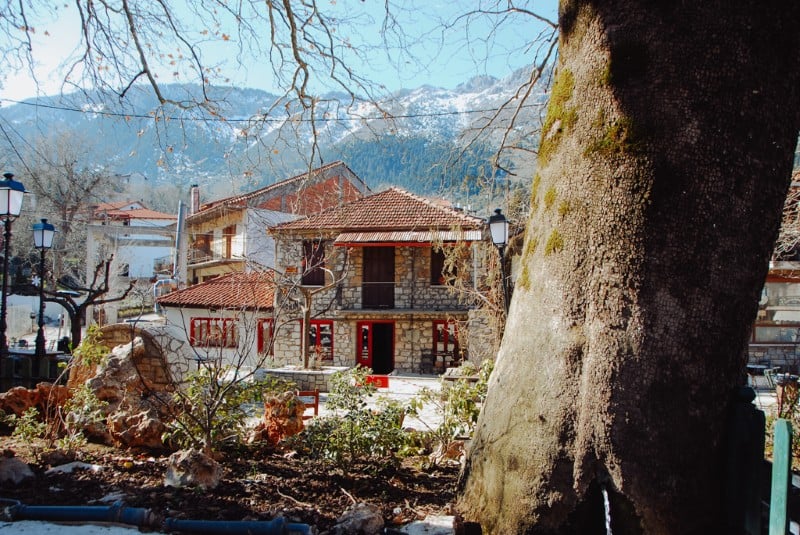
If you are based in Athens, then you’ll love Arachova, a couple of hours away, which also boasts a ton of other small villages perfect for hearty meat dishes. This is also the area of olive oil trees, so make sure to do an olive oil tasting here.
Snow in the mountains is normal, even on Crete island, and heating costs will come into play. Make sure to check my article on cost of living in Greece for a more thorough breakdown of what you can expect expenses wise.
2. You Have to Go Outside Athens
While this might sound like a “duh” comment, Athens will probably be your first experience within Greece, or a place you visit to see if it fits with your ideal lifestyle. I’ve met lots of people that fall in love with or alternatively hate Athens, and use that as a way to measure how the rest of the country will be.
At almost 5 million, Athens is half the population of the country and has a different pace of life, more traffic and way more exposure to international visitors than some of the smaller towns which will offer a completely different experience.
Neither is inherently bad, just something to think about if you’re planning a scouting trip before you decide to relocate to Greece. A few of the locations I would definitely recommend checking out are Nafplio and the coastal areas around the Peloponnese, Crete island, as well as Thessaloniki in the north.
I would also recommend driving to at least some part of the mainland to get a better feel for the landscape and towns along the way. Which brings me to my next point…
3. Greece Has a Lot of Mountains
Many people don’t realize how mountainous Greece is until they do their first road trip around the mainland. Over 80% of the country is considered mountainous with the biggest mountain range being that of Pindos. It starts in the north west border and traverses the country almost diagonally.
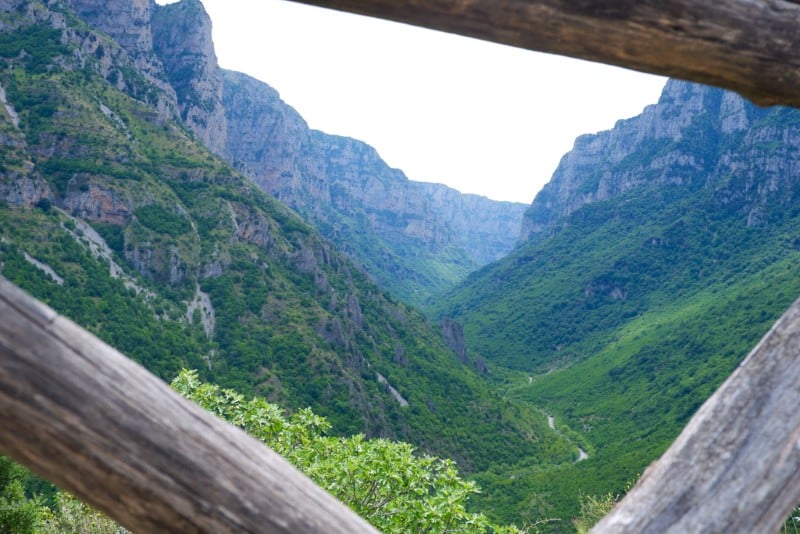
On the positive side, this makes the country ideal if you enjoy outdoor sports, hiking, road trips, small villages or nature exploration in general. Even some of the smaller islands are not flat. I’ve experienced this in the summer many times, like on the island of Andros near Athens, where summer temperatures in August can be close to 40°C, but when you travel to the other side and go up into the mountains, the temperature drops to 15 degrees with fog and rain.
Crete is similar, even though it is way south, with huge mountain ranges covering the central part of the island. In the north, you’ll find plenty of beautiful mountainous spots, like the villages known as Zagorohoria, where many Greeks holiday during the summer and winter period.
The villagers were known as some of the finest stonemasons of the time, which is why you’ll find stone built houses, arched bridges and beautiful walking paths.Some of the villages are not even accessible by car! It is a side of Greece not many people expect, which is why you have to check it out.
4. Family and Church Still Matter
This is another fun fact that I would encourage people to lean into and understand. Greek society has been influenced by Western and modern ideals but that doesn’t mean that some of the cultural elements don’t remain. Greek society has a strong focus on family and Orthodoxy traditionally, which might be more obvious if you live in a smaller town or if you meet locals.
Name days, for instance, aren’t just an old tradition but something Greeks still celebrate – even more than birthdays. Every person has a name day (through baptism) and growing up you were expected to have cake and drinks ready to treat your friends and visitors.
This also explains the old joke from the movie, “My Big Greek Fat Wedding” where everyone is named “Nikos”. Greeks traditionally name their children after their parents so certain names are tied to the location and family and get carried on again and again.
The same logic extends to a town’s name day and it is tied to the patron saint. For example, Athens is celebrated on November 21st honoring the Virgin Mary whereas Thessaloniki is October 26th, honoring Saint Demetrios.
You can also expect parades, church services and other festivities around these days.

5. Greeks Are Political, Loud and Direct
As a Mediterranean country, Greeks are often perceived as loud or “angry”. The old joke being that if you observe two Greek friends talking, you are not sure if they’re fighting or just talking about the weather. Usually, it is simply the latter but it takes a moment to adjust to it, as well as the tempo of the language and all the hand gestures.
One main difference with Northern European or North American countries is also how being direct is perceived. Here making a comment on someone’s age, work situation or talking about money is not considered particularly rude. Greeks also speak loudly over each other and interrupt often, which means that conversations can feel intense if you come from a more structured or individualistic culture.
Politics and the economy is also a constant conversation topic, for old and young, which is not helped by the fact that there are multiple political scandals dominating everyday life in the past few years (or forever!)
On the small talk front, expat friends have often expressed surprise over comments on age, or tiredness. For example, a Greek friend can directly say to another “Hey, you look tired” or “You look messy” without it being considered rude by most.
6. Smoking is Still Very Common
More than 1 in 4 Greek adults smoke daily, and while stats have been dropping compared to 20 years ago, Greece is still among the top countries for nicotine consumption within the EU. Although smoking indoors is technically illegal, it is not uncommon to see a bending of the rules in places outside the main centers.
You’ll also see smoking in outdoor areas, cafés, bars, and restaurants, which can be surprising if you’re coming from countries with strict bans.
7. Bureaucracy Takes a Lot of Time
Another thing that Greeks and non-Greeks would agree on and complain about is the amount of time it takes to get any paperwork done in Greece. The issue is not just the queues or insufficient instructions, but also how rules can change depending on the clerk you see at the government office you visit. This is one of the main things expats complainted about after they moved to Greece.
It is best to expect delays and repeat visits and be pleasantly surprised if it doesn’t happen. Hiring professionals to deal with government, tax, and legal issues is often a good idea, especially since not everything is provided in English.
Don’t expect a tech-forward country with great online systems yet, but we are making small moves towards the right place.
8. Real Estate is Within Reach
Greece is not uniform in its real estate prices but some parts are still within reach. So if you are dreaming of owning a house here one day, you might just need to look outside of Athens or some insanely expensive islands.
Some parts in Athens for example will be similar to the high cost of living areas in the US at about €4,000/m² (~US$4,200/m²). But the average across the country is much lower at €2,560 per square meter (~US$2,700/ m²).
For a quick comparison:
- Spain is currently €2,090 per m²
- Italy (€1,830 per m²)
Let’s compare that to a villa in Santorini which can easily reach €7,000–€10,000 per square meter and even higher near the caldera with a coastal property in the Peloponnese which is closer to 1,800–€2,800 per square meter.
So if you are set on getting a house or working towards an investment property, there are a lot of areas that are still undeveloped and have fair, low prices. You can end up buying a house within the €180,000–€280,000 range rather than well over a million.
Knowing where locals live makes a huge difference to your budget, so if you don’t want a fancy upcoming expat neighborhood you’ll keep your costs much lower.
9. Shopping Like a Local Makes a Big Difference
Until a few decades ago, Greek households did their shopping directly from producers rather than big supermarkets, which is good to remember when you’re planning your daily routine and shopping.

You will usually have better prices and produce if you head to the bakery for bread, the butcher for meat and the local farmers market for produce. Farmer markets are a particularly important part of the weekly routine, especially for older generations, and every neighborhood has set days where a street closes for the “laiki”.
When it comes to supermarkets, there is no huge difference in prices between Greece with the one exception being smaller mini-markets near tourist areas. Always try to go to a bigger chain supermarket if you are staying near a tourist location.
10. Laid Back Doesn’t Mean Fewer Work Hours
There seems to be a misconception that Greeks are lazy or work very little, I would generally fight back on that. Based on data from the EU, Greeks have one of the largest average working weeks in the European Union and often work overtime hours (with a new 13hour law being voted this year) and sometimes doing two or multiple jobs as well.
The perception of Greeks being laid back, in my opinion, comes a bit from the fact that breaks are social and evenings run late, so work-life balance looks different than other countries.
Even for families with school aged kids, it is normal to have a weekly schedule of after school activities until 9-10PM followed by dinner and then going to bed.
11. Public Transport Has Limits
If we try to see public transport in Greece through the lens of cities like Berlin, Stockholm, London or even Budapest, then it is very much lacking. There is an older and more established metro network in Athens that is considered good and a brand new and very limited metro for the center of Thessaloniki that was completed just recently after 20+ years of construction.
Public buses are available in most cities but they don’t always run on time or have sufficient space for everyone, which may or may not work for your needs.
Most people that don’t like to drive would prefer taxis in this scenario, but in smaller towns or the Greek islands you would definitely need to have a car. Walkability also varies greatly by location. Flat city neighborhoods and coastal towns are easier to navigate but the smaller towns and villages will require walking through steep streets.
12. Coffee Culture Is Its Own Lifestyle
Greece has a very specific coffee culture and the favorite coffee drink is either frappe (a strong instant coffee mix of coffee ice and sometimes sugar) or freddo espresso and freddo cappucino.

These iced coffee drinks encapsulate the culture of Greece perfectly. They are strong and meant to be drunk slowly during a period of hours, as the ice melts. When Greeks meet for coffee it usually can mean at least a few hours if not more, and day time socializing often replaces after work drinks.
If you are looking to retire in Greece, then I would definitely suggest establishing a coffee routine, and checking out all the coffee shops around your neighborhood for new friends. Coffee time is a good opportunity to meet new people and Greeks are generally talkative and open.
13. Word of Mouth Still Matters
Another thing that might surprise visitors is how many businesses lag behind the digital revolution. It is not uncommon to have big businesses without a website or online booking system and a lot of them, especially in smaller towns, rely on traditional means of communication like picking up the phone or advertising through friends and word of mouth.
The idea of recommendations and “who you know” is still strong in the country, and personal introductions are how things get done, although this is changing slowly. This might create a challenge in the beginning if you’re looking for a service in a smaller town and Google results are low or not existent.
I would also recommend calling ahead and not relying on Google Maps for opening hours, as these might not be updated, or places might be closed during the off season.
14. Culture Is Centralized
If you are a fan of museums, concerts, theatres and international events, then you will be better in or near Athens. Smaller cities in Greece do have the occasional big event but they might be geared more towards Greek speakers.
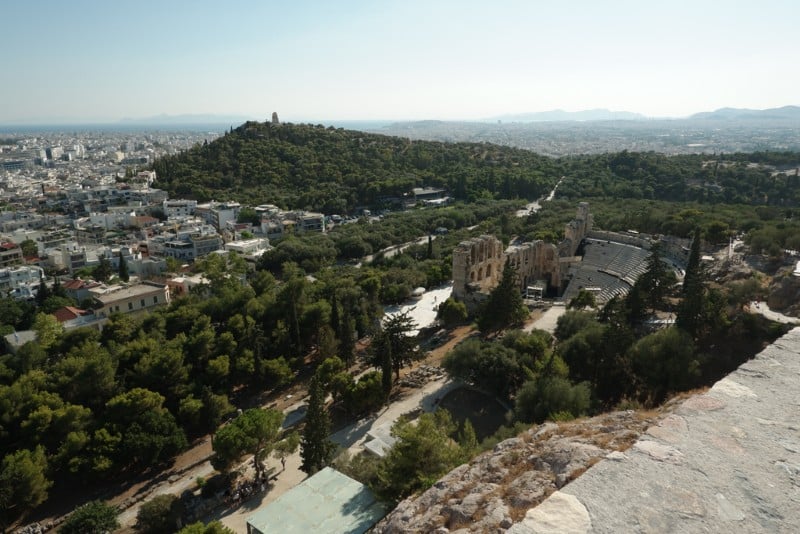
To have more options, I’d recommend you pick locations near Athens or in nearby Peloponnese where the wonderful Epidaurus festival takes place every summer. From there you can also drive to Athens within a few hours if the opportunity arises.
Similarly, islands are great if you are after swimming in the summer, slow living, a tight knit community or access to nature and mountains, but you’ll have to contest that with flying to Athens or taking a long and slower ferry if you want to see international events.
15. Many Islands Shut Down in Winter
Speaking of islands, the most popular ones are almost completely empty during the winter months. You’ll be good there if you want a small local population or prefer the contrast between empty streets and busy touristy periods. Most professionals or residents will actually leave during the winter months and go to Athens or stay to do renovations.
For a better balance, I’d recommend some of the larger islands like Corfu, Rhodes or Crete which have more life during the winter months but are still quiet.
16. Ηealthcare Access and Location Are Important
Αs we touch on places that are shut down in the winter, it is important to note healthcare access. I would definitely recommend taking a flight and ferry during the off season, before you decide on relocating to an island in Greece permanently. That way you’ll have a better understanding of the challenges during winter months and also visit some of the hospital routes.
The biggest hospitals are of course in the mainland, so this is where you’ll need to be directed to during a more intense health emergency. But even for more maintenance appointments, ferries and planes are sometimes cancelled in the winter due to bad weather, and you’ll need to travel back and forth to Athens.

A great in between option is again the Peloponnese with towns like Nafplio or Kalamata. You get a mid-sized town with access to nature and beaches, plus easy road access to Athens within a few hours maximum in case it is needed. Make sure to check out health centers near your preferred location as well so you know what to expect.
Of course, you can also speak with a relocation specialist or work with professionals in Greece to arrange those aspects in more detail.
17. Greek Is a Bit Hard to Learn
Greek is not the easiest language to learn, even though I find this has most to do with the alphabet. Once that is taken care of, it is easy to pick up words and expressions as Greek is a phonetic language meaning you mostly know what you read or write. In terms of social integration, Greek is not mandatory but much appreciated.

Many retirees find that joining local cafes or having a go to a local spot soon creates a sense of community, but it can also be done through language classes, religious or cultural events and expat groups that help them integrate into daily life.
One thing for sure and that is that Greeks appreciate when you make an effort to speak the language, even if it is a few words.
Find out more:
- My Personal Guide on Learning Greek for Beginners
- A Complete Guide on the Best Way to Learn Greek Alphabet
18. Stray Cats and Dogs are Common
Greece has a huge population of stray dogs and cats with some places having better laws to take care of them than others. There is even a popular organization called Adopt a Greek Cat that works to foster stray cats to European homes.
You’ll definitely come across a lot of Aegean cats, a specific breed that is native to the country. If you want to relocate with your own dog or cat, it must be said that Greece has been working for better inclusion of ferry friends in everyday life. The law allows for pets in rentals with some limits on numbers, but microchipping is mandatory.
Most ferry companies, like Blue Ferries, are also pet friendly, so you can travel across the islands with your pets as normal.




 Español:
  ไทย:
ไทย: