This article will take approximately 34 minutes to read. Don't have the time right now? No worries. Email the ad-free version of the article to yourself and read it later!
Thinking of moving to Croatia? Which city is right for you? This article dives into the cost of living, jobs, visas, healthcare, and lifestyle in five of Croatia’s most livable cities for expats.
Before moving to Croatia, I fell in love with Split before I had even set foot there. The coastal cityscapes, crystal blue waters, and Mediterranean sunshine made it feel like a vacation every day. So when the chance came, I didn’t hesitate to leave the hustle of Bangkok for this tranquil, lesser-known Croatian town.
However, living here in reality isn’t without its challenges. While the beauty is undeniable, there are aspects I hadn’t anticipated, like the bustling tourist seasons that leave no breathing room and a higher cost of living than expected. Additionally, while you’d think the paperwork here would be modern, it’s even more outdated than Thai bureaucracy.
Nevertheless, the charm of Croatia, unmatched by any other European city, lies in its natural beauty, tranquility, and classic appeal, drawing many to relocate. But without having visited, one might not realize each city has its own unique charm. So, in this article, I’ll introduce you to the five most livable cities, truly perfect for starting a new life.
Disclaimer: This article may include links to products or services offered by ExpatDen's partners, which give us commissions when you click on them. Although this may influence how they appear in the text, we only recommend solutions that we would use in your situation. Read more in our Advertising Disclosure.
Contents
- Key Takeaways
- Important Factors to Consider Before Moving to Croatia
- Best Cities in Croatia for Expats
- Other Noteworthy Cities
- Where Should You live in Croatia?
Key Takeaways
- Croatia might not be the first country that comes to mind, but it’s actually a great place to live in, with many cities perfect for settling down.
- Zagreb is ideal for office workers, IT professionals, families, and those looking for stable living costs. It offers good public transportation and has quality hospitals and clinics concentrated, making it comfortable for long-term living in a capital city that’s not overly expensive.
- Split is perfect for sea lovers, sun seekers, and outdoor enthusiasts, including digital nomads. However, expect a rise in living costs and rent during the summer, and finding long-term accommodation might be trickier than expected.
- Dubrovnik is ideal for those enchanted by historic coastal towns, offers a world-class luxurious atmosphere, or retirees with a high budget. It’s important to note the highest living costs in the country, and as a tourist city, it gets crowded during summer but remains quite quiet in winter.
- Pula is suitable for families and those wanting a mix of Roman historical ambiance and seaside living. It offers moderate living costs, complete healthcare and facilities, allowing for a slow-paced life without lacking anything.
- Rijeka is perfect for those who want to live in a port city with reasonable prices, get the ‘real city’ feel of local life without the full-on tourist scene. The cost of living is stable, traveling is convenient, and it offers port-related and industrial jobs with city life close to the sea.
- Other cities like Zadar, Rovinj, and Osijek are ideal for those seeking a unique version of Croatia — think seaside art and history, or a peaceful local vibe with a low cost of living rather than a famous tourist destination.
- Before moving permanently, it’s wise to try living there outside the tourist season, find long-term rental accommodation, get all your paperwork ready, and explore for yourself to see if the atmosphere and lifestyle of each city match what you really want.
Important Factors to Consider Before Moving to Croatia
If you’re planning to move permanently to Croatia, you might need to consider more paperwork and costs than you’d think. Croatia is a place where the bureaucracy is still not fully modernized, and most processes still rely heavily on paper. Plus, with the massive influx of tourists each year, the cost of living in tourist areas can be unnecessarily high. So, before moving to Croatia, I recommend considering these key factors:
Visa and Residency Status
After I actually moved to Croatia, the first thing I had to face was the “Visa and Residency Status,” which is quite different for those coming from EU countries compared to those like us from outside the EU. If you are an EU/EEA citizen, everything is unbelievably easy. You just need to register your residency with the local police (MUP) within 90 days and you’re all set.
But if you’re Non-EU like Thais, the options become diverse and complicated immediately. Whether it’s the Digital Nomad Visa, Work Visa, Student Visa, or applying for a Work Permit that requires a Croatian employer to sponsor you, my advice is not to underestimate Croatian bureaucracy. The processes tend to take much longer than expected, so preparing in advance is crucial.
I’ve already written a guide to moving to Croatia, covering preparation steps, how to apply for a visa, and detailed residency application methods. Anyone planning to relocate can use this as a guide. It helps save time and reduces confusion before the actual process begins.
Monthly Budget
Another thing many people aren’t prepared for is the cost of living. At first, I also wondered why living expenses in Split were so high. But when comparing various cities, the difference became quite clear. Especially in coastal cities, where prices skyrocket with the seasons without any warning.
On the other hand, Zagreb is the city with the most stable cost of living. Rent stays constant throughout the year, without fluctuations, and local goods are genuinely local prices, not inflated by tourists like in seaside towns.
But in popular cities like Split or Dubrovnik, prices jump immediately entering the tourist season. Many homeowners opt for short-term rentals instead, forcing those looking for long-term stays to compete for accommodations in the off-season, when prices noticeably drop.
But if you want to know the budget details for each city, you can continue reading at: Cost of Living in Croatia: How Much You’ll Need Per Month.
Croatian Language Skills
I feel that recently, Croatians have been speaking English well, or even if they don’t speak it, they’re more open to trying compared to when I first arrived. Speaking only English is enough to get by here, but knowing basic words like greetings, ordering food, or asking for prices can make life a lot easier. It also helps you truly connect with the locals more. I’ve started using simple words like “Dobar dan” (Hello), for example.
Job Market Needs
In Croatia, jobs are not very diverse for the working-age group. Especially in Split and Dubrovnik, there are mainly service and tourism business jobs. The easiest jobs to find are in restaurants, hotels, cafes, as guides, and in almost every type of service. Additionally, there is a year-round need for construction work, from electricians, plumbers, and builders to general laborers. As for agriculture-related jobs, like fruit picking or farm work, they do exist but are mostly in rural areas.
But if you’re looking for a better-paying office job, most opportunities are concentrated in Zagreb, the rapidly growing center for IT and Tech jobs including developers, engineers, and various technical roles. However, finding an employer willing to sponsor your visa or residency is more challenging than in the service or tourism sectors.
Or you can relocate with a Digital Nomad Visa. It’s not as hard as you might think. Here, the internet quality is in the world’s top 10, and there are beautiful views to enjoy all day. If you’re a Digital Nomad, you can practically choose any city as long as the internet is good and the cost of living suits your lifestyle. But if you’re planning to work within the formal system, the city you choose will determine your job opportunities and lifestyle.
The Climate You Want
What I like least about Croatia is the weather, with only 2-3 months of good weather all year round. Croatia has both continental and Mediterranean climates. In Zagreb, you’ll experience all four seasons fully: warm summers, but genuinely cold winters with snow. The coastal cities like Split, where I lived, and Dubrovnik, have long, hot summers. The first year I was there, the temperature soared to 45 degrees.
The winters aren’t as cold and snow is rare. Instead, you’ll often encounter strong winds, making outdoor life in winter quite challenging and requiring some adjustments.
Proximity to an International Airport
When I first moved to Split, I didn’t realize how it was better than other cities until the tourist season came. You can travel to Rome and Vienna in just 1-2 hours because Split has an airport. Another equally convenient city is Zagreb, which has an international airport offering flights to Scandinavia and other countries.
However, if you’re in other cities, you might rely more on buses or connecting flights. So, if you plan to travel frequently, choosing a city near a major airport like Zagreb or Split is much more convenient.

Choosing the Right Accommodation
I recommend if you’re planning to move, start looking for accommodation about 6 months in advance or find a reliable real estate agent. Finding long-term accommodation that covers the entire year is quite challenging these days due to the high demand in the real estate market from both tourists and expats. Without adequate preparation, you might end up with an expensive place or one that’s very far from the city.
Access to Healthcare and Insurance
Of course, when living abroad, having private insurance gives peace of mind. Before you’re familiar with the public health system or have your own regular doctor, something might come up requiring a visit to a doctor. Private insurance offers easier access to services and tends to cover medical expenses more comprehensively.
However, I must say that the public health system, like HZZO in Croatia, isn’t as bad as some might think. You can still visit doctors at clinics that are part of the system as usual. And for minor issues, you can walk into general pharmacies to buy medicine conveniently as well.
Best Cities in Croatia for Expats
Let’s see what popular cities for expats in Croatia are.
Zagreb: The Economic and Cultural Hub
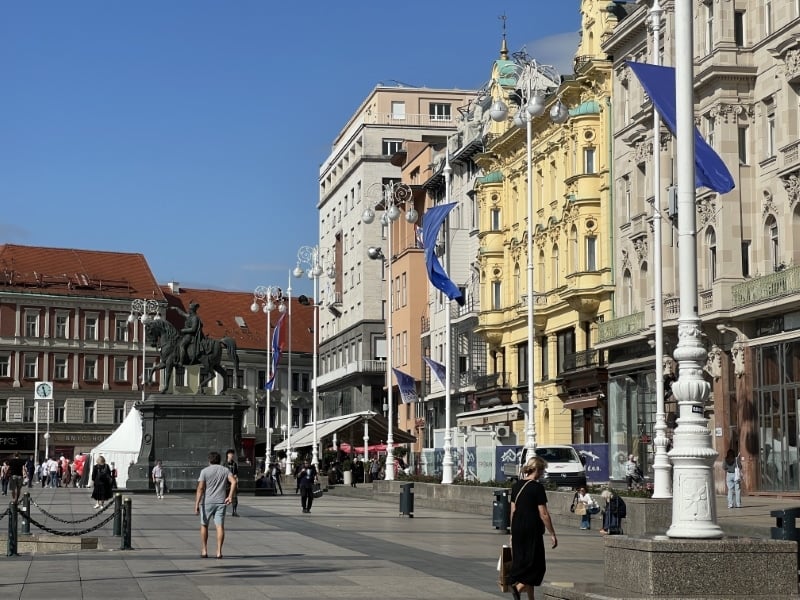
To me, Zagreb feels a lot like Hong Kong, with its diverse public transportation, commercial centers, educational institutions, and art and culture all around the city. But it stands apart with its Central European charm and Austro-Hungarian architecture, giving it a distinct allure compared to coastal cities.
Cost of Living in Zagreb
In Zagreb, the cost of living is more stable than in other cities because it’s an economic hub with many offices and universities. Plus, it’s relatively affordable. On average, basic expenses for food and essentials run around €350 to €450 per month, depending on whether you cook at home or eat out frequently. When I visited, I found the cost of living much cheaper than in Split because even meals at tourist spots were just €15 a plate.
Getting around the city is convenient, even if you stay a bit outside the city center. There are trams and buses for easy travel. A monthly pass costs around €35, or €0.5-1.5 per ride. Utilities such as electricity, water, internet, and phone are about €199 per month. Leisure activities like fitness or sports clubs average €54 per month. In summary, a moderate lifestyle might see monthly expenses per person in Zagreb around €800-900.
Healthcare in Zagreb
Healthcare in Zagreb is considered the most convenient and accessible in Croatia because the city is the country’s medical hub. This means there are numerous large public hospitals and leading private clinics clustered here. When sick or needing a specialist, appointments are usually faster than in rural areas, with more diverse treatment options available.
Major public hospitals, such as KBC Zagreb, KBC Sestre Milosrdnice, KB Merkur, KB Dubrava and KB Sveti Duh, have specialized expertise in fields ranging from pediatrics, endocrinology, complex surgeries, to the largest intensive care units in the country.
Meanwhile, on the private side, facilities like Sv. Katarina, Poliklinika Arista, Poliklinika Helena and Klinika Magdalena are a popular choice for Zagreb locals who want faster care or specialized services without long waits, ensuring life in this city feels secure that “when you’re sick, there’s always somewhere to rely on” in both public and private sectors.
Lifestyle in Zagreb
I really like Zagreb because it’s a city with simple charm, boasting many great coffee shops where people spend their days chatting away in cafes, convenient blue trams, year-round festivals, and green spaces for relaxation. People value a balanced life, making the city effortlessly livable and filled with small daily joys.
Safety in Zagreb
Zagreb is considered a safe and easygoing city with low crime rates, ideal for relocation. However, staying aware of crowded areas, pickpocketing, and deserted places at night is still necessary.
Who Should Live in Zagreb?
Zagreb is perfect for those who love a peaceful but lively atmosphere. It’s an ideal city for professionals, families, and those who want a friendly daily living environment. If you enjoy the café culture, a laid-back lifestyle, a variety of job opportunities, and a good work-life balance, Zagreb is a great choice.
It’s also suitable for those who value safety, easy tram travel, and year-round cultural activities. The cost of living is reasonable compared to Western European capitals, making it a great option for those wanting to live in a stable, warm, and charming European city.
Best Areas to Live in Zagreb
Personally, I love the city center the most because it’s full of cafes, restaurants, and the classic charm of European architecture. It’s also easily accessible with various transportation options. For those who prefer tranquility closer to nature, the suburbs or areas around large parks might suit your lifestyle better. In Zagreb, these are divided into neighborhoods as follows:
- Gornji Grad (Upper Town): A historic and quiet old town area, ideal for culture lovers, near St. Mark’s Church and museums.
- Donji Grad (Lower Town): Bustling center, heart of the city, near Ban Jelačić Square, restaurants and shopping, perfect for those who love lively life.
- Tkalčićeva Street: A bustling street of cafes, bars, and restaurants, ideal for those who enjoy nightlife and socializing.
- Maksimir: Around a large park with a lake and zoo, perfect for families and outdoor enthusiasts.
- Jarun: Area around the lake with water activities, sports, and nightlife, suitable for families and activity lovers.
- Novi Zagreb: A new area south of the Sava River, modern high-rise buildings with lower rent, malls, and parks, great for modern and convenient living.
Split, a Beautiful City with Crystal Clear Waters
Split is a city I love for its nature and people the most. Besides being Croatia’s large coastal city, it also offers numerous attractions and a relaxed atmosphere. I lived here for about a year, experiencing the local lifestyle. Most holidays were spent visiting the surrounding islands or chilling on the beach, listening to the waves.
There are plenty of activities like swimming, diving, rowing, and enjoying fresh seafood at seaside restaurants, making it both fun and relaxing.
Cost of Living in Split
In my opinion, Split is a city with a fairly high cost of living, and it fluctuates with the seasons, especially during the summer when tourists flood in. If we reference data from Numbeo, apartment rent for expats can be as high as €1,000+ per month, but off-season prices drop to around €500-700 per month. This is true because even though I live in the suburbs, rent is still around €500-900 per month, which is manageable if shared with a friend. But in the end, what you get is just one room in a Croatian family’s home, with only a small kitchen, bathroom, king-size bed, and sofa bed, much simpler than expected.
I therefore recommend that if you’re moving to the city, try to find accommodation from October to April or move during this time to adjust. If you move starting in May, it might be hard to find long-term accommodation, and you may have to move frequently, as I’ve done before.
Additional information from Numbeo talks about general expenses that are considered quite accurate. For a single person, the expenses might be approximately €836 per month excluding rent, while a family of four might spend around €2,962 per month. Basic food items like milk, eggs, bread, fruits, and meat range from €1-13 per unit.
Dining at a regular restaurant costs about €15 per meal, and a bus trip is around €1.25. There is also a ferry service at €1.5 and local train trips between cities at about €1.
Healthcare in Split
From what my Croatian friends have told me, the state hospital KBC Split in Split has longer waiting times compared to Zagreb, despite being the second-largest hospital in the country. Many people therefore turn to private clinics that offer specialized services, which are more suitable for expats, such as:
- Poliklinika Priska Med offers diagnostics, surgery, and physical therapy. The staff is friendly and speaks good English.
- Polyclinic Affidea Kalajžić focuses on specialized and professional services.
- Akromion – Special Hospital for Orthopedics is a specialized orthopedic hospital located in Krapinske Toplice, a leading center in this field.
Lifestyle in Split
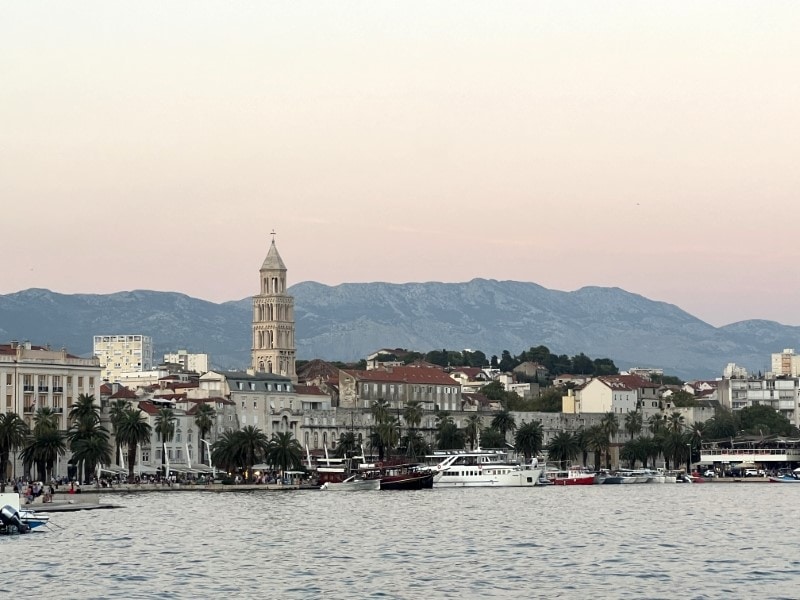
If you love the sea, sunshine, and beaches, you’re sure to fall in love with Split. Most accommodations here are within walking distance to the sea, and along the waterfront, you’ll find the Riva promenade for scenic walks, beaches to sunbathe on, or you can choose to sip coffee, meet friends, and enjoy some relaxing people-watching.
People here often love the sea and outdoor activities like swimming at Bačvice Beach or playing picigin (a local water sport) and hiking or cycling at Marjan Hill. Additionally, if you work remotely, the city also has a large Digital Nomad community, making it easy to build connections for work.
Safety in Split
I love strolling around Split at night because it’s an easy, safe city to explore, much less intimidating than big cities like Paris or Rome. It’s so safe you can leave valuables on the beach in broad daylight and take a dip without them disappearing. However, as with any city filled with unfamiliar faces, it’s generally best to remain cautious.
Who Should Live in Split?
If you love a laid-back, relaxing atmosphere and want to be close to nature, this town is perfect for you. With options for swimming, water sports, and hiking trails in Marjan Hill Forest Park to choose from every day, Split is ideal for those wanting to escape the hustle and bustle of big city life and enjoy a slower pace surrounded by beautiful seas, delicious food, and a lifestyle focusing on quality living and natural social interactions.
Best Neighborhoods to Live in Split
Split is quite a large city compared to other places. Personally, I live in Kaštel Sućurac, which is just outside the city of Split. It takes about 15 minutes to get into the city, but the cost of living is much lower. Additionally, there are other neighborhoods both within the city and in the outskirts, such as:
- Veli Varoš: An old neighborhood full of narrow stone alleys. Quiet and close to Diocletian’s Palace and Riva, perfect for those who love the traditional atmosphere.
- Bačvice: Close to beaches and night bars, lively both day and night, ideal for young people.
- Spinut: Quiet and peaceful, with green spaces near Marjan Park, suitable for families.
- Meje: Luxurious, beautiful sea views and close to Kašjuni and Ježinac beaches. Perfect for those who enjoy tranquility and a high quality of life.
- Kaštela: Small towns near Split: Quiet and peaceful, with a lower cost of living and easy access to the city.
- Trogir: A historical island town, UNESCO World Heritage site, beautiful and romantic, perfect for history lovers, with easy travel to Split and the airport.
Dubrovnik: A World-Renowned City
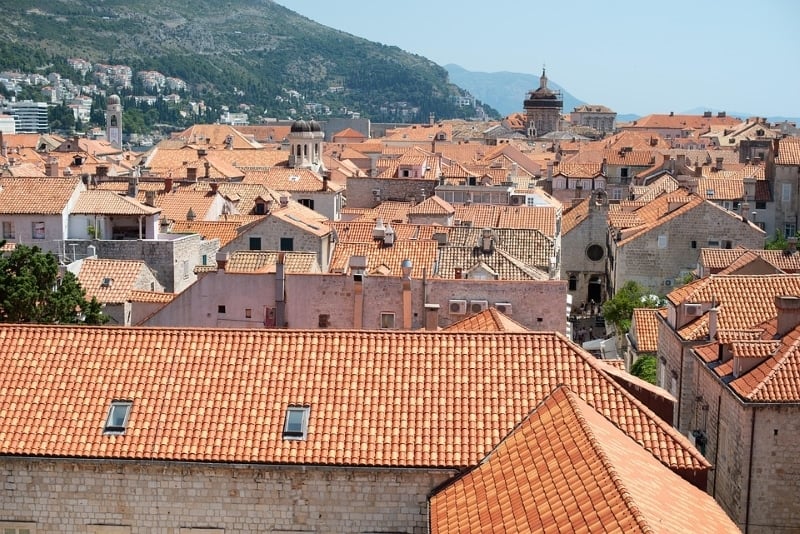
Famous from Game of Thrones, known as the “Pearl of the Adriatic”, it’s a UNESCO World Heritage site. Its fame draws many tourists, so if you’re thinking of moving here, consider the cost of living, as I discovered that staying long-term in this city would mean high rent and living expenses.
Cost of Living in Dubrovnik
Dubrovnik is known as the most expensive city in Croatia, with a premium tourism industry. Restaurants, cafes, and services are notably pricier than in other cities like Zagreb or Split. According to Numbeo, a meal at typical restaurants starts at around €15 per plate. Simple drinks like soda or coffee cost about €3-4, so those planning to stay long-term should manage their expenses well.
Accommodation is no less either. Renting a one-bedroom apartment outside the old town typically starts around €800-1,300 per month. Public transportation costs about €2.5 per trip. Even though the cost of living is high, if you love the old town atmosphere by the sea, beautifully cinematic as if from a Hollywood movie, and are ready to adapt to the tourist town lifestyle, Dubrovnik is still one of the most worthwhile places to live on the Adriatic coast.
Healthcare in Dubrovnik
Dubrovnik is considered to have a sufficient basic public health system. State hospitals like KBC Dubrovnik provide general services well, but if it’s a specialty condition, locals often choose to travel for treatment to Split or Zagreb, which have larger medical centers and more comprehensive equipment.
Private clinics in Dubrovnik have a good standard and communicate comfortably in English, but you must accept that their service fees are noticeably higher.
Lifestyle in Dubrovnik
Living in Dubrovnik feels like being in a city of dual personalities. Summer is all about vibrant energy, packed with tourists, cruise ships, shops staying open late, and the old town so crowded you can hardly move. But come winter, the city flips to the complete opposite, quiet, peaceful, and it’s when you truly get to see the ‘local’s Dubrovnik.’ There’s time to stroll along the city walls with hardly anyone around, enjoying the slow sea breezes, leading a simpler and much more relaxed life.
Safety in Dubrovnik
The only thing to watch out for in Dubrovnik is the inflated taxi prices typical of tourist towns. However, Croatia overall has a low crime rate, and Dubrovnik ranks among the safest. Many people, myself included, feel comfortable exploring the city alone, both day and night.
Who Should Live in Dubrovnik?
This city is perfect for those who love history, enjoy being surrounded by world-class architecture, or want to retire by the beautiful seaside (with a sufficient budget). It’s also ideal for professionals in the premium tourism sector or jobs that require frequent travel because, despite its small airport, there are quite a few European flights available during the summer.
Best Neighborhoods to Live in Dubrovnik
Even though the old town has a high cost of living, Dubrovnik still has several accessible communities around it, such as:
- Lapad: A popular area for families and those wanting to be near the sea. Easy access to the old town, about a 10-15 minute journey. It has beautiful beaches, restaurants, cafes, and parks, making it perfect for a relaxed everyday life.
- Babin Kuk: Peaceful and close to nature, surrounded by green spaces and Copacabana Beach, it’s perfect for those seeking privacy and a luxurious yet peaceful retreat ambiance.
- Gruž: The transportation hub with a main port, bus station, and a large fresh market.
Convenient for travel and has a more reasonable cost of living compared to other tourist zones.
- Pile / Ploče (Pile / Ploče): Adjacent to the old town, close to tourist attractions and with a great view of the city walls. It’s perfect for those who love a classic atmosphere, but rent is high and it’s crowded during tourist season.
Pula: Roman Charm on the Istrian Peninsula
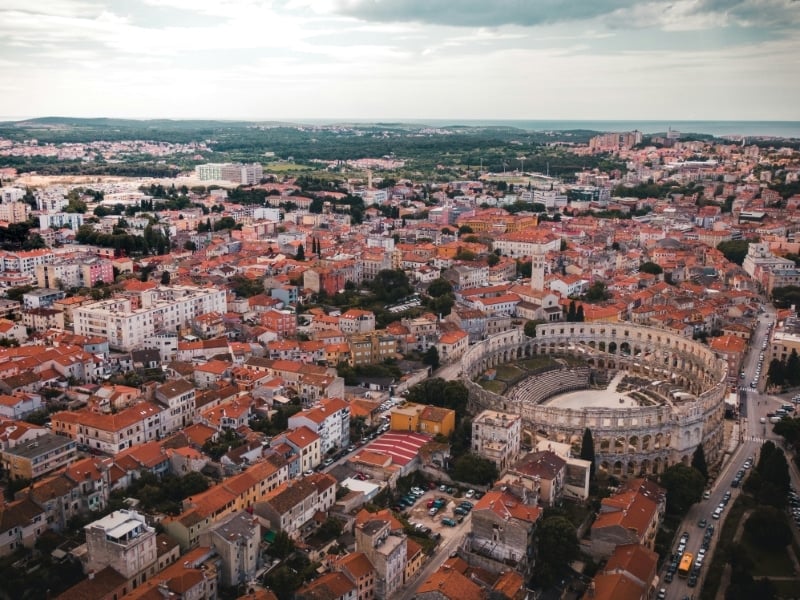
Pula is a city that impressed me from the first time I wandered around the Pula Arena, an incredibly well-preserved Roman amphitheater that felt like stepping back in time to the Roman era. The people here are friendly, and the town is filled with peace and tranquility. It’s ideal for a laid-back lifestyle.
During my stay, I loved strolling through the old town, admiring the architecture, and visiting the little cafes hidden along the cobblestone alleys.
Cost of Living in Pula
Pula has a moderate cost of living for Croatia. According to Numbeo, meal at a typical restaurant starts at about 12.50 euros per person, while a meal for two at a mid-range restaurant is around €65. Basic utilities like electricity, water, and trash for an 85 sq. m. apartment cost about €134 per month. A mobile phone plan with internet costs approximately €27, and high-speed home internet runs around €36 per month.
Accommodation: A one-bedroom apartment in the city center costs about €592 per month, while those in surrounding areas are about €425 per month. For families or those needing more space, three-bedroom apartments in the city are around €1,050 per month, and outside the city €825. Although the cost of living is higher than in some smaller towns, Pula’s historical charm and beaches make every expense worthwhile as you enjoy city life and outdoor activities up close.

Healthcare in Pula
Pula, while a smaller city, is convenient for healthcare because it has a comprehensive system of both public hospitals and local clinics. The main hospital of the city, Opća bolnica Pula, offers general medical, surgical, and emergency services. If you fall ill or need to see a specialist, access is relatively quick.
There are also local clinics and health centers (Doma Zdravlja) providing general practice and dental services, as well as pharmacies throughout the city (Ljekarna) where over-the-counter medication can be easily purchased.
Lifestyle in Pula
History buffs, culture enthusiasts, and film lovers will adore this city because it hosts an international film festival at the Pula Arena every year. There’s a vibrant cultural scene with truffle hunting, wine production, and premium olive oil activities throughout the year. Plus, there are plenty of outdoor activities to enjoy, like exploring the islands Brijuni National Park and relaxing on the pebble beaches.
Safety in Pula
Pula is a very walkable city, and it feels quite safe. The people are friendly, and life moves at a relaxed pace. The atmosphere in the old town is charming, making it perfect for families and those who want a laid-back lifestyle by the sea.
Who Should Live in Pula?
Pula is ideal for families with children, retirees who prefer a quiet life but still want access to city conveniences and cultural activities, as well as food lovers seeking a Southern European vibe with Italian influences.
Best Neighborhoods to Live in Pula
If you’re looking for a place to live in Pula but aren’t sure which neighborhood is right for you, this article introduces great areas, whether near the sea, close to the city, or in peaceful surroundings, suitable for different lifestyles.
- Centar In the heart of the old town, close to Pula Arena and the main square, easy to get around, though parking can be a bit tricky
- Stoja Near the beach, with numerous apartments and within easy walking distance to the sea. Perfect for those who love sea views and outdoor activities.
- Veruda A quiet neighborhood, popular with locals, featuring shops and schools. Ideal for families looking for convenience and tranquility.
Rijeka: A Lively and Affordable Port City
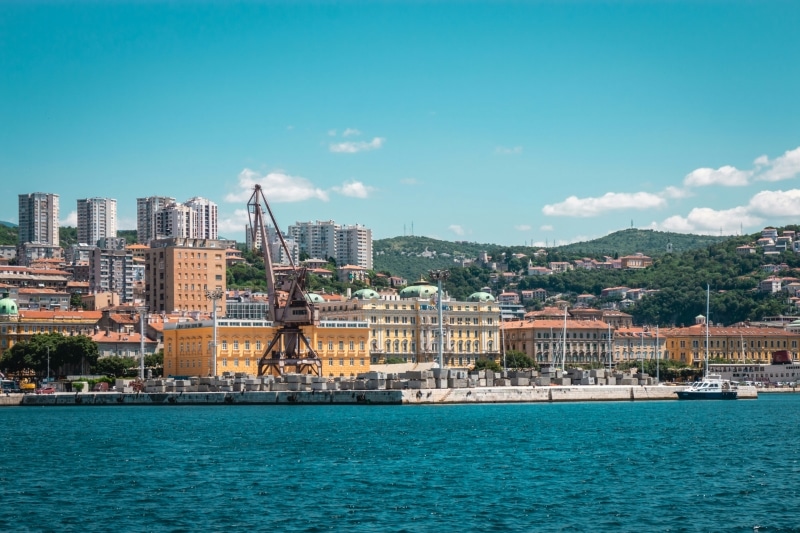
Rijeka is a major port city that I love because it feels more “raw and real” compared to other places, not overcrowded with tourists like Split or Dubrovnik. Here, you get to witness the daily life of locals in full swing, with markets, old factories, and street art. I lived here for nearly half a year, enjoying morning strolls on the Korzo promenade, savoring some coffee, sipping beer in the evening, and catching snippets of live music from small venues around the city.
Cost of Living in Rijeka
This city is considered to have quite low and stable living costs compared to other major coastal cities. Data from Numbeo indicates that a one-bedroom apartment in the city center is around €560 per month, which is quite affordable compared to Dubrovnik or Split. Typical restaurant meals start at about €12, while a three-course meal for two is around €65. Fresh and flavorful food makes every meal feel like you’re immersing in the local lifestyle without breaking the bank.
Getting around is easy if you choose public transportation, with a single ticket costing only €1.70. If you use it frequently, you can buy a monthly pass for about €48. A leisurely stroll around the city is enjoyable too. If you want to head to the beach or other parts of the city, you can call a taxi starting at €5, or drive yourself with gas prices around €1.49 per liter.
Healthcare in Rijeka
Rest assured if you fall ill here, you can seek treatment at a large hospital and clinical medical center covering almost every field. There’s also a plan to integrate all facilities into a new, modern building in Sušak, making it convenient to visit the doctor.
There are also leading private clinics like Specialty Hospital Medico which meet international standards, and of course, the staff speaks English fluently. Even though it’s a remote city, it offers complete convenience.
Lifestyle in Rijeka
The lifestyle in Rijeka is perfectly balanced for those who love both city life and nature. The city blends modern urban living with close proximity to the sea and nature seamlessly. I used to stroll down the pedestrian streets Korzo to check out street art and capture city views as memories. Every time I’m here, I feel the city’s energy, openness, and the creativity of its people.
Moreover, Rijeka has a famous carnival, outdoor music events, and art markets happening year-round, so it never feels boring. Importantly, the cost of living is quite reasonable, so I feel it’s perfect for young professionals, students, or anyone wanting to live close to the sea without paying too much.
Safety in Rijeka
Overall, Rijeka is a safe city that warmly welcomes tourists. I’ve walked around at night many times and never encountered any issues. Just use common sense like you would in any big city, such as being cautious of personal belongings in crowded areas, and you can enjoy the city and lifestyle with peace of mind.
Who Should Live in Rijeka?
If you’re looking for a cosmopolitan city with strong culture, stable job opportunities especially related to the sea, and the option to easily escape the hustle and bustle to embrace nature, all at a more affordable price than other tourist cities, Rijeka is the perfect answer! The cost of living is inexpensive, the lifestyle is friendly, and it’s full of cultural colors to enjoy year-round.
Best Neighborhoods to Live in Rijeka?
This city suits all lifestyles, whether you love convenience, being near the sea, or a quiet environment with beautiful views.
- Centar City Center: Next to Korzo Street, a hub for shopping and cultural activities
- Trsat: Set on a hill with a castle and stunning views of Kvarner Bay, perfect for tranquility
- Brajda: Near the city center, but with a not-so-high cost of living
- Zamet: Modern, with sports centers and new facilities, ideal for families
Other Noteworthy Cities
Additionally, there are many charming places in Croatia I’ve yet to visit, but from what I hear, they’re equally worth living in.
Let’s start with Zadar, a city that perfectly balances deep historical roots with creative modernity. Not as chaotic as Split or Dubrovnik, yet not too quiet either. There are public spaces to enjoy a gentle breeze, such as listening to the sounds from the famous Sea Organ sculpture or strolling on the Sun Salutation, soaking in the evening aesthetics. It makes every day here lively and special, ideal for art lovers seeking a relaxed seaside quality of life.
On the other hand, Rovinj offers a different romantic atmosphere. It’s an old town like an artist’s seaside village retaining traditional charm. The tranquility and beauty of the cobblestone houses make it perfect for retirees, couples, or freelancers who seek peace to focus on daily life. Taking walks in the alleyways, finding fresh seafood from fishermen, and sipping Istrian wine are daily activities that don’t rely on tourists, making Rovinj a city where you can live “slowly but with quality.”
Moreover, for those who want to experience authentic Croatia, Osijek is an inland city in the Slavonia region perfect for simplicity lovers and those looking for a low cost of living. Here, you can enjoy life by the Drava River, stroll through the old fortress of Tvrđa, and savor local delicacies like Kulen or grilled meats. The tranquility and friendliness of the locals make Osijek an ideal city for those wanting to escape the hustle and bustle of tourist spots and live like a true local.
Where Should You live in Croatia?
Choosing a place to live in Croatia isn’t just about picking a city, it’s about choosing a “lifestyle” that aligns with your needs and preferences. As mentioned earlier, each city has its unique charm, but where you should stay depends on your lifestyle and personal requirements.
If I had to recommend the best city for beach lovers and those passionate about hospitality services, Split is very interesting because there are definitely jobs available in the summer. However, you should be prepared for potential unemployment in the winter months from October to February, and plan your expenses in advance.
For anyone looking to grow in IT, technology, or have part-time jobs available year-round, Zagreb might be more suitable because it’s filled with renowned office headquarters, offering high career opportunities. Plus, it has a convenient public transport system and stable cost of living throughout the year.
If you’re seeking peace or want to relocate your family to Croatia, Pula and Rijeka are great choices because they offer a tranquil atmosphere, are family-friendly, and are near the beautiful Istrian coast.
But for those who are retired and have a higher budget, Dubrovnik is a dream city. With its stunning scenery and unique World Heritage city atmosphere, every day offers a chance to wake up to azure sea views and stroll through a historic old town.
Finally, regardless of which city you choose, don’t forget that the key is to prepare thoroughly, especially with government documents and accommodation that must be pre-arranged and have significant steps. If you aim to move permanently, consider visiting the city you like first to truly experience the local lifestyle.



 ไทย:
ไทย: Deutsch:
 Français:
 Español: