
This article will take approximately 26 minutes to read. Don't have the time right now? No worries. Email the ad-free version of the article to yourself and read it later!
Ramadan changes the pace of life in the UAE for a month: quieter days, late nights, meals after sunset and shorter hours at work and school. Fasting or not, most of the change is easy to live with once you know the few rules that apply to everyone.
You’ll notice it whether you’re here for a job, retired, raising kids or staying a few months. Office and school days get shorter, restaurants change their routine, and the city comes alive after sunset.
For about a month, the UAE runs on a different clock. Days are quieter, evenings run late, and the hour before sunset turns the roads into a race home.
You also get malls open past midnight and some of the best food of the year. A few rules and courtesies still apply, and they aren’t identical in every emirate.
Disclaimer: This article may include links to products or services offered by ExpatDen's partners, which give us commissions when you click on them. Although this may influence how they appear in the text, we only recommend solutions that we would use in your situation. Read more in our Advertising Disclosure.
Key Takeaways
- Ramadan 2027 is expected to start on Monday 8 February 2027. It’s a forecast until the UAE moon-sighting committee confirms it.
- Onshore private-sector staff work two hours less a day in Ramadan, Muslim or not, with no cut in pay.
- Dubai’s official guidance says eating and drinking in public are allowed at all times. Abu Dhabi asks visitors to avoid eating, drinking and smoking in outdoor public spaces in daylight, and Sharjah needs a permit for daytime food sales.
- Cover shoulders and knees in malls and public places.
- Ramadan road accidents cluster between 2pm and 6pm, from the early finish to the rush home before iftar.
- Eid Al Fitr 2027 is expected on 9 or 10 March, and the holiday covers 1 to 3 Shawwal plus Ramadan 30 if the month runs a full 30 days.
Ramadan 2027 Dates
Ramadan 2027 is expected to begin in the UAE on Monday 8 February 2027, with Eid Al Fitr on Tuesday 9 or Wednesday 10 March 2027. Those are astronomical forecasts reported by Gulf News and The National, not an official notice. (Forecast as of November 2026.)
We update this section every year. The official start date won’t be confirmed until the night before Ramadan begins.
The moon-sighting committee of the UAE Council for Fatwa meets after sunset on 29 Sha’ban, the month before Ramadan. It reviews reports from observers and observatories, then announces the result that evening through official channels.
Khaleej Times, citing the Astronomy Centre, puts that evening on Saturday 6 or Sunday 7 February 2027. The centre expects the crescent to be impossible to see from the UAE on the 6th, so Sha’ban would run 30 days and Ramadan would start on Monday 8 February.
| Date | Expected in 2027 |
|---|---|
| Crescent watch for Ramadan | Evening of Saturday 6 or Sunday 7 February 2027 |
| First day of fasting | Monday 8 February 2027 |
| Crescent watch for Eid (29 Ramadan) | Evening of Monday 8 March 2027 |
| Last day of fasting | Monday 8 March 2027 (29 days) or Tuesday 9 March 2027 (30 days) |
| Eid Al Fitr | Tuesday 9 March 2027 or Wednesday 10 March 2027 |
Before You Go: Booking travel around Eid? Keep both possible Eid dates in play until the evening of 8 March 2027, when the committee looks for the Shawwal crescent.
How Ramadan Works in the UAE
Ramadan is the ninth month of the Islamic calendar. Muslims who are able to fast don’t eat, drink or smoke from dawn to sunset, every day for 29 or 30 days.
The Islamic year has 354 days, so Ramadan arrives about 11 days earlier each year. In 2026 it began on Wednesday 18 February. In 2027 it’s expected ten days earlier.
How You Find Out It Has Started
The start is set by the moon-sighting committee of the UAE Council for Fatwa. It meets after the sunset prayer on the evening the new crescent could appear, hears reports from field teams and the country’s accredited observatories, and announces the result that night.
That means nobody knows for sure until the evening before. In 2026 the committee met at Qasr Al Hosn in Abu Dhabi on Tuesday 17 February, and the fast began the next morning.
A Day in Ramadan
The day starts with suhoor, a meal eaten before dawn. Then the fast runs until sunset, and daytime is noticeably quieter, with shorter hours at work and school.
At sunset the fast is broken with dates and laban (buttermilk). In many places across the country the iftar cannon marks the moment, and you can hear it up to 8 to 10 km away.
After the night (Isha) prayer in mid-evening, mosques fill for Tarawih prayers, held every night of the month. After that the city stays up late, and malls and restaurants keep going past midnight.
Across the Month
The build-up starts early. Around the middle of the month before Ramadan, on Hagg Al-Layla, Emirati children go door to door singing and collecting sweets and nuts from the neighbours.
The last ten days are the most devout part of the month. Many Muslims spend long hours in the mosque around Laylat Al Qadr, the night the Quran is believed to have first been revealed. Ramadan ends when the next crescent is sighted, and Eid Al Fitr begins.
What It Means If You Don’t Fast
Non-Muslims aren’t required to fast. The official UAE government portal says it plainly, and adds that the cities get especially lively after sunset.
Abu Dhabi’s tourism board says the city “quietens during the day, but evenings are busier than ever.” Expect a slower daytime, longer nights and a lot of food after dark.

In Practice: The greeting is “Ramadan Kareem” or “Ramadan Mubarak”. Say it to colleagues, neighbours and the cashier at the supermarket, and you’ll hear it back all month.
Working Hours
Private-sector working hours in the UAE drop by two hours a day during Ramadan, for Muslim and non-Muslim employees alike, without any cut in wages. (Verified November 2026.)
Government offices run shorter days too. Staff in the DIFC and ADGM free zones follow their own employment law, which works differently.
Private Sector
The Ministry of Human Resources and Emiratisation (MoHRE) announced the two-hour cut again in a notice dated 12 February 2026.
So an eight-hour day becomes six, and a nine-hour day becomes seven. Employers can run flexible hours or remote work, as long as staff stay within the shorter Ramadan day.
Here’s how that looks on a normal office schedule. If you usually work 9am to 6pm with an hour for lunch, that’s eight working hours, so your Ramadan day drops to six: 9am to 3pm, for example, or 10am to 4pm. Your employer picks the exact times.
Offices handle this differently. Some start later, some finish mid-afternoon. We’d ask HR for the Ramadan timetable in writing during the first week, so nobody argues about it in week three.
Common Misunderstanding: The shorter day isn’t only for people who fast. Onshore, the government portal says the reduction applies to Muslim and non-Muslim employees.
Government Offices
Federal government staff worked 9am to 2:30pm Monday to Thursday and 9am to noon on Fridays in Ramadan 2026, under a circular from the Federal Authority for Government Human Resources (FAHR). Up to 70% of an entity’s staff could work remotely on Fridays. (Verified November 2026.)
Each emirate sets hours for its own government. Sharjah’s departments ran 9am to 2:30pm in Ramadan 2026, and offices working shifts set their own times.
For you, that means doing paperwork early in the day. If you’re in the middle of a visa renewal or a Golden Visa application, counters close sooner, and a 2pm visit is cutting it fine.
DIFC and ADGM
Staff employed in the DIFC or ADGM financial free zones fall under those zones’ own rules, where the Ramadan reduction is written for Muslim employees.
- DIFC: the DIFC Employment Law says a Muslim employee can’t be required to work more than six hours a day in Ramadan, with no cut in pay.
- ADGM: the 2024 employment regulations give Muslim employees a 25% cut in normal working hours, with no cut in pay, according to law firm Clyde & Co.
If you’re not Muslim and work in either zone, shorter hours depend on your employer’s policy. In any other free zone, check your contract to see which employment law covers you.
Eating, Drinking and Smoking in Public
Non-Muslims can eat and drink during fasting hours in the UAE, but where you do it still matters. Official guidance differs between Dubai and Abu Dhabi, and Sharjah regulates daytime food through permits. (Verified November 2026.)
Muslims who are fasting won’t eat, drink or smoke between dawn and sunset. None of that applies to you, but the people around you on the Metro may not have had water since dawn.
Dubai
Visit Dubai, the Dubai government’s official tourism site, says eating and drinking in public are allowed at all times during Ramadan. For restaurants and dining areas, “it’s business as usual.“
Forum threads from around 2011 tell a stricter story, with curtained-off food courts and warnings for anyone caught eating outside. Dubai’s own guidance doesn’t read that way any more.
We’d still skip the coffee on the Metro and the sandwich outside a mosque. It costs you nothing, and it’s the kind of courtesy people notice.
Abu Dhabi
Abu Dhabi’s tourism board says non-Muslims can eat during the day in restaurants, hotels and designated areas. The courtesy it asks for is to avoid eating, drinking or smoking in public outdoor spaces in daylight.
Mall restaurants and food courts that stay open usually have designated seating for non-Muslims, according to Visit Abu Dhabi. Some restaurants close or change their hours during the day, but all reopen by iftar.
Heads Up: Smoking counts too. Abu Dhabi’s guidance puts it alongside eating and drinking, so step inside or wait for sunset.
Sharjah
Sharjah runs a permit system for daytime food in Ramadan. Sharjah Municipality issues Ramadan permits that let restaurants and food outlets, including those in malls, prepare and sell meals during the day. Under the 2026 rules, cooking happens in the kitchen only and customers can’t be seated in the restaurant hall.
Khaleej Times reported that permit at AED3,000 in 2026, with a separate AED500 permit for displaying food outside shops before iftar. We’d expect fewer daytime options than in Dubai, and we’d treat Abu Dhabi’s “nothing in outdoor public spaces” courtesy as the minimum here.
Dress and Behaviour
There’s no special Ramadan dress code for non-Muslims in the UAE, but covering your shoulders and knees in malls and public places is the respectful default during the month.
Visit Abu Dhabi recommends loose, light clothing that covers shoulders and knees, and calls it respectful but not mandatory. At a hotel pool or beach, you dress as you normally would.
Behaviour matters more than clothes. For Muslims, the fast also means avoiding bad language and bad behaviour, so a little restraint from everyone goes a long way.
- Language: skip the swearing and the public arguments, including the ones with other drivers.
- Music: we’d keep the car stereo and the beach speaker down in daylight.
- Affection: we’d keep it to hand-holding in public.
- Fasting colleagues: eating away from them is a kind gesture when it’s easy, and Dubai’s tourism site suggests avoiding late-afternoon meetings.
Good to Know: You don’t have to fast, but you’re welcome to try a day, as Dubai’s tourism site puts it. If you do, eat suhoor before dawn like everyone else, or the afternoon gets long.
Shops, Malls and Restaurants
Supermarkets and grocery shops in the UAE keep their usual hours during Ramadan, while malls stay open late into the night.
In Abu Dhabi, most malls and shops open until 1am or 2am at weekends. Gulf News reported Dubai’s City Centre Mirdif and City Centre Deira running 10am to 1am in Ramadan 2025, with restaurants until 2am.
Amusement parks, attractions and cultural sites stay open through the day. Some Dubai attractions open and close later than usual, so check before you go.
| Place | What to expect in Ramadan |
|---|---|
| Supermarkets and grocery shops | Usual opening hours across the UAE |
| Malls | Open late at night; in Abu Dhabi, most until 1am or 2am at weekends |
| Restaurants in Dubai | Most operate as normal during the day |
| Restaurants in Abu Dhabi | Some close or change hours by day; all reopen by iftar |
| Attractions and theme parks | Open through the day; some open and close later |
Licensed hotels, bars and restaurants in Abu Dhabi still serve alcohol in Ramadan, usually in indoor areas and sometimes only after iftar. House rules vary from one venue to the next, so ask before you book.
Co-ops and hypermarkets run heavy Ramadan discounts on essentials, some up to 70%. The Ministry of Economy and Tourism also caps the price of essential goods during the month and takes complaints on 800 1222.
Tip: Ramadan is a good month to stock up on rice, oil and other basics, since the discounts land on exactly those items.
Iftar and Suhoor
Ramadan evenings in the UAE revolve around iftar, the meal that breaks the fast at sunset, and suhoor, the last meal before dawn. Non-Muslims are welcome at plenty of both.
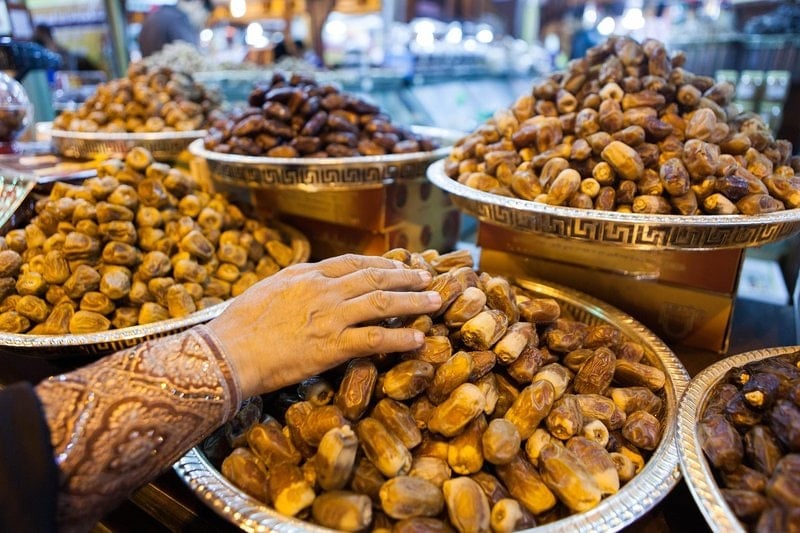
The fast is traditionally broken with dates and laban (buttermilk), followed by a full meal. In many areas a cannon fires at sunset to mark iftar, and the bang carries 8 to 10km. In Abu Dhabi, one fires every evening on the grounds of the Sheikh Zayed Grand Mosque.
Iftar Tents and Free Meals
Free iftar tents are one of the best parts of Ramadan in the UAE. The Emirates Red Crescent, the Khalifa bin Zayed Al Nahyan Foundation and other charities set them up near mosques and in open spaces.
People of every nationality and income sit down together. Many organisations also hand out dates, water and meal boxes at mosques and malls just before sunset.
Hotel Iftars and Late Suhoors
Hotels and restaurants run iftar buffets and special menus all month, and many serve suhoor late into the night. Dubai’s tourism site notes that family get-togethers carry on until late at parks, markets and malls.
Book popular iftars ahead, especially at weekends. Restaurants fill up right at sunset, and turning up at iftar without a table is a hungry way to learn that.
If You’re Invited Home
Bring a small gift if a colleague or neighbour invites you to iftar. Dubai’s tourism site suggests local sweets, chocolates, a box of dates or a dessert.

We’d arrive a little before sunset, since the meal starts the moment the fast ends. Leave the evening free, too. Dubai’s tourism site says an invitation to an Emirati friend’s home often means food and conversation into the early hours.
Our Pick: Say yes to the first iftar invitation you get. It’s the easiest way to understand the month from the inside.
Schools
Private schools in Dubai run a school day of no more than five hours during Ramadan and finish by 11:30am on Fridays, under 2026 guidance from Dubai’s Knowledge and Human Development Authority (KHDA).
The same guidance, as Gulf News reported, also excused fasting pupils from PE. It asked schools to take parents’ views into account when setting start and finish times.
Each school sets its own exact timetable and sends it to parents before Ramadan. Schools in other emirates follow their own regulator, so the letter from your school is the one that counts.
Before You Go: If both parents work, sort out the earlier pick-up before the first day. Early school runs land in the same early-afternoon window as the worst Ramadan traffic.
Traffic, Parking and Public Transport
UAE roads are riskiest during Ramadan between early afternoon and iftar, when shorter working days send everyone home at once and fasting drivers race the sunset.
Insurance claims from Ramadan 2025, analysed by Al Wathba Insurance and Road Safety UAE and reported by The National, showed 17% of accidents happening between 2pm and 4pm and another 15% between 4pm and 6pm. Mondays and Thursdays were the most dangerous days, and Sundays the safest.
Then there’s the iftar rush. In 2026, Abu Dhabi Police launched a Ramadan campaign urging drivers to stick to speed limits and not to rush home before iftar.
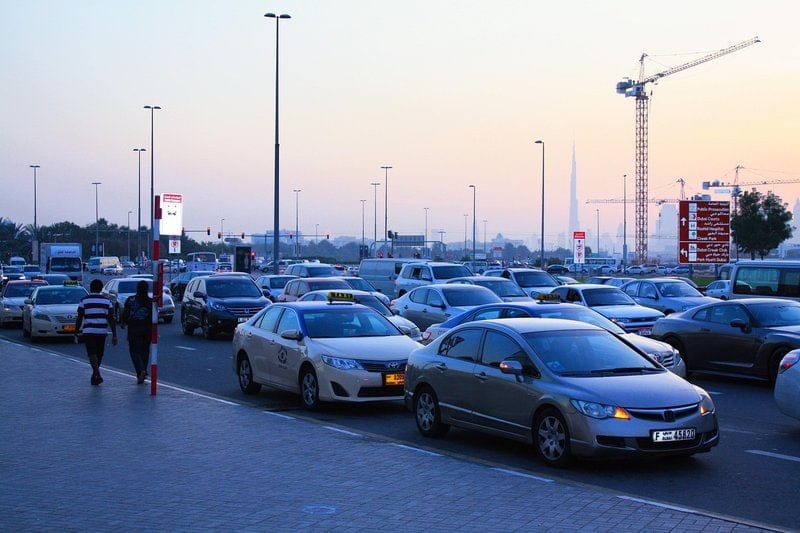
“If you drive try to avoid driving in the late afternoon before iftar. During this time lots of people are rushing home to break the fast.” (From an AngloINFO Dubai forum thread, around 2011.)
Taxis
Taxis are hard to find around sunset in Ramadan, because many drivers stop to break their fast. The UAE government portal and Abu Dhabi’s tourism board both suggest booking ahead if you need a ride around iftar.
Parking and the Dubai Metro
Dubai’s Roads and Transport Authority (RTA) publishes separate Ramadan timings every year. In Ramadan 2026, paid parking ran 8am to 6pm and 8pm to midnight, Monday to Saturday, which left street parking free from 6pm to 8pm around iftar.
| Service | Ramadan 2026 timings in Dubai |
|---|---|
| Paid street parking | Monday to Saturday, 8am to 6pm and 8pm to midnight (free 6pm to 8pm) |
| Multi-storey car parks | Open 24/7 |
| Dubai Metro (Red and Green Lines) | Monday to Thursday and Saturday 5am to midnight; Friday 5am to 1am; Sunday 8am to midnight |
| Dubai Tram | Monday to Saturday 6am to 1am; Sunday 9am to 1am |
The RTA’s 2026 announcement also covered bus, marine transport and vehicle-testing hours. Other emirates change their paid-parking hours in Ramadan too, and the times are posted on the parking meters.
Charity and Zakat
Charity in the UAE has to go through licensed channels. Individuals aren’t allowed to organise or run any fundraising activity, so collections must go through a licensed charity or humanitarian organisation.
So if a friend starts a private collection and asks you to chip in, we’d suggest giving through a licensed charity instead.
- Counters and boxes: the Emirates Red Crescent takes donations at counters in mosques, malls and hospitals, and registered charities put out donation boxes in public places.
- Tents near co-ops: many organisations set up donation tents outside co-operative supermarkets during Ramadan.
- Iftar meals: sponsoring or serving iftar is a common way to give, and an AngloINFO forum thread from around 2011 suggests volunteering to serve food to labourers.
Zakat and Zakat Al Fitr
Zakat (charitable giving) is one of the five pillars of Islam, so it’s a duty for Muslims rather than something non-Muslims are asked to pay.
For Ramadan 2026, the UAE Council for Fatwa set Zakat Al Fitr at 2.5kg of rice or AED25 per person, as Gulf News reported. It asked people to pay through approved bodies such as the Zakat Fund and the Emirates Red Crescent.
The General Authority of Islamic Affairs, Endowments and Zakat takes zakat through more than 43 payment channels. The Council sets a fresh amount every year.
Begging
Begging is illegal in the UAE, and you’ll notice more of it in Ramadan. Beggars face fines or deportation, and the government portal lists hotlines to report it.
Good to Know: To report begging, call 800243 in Dubai, 999 or 8002626 (800Aman) in Abu Dhabi, or 901 or 80040 in Sharjah.
Eid Al Fitr Holidays
Eid Al Fitr is a public holiday for both the public and private sectors in the UAE, covering 1 to 3 Shawwal, plus the 30th day of Ramadan if the month runs a full 30 days. (Verified November 2026.)
The holiday doesn’t move if it lands on a weekend or another public holiday. You just get the days as they fall.
How the Dates Are Announced
FAHR and MoHRE announce the Eid holiday for government and private-sector staff ahead of time, with a fallback in case Ramadan runs 30 days.
In 2026, federal staff got Thursday 19 to Sunday 22 March. Private-sector staff got 19 to 21 March, extended to 22 March if Ramadan ran 30 days, as The National reported.
The final answer comes on the evening of 29 Ramadan. The Council for Fatwa’s committee meets after sunset to look for the Shawwal crescent, then announces whether Eid starts the next day.
Eid Al Fitr 2027
Eid Al Fitr 2027 is expected on Tuesday 9 or Wednesday 10 March 2027, which would give a private-sector holiday of 9 to 11 March or 9 to 12 March. Nothing has been announced yet. (Forecast as of November 2026.)
| If Ramadan 2027 lasts | Eid Al Fitr | Likely holiday |
|---|---|---|
| 29 days | Tuesday 9 March 2027 | Tuesday 9 to Thursday 11 March 2027 |
| 30 days | Wednesday 10 March 2027 | Tuesday 9 to Friday 12 March 2027 (Ramadan 30 plus 1 to 3 Shawwal), then the weekend |
Planning Leave Around Eid
Annual leave around Eid works best when you plan for both possible lengths of Ramadan. On a Saturday-Sunday weekend, a 30-day Ramadan in 2027 would give a six-day break from Tuesday 9 to Sunday 14 March, as Gulf News pointed out.
Our Pick: Book Friday 12 March 2027 as leave. If Ramadan runs 29 days, that one day turns 9 to 14 March into a six-day break. If it runs 30 days, the Friday is a public holiday anyway, so ask HR now whether they’ll credit the day back.
Differences Between Emirates
Federal Ramadan rules, such as the working-hour cut and the Eid holiday, are the same in every emirate. What changes between Dubai, Abu Dhabi and Sharjah is mostly daytime eating and how much is open.
| Emirate | Eating in public by day | Restaurants by day |
|---|---|---|
| Dubai | Allowed at all times, per Dubai’s official tourism guidance | Most operate as normal |
| Abu Dhabi | Fine in restaurants, hotels and designated areas; avoid outdoor public spaces | Some close or change hours; all reopen by iftar |
| Sharjah | No official guidance found; we’d eat indoors | Outlets can cook and sell food by day under a municipal permit (2026); no seating in the restaurant hall |
We couldn’t find separate official guidance on daytime eating for Ajman, Ras Al Khaimah, Umm Al Quwain or Fujairah. Outside Dubai, we’d follow Abu Dhabi’s courtesy and eat indoors.
Common Misunderstanding: Dubai’s relaxed guidance doesn’t cross the border with you. If you live in Dubai and commute to Sharjah, or the other way round, adjust to the emirate you’re standing in.
Tips for Your First Ramadan
Your first Ramadan in the UAE is easier if you move your errands to the morning, avoid the roads before iftar and say yes to at least one invitation.
- Front-load your day: government counters and many offices close early, so book appointments for the morning.
- Stay off the road before iftar: if you can, leave before 2pm or after sunset.
- Book taxis ahead: around sunset they’re scarce.
- Keep your water bottle low-key: legal in Dubai, but out of sight on the Metro and outdoors is the courteous choice everywhere.
- Shift your evenings later: malls, restaurants and markets are busiest after iftar and stay busy past midnight.
- Check which employment law covers you: onshore staff get the two-hour cut automatically; DIFC and ADGM rules differ.
In an AngloINFO Dubai thread from around 2011, the advice to newcomers was to avoid the late-afternoon drive and dress a little more conservatively. The same thread warns about eating in public, written when the rules were tighter, so check the date before treating any forum post as current.
If you’d like to try fasting for a day and you’re on regular medication, talk to your doctor first. It’s also a good moment to check that your health insurance covers the clinic you’d normally use.
Heads Up: If you arrive in the UAE just before or during Ramadan, allow extra time for visa medicals and Emirates ID appointments, since government offices work shorter days.
Read more:
FAQ
Do non-Muslims have to fast in the UAE?
No. Fasting is for Muslims who are able to, and nobody expects it of you. If you’re curious, you’re welcome to try a day.
Can I drink water in public during Ramadan in Dubai?
Yes, Dubai’s official guidance allows eating and drinking in public at all times. In Abu Dhabi, the courtesy is to avoid it in outdoor public spaces in daylight. Wherever you are, a discreet sip beats a big gulp in front of someone who’s fasting.
Do non-Muslim employees get shorter hours?
Onshore, yes. The private-sector cut of two hours a day covers everyone, regardless of religion. In the DIFC and ADGM the legal entitlement is for Muslim employees, so non-Muslims there depend on company policy.
Are bars open during Ramadan?
In Abu Dhabi, licensed hotels, bars and restaurants keep serving, usually indoors and sometimes only after iftar. Elsewhere, we’d check with the venue before you go.

When is Eid Al Fitr 2027?
Most likely Tuesday 9 or Wednesday 10 March 2027, depending on whether Ramadan lasts 29 or 30 days. The moon-sighting committee settles it on the evening of 8 March, and FAHR and MoHRE confirm the holiday dates.
Is Ramadan a bad time to move to the UAE?
Not bad, just slower. Paperwork takes longer because offices close early, but the evenings are some of the friendliest of the year. If you can choose, we’d land a couple of weeks before Ramadan and get the visa errands done first.
Sources Cited
- UAE Government Portal, Ramadan: fasting rules, moon-sighting committee, working-hour cut for all employees, shop hours, iftar tents, donations rules, price caps, taxis, begging hotlines.
- UAE Government Portal, Public holidays: Eid Al Fitr holiday from 1 to 3 Shawwal plus Ramadan 30, no transfer of holidays.
- MoHRE, 12 February 2026: two-hour daily reduction for the private sector, flexible and remote work.
- FAHR Circular No. 01 of 2026: federal government Ramadan hours and Friday remote work.
- Sharjah24, 11 February 2026: Sharjah government Ramadan hours.
- DIFC Employment Law (Consolidated Version No. 5): six-hour maximum for Muslim employees in Ramadan.
- Clyde & Co, ADGM Employment Regulations 2024: 25% Ramadan reduction for Muslim employees in ADGM.
- Visit Dubai, Guide to Ramadan: eating and drinking in public, restaurants, fasting not required, iftar invitations.
- Visit Abu Dhabi, Guide to Ramadan and Ramadan questions answered: dress, daytime dining, mall hours, alcohol, iftar cannon, taxis.
- RTA, Ramadan 2026 service hours: Dubai parking, Metro and Tram timings.
- Abu Dhabi Media Office, February 2026: how the Council for Fatwa’s moon-sighting committee works.
- The National, Gulf News and Khaleej Times: expected Ramadan and Eid 2027 dates.
- The National, Eid Al Fitr 2026 holiday: how FAHR and MoHRE announced the 2026 holiday.
- Gulf News, KHDA Ramadan guidance: Dubai private school hours.
- The National, Ramadan road safety: accident timing data from Al Wathba Insurance and Road Safety UAE.
- Khaleej Times, Sharjah Ramadan food permits: daytime food preparation and display permits.
- Gulf News, Zakat Al Fitr 2026: Zakat Al Fitr amount and approved payment bodies.