
This article will take approximately 16 minutes to read. Don't have the time right now? No worries. Email the ad-free version of the article to yourself and read it later!
The Panama Friendly Nations Visa is one of the most accessible routes to permanent residency in Latin America. Here is what the current program actually requires.
For years, Panama’s Friendly Nations Visa had a reputation built on one trick: form a local corporation for around US$2,000, use it as proof of “economic ties,” and collect your residency card within weeks. It attracted applicants by the tens of thousands. Then in May 2021, Panama issued Executive Decree 197 and killed that option. The corporation route was eliminated.
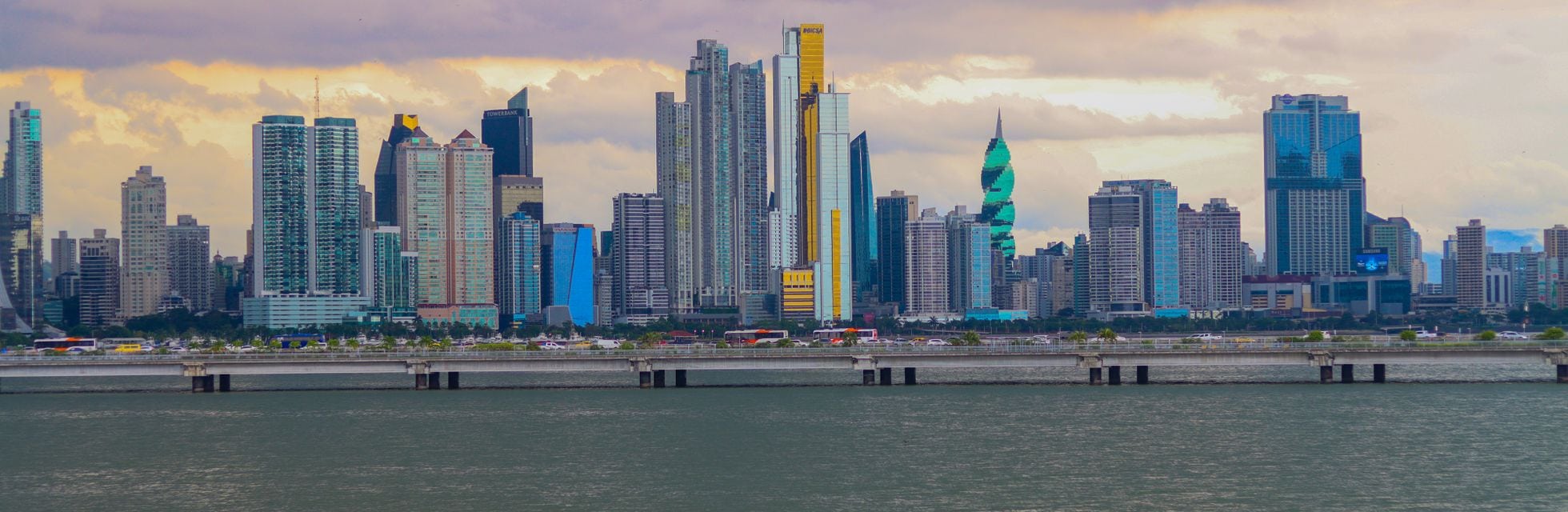
It remains a strong program for those who want to find local employment, buy a property, or put a bank deposit in Panama, especially for US, UK, and Canadian expats weighing their options in Latin America. Panama uses a territorial tax system, meaning income earned from abroad is not taxed in Panama. The country runs on US dollars. Infrastructure in Panama City is solid by regional standards.
Key Takeaways
- The Friendly Nations Visa gives two years of provisional residency that converts to permanent residency — citizenship is possible after five more years.
- You must be a citizen of one of Panama’s 50-plus designated friendly nations; citizens of India, China, and most of Africa and the Middle East do not qualify.
- Three routes to qualify: get a job with a Panamanian company employing at least 10 locals, buy property worth at least US$200,000, or deposit US$200,000 in a General License Panamanian bank for three years.
- The bank deposit earns 3.75 percent to 5.5 percent annually and your full principal is returned after three years — making it the most popular route.
- A licensed Panamanian attorney is required by law; you cannot file the application yourself.
- Total process costs for a single applicant, excluding the US$200,000 investment, typically run from US$4,500 to US$8,000 across both stages.
- If you already receive a qualifying pension of at least US$1,000 per month, the Pensionado Visa is faster, simpler, and includes significant lifestyle discounts.
- Panama does not tax foreign income, so US salaries, UK pensions, and other overseas earnings are not subject to Panamanian income tax.
What the Friendly Nations Visa Is
The Friendly Nations Visa is a residency program for Panama. Once you get the visa, you are a legal resident of Panama and can stay in the country as long as you want for the first two years.
After that, you can apply for permanent residency and eventually citizenship after five years.
Good to Know: Panama uses a territorial tax system, meaning income earned outside Panama is not subject to Panamanian income tax. This is a real benefit for expats who continue earning from abroad.
Requirements for the Friendly Nations Visa
There are three main requirements for the Friendly Nations Visa:
- Nationality
- Basic Eligibility
- Route based on your options.
Here is a look at each in more detail.
Nationalities
The program is open to citizens of 51 countries that Panama has designated as “friendly nations.” The current list comes from Executive Decree No. 16 of 31 August 2026:
Americas: Argentina, Brazil, Canada, Chile, Costa Rica, Ecuador, Mexico, Paraguay, Peru, United States, Uruguay
Europe: Andorra, Austria, Belgium, Croatia, Cyprus, Czech Republic, Denmark, Estonia, Finland, France, Germany, Greece, Hungary, Ireland, Latvia, Liechtenstein, Lithuania, Luxembourg, Malta, Monaco, Montenegro, Netherlands, Norway, Poland, Portugal, San Marino, Serbia, Slovakia, Spain, Sweden, Switzerland, United Kingdom
Asia and Oceania: Australia, Hong Kong, Israel, Japan, New Zealand, Singapore, South Korea
Africa: South Africa
Citizens of India, China, and most of Africa and the Middle East are not on the approved country list and cannot get the visa, regardless of how much they invest.
Panama updates the list occasionally, so confirm your country’s current status with a licensed Panamanian attorney before spending time or money on document preparation.
Ecuadorians qualify too: Ecuador is on the list under Executive Decree No. 16, published in Gaceta Oficial Digital No. 30601-B. Ecuadorian citizens use the same three routes as everyone else, and go through the same two-year provisional stage first.
Basic Eligibility Requirements
Beyond nationality, you must be
- at least 18 years old
- have a health certificate from a licensed doctor confirming you are in good health. These certificates expire after a few months, so time your medical appointment close to your application submission date.
- have a clean criminal record. Panama requires a national-level background check, not a local or state one*
- For US applicants, that means an apostilled FBI Identity History Summary — the full national report, not a state police check.
- UK applicants submit an ACRO Police Certificate
- Canadians submit an RCMP criminal record check
*If your criminal report shows any arrests or DUIs, your application goes through a special “Visto Bueno” review at a senior level of Panama’s immigration office. This adds processing time and costs approximately US$1,000 in additional government fees.
Route
There are three main routes to get the Friendly Nation Visa:
- Employment
- Real Estate Investment
- Fixed-Term Bank Deposits
You need to choose one of them.

Employment with a Panamanian Company
You need a valid job offer or signed employment contract with a company that is legally registered in Panama. That company must also employ at least 10 Panamanian nationals.
This is the most popular route for young expats who seek employment here. And it has the lowest upfront cash requirement since no US$200,000 investment is needed. However, finding a qualifying employer as a foreign national can be a challenge since most Panamanian companies hire locally.
Realistic options include working for a multinational with a Panama City office, joining an international organization based there, or setting up your own operating company in Panama and hiring at least 10 Panamanian staff.
Good to Know: Before your visa application is filed, your employer must first obtain a separate work permit for you through Panama’s Ministry of Labor, which adds several weeks to the process.
Read more: Working in Panama
Real Estate Investment (US$200,000 Minimum)
Another way to get the visa is to purchase property in Panama with a registered value of at least US$200,000, titled in your name or jointly with your spouse. The property must be free of liens and mortgages though local bank financing is allowed if the equity portion in your name meets the threshold.
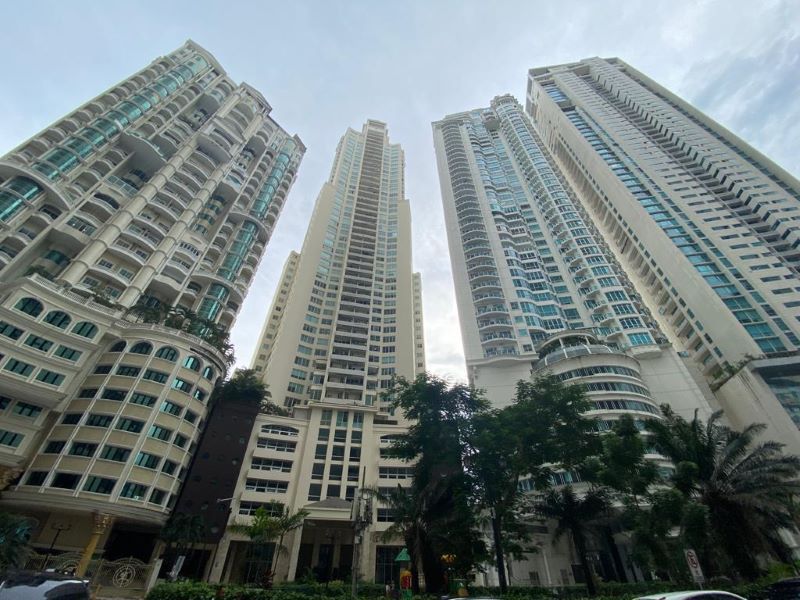
With US$200,000, you can buy a solid one- or two-bedroom apartment in Panama City’s established expat neighborhoods. Punta Pacifica, El Cangrejo, and Costa del Este are the most common choices. Boquete in the western highlands has a long-established expat community and cooler temperatures. Beach properties along the Pacific coast in Coronado and Pedasi cost less per square meter and move at a slower pace.
Most expats who went the property route give the same advice: buy after you know the country, not before.
Good to Know: Panama’s real estate market is fully dollarized, which removes currency risk from the equation. Property tax rates on primary residences are relatively low. Confirm current thresholds and rates with a Panamanian tax attorney before you purchase.
Read more: Renting an Apartment in Panama City: What Expats Should Know
Fixed-Term Bank Deposit (US$200,000 for 3 Years)
If you don’t want to buy a property or take the employment route, you can deposit US$200,000 into a three-year certificate at a Panamanian bank holding a “General License”, which are basically local banks in Panama. Popular options include Banistmo, Banco Nacional de Panama, Global Bank, and Multibank, among others.
Among expats who have gone through this process, the bank deposit route consistently gets the best reviews.
- The paperwork is predictable
- There is no property to manage
- The money earns a return while it works as your visa qualification.
After the three-year hold period ends and your permanent residency is granted, you are free to withdraw or redeploy the principal.
The tradeoff is that your money is locked in a foreign bank for three years, which is worth discussing with a financial advisor — particularly US citizens who have annual FBAR reporting obligations for foreign accounts exceeding US$10,000.
Good to Know: The deposit is yours throughout the three-year term and earns interest. Rates in early 2026 ranged from approximately 3.75 percent to 5.5 percent annually, which means a US$200,000 deposit generates roughly US$7,500 to US$11,000 per year while satisfying the visa condition.
Read more: Opening a Bank Account in Panama as a Foreigner
What’s the Most Popular Route?
The bank deposit route is the most popular for good reason. The capital requirement is fixed and clear, the process is predictable, and the deposit earns interest while it satisfies the visa condition. After three years, the principal comes back to you. For people who do not yet know Panama well enough to commit to a property, it is the cleaner starting point.
The employment route is cheaper on paper but harder to execute. Unless you already have a job lined up with a qualifying Panamanian employer, finding one as a newcomer is a long process. Most applicants who have the capital available do not pursue this route.
The real estate route works best for people who already know where they want to live in Panama and are ready to commit. Buying before you know the country is a common regret among expats who went this way.
Required Documents and the Attorney Requirement
Like other visas in Panama, Panama’s National Migration Service only accepts immigration applications filed by a licensed Panamanian attorney — there is no self-filing option. Budget for legal representation from the start and treat the choice of attorney as one of the most important decisions in the process.
Expat forums focused on Panama consistently flag attorney quality as the biggest variable in how smoothly things go. Fees are unregulated (there is no government-published rate) and the range is wide.
One expat who completed the process put it plainly: “Doing it solo is almost impossible — there are too many documents to prepare, and each stage has its own rules. With a lawyer, everything was handled efficiently, and the immigration system itself was surprisingly modern and transparent.” Before committing, interview at least two or three firms, ask for a written breakdown of what is included in the fee, and ask about their current processing timelines.
Your attorney will prepare and submit:
- A signed power of attorney authorizing your lawyer to act on your behalf
- Your original passport and a notarized copy, valid for at least six months beyond your application date
- An apostilled national criminal background check from your country of citizenship, and from any country where you have lived for two or more years
- A health certificate from a licensed doctor
- Five recent passport-style photographs
- Certified checks payable to the National Treasury and to the National Migration Service
- Proof of your qualifying economic tie: a signed employment contract plus approved work permit, a notarized property deed, or a bank certificate confirming the fixed-term deposit
All foreign documents require an apostille. If your home country is not a signatory to the Hague Apostille Convention, consular legalization is required instead. US applicants should note that FBI reports can take four to eight weeks through standard channels. Using an FBI-certified channeler (an authorized third-party processing service) can cut that to one to two weeks and is worth the additional cost if timing matters.
How to Apply: The Two-Stage Process
There are two steps to get permanent residency in Panama with this route.
Stage 1: Provisional Residency
Your attorney submits the full application to the National Migration Service. You do not need to be in Panama while it is being processed. Once approved, you travel to Panama as a tourist to collect your provisional residency card in person.
Processing currently takes four to six months. The provisional card is valid for two years and comes with a multiple-entry and exit visa, so you can travel in and out of Panama freely during this period. It gives you the right to live in Panama, open local bank accounts, and access most resident services.
Stage 2: Permanent Residency
Around the 23-month mark, just before the provisional card expires, your attorney files for permanent residency. This requires updated versions of your key documents: a fresh background check, a new health certificate, and current proof that your qualifying economic tie is still in place.
Processing takes approximately six months. Once granted, the permanent residency card has no expiration date and you can live in Panama indefinitely.
After five years of holding permanent residency, you can apply for Panamanian citizenship. The process includes a Spanish language test and a Panamanian history and civics test.
Cost
The total cost splits into three parts: government fees, attorney fees, and document preparation costs. The US$200,000 investment (if you are not using the employment route) is separate from all of these.
- Government fees for Stage 1 run approximately US$1,400 for a single main applicant, paid via certified checks. Stage 2 adds approximately US$900 to US$1,300 in further government fees. Total government fees across both stages run roughly US$2,300 to US$2,700.
- Attorney fees are unregulated and vary considerably. Reputable Panama City immigration firms charge from US$1,800 to US$5,500 for the full two-stage process, sometimes quoted as a combined fee and sometimes split between stages. Be cautious of quotes below US$1,500 — the complexity justifies professional pricing, and the cheapest option rarely produces the smoothest result.
- Document and administrative costs (apostilles, translations, FBI channeler fees, health certificates, and passport photos) typically add US$400 to US$800.
- Dependents add approximately US$1,200 to US$2,000 per person in government fees, plus your attorney’s dependent filing charge, which typically runs US$500 to US$1,500 per person.
- Total: US$4,500 to US$8,000 per person.
These costs do not include the US$200,000 required for the property or bank deposit routes.
How to Keep Your Friendly Nations Visa Active
You need to keep your main requirements active. For example, if you got residency via bank deposit, that US$200,000 must stay on deposit for the full three-year term. If you used real estate, the property must remain titled in your name. If you used employment, you must stay with the qualifying company.
Panama does not appear to run routine checks mid-period, but your tie must be intact when you apply for permanent residency.
The Friendly Nation vs Pensionado Visa
Pensionado Visa is built for retirees with a qualifying pension. The core requirement is a guaranteed lifetime income of at least US$1,000 per month from a source like Social Security, military retirement, a government pension, or a qualifying private pension plan. In return, you get immediate permanent residency with no two-year provisional stage.
If you have a qualifying pension, the Pensionado is faster, simpler, and cheaper than the Friendly Nations Visa. The Friendly Nations route makes sense for retirees who do not have a qualifying pension, or who want to anchor to a property purchase rather than proving income.
The Friendly Nation vs Digital Nomad Visa
Digital Nomad Visa targets remote workers earning at least US$3,000 per month (US$36,000 per year) from foreign clients or employers. Processing takes two to three weeks and the government fee is just US$250. But the visa is valid for nine months only, renewable once, for a maximum of 18 months in the country.
There is no path to permanent residency from this category. It suits someone who wants to try Panama for a year or two without committing capital. If putting down roots is the goal, the Friendly Nations Visa is the right starting point.
Read more: Retiring in Panama: The Expat Guide
Is the Friendly Nations Visa Right for You?
For a US, UK, or Canadian expat who has decided Panama is a long-term destination, the Friendly Nations Visa is one of the more accessible permanent residency programs available anywhere in the Western Hemisphere. It requires real commitment — capital, legal fees, and a three-year timeline — but it delivers a clear outcome.

Panama’s territorial tax system is a consistent draw. Foreign income is not taxed in Panama. If you plan to continue earning from abroad while building a life in Panama, that calculation is worth running with a tax advisor who knows both your home country obligations and Panama’s system.