This article will take approximately 26 minutes to read. Don't have the time right now? No worries. Email the ad-free version of the article to yourself and read it later!
Learn how to open a bank account in Greece as an expat or foreigner. Covers documents, AFM, bank choice, fees, and common issues you should expect in 2026.
Opening a Greek bank account is one of the first things you need to do when moving to Greece.
Unfortunately, Greek bureaucracy extends to banking. So, if you’ve heard it can take patience, time, and paperwork, the rumors are true.
In my experience, opening a Greek bank account as a foreigner (or a returning Greek resident) isn’t something you can knock out in a couple of days.
This guide covers everything you need to know to streamline the process and avoid headaches. You’ll also find out which Greek banks are known for being slower or more difficult, and which fees tend to catch people off guard.
This is for anyone planning to open an account in Greece.
Disclaimer: This article may include links to products or services offered by ExpatDen's partners, which give us commissions when you click on them. Although this may influence how they appear in the text, we only recommend solutions that we would use in your situation. Read more in our Advertising Disclosure.
Contents
- Key Takeaways
- What to Consider Before Opening an Account
- Opening a Greek Bank Account
- Opening a Bank Account Without a Greek Residence Permit
- The Best Greek Banks for Expats
- Types of Accounts in Greek Banks
- Greek Debit Cards
- ATMs in Greece
- Transferring Money Into Your Greek Bank Account
- Setting Up Salary or Pension Payments
- Bank Fees
- Alternatives to a Greek Bank Account
- Bank Operating Hours
Key Takeaways
- Opening a Greek bank account takes time. It is rarely quick or straightforward, especially for foreigners or non-residents.
- Greek bureaucracy is real. Requirements can change, documents may be requested more than once, and rules are not applied consistently.
- Branch discretion matters. Different branches and even different employees can interpret requirements differently.
- An AFM is essential. Without a Greek tax number, you will not be able to open a bank account or handle most administrative tasks.
- Expect in-person visits. Most of the process still happens at the branch, not online.
- English support is not guaranteed. Some branches are helpful, others are not. Having local or professional help can make a big difference.
- Non-residents face stricter checks. Additional paperwork, translations, and proof of income are common.
- Fees are easy to overlook. Small monthly charges, document fees, and optional insurance products add up over time.
- Wise and Revolut are useful but limited. They work well as secondary accounts, but a Greek bank account is still necessary for salaries, rent, taxes, and property-related payments.
What to Consider Before Opening an Account
The following tips apply no matter which bank or account you choose. These are general things to keep in mind when banking in Greece.
- Greek bureaucracy and branch discretion: Each branch, and each employee, may have a different interpretation of what counts as “proof.” There isn’t one consistent standard, and small things (like knowing someone at the bank, or depositing a certain amount) can sometimes make a difference. One bank might ask for five pages of documents, while another accepts something else.
- Ask around and visit a few branches: Because branch discretion is a real factor (even though it’s not advertised that way), the branch you choose can affect how much support you get. This mostly comes down to the employees there and how willing they are to answer questions and help you move things along.
- Expect a lot of in-person visits: Even with more services moving online, most banking paperwork still happens in person. Pick a branch somewhere you can realistically visit more than once. If possible, choose a branch with less “traffic” so you’re not waiting weeks for an appointment.
- English isn’t guaranteed: Many banks have English-speaking staff, but it’s not a given. Even when they do, they may not be comfortable handling more specific questions in English. If you don’t speak Greek, having a local friend (or legal support) can really help.
- Paperwork requests can change mid-application: This is one of the most frustrating, but very real, parts of dealing with banking (and paperwork in general) in Greece. It’s common to be asked for certain documents and then later be asked for more, or for a different version of the same document. You may also get conflicting information about what’s required. This can happen across branches too, which is why it’s best to start and finish the process at the same branch. If you switch branches, you may end up having to start over.
- Consider alternatives first: Many people in Greece use Wise, Revolut, or N26 alongside a Greek bank account. Depending on your situation, a European account may be enough. But if you plan to live, work, or own property in Greece, it’s very likely you’ll still need a Greek bank account.
Opening a Greek Bank Account
There’s no law that says you must have a Greek bank account if you live in Greece. In practice, though, it’s very hard to function without one. Here’s what to expect when you start the process.
Documents
The first thing to think about is the documents each bank requires. Requirements vary slightly from bank to bank, but they usually include the categories below.
Passport or EU ID
This is to verify your identity. You’ll need to provide a passport or ID card so the bank can verify it and make copies.
AFM (Greek tax number)
AFM is the Greek tax number, and it’s something many people won’t have right away when they first arrive. It’s arguably even more important than a bank account because you’ll need it to rent or buy an apartment when you’re first moving to Greece.
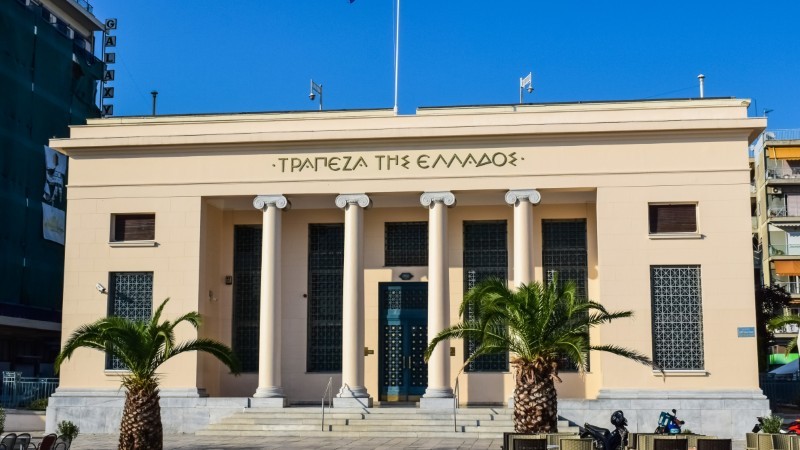
Your AFM is required for almost everything in Greece, and you will not be able to move forward with opening a bank account without it.
Getting an AFM usually requires an in-person visit to the tax office (plus paperwork), or you can use a legal representative (like a lawyer or accountant) to do it for you. The second option is usually better if you don’t speak Greek or you’re not in the country.
Proof of Address
This has personally caused me a lot of issues in the past, so make sure you have something solid, especially if you’ve moved around a lot. Banks usually accept utility bills and rental agreements that are active on the Greek TAXIS system as proof of address.
These typically need to be in your name. If they aren’t, you’ll likely have to provide additional paperwork.
Good to know: The Greek TAXIS system is the government’s central tax and residency system. Most banks will use it to verify your status. It’s not a “taxi,” like in other countries.
Residence Permit or Registration Certificate (when required)
Some Greek banks will open an account even without a residence permit, but they may require monthly deposits or other conditions. It’s usually handled case by case.
Financial Requirements
Beyond documents, Greek banks often look at your income streams and whether your account makes sense from their perspective. Requirements vary by bank and can change year to year.
Proof of Income
This isn’t technically a legal requirement, but most banks request it, especially if you’re a non-resident. You may need to provide pay slips, employment contracts, pension statements, or tax returns, plus overseas bank statements showing regular incoming funds.
If you’re self-employed (like me), they may ask to see income for the past two or three years, not just one.

These checks are tied to AML (anti-money laundering) regulations in the EU, which are meant to flag accounts with suspicious activity.
Minimum Deposit (Varies by Bank)
For a standard checking account, Greek residents usually aren’t asked for a minimum deposit. Non-residents may be asked for an initial deposit (often around €100–€300), but this is once again down to the branch.
Opening a Bank Account Without a Greek Residence Permit
If you’re not a Greek resident (for example, you’re planning to retire here later or buy property), prepare for more paperwork, stricter checks, and extra requirements.
What you’re asked for can depend heavily on the bank, the employee you deal with, and their willingness to help. In these situations, I’d say paying for a lawyer or accountant is often worth it, especially since they can act on your behalf to gather documents and streamline the process.
Some extra requirements that can create headaches if you’re not a Greek tax resident include:
- Residency: You may be asked for a certificate proving residency in your home country. These documents often need to be translated and apostilled for verification.
- Tax documents: Similarly, you may be asked for tax documents going back one to three years, which may also need translation and an apostille.
- Investment: In some cases, banks may require a certain amount of money to be deposited into the account every month. This isn’t always clearly stated upfront and can vary by bank.
- Utility bills: Banks may ask for recent utility bills to confirm both your foreign and Greek addresses. You can usually use electricity, water, or phone bills from your home country and from your rental place in Greece. Non-Greek documents may need to be translated.
My experience: In my case, opening a bank account as a returning Greek during the capital controls years was almost impossible without a lawyer’s help.
The problem was that I was technically not a Greek tax resident, and I had no Greek income on TAXIS.
In recent years, the same types of issues still come up under the umbrella of “EU anti-laundering regulations.” In practice, there are still plenty of cases of Greeks and non-Greek residents getting stuck in bureaucracy.
The Best Greek Banks for Expats
There isn’t one bank that’s universally “best” for expats in Greece. Different banks are known for being more flexible (or more strict) with different situations. My best advice is to ask around and visit a few branches in the area you’ll live in before deciding.
All of the bank websites are available in English, so that part is usually fine.
Here are some of the most popular bank options in Greece as of 2026.
National Bank of Greece
The National Bank of Greece is the oldest and largest bank, with a wide branch network. Historically, it’s been a common choice for pensioners and people with government-related income or salaries.
The most well-known drawback is that it can be conservative and paperwork-heavy. Smaller branches may also be less flexible with non-residents or less willing to find workarounds. That said, they often have better English support than some other banks.
Alpha Bank
Alpha Bank is often seen as more flexible or expat-friendly, especially in Athens and Thessaloniki. It’s also a common choice for freelancers and self-employed residents.
I find their e-banking relatively straightforward, and I have multiple products with them. Alpha Bank is also popular because of its partnership with Aegean Airlines and the rewards program that lets you earn points on purchases.
Eurobank

Eurobank is very popular, especially with younger people and self-employed professionals. It’s also commonly used for international income streams. Eurobank offers solid online and mobile banking and has recently been a strong option for loan products.
Piraeus Bank

Piraeus was named Best Bank of Greece. As with all banks here, though, opinions are mixed depending on who you ask. Their e-banking is modern, and many users find day-to-day banking easier to manage digitally compared to other banks. They’re also known for being very procedural and fee-focused, including extra monthly maintenance fees that can be easy to miss.
Easiest Bank to Open an Account
Based on my experience, the easiest bank to open an account with right now is Alpha Bank, followed by Eurobank. Once you have a paper trail, it gets easier to open accounts with the other Greek banks too.
Types of Accounts in Greek Banks
These are the most common account types you’ll run into when opening a bank account in Greece. You’ll notice there are fewer options than in some other countries, and the structure is fairly standard across banks, so don’t expect huge differences. Greek banks usually differentiate accounts based on purpose and source of funds. The names can be misleading and confusing (even for Greeks), so it’s worth taking a minute to understand the differences.
Savings accounts (Λογαριασμός Ταμιευτηρίου)
This is not a high-yield savings account. It’s the standard, most common account type in Greece. It’s used for:
- Receiving salary or pension payments
- Paying bills
- Everyday transactions
- Online banking and transfers
These are often the only account types available to non-residents or people without Greek employment. They’re subject to the small monthly fees mentioned later in this guide and usually come with a debit card and online banking access. Historically, this was where your paycheck would land. And because Greece wasn’t that long ago a cash-heavy society, people often withdrew most of it in cash, so there were fewer transactions happening in the account itself.
Current accounts (Τρεχούμενος Λογαριασμός)
This type of account is most common for businesses (or self-employed people) or for anyone who needs cheque functionality. Most expats rarely need this and can do just fine with a savings account. If you do need cheques, you’ll want to ask specifically for this. Another difference is that these accounts may allow overdrafts.
Traditionally, these were the standard business accounts for agricultural businesses and older-style Greek companies that relied heavily on cheques.
Joint accounts
Joint accounts are very common in Greece, especially for:
- Married couples
- Families
- Long-term partners
You’ll likely need a joint account if you’re purchasing property with someone else, or if a parent/family member has given you a share of an inheritance and you’re receiving income from it.
Foreign currency accounts
All the major Greek banks mentioned above offer foreign currency accounts. They often require a small initial deposit (around €300). The main purpose is to hold funds in a different currency, usually to make payments abroad more convenient.
Greek Debit Cards
No matter which bank you choose, you’ll apply for and receive a Greek debit card for online and in-store purchases. Right now, most banks require an active debit card as part of your account in order to access e-banking, although that could change in the future.
Credit cards are a different topic, and they’re usually much harder to get in Greece, especially as a non-resident.
When you receive it
You usually have the option to receive your debit card in one of two ways:
- At the branch where you submitted your application
- At the address listed in your file
Activation is usually straightforward. After that, you’ll have access to e-banking and can use the card for purchases.
Fees to expect
Many Greek banks charge annual fees for debit cards with perks. Some banks offer a standard debit card for free, but it depends on the bank. Annual fees usually range from €6–€15. Alpha Bank, for example, has a standard debit card with no annual fee, and also offers the Aegean Bonus Visa Debit Card with a €20 annual fee, which gives you Aegean Miles + Bonus points on sign-up and extra points on purchases.
Similarly, Piraeus Bank offers a standard debit card, plus other options like the AB Plus Visa Debit, with a €15 annual fee, which earns points for AB Supermarkets (used as discounts at checkout). Most loyalty debit cards in Greece are tied to a specific provider, like a supermarket chain, fuel company, or partner store, so they’re usually not as useful for travel miles or major discounts. Still, it can add up.
Online and international use
Greek debit cards are most useful within Greece, but you can also use them abroad and online. International fees are usually high, so they’re not ideal for frequent foreign transactions. For occasional charges, they’re fine. For regular international spending, services like Wise or Revolut tend to have better exchange rates.
ATMs in Greece
Availability
In my experience, ATMs are widely available in Greece, both in major cities and in tourist areas, airports, ports, and ferry terminals. A few things to keep in mind:
- Withdrawing from your bank: Most banks charge extra if you withdraw from another bank’s ATM. So if you bank with Piraeus, it’s better to use a Piraeus ATM rather than an Alpha Bank one. You can still withdraw cash, but you may be charged an extra €2–€5.
- Tourist ATMs: There are many private ATMs (like Euronet and Cashzone) with higher fees and poor exchange rates. They’re legal and look official. It’s best to avoid them when withdrawing from either a Greek account or an overseas account.
Using foreign cards
Foreign debit and credit cards generally work in Greece, but not all cards are equally useful. American Express, for example, isn’t widely accepted, and many ATMs won’t support withdrawals. If it’s your primary card, make sure you have a backup. Visa is the most reliable, along with Mastercard.
Daily limits
Daily cash withdrawal limits are often lower than people expect, so it helps to know yours. Typical Greek bank debit cards often allow up to €1,000 per day. Depending on your account, you may also be able to ask your bank to raise or lower the limit. Limits are usually per card, per day, so if you need to withdraw larger amounts, you can plan ahead and spread withdrawals out.
ATM issues
The most common issue is ATMs running out of cash. This is most likely in tourist-heavy areas during the summer months.

Transferring Money Into Your Greek Bank Account
Once you open a Greek bank account, you may want to transfer money into it from an overseas account. Here are the most common scenarios.
From EU banks (SEPA transfers)
Transferring money from another EU country is usually the easiest and cheapest option. Greece is part of SEPA (an EU standardized payment system), which means transfers are typically low-cost and fairly fast. In most cases, you just need an IBAN.
From non-EU banks
Transfers from non-EU banks are usually more expensive and slightly more complicated. Your overseas bank will typically ask for extra details (like the bank address and SWIFT number), and fees are usually higher. Transfers can also take longer to arrive.
Using Wise
Wise (formerly TransferWise) is one of the most popular tools expats use to move money to Greece, especially from non-EU countries. Exchange rates and fees are usually better, and costs are stated upfront. It’s also a common option if you’re paid in another currency and want to move money into Greece without dealing with high overseas bank fees.

Setting Up Salary or Pension Payments
These are useful things to know if you’ll be receiving income into a Greek bank account, whether it’s a salary or a pension.
Salary payments in Greece
If you work in Greece, your salary needs to be paid into a Greek bank account. Your employer will ask for your IBAN and full name. Salaries in Greece are typically paid monthly, not weekly or biweekly. If you’re self-employed and invoicing clients, you’ll also need to provide your IBAN, or set up IRIS (through your mobile phone).
Pensions from abroad
If you’re receiving a pension from abroad, you may be able to have it paid into a Greek account, but there are usually extra steps depending on the pension system’s policies. Greece also has a special tax regime for pensioners designed to attract retirees. If you qualify, you may get reduced tax rates on your pension for up to 15 years. A key requirement is not having had Greek tax residency for the last 5–6 years. If you’re planning a move later (or considering buying property), it’s worth looking into. Since Greece taxes worldwide income, this kind of tax residency can significantly reduce your overall tax burden.
Bank Fees
In this section, I’ll cover the most common bank fees to expect, both when opening an account and when using it ongoing.
Monthly maintenance fees
Monthly maintenance fees have become more common in recent years, and now almost every bank has them. They’re small, automatic, and easy to miss. They often show up as “account servicing” or are bundled into a package, and they typically range from €0.60–€1 per month. Sometimes they’re not clearly disclosed and are deducted without much notice. Banks often frame these charges as covering added benefits, like certain transfers or ATM withdrawals.
Transfer fees
A lot of people in Greece bank with more than one bank, which might sound strange, but one reason is to avoid transfer fees. Before IRIS, there wasn’t a simple way to transfer money instantly without fees, so businesses often kept multiple IBANs across different banks to make payments easier.
Fees aren’t huge, but €2–€5 adds up quickly. Since IRIS was introduced, this is less of an issue because you can transfer using a phone number, though you still need to choose which bank account your phone is linked to.

Document issuance fees
Document issuance is less common, but it can come up. Greek banks charge fees for issuing official documents, and while the amounts aren’t huge, they can add up if you need several documents.
These are typically for:
- Account confirmation: Used to prove you hold an account with the bank
- Balance confirmation: Often requested for residence permits, visas, and other government applications
- Transaction history confirmation: May be requested during tax audits or visa renewals
- Source of funds/property purchases: Relevant when making large purchases or buying property/assets
Most of these documents cost around €5–€20 and are delivered electronically. You usually request them through your e-banking portal.
Dormant account rules
This is a complicated category and mostly relevant if you’ve had a Greek bank account sitting inactive for a while.
If you open a Greek account but don’t use it, it’s good to know that inactivity (often somewhere between 12 and 24 months) can lead to the account being flagged and temporarily paused. It’s not always clearly stated, but some accounts may require a reactivation fee.
The bigger issue is that you may be asked to re-verify your details (ID, tax status, address, etc.) through Greek TAXIS.
These pauses can happen without warning or emails, so make sure you check your account regularly and/or use it occasionally.
Other fees
One fee category that can catch you off guard is insurance products that banks add onto accounts. These have become very common in the last few years and are sometimes presented as mandatory or strongly recommended. They are not mandatory. They’re optional. They often include “personal accident insurance,” “life or disability coverage,” and “account protection” (which is the one banks often push the hardest, since it’s framed as fraud protection or coverage for unexpected events).
Costs vary by bank, but it commonly ranges from €30–€60 per year, and some products may have additional yearly fees on top of that. From experience, I’ve had accounts become enrolled in these insurance packages without realizing it, and I only noticed once recurring charges showed up on my statements. You can typically request removal to stop the charges, and if you catch it early, you should also ask for a refund for any fees already charged.
Alternatives to a Greek Bank Account
If you don’t want to open a Greek bank account right away, you still have a few alternatives. These are popular with Greeks as well as people relocating to Greece for work or retirement.
Wise
Wise is an international payment provider that’s especially useful if you need to hold or convert multiple currencies. You can register entirely online (no branch visits), and you can order a debit card for everyday purchases. It’s a good option if you’re paid in foreign currencies or receive money from abroad and want to convert to euros and spend without moving funds into a Greek bank right away.
Revolut
Revolut is another common option, especially among younger people. Registration is fully online with less paperwork: typically, you just need an ID document and your AFM (tax number), and then you can get a virtual or physical card. Even though Revolut is widely used, it’s not accepted everywhere in Greece. In particular, it’s often not suitable for paying rent or for being the account used for salary payments. This is because Revolut typically provides a non-Greek IBAN, which can create issues with public-sector services and tax payments. For that reason, it’s often used as a secondary account.
Why Greek Banks are Still Unavoidable
Even though these options are easy to set up and can work well in the short term, a Greek bank account is still effectively required if you want to do business in Greece, work with Greek clients, or run a Greek business. If you own or rent property, you may also struggle to pay utilities, rent, and government-related taxes without a Greek bank account.
Bank Operating Hours
As mentioned, there’s usually no way around visiting a bank in person when opening an account. Here are a few things to keep in mind about hours and appointments.
Typical hours
Greece has limited bank opening hours compared to many other countries. Most branches are open Monday to Friday, roughly 8:00–14:00. There are no evening or weekend in-branch services, so if you work mornings, you’ll likely need to take time off. Also, keep public holidays in mind, as banks close on those days.
In-branch only services
There are still many things you’ll need to visit a Greek bank for in person. Opening an account is one of them, since you’ll need to sign documents at the branch. Alpha Bank is one of the few banks that sometimes allows you to start an application online and complete it in-branch, but it’s not common and not everyone qualifies for that faster track.
Appointment culture
You’d think there would be a simple appointment system for all this. But it’s hit-or-miss. Some banks offer appointment booking portals (often only for existing customers), but if you’re trying to book an appointment to open an account, you may need to call or visit in person. Wait times can vary a lot, and that can add extra delays.