
This article will take approximately 33 minutes to read. Don't have the time right now? No worries. Email the ad-free version of the article to yourself and read it later!
Croatia lets emigrants and their descendants become citizens without ever living there, without a language test, and without giving up the passport they already hold. Here’s who qualifies, what documents you need, what it costs, and how long it really takes.
If your grandmother left Dalmatia for Chicago in 1958, or your great-grandfather sailed from Rijeka to Buenos Aires between the wars, Croatia has a door open for you. It isn’t the automatic birthright some countries offer.
You apply, the Ministry of the Interior decides, and the paperwork is heavier than most people expect.
But the two conditions that stop most people from claiming a European passport (years of residency and a language exam) don’t apply here. Neither does giving up your American, Canadian, Australian, German, Argentine or Chilean citizenship.
This guide walks through the whole thing: which route fits your family, who counts as an emigrant, the documents you’ll need to assemble across three or four generations, the costs, the waiting time, and the military registration duty that now attaches to Croatian men aged 18 to 30 wherever they live.
Key Takeaways
- Ancestry-based Croatian citizenship runs through naturalisation, not birthright. The law waives the residency, language and renunciation requirements, but you still file an application and the Ministry of the Interior still decides.
- Your ancestor must have left the territory of today’s Croatia before 8 October 1991.
- There’s no generational cap in the current law. The 2019 amendment removed the old third-degree limit.
- You keep your existing citizenship.
- The foreign ministry’s own guidance puts the wait at 18 to 24 months for a complete application in the US (its Australian page says 12 to 24 months), and longer in some cases.
- The administrative fee on approval is €139.36. Apostilles, certified translations and record hunting cost far more than that.
- Applications must be lodged in person at a Croatian embassy or consulate. Not by mail, not through a proxy.
- Croatia’s basic military training restarted in 2026, and Croatian men aged 18 to 30 living abroad now have a registration duty at their consulate.
What Croatian Citizenship Gets You
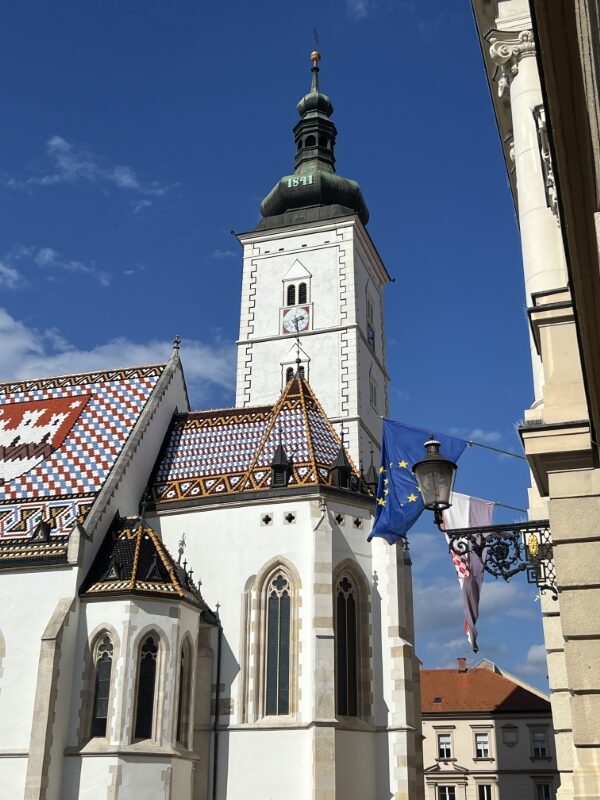
A Croatian passport is an EU passport, and that is the whole reason most of the diaspora applies. It carries the right to live, work, study and retire in any of the 27 EU member states without a visa, a permit, or a sponsor.
Croatia joined the euro area on 1 January 2023 and is a full member of the Schengen area, so a Croatian citizen crosses most of continental Europe without showing a document at all.
Those rights break down like this:
- Work anywhere in the EU: no work permit in Berlin, Dublin, Lisbon or Amsterdam.
- Study at EU tuition rates: the domestic-student fee at European universities instead of the international one, which on a four-year degree is often the single largest financial benefit of the whole exercise.
- Buy property freely: no foreign-buyer approval process when you buy property in Croatia, and no reciprocity check.
- Pass it on: your minor children can be included in your application, and children born to you afterwards can be registered as Croatian from birth.
What It Doesn’t Get You
Citizenship doesn’t come with Croatian health coverage. That runs off residence and contributions, not nationality, so a Croatian citizen living in Toronto is not in the Croatian system, and private health insurance is what fills the gap for most new arrivals.
It also doesn’t erase your existing tax obligations. Croatia taxes residents, not citizens, so holding the passport while living in Sydney changes nothing about what you owe. Americans stay inside the US citizenship-based tax system regardless.
Good to know: One rule matters most if you plan to spend real time in Croatia. Before Croatian authorities, a dual citizen is treated exclusively as a Croatian citizen. Your other embassy has no standing to intervene on your behalf inside Croatia.
The Routes
There are a few different ways to claim Croatian citizenship through family, and working out which one is yours comes down to two questions: when did your ancestor leave, and when were you born?
Most people reading this are on the first track. A grandparent or great-grandparent left, nobody in the family kept their Croatian citizenship going, and you’re starting from scratch. That’s the naturalisation track, and it splits into two routes I’ll cover next.
A smaller group is on the second track. If one of your parents was already a Croatian citizen when you were born, you’re not really applying for anything new. You have a claim from birth, and the job is just to get it recognised on paper. That’s the shorter path, and it’s covered further down.
When Your Ancestor Left: The Naturalisation Routes
These are the routes for the diaspora. Your family emigrated, the citizenship lapsed somewhere down the line, and you’re claiming it back. There are two routes, and the difference between them is what your claim leans on: the emigration itself, or Croatian ethnicity.
- The emigrant route is the main road, and it’s the one most diaspora applicants use. An emigrant and their descendants can become citizens by naturalisation, and the law waives the three requirements that would otherwise stop you cold. You don’t have to give up your current citizenship. You don’t have to rack up the eight years of registered residence that the ordinary permanent residence track demands. And you don’t have to prove you speak Croatian or know the culture. Spouses are covered too, and so are the spouses of descendants.
- The ethnic-Croat route is the alternative. It’s open to anyone who is ethnically Croatian, lives outside Croatia, and can document that identity, and it waives even more than the emigrant route, leaving only the good-character condition.
The catch is proving the ethnicity.
The authorities want older documents where your Croatian nationality was actually written down at the time, such as
- employment records
- military records
- school certificates
- student grade books
- register extracts.
Evidence that you’ve promoted Croatian interests abroad counts too, as does active membership in a Croatian cultural, scientific or sporting association. A certificate from a Croatian folklore group, a Croatian Catholic mission or a Croatian sports club all help.
Good to Know: If both of your parents are already clearly established as members of the Croatian people, you don’t have to prove it for yourself. You submit the evidence for them.

When You Were Born: Citizenship You Already Have
If a parent was already Croatian when you came into the world, you’re on a different and simpler footing. You may not need to apply for anything. There are two versions of this, depending on your age.
Determination, for adults who were never registered
Some people already hold Croatian citizenship and simply were never written into the register. Determination (utvrđivanje) is the process of checking whether you picked it up automatically under the rules that applied up to 8 October 1991. If you did, you count as a citizen from birth, not from the day they finally enter you in the register. The consulates put it more plainly: it’s the route for people over 21 whose parents were both Croatian citizens when they were born.
There’s one hard stop here. If you hold the citizenship of another former Yugoslav country and you picked up that republic’s citizenship under the pre-1991 rules, determination isn’t open to you.
Registration, for children under 21
If one of your parents was a Croatian citizen when you were born and you’re not yet 21, you don’t naturalise. You register. A child born abroad to one Croatian-citizen parent gets citizenship by origin as long as they’re registered at a Croatian diplomatic mission or a registry office in Croatia before turning 21. A parent can do it for a child, and from 18 to 21 you can do it yourself.
Miss that birthday and the door shuts. There used to be a catch-up window for adults over 21 in the same position, opened by the 2019 amendment and extended by a year in 2021, but it closed for good on 1 January 2023. Anyone over 21 now goes through the emigrant or ethnic-Croat route instead.
Tip: This birth route only applies to people born after 8 October 1991, when the Citizenship Act took effect. If you were born before that date, it was never open to you, and the emigrant or ethnic-Croat route is where you belong.
Registering a Child Born Abroad to a Croatian Parent
If one parent was a Croatian citizen on the day the child was born, you register the child instead of applying to naturalise. The deadline is the child’s 21st birthday. (Verified October 2026.)
What the Parent Brings
- Your own proof of citizenship: your Croatian passport, or your domovnica plus your US passport.
- The child’s birth certificate: apostilled and translated into Croatian by a certified translator.
- Your marriage certificate: apostilled and translated, if your marriage isn’t registered with the Croatian authorities yet.
- Your own birth certificate: apostilled and translated, if you were born outside Croatia and aren’t in the Croatian birth registry. You register first.
If Nobody Registered the Child in Time
From 18 to 21, the child can register on their own. They bring a valid passport and their birth certificate, apostilled and translated. They also bring proof that a parent was Croatian at the time of the birth, such as the parent’s domovnica or Croatian passport. After 21 this route is closed. Those people go through the emigrant or ethnic-Croat route described above.
Who Counts as an Emigrant
Everything on the emigrant route hangs off one definition, and it’s narrower than it sounds. An emigrant is a person who left the territory of the Republic of Croatia before 8 October 1991 intending to live permanently abroad.
The foreign ministry’s own example:
- someone who moved from Zagreb to the United States in 1978 meaning to stay is an emigrant.
- Someone who left Croatia in 1993 is not, because that’s after the cut-off date.
There’s an important extension. An emigrant can also be a member of the Croatian people who emigrated from another part of the former states that Croatia belonged to at the time. A Croat who left Bosnia and Herzegovina for the United States while both were part of the same country qualifies, but has to prove Croatian ethnicity on top of the emigration.
Some departures don’t count as emigration at all:
- Treaty emigrants: people who left under an international agreement.
- Renouncers: anyone who gave up Croatian citizenship.
- Internal movers: someone who simply changed residence to another republic inside the same country. Croatia to Montenegro in 1984 is not emigration.
Non-citizens of the republic: someone who left Croatian territory without ever holding Croatian republic citizenship or local belonging (zavičajnost, roughly the old register that tied you to a home municipality) there in the first place.
The third exclusion does the most damage in practice. A family whose ancestor moved from Croatia to Vojvodina or Serbia in the 1950s and only left Yugoslavia a generation later fails on it, because the move out of Croatia was internal.
Requirements
On the emigrant route, almost every ordinary naturalisation condition falls away, but not all of them.
- You still need to be 18
- You still need to clear the good-character bar
- In plain terms, that means your conduct shows you respect Croatian law, you’ve paid off any public debts you owe, and there’s nothing on the security side that would bar you.
That last one is why the criminal record check sits at the centre of the document list.
The Ministry of the Interior gathers information from tax offices, courts and other ministries while your file is open, and it can refuse an application even where the conditions are met if it judges there are reasons of national interest to do so.
Minor children don’t need to be 18. A child can acquire citizenship alongside a parent naturalising on either route, and the consulates take them on the same application.
There’s no minimum income, no investment, no property purchase, and no requirement to have ever set foot in Croatia.
Documents
You’re proving an unbroken documentary chain from yourself back to an ancestor who left Croatia before October 1991, and every link has to match. That is where the work is.
Your Own Documents
- Completed application form and questionnaire, from the consulate or the Ministry of the Interior website.
- Valid passport, plus proof of any other citizenships you hold.
- Birth certificate, apostilled and translated into Croatian by a certified translator.
- Marriage certificate if applicable, issued within the last six months, apostilled and translated.
- Criminal record check no older than six months, apostilled and translated. In the United States that’s the FBI check. If you hold more than one citizenship, you need a check from each country, and if you were born somewhere other than where you live now, a check from your country of birth as well.
- Certified copy of a valid photo ID.
- A CV in Croatian covering your name, date and place of birth, address, education, current job, your parents’ names and their dates and places of birth, and the family’s emigration path.
- A motivation letter in Croatian, or in English with a certified Croatian translation attached, explaining why you’re applying.
Your Ancestor’s Documents
- The emigrant ancestor’s birth certificate from Croatia.
- Proof of emigration: travel documents, ship manifests, passenger lists, immigration or naturalisation records from the destination country. US National Archives material has to be certified by the National Archives and Records Administration before it’s translated.
- Proof of Croatian ethnicity where the ancestor emigrated from Bosnia, Vojvodina or elsewhere in the former state rather than from Croatia proper.
The Chain in Between
If you’re a grandchild or great-grandchild rather than a child of the emigrant, the ministry wants the birth certificates of every intermediate relative, each one apostilled and translated. Your own certificate alone won’t do. Your parent’s certificate has to establish their link to the emigrant, and so on up the line.
Names have to reconcile. The foreign ministry states it as a prerequisite: your personal details, or your parents’ and ancestors’ details, either match what’s in the Croatian registers or you file proof of the legal name change. A Josip who became Joseph and a Kovačević who became Kovacevich need documentation joining the two.
Apostilles and Translations
Every foreign public document needs an apostille under the 1961 Hague Convention, obtained from the issuing authority in the country of origin. In the United States that’s the Secretary of State of the state that issued the document, and the FBI check gets its apostille federally.
Then every document gets translated into Croatian by a certified court translator. There’s no way around either step, and together they’re usually the biggest line in the budget.
Tip: Apostilles and criminal record checks both age out at six months. Sequence them last, after you’ve secured a consular appointment, or you’ll pay for the same documents twice.
Finding Croatian Records
Getting an ancestor’s Croatian birth record is the step that most often stalls an application for a year, and it’s the one part of the process no consulate can do for you.
Civil registers sit with the registry office covering the place of birth, and those offices will issue extracts on request. Records older than roughly a century usually aren’t there. They’re in the regional state archives or still with the parish office that kept the baptismal book, and a baptismal entry has to come as a properly stamped and signed certified copy to be accepted.
In the diaspora forums, the consistent advice on this stage is to write to the archive or parish directly, in Croatian, with the village name and an approximate year rather than the name alone. People who do that regularly report better results than people who go through an agency, largely because a local clerk searching one parish book is faster than a service that has to make the same request anyway.
The other recurring warning is about place names. The village your family called home may sit in a different municipality now, may have been renamed twice, and may have had its records consolidated into a neighbouring parish. Getting the geography right before you write saves months.
Birth Certificates and Name Matching: Where Files Stall
Most delays come from paper that doesn’t match, not from the law. Check these before you pay for apostilles. (Verified October 2026.)
- City of birth: your birth certificate has to name an actual city. If it only shows a county or a state, the consulate won’t accept it.
- Your name: the name in your passport has to match your birth certificate, your marriage certificate and your FBI check or other police certificate.
- Your ancestors’ details: their names, dates and places of birth have to match what’s in the Croatian registers. If a name changed in the US, attach proof of the legal change.
- US archive records: ship manifests, passenger lists and naturalisation papers from the National Archives must be certified by the National Archives (NARA) first. Then an official translator turns them into Croatian.
- Originals: take the originals of your passport, certificates and police check to the appointment. The foreign ministry’s Australian page says all of them must be presented.
Report changes after you file. If your address, phone number or name changes while the ministry has your file, tell the consulate. It can only update the application if you do.
The Application Process
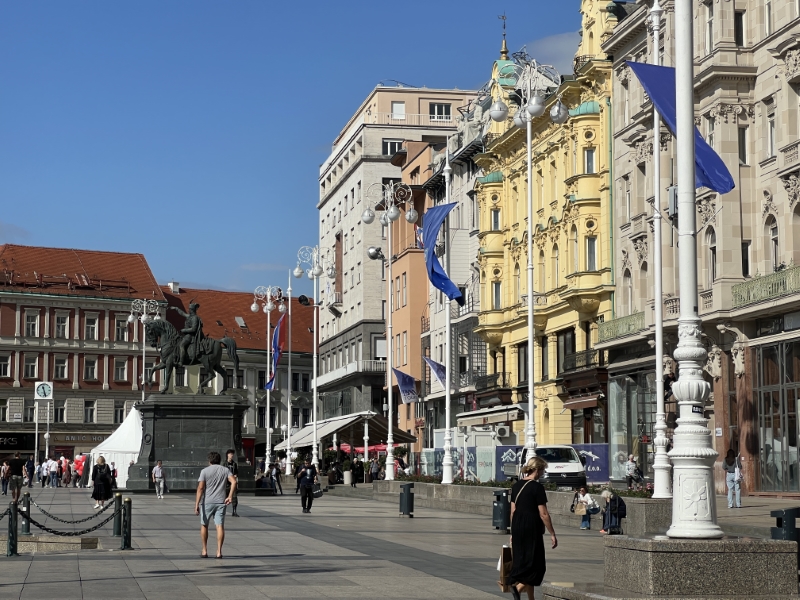
You have to show up in person. The foreign ministry is explicit that a citizenship application cannot be submitted by mail or by proxy, which means one trip to the embassy or consulate that covers where you live, with the complete file and the originals of everything.
Filing runs in five steps:
- Identify your consulate. Jurisdiction runs by where you live. In the United States that’s the embassy in Washington DC or the consulates general in New York, Los Angeles and Chicago, each covering a set of states.
- Book an appointment by phone or email. This is the bottleneck; see the timing section below.
- Attend and file. You hand over the file, present the originals, and pay the consular fee on the spot.
- Wait. The Ministry of the Interior in Zagreb runs the whole procedure, not the consulate. Consular officers contact you if something’s missing.
- Take the oath. Anyone naturalising swears a solemn oath to abide by the Constitution and laws and to respect the legal order, culture and customs of Croatia. Abroad, that’s done at the mission.
Citizenship takes effect the day the positive decision is delivered to you, not the day you applied. Determination works the other way round: if you already held the status, you’re a citizen from birth.
Where to File From the United States or Australia
You file at the post that covers your home address. The Croatian law is the same everywhere. Fees, waits and the paperwork details change by country. (Verified October 2026.)
United States
- Where: the embassy in Washington DC, or the consulates general in New York, Los Angeles and Chicago. Which one covers you depends on your state, and the embassy’s website has the jurisdiction list.
- Booking: email or phone the office that covers you.
- Paying: you pay the consular fee when you file, by personal cheque or money order. The ministry reviews the fee every six months against the euro-dollar rate, so ask the office for the current amount first.
- Waiting: around 18 to 24 months for a complete application.
Australia
| If you live in | You file at |
|---|---|
| ACT | Embassy of the Republic of Croatia, Canberra |
| Victoria, South Australia, Tasmania | Consulate General, Melbourne |
| New South Wales, Queensland, Northern Territory | Consulate General, Sydney |
| Western Australia | Consulate, Perth |
- Apostilles: Australian birth and marriage certificates and your police check get an apostille through the Department of Foreign Affairs and Trade (DFAT). All must be less than six months old.
- Translations: a certified translator turns every English document into Croatian. The ministry points to the NAATI directory.
- Fee: the ministry reviews it every year against the euro-Australian dollar rate. Ask your post for the current figure.
- Waiting: the ministry’s Australian page says around 12 to 24 months for a complete application, and it can take longer or shorter. That’s shorter at the bottom end than the US guidance.
Once the passport is in your hands, our guide to the cost of living in Croatia shows what a move would run you.
Costs
The government’s own fee is the small part. Figures below use the European Central Bank reference rate for 28 August 2026: €1 to US$1.1643.
| Item | Cost | Notes |
|---|---|---|
| Administrative fee on approval | €139.36 (about US$162) | Payable when the positive decision is issued in Croatia |
| Consular fee at filing | Varies by post | Non-refundable whatever the outcome; set against the local currency and reviewed every six months in the US and once a year in Australia |
| Copy of the decision | €13.94 (about US$16) | Administrative fee for a duplicate |
| Apostilles | Varies by state or province | One per foreign document, plus a federal one for the FBI check |
| Certified translations | Varies by translator | Usually the largest single line, and it scales with the number of generations |
| Croatian record retrieval | Varies | Registry office and archive fees, plus postage |
The consular fee is the one figure no published schedule pins down. The ministry says fees are reviewed against the exchange rate (every six months for US posts, every year for Australian posts) and tells applicants to ask their own consulate before filing, so treat any number you find on a blog as stale.
Good to Know: The consular fee is non-refundable regardless of the outcome, and it’s payable when you file. A refused application costs you the same as an approved one.
How Long It Takes
The foreign ministry’s published guidance puts the expected wait for a fully completed application at 18 to 24 months, and says it may take longer in some cases. That clock starts when you file, not when you start gathering documents.
The appointment queue stretches it further. In the diaspora forums, applicants at the busier posts report waits of months and sometimes longer just to get a slot, which is a problem when your FBI check and apostilles expire at six months.
Several people describe paying for the same criminal record check twice for exactly that reason. Mobile consular days, where a consulate sends officers to a city it doesn’t cover, come up repeatedly as the workaround.
The other thing that stretches the clock is an incomplete file. The ministry advises filing a complete application specifically to avoid corrections that lengthen the wait, and the forums bear that out: files that go back and forth for a missing intermediate birth certificate are the ones that run past three years.
Tip: Budget six to twelve months to assemble documents before you file, then the ministry’s 18 to 24 months on top. Anyone quoting you a total under two years is quoting the filing stage only.

After You’re Approved
Approval isn’t the end of the paperwork. Once the decision is delivered, you’re entered in the register of citizens, and then three things follow.
- Domovnica: the certificate of citizenship, the document that proves your status. It’s issued by a registry office, and once you’re registered you can collect it from any registry office in Croatia.
- OIB: the personal identification number that Croatian administration runs on. You’ll need it to open a bank account, sign a lease, take out a utility contract or register a company.
- Passport: applied for at a consulate or, if you’re in Croatia, at a police administration.
Community Input: In the forums the consistent report is that this tail end moves much faster in Croatia than through a consulate, and people who are travelling anyway often batch the three into one trip.
Military Service
Croatia reinstated basic military training in 2025, and the first conscripts were called up in 2026. For most of the diaspora it’s an administrative obligation rather than a real prospect of service, but it is a live legal duty and it attaches the moment the decision is delivered.
The new rules set the ages, the duty and the way out:
- Who: military obligation arises in the calendar year a Croatian citizen turns 18 and runs to the end of the year he turns 30. Men are subject to it; women may volunteer.
- What: basic military training lasts two months. Conscripts are normally called in the year they turn 19. The Ministry of Defence puts the allowance at around €1,100 net a month.
- Living abroad: a conscript who has lived abroad since birth, or who left with his parents before the obligation arose, must report to a Croatian diplomatic mission or consulate in the calendar year he turns 18 to be entered in the military records. Anyone abroad who was never entered has to register with the mission by the age of 29 at the latest.
- Exemption: you’re excused from basic training if you already sorted out your military obligation abroad. That covers a dual citizen who dealt with it under his other country’s rules, and someone who naturalised as a Croatian after handling it in the country he was a citizen of.
How that exemption applies to a man from a country with no conscription at all, where there was no obligation to regulate, is the open question. It’s new law, and the practice isn’t settled. If there are men aged 18 to 30 on your application, ask the consulate directly and get the answer in writing.
Do You Need a Lawyer?
The forums are genuinely split, and the split runs along a clear line. In short,
- if your family history is simple, you can do it yourself.
- If it’s complicated, hiring a lawyer can be worth the price.
Where the family history is simple (an ancestor born in a village inside modern Croatia who emigrated with documented passage), the do-it-yourself view dominates. The argument is that no lawyer can move you up the ministry’s queue, the forms are short, and the money is better spent on translations.
Where the history is complicated, the opposite view is just as strong. Ancestors from Bosnia or Vojvodina, records destroyed or never civil-registered, names that shifted spelling across three generations, an ethnic-Croat claim that turns on documentary judgement: these are the cases where people who paid an agency say it was worth it, and where people who didn’t describe years of back-and-forth.
The reported price range for full-service help runs into several thousand US dollars, which is a real number to weigh against a €139.36 government fee. Nobody in the forums claims paid help makes the decision itself any faster.
Tip: Before you spend anything on apostilles, write out your family line on one page with names, dates, places and the document that proves each link. Every gap on that page is a gap in your application, and it’s much cheaper to find them now.
Read more:
- Moving to Croatia: A Complete Guide
- The Cost of Living in Croatia
- The Best Places to Live in Croatia
- Retiring in Croatia
Frequently Asked Questions
Do I have to give up my current citizenship?
No. Croatia permits dual citizenship for people naturalising through the privileged routes, and both the emigrant and ethnic-Croat routes are on that list. The ministry’s own guidance says so explicitly.
Is there a generational limit?
Not in the current law. The emigrant route, as rewritten by the 2019 amendment, covers simply “an emigrant and their descendants”, with no degree of kinship attached. The earlier version capped it at the third degree in the direct line, and some official pages haven’t been updated since.
The evidence burden does change. The further back the emigrant sits, the more intermediate birth certificates you have to produce.
My ancestor came from Bosnia. Do I still qualify?
Possibly. The law extends the definition of emigrant to a member of the Croatian people who left another part of the former state that Croatia belonged to.
The foreign ministry gives a Croat emigrating from Bosnia and Herzegovina to the United States as its own worked example. You’ll have to prove Croatian ethnicity as well as the emigration.
Do I need to speak Croatian?
Not for the application itself. The emigrant route waives the language and culture test. Your CV and motivation letter still have to be submitted in Croatian, which in practice means a translator, and every foreign document gets a certified Croatian translation.
Can I apply by mail or send someone on my behalf?
No. Submission is in person only. The one exception in the law is for applicants with a disability, who may file through a legal representative or an authorised proxy.
What if my ancestor left after 1991?
Then the emigrant route doesn’t fit. The cut-off is 8 October 1991, it’s applied strictly, and someone who left in 1993 is not an emigrant for these purposes.
If your parent was a Croatian citizen when you were born, look at the under-21 registration route instead, or at determination if the family status was never registered.
Will my children get citizenship too?
Minor children can be included in your application. The other parent has to co-sign in person at the consulate, or you supply proof of sole custody or of the other parent’s death. Children born after you become a citizen can be registered as Croatian from birth, provided it’s done before they turn 21.
Will I owe Croatian tax?
Not on citizenship alone. Croatia taxes on residence, so if you don’t live there, the passport doesn’t create an income tax liability. Actually moving to Croatia is a different question, and worth taking advice on before you do.
What counts as proof of emigration?
Any travel document or other official paper showing that your ancestor left Croatia. The foreign ministry lists American immigrant documents and Ellis Island records as examples. US National Archives records such as ship manifests, passenger lists and naturalisation papers must be certified by the National Archives before they’re translated.
Does my birth certificate have to show a city?
Yes. It has to name the actual city of birth. If it only gives a county or a state, the consulate won’t accept it. Ask the issuing office for a version that names the city before you pay for apostilles.
Can my foreign spouse get Croatian citizenship through me?
Yes, if you’re an emigrant or a descendant of one. The law lets a foreigner married to such a person naturalise without the residency, language and renunciation requirements. They still have to be 18 and meet the good-conduct rules, and they apply in their own right.
How do I register my child born abroad as a Croatian citizen?
Register the birth at your embassy or consulate before the child turns 21, as long as one parent was a Croatian citizen at the time of the birth. Bring your Croatian passport or domovnica and the child’s apostilled, translated birth certificate. If your marriage isn’t registered in Croatia, bring that certificate too. The section on registering a child lists everything.
What do I need for my first Croatian passport?
You apply in person. The embassy in Washington asks first-time applicants for the domovnica or the ministry’s decision admitting you to citizenship. You also need a birth certificate no older than six months, apostilled and translated into Croatian. You also need a colour photo (3.5 x 4.5 cm, white background, no smile). Consular fees follow the exchange rate, so ask your post. Next, get your OIB, and if you’re planning a move, read our guide to moving to Croatia.
Sources Cited
- Zakon o hrvatskom državljanstvu (consolidated text, NN 53/91 to 138/21): Articles 2, 4, 5, 8, 11, 13, 16, 24, 24a, 24b and 30, covering the routes, the emigrant definition, waived conditions and the oath.
- Zakon o izmjenama i dopunama Zakona o hrvatskom državljanstvu, NN 102/2019: the 2019 replacement of Article 11 that removed the generational limit, and the original two-year catch-up window.
- Zakon o izmjenama Zakona o hrvatskom državljanstvu, NN 138/2021: the extension of that window from two years to three.
- Ministry of the Interior, Citizenship: the document list, the legalisation rules, and the €139.36 administrative fee.
- Ministry of the Interior, Državljanstvo: which routes allow dual citizenship, the 8 October 1991 birth cut-off for Articles 4 and 5, and where the domovnica is issued.
- Ministry of Foreign and European Affairs, Acquiring Croatian Citizenship: an overview (November 2024): the emigrant definition with worked examples, the full document list, the city-of-birth and name-matching rules, child registration documents, the in-person filing rule, payment by cheque or money order, and the 18 to 24 month waiting time.
- Ministry of Foreign and European Affairs, Applying for Croatian Citizenship: Australian consular districts, apostille and certified translation requirements, the six-month document validity, the yearly fee review and the 12 to 24 month waiting time at Australian posts.
- gov.hr, Utvrđivanje hrvatskog državljanstva: the determination procedure, and the 1 January 2023 closing date for Article 5(2) and Article 30a(2) applications.
- Zakon o izmjenama i dopunama Zakona o obrani, NN 136/2025: the reinstated basic military training, the age range, the two-month duration, the consular registration duty for conscripts abroad, and the exemptions.
- Ministry of Defence, Croatia Introduces Mandatory Military Service: the call-up schedule and the €1,100 net monthly allowance.
- European Central Bank, Croatia and the euro: euro area membership from 1 January 2023.
- European Commission, Schengen Area: Croatia’s membership of the Schengen area.
- Embassy of Croatia in the US, Croatian Passport: documents and photo rules for a first Croatian passport.