
This article will take approximately 17 minutes to read. Don't have the time right now? No worries. Email the ad-free version of the article to yourself and read it later!
Thailand ended its 60-day visa-free scheme in May 2026, reverting most nationalities to 30-day stays with a two-entry cap. Here is what digital nomads, retirees, and long-stay expats should do now.
"*" indicates required fields
Disclaimer: This article may include links to products or services offered by ExpatDen's partners, which give us commissions when you click on them. Although this may influence how they appear in the text, we only recommend solutions that we would use in your situation. Read more in our Advertising Disclosure.
Most expats throw money away, get lost in red tape, and miss the local hacks that make life easier and cheaper. ExpatDen Premium gives you the secrets seasoned expats use to save, earn, and thrive beyond the basics, saving you thousands and opening doors you didn’t even know existed.
Here’s what’s inside:
- Housing Hacks: Slash your rent by 40% or more - because the locals are laughing at what you’re paying.
- Banking Mastery: Stop wasting on fees and get top exchange rates. Why give your money away?
- Healthcare for Local Prices: Quality treatment without the expat price tag.
- Visa and Legal Shortcuts: No more bureaucratic nightmares. Get the visa and residency secrets that others pay their lawyer dearly for.
- Deep Discounts: Find the savings locals rely on for groceries, dining, and more.
If you’re serious about making Thailand work for you, join ExpatDen Premium and make Thailand work for you.
Key Takeaways
- Thailand’s Cabinet voted on 19 May 2026 to end the 60-day visa exemption for 93 countries, reverting most to 30 days — the change takes effect 15 days after Royal Gazette publication.
- If you are currently in Thailand on a 60-day stamp, your stay is unaffected; existing stamps remain valid until they expire.
- The two-entry-per-year cap makes traditional border runs effectively dead, even under the new 30-day rules.
- The Destination Thailand Visa (DTV) is the best replacement for most digital nomads: five-year multiple-entry, 180-day stays, THB500,000 in bank funds held for three months, and a THB10,000 fee.
- Retirees aged 50 or older should look at the Non-Immigrant O-A: THB800,000 in a Thai bank or THB65,000 per month in verifiable income, with mandatory health insurance.
For about two years, Thailand accidentally gave the world one of the best deals in long-stay travel. From July 2024, nationals of 93 countries could enter visa-free and stay for 60 days, extend for another 30, and be in Thailand for three months without ever visiting an embassy. For slow travelers, retirees doing a soft test-run, and digital nomads who liked to keep their options open, it was genuinely hard to beat.
On 19 May 2026, Thailand’s Cabinet voted to end it.
The change reverts most of those 93 nationalities to a 30-day visa exemption, capped at two entries per year. The 60-plus-30 combination that gave a rolling 90-day window is gone. And if you’ve been managing a long stay in Thailand by flipping between tourist entries, you need a different plan. This article maps out what your realistic options are.
What Just Changed (and What Hasn’t Yet)
The Cabinet decision, announced by Tourism and Sports Minister Surasak Phancharoenworakul on 19 May 2026, cancels the 60-day scheme and returns Thailand to a structure closer to what existed before July 2024. Under the revised framework approved by the Cabinet:
- Nationals of 54 countries and territories revert to 30 days visa-free
- A smaller group of three nationalities drops to 15 days
- ASEAN nationals are not affected
- Non-ASEAN nationals are limited to two visa-exempt entries per year
- Foreigners already in Thailand under existing 60-day stamps are not required to leave early
The same Cabinet session also approved a THB300 landing fee for air arrivals, intended to fund tourism infrastructure improvements. Implementation timing has not been confirmed.
One important caveat: as of early June 2026, the new rules are not yet in force. The changes take effect 15 days after publication in the Royal Gazette, and no publication date has been confirmed. Until that notification goes out, the current 60-day scheme remains valid. Monitor the Ministry of Foreign Affairs and your nearest Royal Thai Embassy for the effective date.
The practical arithmetic matters here. The old path was: 60 days visa-exempt, then a 30-day extension at any immigration office, equaling 90 days without crossing a border. The new ceiling under a 30-day exemption is: 30 days plus a 30-day extension, equaling 60 days maximum. That is a meaningful cut for anyone who was using the full window.
Tip: If you are currently in Thailand on a 60-day stamp, your permitted stay is unaffected. You do not need to leave early or take any action now. Use this window to figure out your next move.
Read more: Thailand Visa and Immigration Updates 2026
Why Thailand Did This
The 60-day scheme was introduced to stimulate post-pandemic tourism recovery, and in that narrow sense it worked. But by 2026, immigration authorities had accumulated enough data to feel uncomfortable about how the window was being used.
The government was direct: “The current scheme has allowed some people to exploit it.” That exploitation had two broad shapes. The first was security-related: officials linked the 60-day policy to surges in unauthorized foreign workers, nominee businesses using Thai nationals as fronts, and connections to online scam operations active in the region.
Government data told a simpler story. The average foreign visitor to Thailand stays around nine days — a 60-day exemption designed for tourists was always going to attract people who weren’t tourists.
Minister Surasak framed the shift as pursuing “quality tourists, not simply making entry easy.” Read that as a policy signal. Thailand isn’t trying to reduce tourism overall. Q1 2026 arrivals were already down 3.4 percent year-on-year, and Middle Eastern visitor numbers dropped nearly 30 percent. The government absorbed that trade-off anyway, which suggests the security concerns were taken seriously at a high level.
For the long-stay community, the subtext is clear: the era of managing quasi-residency through tourist exemptions is closing.
Who This Actually Hurts
The honest answer is: not the person who visits Thailand for two weeks to see temples. The 30-day exemption is generous for actual tourists, and a 30-day extension at any immigration office covers the extended traveler who wants six weeks.
The people this policy targets, even if not by name, are the ones who were threading the 60-day window repeatedly:
- digital nomads doing two-to-three month stints without ever getting a proper visa
- retirees who’d delayed the paperwork of a retirement visa because the tourist exemption was so easy
- slow travelers who used the extension as a last resort
- people running informal operations in Thailand who technically lived here with no legal status.
The two-entry-per-year cap compounds this significantly. Even if you are willing to do a border crossing, you can only use the 30-day exemption twice in any 12 months. That kills the classic rhythm of leave for a weekend in Kuala Lumpur, come back for another 30 days. Combined with stricter immigration scrutiny at land borders for frequent re-entries, that model was already under pressure before the May 2026 vote formalized the end of it.
If your plan was to live in Thailand on back-to-back tourist entries: that plan needs replacing.
Option 1: The DTV – The Right Answer for Most Nomads
The Destination Thailand Visa, launched by the Ministry of Foreign Affairs in July 2024, has become the logical replacement for the long-stay nomad crowd. Among digital nomad communities and expat forums, it is consistently the most-recommended path for remote workers who want a clean, legal long-term setup without an income threshold most people can’t clear.

Here’s what it offers: a five-year multiple-entry visa, with 180 days per entry. Each 180-day stay can be extended once for another 180 days, giving you up to 360 consecutive days in Thailand before you need a border exit. Then you re-enter and start the cycle again. For someone who wants to be based in Thailand for the better part of a year, this is the most practical structure on the market.
The requirements are manageable for most remote workers:
- Age 20 or older
- THB500,000 in a bank account, with those funds present for at least three months before you apply
- Proof of foreign employment, freelance income, or a qualifying activity (Thai language study, Muay Thai, cooking courses, wellness retreats, and a list of Thai soft power activities also qualify)
- You must apply from outside Thailand
The fee is THB10,000 at most embassies, roughly US$280, though some posts charge considerably more (Canberra, for example, charges significantly above the base rate). Extensions cost THB1,900 each.
The key restriction: you cannot work for Thai companies or Thai clients. The DTV is explicitly for income earned from outside Thailand. If you want to take local freelance contracts, you’d need a separate work permit, which is a different process entirely.
Application practicalities vary sharply by embassy. Nomads consistently report smooth, fast experiences at the Thai consulate in Kuala Lumpur (typically one to two weeks) and in Vientiane (similar or faster). Western embassies in London and Washington DC are more thorough but slower, often two to four weeks. The most common rejection reason across all embassies is a bank balance that was recently boosted rather than maintained. Immigration officers check the three-month history, and a large recent transfer is a red flag regardless of the current balance.
Tip: Don’t move money into your account the week before you apply. Maintain the THB500,000 balance genuinely across the three months preceding your application. That single discipline resolves the most common DTV rejection reason.
Read more: Destination Thailand Visa (DTV): Complete Guide
Option 2: Retirement Visa – For the 50-Plus Crowd
If you are 50 or older, the Non-Immigrant O-A (the standard Thai retirement visa) remains the simplest long-term path. It doesn’t require a particular income type or employer documentation; it just requires you to prove you can support yourself financially while you’re here.
The financial threshold can be met in one of three ways:
- THB800,000 deposited in a Thai bank account (with at least THB400,000 maintained through the rest of the year)
- THB65,000 per month in verifiable income, which can be pension, Social Security, dividends, or any regular income source
- A combination of bank deposit and annual income totaling THB800,000
The visa is issued for one year and renewed annually at your local immigration office. Health insurance is mandatory: at least THB40,000 of outpatient coverage and THB400,000 of inpatient coverage, from a Thai-approved provider or with a compliant foreign insurance certificate. Enforcement has tightened considerably since 2023, and arriving at your renewal appointment without valid insurance now routinely results in a denial.
You also have a 90-day reporting obligation throughout the year: every 90 days you report your address to immigration, in person, by post, or online. A missed report carries a THB2,000 fine and can complicate your next renewal.

The longer-stay version, the Non-Immigrant O-X, runs for 10 years and requires THB3,000,000 in a Thai bank. Only nationals of 14 specific countries are eligible, so check whether yours is on the list before planning around it. If you do qualify and have the capital, it removes annual renewal appointments for a decade.
Read more:
Option 3: The LTR – For High Earners Settling Long-Term
The Long-Term Resident Visa, administered by Thailand’s Board of Investment, is a 10-year renewable visa with a meaningful package on top of the stay rights: annual reporting instead of 90-day check-ins, a digital work permit that bypasses the usual 4:1 Thai-to-foreigner employment ratio, and a practical acknowledgment that you’re a genuine long-term resident rather than a recurring visitor.
The eligibility bar is where most people fall off. There are four categories:
- Work-from-Thailand Professionals: Minimum US$80,000 per year in income, employed by a company with at least three years of operation and combined revenue of US$50 million or more. This is a corporate-professional visa, not a freelancer option.
- Wealthy Global Citizens: Net assets of at least US$1 million, with at least US$500,000 invested in Thailand through government bonds, REITs, or BOI-approved projects.
- Wealthy Pensioners: Passive income of at least US$80,000 per year from pension, dividends, or investment sources.
- Highly Skilled Professionals: Specialists in industries Thailand is prioritizing: digital technology, automation, biofuels and biochemicals, medical and wellness, and agricultural technology. Income requirements apply.
If you qualify, the LTR is excellent value for a decade of settled life. If you’re a nomad earning US$50,000 from freelance clients, it isn’t for you yet, but it’s worth understanding as a target.
Read more: Thailand LTR Visa Review: Requirements and How to Get It
Option 4: Education Visa – A Bridge, Not a Solution
The Non-Immigrant ED visa lets you stay in Thailand while enrolled at a licensed educational institution. The most common use for long-stay foreigners is Thai language school, which typically costs THB10,000 to THB30,000 per term, covering three to six months, and is renewable as long as you continue studying at an approved institution.
The problem is the 80 percent class attendance requirement. If your lifestyle involves traveling between Thailand and neighboring countries regularly, you will violate the attendance rules and risk the visa. It’s also under considerably more scrutiny than it was a few years ago: immigration checks attendance records now, and the schools that would historically rubber-stamp foreign enrollments are a riskier bet than they once were.
Where the ED visa genuinely earns its place is as a bridging option: if you’re already in Thailand, waiting for a DTV application to be processed, enrolling in a legitimate Thai language school gives you legal status in the meantime and, usefully, a reason to learn something. As a permanent arrangement for someone who wants to avoid proper visa status, it’s more trouble than it’s worth.
Option 5: Thailand Privilege – If Simplicity Is Worth the Price
The Thailand Privilege card (previously Thailand Elite) is a one-time purchase for people who have capital, don’t want to document income or employment, and want the simplest possible long-stay arrangement.
Current tiers as of 2026:
- Bronze (five years): THB650,000
- Gold (five years): THB900,000
- Platinum (10 years): THB1,500,000
- Diamond (15 years): THB2,500,000
No work rights come with any tier. The 90-day reporting obligation still applies. There are no tax benefits. What you get is a long-stay visa with no income threshold to prove annually, no employer to document, no bank balance to maintain at a specific level, and no annual renewal appointment.
It suits a specific profile:
- someone with capital
- retired or semi-retired, who doesn’t need to work legally in Thailand and values simplicity above all else.
The Bronze tier at THB650,000 works out to THB130,000 per year for five years of certainty. For some people that math makes sense. For most nomads who can document income for a DTV, it probably doesn’t.
Note: the THB50,000 application fee has been temporarily waived as of March 2026.
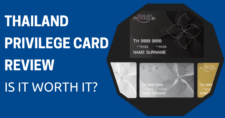
Read more: Thailand Privilege Card Program Review: Is It Worth It?
Choosing the Right Path
The right visa depends almost entirely on your age, income type, and how long you actually want to stay. Here’s an honest framework:
- If you are a remote worker or freelancer under 50: The DTV is your answer. It’s designed for this situation, the eligibility bar is achievable with some preparation, and five years of 180-day multiple-entry stays covers everything short of permanent residency. Apply now rather than waiting.
- If you are 50 or older with pension, Social Security, or investment income: The Non-Immigrant O-A is the standard path and it’s well-understood. If you are from one of the 14 eligible nationalities and have THB3,000,000 to place in a Thai bank, the O-X removes annual renewal appointments for a decade.
- If you are a senior professional earning US$80,000 or more from a major employer: Look seriously at the LTR. The 10-year runway and annual-only reporting represent a genuine quality-of-life upgrade from perpetual annual renewals.
- If you have significant capital and no interest in paperwork: Thailand Privilege. Pay once, stay without bureaucratic friction.
- If you need a bridge while you wait for a proper visa: Education visa at a legitimate Thai language school, treated as temporary.
What none of these options replace is the old “tourist exemption as a lifestyle” model. That option is closed.
What to Do Right Now
If you are currently in Thailand on a 60-day stamp, there is no urgent action required. Your current stay is valid until the date stamped in your passport, regardless of the Royal Gazette publication. Use this period to gather documents for whichever visa you’re moving toward: three months of bank statements, employment contracts or client invoices, and proof of health insurance if you’re heading toward the retirement visa.
If you are outside Thailand and planning to arrive soon, check the Royal Gazette status before you travel. If the new rules have taken effect by your arrival date, you’ll enter on 30 days, not 60. Plan accordingly, and factor in the possibility of a 30-day extension at a local immigration office if you need more time before your situation is resolved.
One thing that remains genuinely unresolved as of this writing: the exact scope of the two-entry cap. Official statements have referenced land border entries specifically, but several immigration lawyers are advising clients to treat it as an all-border limit until the Royal Gazette notification provides explicit clarification. Don’t assume a quick flight to Kuala Lumpur and return counts as a separate exemption window.

Tip: Set a Google Alert for “Royal Gazette Thailand visa exemption” to catch the publication date as soon as it happens. The 15-day clock starts from that announcement, and the change will come without much fanfare.
Read more: